


Indigenous perspectives are addressed in the resources from this publisher.


|
HSIE K-6
Engaging resources and ideas for teaching HSIE K-6. Topics such as history, cultures, environments, social systems and structures are taught through hands on, inquiry based approaches. Curated by Catherine Smyth |
 Your new post is loading...

|
Scooped by
Catherine Smyth
July 24, 2012 12:11 AM
|
 Scoop.it!
Indigenous perspectives are addressed in the resources from this publisher.
|
|
Scooped by
Catherine Smyth
July 19, 2012 9:40 PM
|
Scoop.it!

Asian Scientist MagazineOPINION: Learning How To Be A Global CitizenAsian Scientist MagazineLearning How To Be A Global Citizen. By Wai-Fong Chua | Academia July 19, 2012.
|
|
Scooped by
Catherine Smyth
July 17, 2012 10:14 PM
|
Scoop.it!

Although this is an American website, Australian primary teachers may find some of the ideas and resources can be adapted. There are some great ideas for teaching about historic places.
For a more extensive range of resources with a specific history focus see my other scoop it site.
|
|
Scooped by
Catherine Smyth
July 17, 2012 1:14 AM
|
Scoop.it!
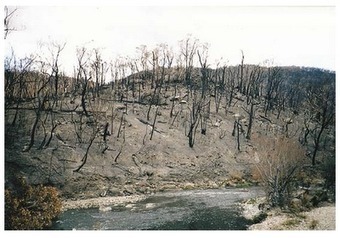
The Geography Teachers Association of Victoria (GTAV) in collaboration with the CFA have produced a 112-page, A4 colour resource - Bushfires: A Geography Resource for Australian students. This publication includes a ...
|
|
Scooped by
Catherine Smyth
July 12, 2012 11:44 PM
|
Scoop.it!
Celebrations and Commemorations, is a joint venture between the NSW Centenary of Federation Committee and the NSW Department of Education and Training as part of the project, One World, Many Democracies: Citizens of the World.
|
|
Scooped by
Catherine Smyth
July 5, 2012 2:28 AM
|
Scoop.it!
Online quizzes focusing on multicultural Australia.
|
|
Rescooped by
Catherine Smyth
from Primary history
July 5, 2012 2:27 AM
|
Scoop.it!

Digital resources with links to topics in the Australian curriculum.
|
|
Scooped by
Catherine Smyth
July 2, 2012 10:13 PM
|
Scoop.it!

A description of the 3rd World Farmer's goals and the people and ideas behind it, as well as the latest news about the game.
|
|
Scooped by
Catherine Smyth
July 2, 2012 3:47 AM
|
Scoop.it!
Mandy explains the six seasons of the Top End of Australia. Whilst most people seperate tropical Australia seasons to the Wet and the Dry Season, the Bininj ...
|
|
Scooped by
Catherine Smyth
July 29, 2012 10:42 PM
|
Scoop.it!

This unique website aims to raise awareness of the impact of conflict on young people.
|
|
Scooped by
Catherine Smyth
June 27, 2013 9:05 PM
|
Scoop.it!

Thousands of copyright free and copyright friendly images and photos for teachers and students.
Free, copyright friendly images for education.
|
|
Scooped by
Catherine Smyth
July 2, 2012 12:48 AM
|
Scoop.it!
An Indigenous Protected Area is an area of Indigenous-owned land or sea where traditional owners have a say in the management of that site.
This video could be used as a resource for teaching the Environments strand (or Social Systems strand) of the NSW BOS HSIE K-6 syllabus.
|
|
Scooped by
Catherine Smyth
June 28, 2012 11:55 PM
|
Scoop.it!
A brilliant 1986 satire of Australian colonialism!
|
|
Scooped by
Catherine Smyth
June 28, 2012 9:16 PM
|
Scoop.it!
Tiddalick the Frog is an Aboriginal Dreamtime Story from the Murray River Region of New South Wales, Australia. Aboriginals believe in two forms of time; two...
|
|
Scooped by
Catherine Smyth
June 28, 2012 2:02 AM
|
Scoop.it!

Teaching resources for Australian curriculum: history...
|
|
Scooped by
Catherine Smyth
June 27, 2012 4:15 AM
|
Scoop.it!

Developed by teachers for teachers, AG Education's non-fiction products will draw on our extensive resources, carefully selected for curriculum relevance, to deliver a series of magazines and accompanying interactive whiteboard (IWB) lessons for...
|
|
Scooped by
Catherine Smyth
June 27, 2012 4:07 AM
|
Scoop.it!
The Atlas of Living Australia provides tools to enable users of biodiversity information to find, access, combine and visualise data on Australian plants and animals...
|
|
Rescooped by
Catherine Smyth
from History and Geography teaching resources - elementary school
June 27, 2012 3:56 AM
|
Scoop.it!

Who says that learning has to be lame? Take the boring out of those old Social Studies books add in cool stories, links, and videos, and you get Go Social Studies Go.
|
|
Scooped by
Catherine Smyth
June 27, 2012 3:54 AM
|
Scoop.it!

Learn about the world by changing the familiar map. Select a subject from the top menu and watch the map resize. A countrys total area no longer represents land mass, but items relevant to the subject (i.e.
|
|
Scooped by
Catherine Smyth
June 27, 2012 3:24 AM
|
Scoop.it!

Teachinghistory.org has been designed to help K-12 teachers teach history. Although this is an American resource, there are a range of resources and materials to inspire Australian primary teachers.
|
|
Scooped by
Catherine Smyth
November 28, 2012 7:36 PM
|
Scoop.it!

Room to Read partners with local communities throughout the developing world to establish libraries, create local language children's literature, construct schools, and provide education to girls.
|
|
Scooped by
Catherine Smyth
June 27, 2012 3:23 AM
|
Scoop.it!

Research-based resources for history teaching and learning.
|
|
Scooped by
Catherine Smyth
June 27, 2012 3:23 AM
|
Scoop.it!

In my opinion this book can be a helpful as it can help me build my knowledge in the area of history. With knowledge comes power; if i feel confident enough with the subject i will be more comfortable with teaching it to my future students. As a student It would be a beneficial resource as it links to other principles such as the 3 fundamental that are mentioned. Knowing how childern acknowledge and learn the concept of 'history' is quite interesting.

As soon as I saw this I knew I'd found my last scoop. These simple three steps will help me greatly when teaching Humanities. Going even further, the book 'How Students Learn' is also very useful as it provides an overview of the best ways to teach history in the classroom. Obviously one of the most important things when teaching is teaching with understanding, and that has been emphasised in all three steps. I think I'd use this frequently in my teaching because by having these steps I would be able to keep focused on the end result (gives me continual guidance). I also know it's from a reliable resource - Catherine Smyth being an experienced primary educator herself.
|
|
Scooped by
Catherine Smyth
June 27, 2012 2:09 AM
|
Scoop.it!

This documentary series traces the history of Australia from 1788 in seven episodes. It was produced in consultation with Aboriginal communities. Primary teachers could use video extracts when teaching about British colonisation or build their own professional knowledge about the topic.

An excellent resource for educators to use in their lesson planning.

A great resource to explain the origins of English culture and language of Australia.

Description of what is on this site:
Directed and produced by Rachel Perkins, an Arrernte woman from Central Australia, First Australians, specifically Episode 1, excellently 'explains changes in the community and family life' experienced by the Aboriginal peoples at the time of the arrival of the First Fleet and beyond. This episode 'evaluates the effects of these' changes 'on individuals' such as Bennelong. The information at http://www.sl.nsw.gov.au/discover_collections/history_nation/terra_australis/education/bennelong/bennelong_extracts.pdf could prove a useful follow-up resource. This is one of the resources selected using selection criteria such as whether the creator of the work is Aboriginal.
The effects of these changes on groups of Aboriginal people are illustrated, such as those experienced by the Aboriginal people of Warang (Sydney). It also enables the audience to evaluate the effects of these changes on 'environments' due to British settlement. Allen Madden from the Gadigal Clan, talking of Captain Philip, explains that "...immediately he orders trees to be chopped down and land to be cleared..." (Perkins, 2008).
A teaching idea:
Children could be asked to write down what stands out to them as they watch the episode, after which time they pair and share and then share their partners response with the class. Teacher can display mind-map of ideas on interactive whiteboard and students can research one of the first Australians mentioned in the episode and present some of the ideas in the mind map in relation to CCS2.2, from the perspective of that first Australian.
An idea for an assessment task:
In order to assess the learning of the students on how well they can fulfill the HSIE outcome CCS2.2, perhaps after giving them a few lessons to research the changes and their impacts, I would ask them to write a speech from the perspective of a particular Aboriginal person or group.
Literacy strategy/links to English KLA:
This could also fulfill some of the outcomes for the English K-6 Syllabus such as EN2-6B in that writing a speech requires students to 'distinguish between different forms of English' as they 'plan and deliver short presentations'.
References:
Hunter, J. (1788). The Taking of Colbee and Bennalong.
Retrieved from the State Library of NSW website: http://www.sl.nsw.gov.au/discover_collections/history_nation/terra_australis/education/bennelong/bennelong_extracts.pdf
Perkins, R. (Director and Producer). (2008). First Australians
[Motion picture]. Australia: Blackfella Films.
|
|
Scooped by
Catherine Smyth
June 26, 2012 9:45 PM
|
Scoop.it!

This site explores the importance of Language in Aboriginal and Torres Strait Islander culture. There were about 250 different Language groups in Australia but only half of these are still spoken.







