
This is one of my favourite websites. Produced by the makers of the film "Ten Canoes", this website presents stories of the Yolngu people who live around the Arafura swamp in north- eastern Arnhem Land.


|
HSIE K-6
Engaging resources and ideas for teaching HSIE K-6. Topics such as history, cultures, environments, social systems and structures are taught through hands on, inquiry based approaches. Curated by Catherine Smyth |
 Your new post is loading...

|
Scooped by
Catherine Smyth
June 21, 2012 3:04 AM
|
 Scoop.it!
This is one of my favourite websites. Produced by the makers of the film "Ten Canoes", this website presents stories of the Yolngu people who live around the Arafura swamp in north- eastern Arnhem Land.
|
|
Scooped by
Catherine Smyth
September 19, 2012 1:36 AM
|
Scoop.it!

A taxonomy means classification. This site provides an overview of the different ways in which thinking has been classified.

|
|
Rescooped by
Catherine Smyth
from Asia and Australia's engagement with Asia
November 28, 2012 7:21 PM
|
Scoop.it!

This site belongs to a Global non-profit organization- the aim is to forge closer ties between Asia and the West through arts, education, policy and business outreach.
|
|
Scooped by
Catherine Smyth
September 18, 2012 10:22 PM
|
Scoop.it!

Together For Humanity - Learning to see past stereotypes to our shared values...
|
|
Scooped by
Catherine Smyth
July 23, 2012 9:29 PM
|
Scoop.it!


An interactive version of the Universal Declaration of Human Rights.
|
|
Scooped by
Catherine Smyth
October 14, 2012 11:18 PM
|
Scoop.it!

The Atlas of NSW provides articles and interactive maps on topics that include the economy, elections, environment, history and people.
|
|
Scooped by
Catherine Smyth
October 11, 2012 12:10 AM
|
Scoop.it!

NAIDOC stands for National Aborigines and Islanders Day Observance Committee.
|
|
Scooped by
Catherine Smyth
October 8, 2012 11:12 PM
|
Scoop.it!
The MyRead website provides strategies and a framework for developing literacy skills. Use these strategies to help students understand the meaning of different texts relating to social or environmental topics.
|
|
Scooped by
Catherine Smyth
June 21, 2012 3:07 AM
|
Scoop.it!

The Aboriginal Language map shows the diversity of Aboriginal nations in Australia.
|
|
Scooped by
Catherine Smyth
October 8, 2012 8:23 PM
|
Scoop.it!

ePals is the social network optimized for K-12 learning. Over half a million classrooms in 200 countries and territories have joined the ePals Global Community to connect, collaborate and exchange ideas.

This online social networking resource invites schools and students to connect with people of differing cultures and religions around the world. Teachers can use this resource when introducing the subject matter to remind the students of the similarities and differences in children’s abilities, characteristics and desires that exist not only in Australia, but worldwide. Having class ePals will encourage students to develop a rich and thorough understanding about various cultures, thus strengthening respect and praise for difference. Furthermore, it allows students to develop genuine relationships with students from varying cultures. Teachers have the opportunity to access and utilize this resource, as it is simple, straightforward and free of charge.
With guidance from a teacher, students can write draft letters, a link to literacy, to their ePals discussing their identity and comparing, ‘with sensitivity and empathy, similarities and differences between themselves and others’ (Gilbert & Hoepper, 2011, p.297). Teachers are able to assess their students understanding of this concept by observing what information about themselves they would relay and what questions they would like to ask their ePal. To conclude this lesson activity, students can holistically write and send a class letter to an ePal of their choice. The letter can include some extracts from the students draft letters outlining their own characteristics and desires, some interesting facts about the class and some relevant questions. Hopefully, the relationships founded via this online social networking resource will strengthen and thus can be utilized in other ways throughout the school year.
It would be most beneficial for teachers to implement this resource and accompanying activities into an Early Stage 1 classroom, only when students understand and respect cultural diversity in a ‘secure and supportive environment’ (Gilbert & Hoepper, 2011, p.296). In other words, this resource would be most effective to students at the conclusion of the unit of work as students will have vital prior knowledge and understanding.
Gilbert, R & Hoepper, B. (2011). Teaching Society and Environment (4th ed.). Melbourne, Australia: Cengage Learning Australia.
|
|
Scooped by
Catherine Smyth
October 15, 2012 8:20 PM
|
Scoop.it!
A resource for teaching about Refugees in HSIE K-6.
Darfur is Dying is mtvU's game for change about the genocide in the Darfur region of Sudan. Play now and find ways to get involved to help stop this human rights and humanitarian crisis.
|
|
Scooped by
Catherine Smyth
October 8, 2012 7:55 PM
|
Scoop.it!

A website for librarians, teachers, publishers, and all those interested in young readers' books from and about the Pacific Rim and South Asia, featuring lists of books published, book reviews, interviews, reading suggestions and resources.
|
|
Scooped by
Catherine Smyth
September 17, 2012 9:00 PM
|
Scoop.it!

Anti-prejudice activites for years K-3...
|
|
Scooped by
Catherine Smyth
September 17, 2012 8:58 PM
|
Scoop.it!

An interactive game which lets you experience what it is like to be a refugee.
|
|
Scooped by
Catherine Smyth
September 17, 2012 8:59 PM
|
Scoop.it!

This website aims to tackle racism in schools in Australia, through providing teachers, school students, parents and governors with games, research and lesson ideas that explore the causes and effects of racism for practical use in the classroom.
|
|
Rescooped by
Catherine Smyth
from What's New in Education?
September 14, 2012 3:24 AM
|
Scoop.it!
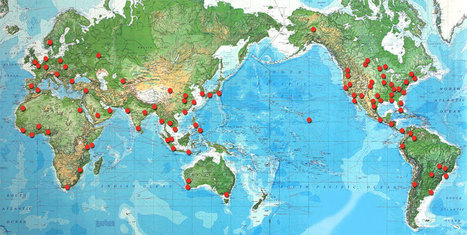
This is the truly global project that asks the children of the world to introduce us to the people of the world. We've seen videos and resources that ask the question, "if there were only 100 people in the world, what would it look like?" This takes that idea of making demographic statistics more meaningful one step further by asking student in schools for around the world to nominate some "representative people" and share their stories. The site houses videos, galleries from each continent and analyze themes that all societies must deal with. This site that looks at the people and places on out planet to promote greater appreciation of cultural diversity and understanding is a great find.
Tags: Worldwide, statistics, K12, education, comparison.

This just makes me realize how the world would be if we only had 100 people rather than the billions we have now.
|
|
Scooped by
Catherine Smyth
September 5, 2012 12:47 AM
|
Scoop.it!

In NSW, primary teachers don't teach doctrine. They are however, required to teach the facts associated with 5 different religions- Buddhism, Christianity, Hinduism, Islam and Judaism. The section labelled 'A-Z of religion' site provides an overview of the beliefs and practices of these religions as well as many others.
|
|
Scooped by
Catherine Smyth
September 3, 2012 9:54 PM
|
Scoop.it!

Primary sources related to First Fleet. See the interactive map charting the Fleet's journey from England to Sydney Cove.
|
|
Scooped by
Catherine Smyth
September 3, 2012 7:48 PM
|
Scoop.it!

SchoolAid is a national schools-based philanthropy network empowering kids to help kids in crisis. The purpose is to promote a world where Australian children live the values of care and compassion and so develop a lifelong sense of moral and social responsibility.
|
|
Scooped by
Catherine Smyth
September 3, 2012 7:43 PM
|
Scoop.it!

For every correct answer you choose, 10 grains of rice are raised to help end world hunger through the World Food Programme.
|
|
Scooped by
Catherine Smyth
July 19, 2012 9:52 PM
|
Scoop.it!

Join the conversation about immigration, take an interactive asylum seeker's journey, read about the partipants, and watch the trailer for the world-first TV event.
|
|
Scooped by
Catherine Smyth
October 15, 2012 8:17 PM
|
Scoop.it!

Voices of Youth has a range of resources and links that focus on current global issues. Some of these resources can be adapted for the primary classroom.
|
|
Scooped by
Catherine Smyth
August 23, 2012 2:50 AM
|
Scoop.it!

From Bangladesh to Brazil, or what photojournalism can reveal about food and cultural context.







