


The UK site of the UN High Commissioner for Refugees (UNHCR), providing news stories and publications relating to international displacement, and asylum and refugee protection in the UK.


|
HSIE K-6
Engaging resources and ideas for teaching HSIE K-6. Topics such as history, cultures, environments, social systems and structures are taught through hands on, inquiry based approaches. Curated by Catherine Smyth |
 Your new post is loading...

|
Scooped by
Catherine Smyth
July 29, 2013 7:24 PM
|
 Scoop.it!
The UK site of the UN High Commissioner for Refugees (UNHCR), providing news stories and publications relating to international displacement, and asylum and refugee protection in the UK.
|
|
Scooped by
Catherine Smyth
July 28, 2013 7:21 PM
|
Scoop.it!

A young fisherman's meagre catch is stolen by a fox who leads him to the catch of a lifetime. Teaching ideas Create an emotions graph tracking the boys emotions through the eventsin the story. ...
Lots of useful teaching and learning activities can be developed using this animation. Integrate literacy with HSIE topics (e.g. environments, needs and wants, place).
|
|
Scooped by
Catherine Smyth
July 16, 2013 1:10 AM
|
Scoop.it!
ACARA need primary teachers to give feedback on the draft Australian curriculum.
|
|
Scooped by
Catherine Smyth
July 10, 2013 12:18 AM
|
Scoop.it!

Making the News is the first pilot program in an exciting new series called Splash Live, brought to you by ABC Splash.
An innovative project by the ABC that helps students create news stories about local issues. Primary teachers will love the way the project integrates different key learning areas using an authentic, inquiry- based approach.
|
|
Scooped by
Catherine Smyth
June 25, 2013 12:45 AM
|
Scoop.it!
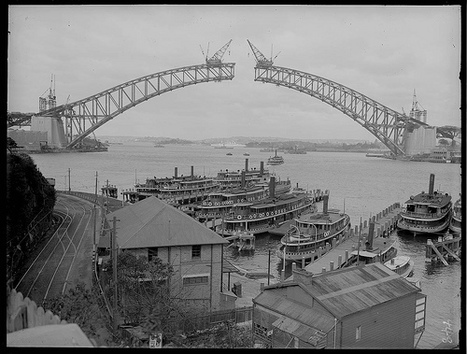
Teaching resources for Australian curriculum: history
Ideas, digital content, research and other resources that focus on teaching history in the primary classroom.
|
|
Scooped by
Catherine Smyth
June 17, 2013 9:00 PM
|
Scoop.it!
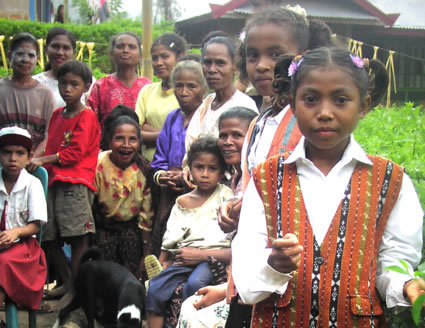
This module looks at the countries found in the Asia region and explores a range of places in China, Japan, India and Indonesia that are special to the people who live there.
This K-2 teaching resource has an Asian focus and introduces young children to countries in Asia, maps and special places in China, Japan, India and Indonesia.
|
|
Scooped by
Catherine Smyth
June 11, 2013 2:36 AM
|
Scoop.it!
Announcements and information updates from the NSW Board of Studies on HSIE K-6.
|
|
Scooped by
Catherine Smyth
May 29, 2013 1:41 AM
|
Scoop.it!
Active citizenship is an important goal of primary education and integral to HSIE K-6. These resources published by the Geography Association in the UK help scaffold the steps in planning a project.
|
|
Scooped by
Catherine Smyth
May 28, 2013 2:53 AM
|
Scoop.it!

This website aims to tackle racism in schools in Australia, through providing teachers, school students, parents and governors with games, research and lesson ideas that explore the causes and effects of racism for practical use in the classroom.

Resources from the NSW Department of Education and Communities to tackle racism in schools and communities.

This website contains different activities and fact sheets along with many other teaching resources to help educate children about racism.
|
|
Scooped by
Catherine Smyth
May 28, 2013 2:51 AM
|
Scoop.it!
Address racism in the classroom, media and wider society using resources from "Racism No Way" website. This checklist helps students analyse racism in media reports.

How do YOU address controversial issues (such as racism) in the classroom? This list is a fabulous starting point and can be adapted to suit different student year levels...Thanks to @SmythCatherine.
How do YOU address controversial issues (such as racism) in the classroom? This list is a fabulous starting point and can be adapted to suit different student year levels...Thanks to @SmythCatherine.
|
|
Scooped by
Catherine Smyth
May 22, 2013 1:54 AM
|
Scoop.it!

The GA supports primary and secondary geography teachers through teaching resources, geography journals, CPD events, Barnaby Bear, Worldwise and more.
|
|
Scooped by
Catherine Smyth
May 21, 2013 9:53 PM
|
Scoop.it!

There is a strong link between geography and play. Geography is simply a giant game of hide and seek. Mentally and physically we've always played the game. From our first smiles playing peekaboo to...
I love the forward -thinking and innovative play-based approach to geography in this blog!
|
|
Scooped by
Catherine Smyth
May 21, 2013 1:04 AM
|
Scoop.it!

Social: this article tells all about the lifestyle in australia ; including clothing, religion, food, and all other daily life activities

The inhabitants of Australia consist of a melting pot of old traditions and new influences and impulses. The country has a huge amount of different cultures and people from various countries. There are actually spoken as much as 200 different languanges. After 1945, there was a flow of imigrants who arrived Australia. Mostly europeans due to the war, and eventually also people from the Asia-Pacific region, The Middle-East and Africa. This made the population go from 7 million inhabitants to todays nearly 23 million. The mix of so many various cultures has made a huge impact on Australia, and has enriched it's culture to a large extent.
This article affect my view on Australia in a really positive way. It seems like a quite good country to live in. My impression is that all of the different cultures are accepted as a part of Australia, and that different people having different views and religions are respected. The fact that other languages than english are valued as well, may also help to maintain the wold's linguistic diversity.
|
|
Scooped by
Catherine Smyth
May 15, 2013 1:25 AM
|
Scoop.it!
Geography is the investigation and understanding of the earth and its features (ACARA Shape Paper: Geography). Retrieved from
http://www.acara.edu.au/verve/_resources/Shape_of_the_Australian_Curriculum_Geography.pdf
Geographical inquiry involves observation, questioning, planning, data collection, making sense of information, communicating and reflecting. This electronic bagpack is packed full of useful tools teachers can use to teach geography through geographic inquiry.
|
|
Rescooped by
Catherine Smyth
from HSIE Cultures of people in the local community
May 6, 2013 12:40 AM
|

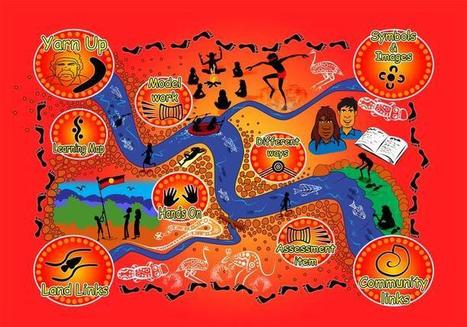
This website is fabulous resource for teachers to integrate Aboriginal pedagogies into their classroom. The 8 ways of Aboriginal learning will teach students about Aboriginal culture. There is a link on the website that teaches how to embed Aboriginal perspectives into the classroom. The first step looks at introducing storytelling or yarning and teaching the students how it is an important part of Aboriginal culture. Secondly, the idea of place is introduced and how a sense of place (physical and emotional) symbolizes Aboriginal identity. Another important aspect that is looked at is the use of symbols and how they contribute to identity. The link goes through each of the 8 ways and includes suggestions on how to integrate them.
A fantastic activity for the class would be to develop their own ways of learning based on the 8 ways. The 8 ways is about identifying local Aboriginal values, systems, protocols and processes and then integrating them into the classroom. The class could engage with the local Aboriginal community to create their ways of learning. This would teach the students about collaboration. It would also “ensure that Aboriginal voices are effectively incorporated into the curriculum” (Board of Studies, 2008).
Board of Studies. (2008). Working with Aboriginal Communities: A guide to community consultation and protocols. Retrieved from
http://ab-ed.boardofstudies.nsw.edu.au/files/working-with-aboriginal-communities.pdf

It is important to integrate Aboriginal ways and processes of learning into our classrooms also.
|
|
Rescooped by
Catherine Smyth
from HSIE Cultures of people in the local community
May 6, 2013 12:39 AM
|
Scoop.it!
Great ideas!
Worldwide culture swap is a fantastic example of how children can be educated about different cultures. Identity and cultural diversity is one of the five learning emphases of global education (Commonwealth of Australia, 2008). This website is a tool for children to learn about different cultures globally. The idea of the website is to link children, families or schools from across the globe. They send each other packages that represent their country. Examples of items that could be sent include letters, souvenirs, different food items, flags, drawings or photographs. Written skills and geographical skills are developed as well as creative thinking when deciding what items can be used to represent their culture.
This website looks at swapping cultures globally but it could easily be translated to a classroom culture swap. Each student could be asked to create a package from their background and present back to the class. This would educate students on the different cultures of people in the local community and how they contribute to Australian identity. If there was not a broad representation of the local community in the classroom, different cultures could be allocated to a group of students. The students would have to research that culture and prepare a presentation on their findings. They would be encouraged to identify linguistic and religious diversity and different customs that are followed.
Commonwealth of Australia. (2008). Global Perspectives: A framework for global education in Australian Schools. Canberra, Australia: Author.
|
|
Rescooped by
Catherine Smyth
from History and Geography Sites for ES1 & S1 teachers - NSW Curriculum
April 25, 2013 9:31 PM
|
Scoop.it!
Award-winning If the World Were a Village animation is available at http://www.cultureforkids.com. For more info visit http://www.master-comm.com for awards ...
Based on the picture book of the same title, this animation is likely to stimulate discussion and lead to an understanding of our interdependance on a global level.
|
|
Scooped by
Catherine Smyth
April 17, 2013 3:04 AM
|
Scoop.it!
This website, produced by the Australian Institute of Aboriginal and Torres Strait Islander Studies (AIATSIS), features a range of teaching resources, information and digital content for addressing Indigenous perspectives in the classroom. The content is categorised under the topics of 'Who are we?', 'Culture and Sport', 'Participation' and 'Resistance and Reconciliation'.

The Little Red, Yellow, Black Book provides an entry-point to Indigenous culture and history for everyone. The book introduces and covers most areas required for study of Indigenous Studies throughout Australia. It is particularly useful as it links to curriculum and provides guidelines for ethical research.
Content is divided into categories: Who are we?; Culture and Sport; Participation; Resistance and Reconciliation. If we take a further look at Steven’s model of framework (2005), we can see potential points and direction of the site through a case study of traditional Aboriginal hunting (http://www.culturalsurvival.org/publications/cultural-survival-quarterly/australia/traditional-aboriginal-hunting-australia-cultural).
To engage students, the class could divide into different groups to collaborate and research issues on the six themes (land, relationship, place, time, language, culture) to be presented either in class, at assembly, to the community, or via the internet (Youtube, website, blog). Students then effectively use a various selection of skills and strategies in interpreting written texts (RS2.6).
For example, students can look into:
Land – how the Aboriginal people act as one body and the importance of the land to Indigenous Australians. Students also evaluate how Aboriginal interaction with the land demonstrates responsible actions in caring for the environment (ENS2.6)
Relationship – Students look at the impact and significance of the historical relationship between both Indigenous and White societies.
Place – When studied alongside the case, students can relate and explore the place and positions of those affected by traditional hunting, and amateur hunting.
Time – Can you apply your knowledge of Australian history to this situation, and construe your own arguments for allowing traditional Aboriginal hunting in National Parks? If “time” is taken literally, students can construct a timeline by first modelling it with string and then by recreating through physical or ICT (UT S2.9). This involves strengthening their concepts of length (MS2.1) and time (MS2.5) An example of this: http://www.youtube.com/watch?v=GCFLGykMasI
Language – Language plays a large role in culture - it defines our sense of place. Students can partake in a debate where they discuss the pros and cons of traditional and amateur hunting. This allows students to understand and relate to the topic and thus gain an understanding of the civil rights of Australian Aborigines.
Additionally, students can learn words of the language and design posters to teach the class. In doing so, students can choose to create it via digital/ICT or handwritten means, encouraging better use of technology and/or handwriting presentation skills (WS2.12, UT S2.9).
Culture – Students can be asked to draw from their own cultural backgrounds and analyse the case study. They would be encouraged to bring in or talk about aspects of their cultural identity, and on some of the stories or tales which have been passed onto them. By teaching the importance of respect and understanding of various cultures, students should be able to understand and relate to Aboriginal and Torres Strait Islander cultures (CUS2.3, CUS2.4).
*****
Board of Studies NSW (2007). English K-6 Syllabus: B.O.S.
Board of Studies NSW (2007). Human Society and Its Environment K-6 Syllabus. Sydney: B.O.S.
Board of Studies NSW (2002). Mathematics K-6 Syllabus. Sydney:B.O.S.
Board of Studies NSW (2006). Science and Technology K-6 Syllabus: Outcomes and Indicators. Sydney: B.O.S.
Stevens, V. 2005. Embedding Indigenous Perspectives Model Framework. Unpublished Model Framework, Indigenous Intellectual Property [Powerpoint].
|
|
Scooped by
Catherine Smyth
April 16, 2013 7:10 PM
|
Scoop.it!
This vast anthology of texts published by the NSW Board of Studies targets the new English K-10 syllabus and is organised into categories including film, media, multimedia and digital texts. Each text has been mapped to the syllabus and, of special interest to HSIE, are the texts with an Aboriginal or Torres Strait Islander perspective, or books that emphasise environmental and social responsibilty.
|
|
Scooped by
Catherine Smyth
April 9, 2013 9:49 PM
|
Scoop.it!
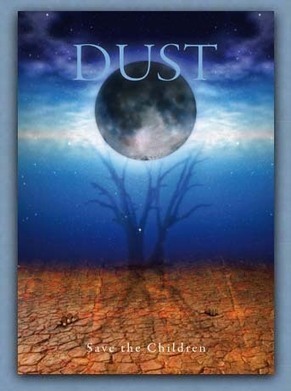
A picture book illustrated by 14 different artists to raise money for Save the Children
This is a confronting and powerful picture book that was inspired by the famine of Niger in 2005. The illustrations in the book were produced by different artists. The images deal with issues of starvation, famine and death, and some are very sad and upsetting. I would use the book with upper primary students who are learning about Aid, social justice or other global issues. Teachers could read it with younger children as well but I would be mindful that there might be a need to debrief and discuss feelings and thoughts that are provoked as a result. This book would be good to stimulate discussion about how our society deals with natural or manmade disasters and the role of different charities, governments and organisations in this.
|
|
Scooped by
Catherine Smyth
April 9, 2013 9:27 PM
|
Scoop.it!
Embed a global perspective using some of the ideas and resources on the World Vision website. Literacy and numeracy outcomes can be addressed through images, graphs, statistics, stories and videos. For example, in the Photo Kit: A Day in the Life of 5 Children, students are introduced to children around the world. There are five photos of each child, covering themes of school, home, chores and family. Students can develop skills of identifying and classifiying information from photographs and text.
Teachers can search for resources according to topics, year level, curriculum category, research type and region.
|
|
Scooped by
Catherine Smyth
April 8, 2013 9:24 PM
|
Scoop.it!

Australia's leading centre for craft and design, Object presents dynamic exhibitions, publishing, retail, digital and educational activities.
This innovative project introduces students to a different way of looking at the world. Using principles of design and design thinking methodology, primary students generate ideas and solutions around different issues. It sounds like a great idea to use in HSIE K-6. I am keen to learn more about the project and to see it working in the primary classroom.
|
|
Scooped by
Catherine Smyth
April 1, 2013 10:33 PM
|
Scoop.it!
The power of picture books shouldn't be underestimated. This blog has many suggestions on how to develop literacy skills through the use of picture books. I'd love to hear what picture books primary teachers are using in HSIE K-6. Please feel free to add a suggestion or comment.











This UK-based website of the United Nations Refugee Agency (UNHCR) has a range of resources relating to the plight of refugees around the world.