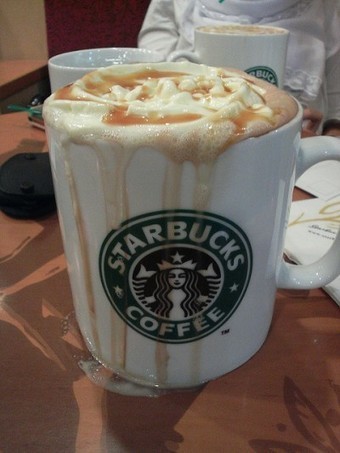
Over the past ten years, in order to achieve the growth… from less than 1,000 stores to 13,000 stores and beyond, we have had to make a series of decisions that, in retrospect, have lead to the watering down of the Starbucks experience…
It was midnight at the Omni Hotel on Amelia Island about 45 minutes from Jacksonville, Florida. I had just been dropped off by an Uber driver after a 4-hour
In the last few years I’ve noticed, as the popularity of the term “customer journey map” has grown, people has started pinning the term to different things, i.e. people call different types of map, customer journey maps. Of course this makes it confusing when you’re talking to someone about what you’re trying to achieved.
Customer Behavior - Marketers today are measuring not just quantity of visits but also attention from customers. Here are some recent stats about consumer attention and suggestions for measuring it.
Customer Relationships - Customer relationships can become brittle or fragile over time. You can measure and offset that brittleness in a variety of ways.
Tomorrow brings with it the end of summer, but I'll look back with fondness, as I gave birth to my daughter, Evelyn in July. While on maternity leave, I took note of some customer experiences that caught my attention--some that I praised and others that left me scratching my head.
Don't Talk, Chat: 4 Ways to Tailor Your Customer Service to Millennials Customer Think Brands concerned with customer service have responded to this generation's needs to the best of their ability… and have gone overboard in the process.
Customer Relationships - The small stuff that brands overlook in customer experience is usually big stuff in their customers' eyes. That small stuff can boost or destroy that relationship.
Since the beginning of time, humans have served as storytellers, passing tales down through the generations in an effort to preserve history. But as technology becomes ever more sophisticated, content marketers recognize storytelling as an opportunity to expand brand reach and strengthen customer trust.
Haven’t we all had those beyond awful customer service experiences? I recently had one of “those” experiences and was stunned that every interaction and communication with this major brand assumed that the customer was wrong and could not be trusted. It is shocking that this kind of behavior is still so pervasive today.
How many times has this happened to you? You settle into a comfortable booth at the hot new restaurant in town with your partner and two of her favorite friends who are in town, and after reviewing the mouth-watering menu the King salmon spoke to you. Your partner and her friends ordered other fascinating main courses and all of you decided to skip appetizers. The waiter departs quietly to enable you to get to know each other.
Twenty minutes later, deep in stories about how your partner met her friends, the server arrives and asks, “So who ordered the salmon?” All four of you stop, turn to him, and say at the same time, that you had ordered the salmon. Conversation flow, stopped.
Merchants must give people a reason to remain loyal to their brands—or risk losing the customers they worked hard to gain. Delivering an authentic brand experience, understanding and meeting your customers' needs, as well as making it easy for customers to interact with your brand are some of the critical factors for building customer loyalty, say industry experts. Here are examples of brands that are taking these lessons to heart.
You may think you know your customers, but according to a new study by IBM, nearly 80% of consumers stated that brands really don’t know them. By now you know that this is the age of the empowered consumer. You need your customers more than they need you, but if you don’t really know them, they will quickly find a competitor who does.
A few weeks ago my wife and I headed out for a date night to see the latest Mission Impossible movie (great movie BTW). So we had our popcorn bucket, planned to buy our drinks and such at the concession stand but stopped off at our local Walgreens to pick [...]
Companies have more data at their fingertips than ever, so why do online shoppers remain such a mystery? The solution begins with bringing all the information together to form a meaningful picture of the consumer. A McKinsey & Company article.
Many have stated that PEOPLE are the most important asset that an organisation has – I could not agree more. The most customer centric organisations in the world recognise and very much appreciate this fact.
Web Sites - Consumers say content errors and inaccuracies are the top issues that make them distrust a company's website, according to a recent report from Neustar and the Ponemon Institute.
Once again, time to discuss how to end bad customer service. Have you followed any of my first 6 rules in Part 1? I hope so, because I know they work. Strap yourself in; here’s Part 2.
To get content containing either thought or leadership enter:
To get content containing both thought and leadership enter:
To get content containing the expression thought leadership enter:
You can enter several keywords and you can refine them whenever you want. Our suggestion engine uses more signals but entering a few keywords here will rapidly give you great content to curate.




 Your new post is loading...
 Scoop.it!












Fascinating article -- very good questions to consider!