Alle goede dingen uit Italie! Zoals eten en drinken, mode, vakantie, bezienswaardigheden, delicatessen, producten, dienstverlening, design, kunst, made in italy, geschiedenis, trends, muziek, mensen, dorpen, steden e.d. Koop uw Italiaanse producten via www.goodthingsfromitaly.com
Why do Italian national sports teams mostly wear blue, rather than one of the colours represented on the flag?
According to their wonderful book Tutti i colori del calcio (All the Colours of Football), authors Sergio Salvi and Alessandro Savorelli acknowledge that although national teams generally wear strips based on the colours of their respective national flags, this is not always the case: The Dutch wear orange jerseys, the colour of the House of Orange-Nassau; the Germans wear white shirts, from the flag of Prussia; and the Slovenians green and white, the traditional colours of the capital city of Ljubljana. The Indians have an all-blue strip and the Australians green and gold!
The Italians' football and rugby (both codes) teams wear blue in honour of the House of Savoy, under whom Italy was unified in 1861.
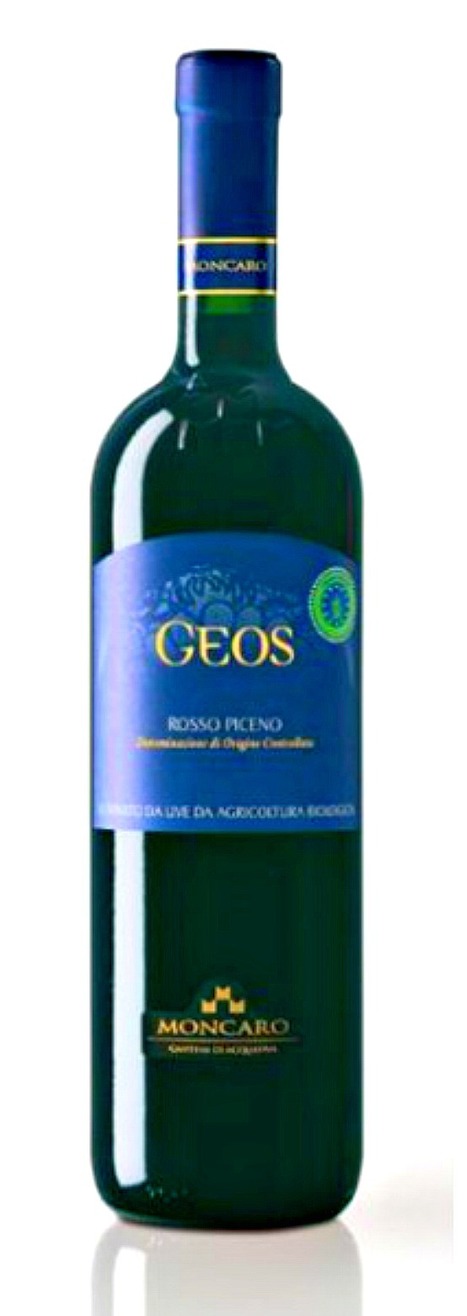
Vineyards - Growing area: the Marche, in the province of Ascoli Piceno. Location: the vineyards are sited nearby Acquaviva Picena town and are cultivated by using the biological techniques. Age: varies from 8 to 30 years. Soils: derived from alluvially-deposited seabed sediment, predominantly Plio-Pleistocene and Miocene, with predominance of sand and rock sloping down to the coast. Aspect and elevation: on sunny hills at 200-350 m. Grapes: 60% Montepulciano, 40% Sangiovese. Training system: guyot and double guyot. Vineyard density: 2.500-4.000 vines per hectare. Yield: 100 q of grapes. Harvest: hand-picked. Vinification: fermentation at controlled temperature, maceration on the skins in steel tanks with daily pumpovers. Maturation: partly in French oak barrels for 4 months Appearance: ruby red colour tending to garnet at the rim. Bouquet: soft fruit, well-ripened cherry melding impressively into subtler impressions of violet. Long and intense. Palate: dry and sapid, its supple tannins and the alcoholic warmth create an admirable balance. Cellaring - Its obvious youthful qualities best suit it to be enjoyed during its first year, but it give considerable pleasure even after 3-4 years. Serving suggestions - Tomato sauce and ragout pasta, very good with bolognese lasagne and macaroni timbale. Perfect with porchetta (roast whole pig), shank of pork and veal stew. Serving temperature - 16/18° C. Alcohol: 12,5% vol.
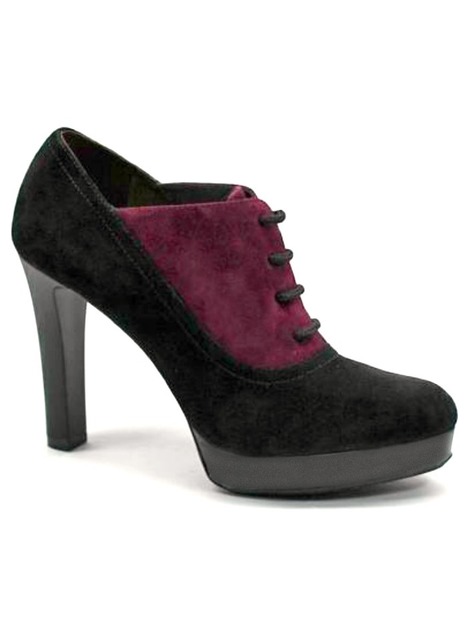
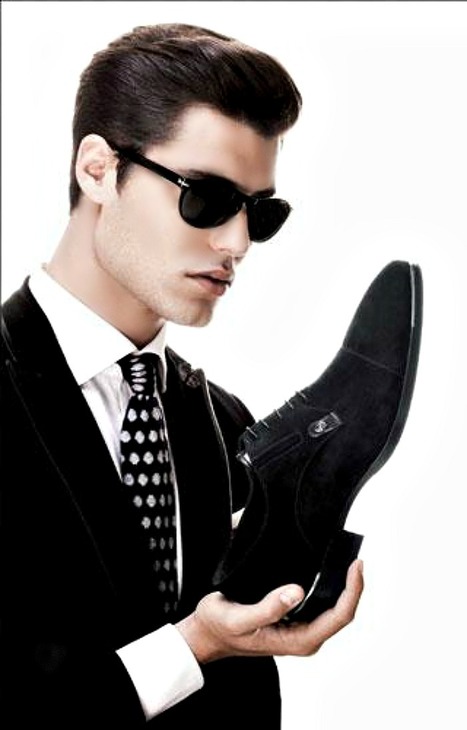
In 1982, Luciano Manni founded a small family business, LARA MANNI able to conquer in few years a relevant role inside the shoe market. LARA MANNI combines high-quality design and flawless crafting, great attention to aesthetic and functional details.
Very few wine producing nations bring as much panache to their tastings as do the Italians.
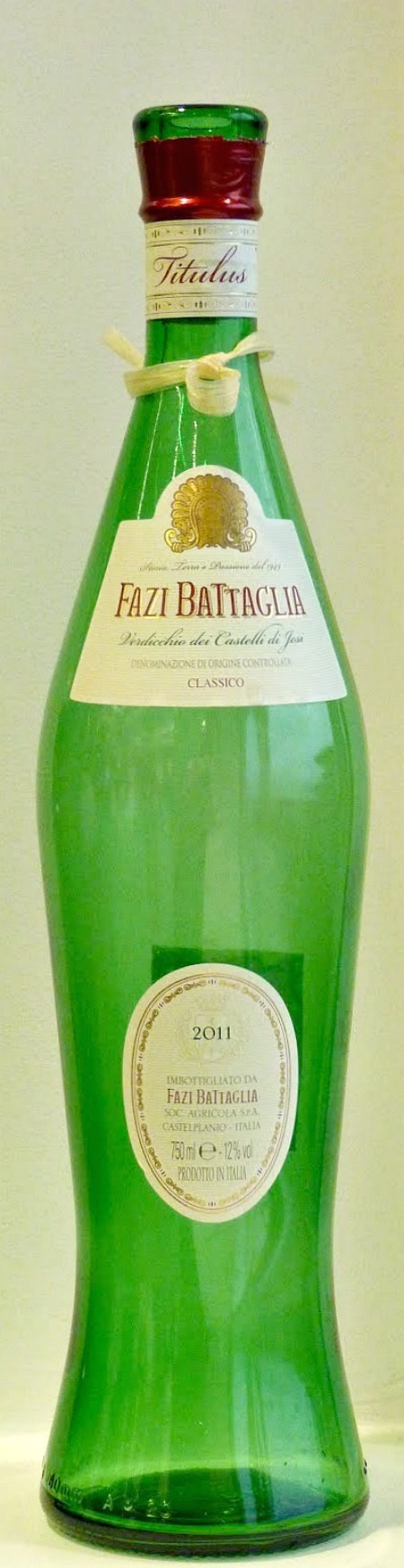
The Italian Trade Commission recently sponsored its ninth annual tasting in Vancouver.. The Italians have sponsored tastings in Toronto and Montreal for 19 years; those cities are the major Canadian markets for Italian wine. In the last decade, Italy has made more of an effort in Western Canada as well, trying to win away consumers that buy most of their wine from Australia, California, South America and British Columbia. Perhaps half of the 37 wineries at the Vancouver tasting have no wines in the market. Those wineries were looking for agents and listings in the BC Liquor Distribution Branch. The LDB currently lists 460 Italian products, including multiple sizes and fortified products. Sales of Italian wines in British Columbia in the 12 months ended September 30 totalled $59.2 million, up five per cent from the previous 12 months. It is a sliver of the market. The LDB’s total sales in the same 12 months were just under $3 billion. But the Italian sliver is worth exploring, to discover the excellent “new world” styling of the wines. In the past decade or two, Italian producers have really raised the bar. And they are doing it with varietals that grow primarily in Italy. The taste profile of Italian wines is a refreshing change to palates that may have become jaded with Merlot and Shiraz. Their edge comes from using varietals not even grown in much of the rest of the wine world. When you add those novel flavours to modern wine making, you get crisp, fresh whites without a trace of oxidation and you get juicy and appealing reds without the hard tannins of yesteryear. Italy still offers the familiar brands that have been on the market for years and years, but made to improved quality standards. One example is a 45-year-old brand, Fazi Battaglia Verdicchio Classico ($14.99), a crisp, refreshing white still being sold in the green hourglass shaped bottle. Many of us bought it initially because the bottles, like the Chianti in the “fiasco” served well as candle holder. Fazi Battaglia is an example of why the Italians are competitive. Verdicchio is an ancient variety that is planted widely in central Italy but hardly anywhere else. The LDB’s tasting notes speak of flavours of baked apple, hazelnut and ripe melon. The wine is light but it has its own personality... ...The bottom line is that the Italians, by adopting cutting edge winemaking techniques but not jettisoning their traditional varietals, are producing wines that are unique.
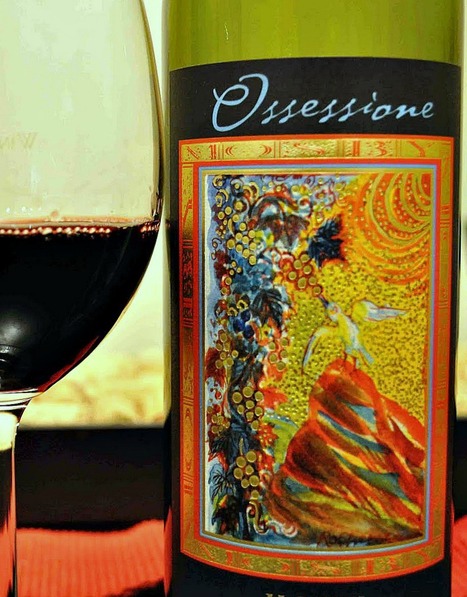
Mosby Winery in Buellton, CA makes exclusively Italian varietals in the classic styles of their origins. Ossessione, that has an incredibly artistic and beautiful label made by the artist named Robert Scherer, is a true Italian import with the grapes coming from Marche, Italy near the Adriatic Sea. True to its heritage, Ossessione has brilliant ruby color and an intoxicating nose with perfume-like notes of woodsy sandalwood, brown spice and maple. Flavors, of dried red currant and spice finish with medium tannins and a hint of vanilla. The wine is ready to drink now, and would paor very well with roasted meat dishes or a selection of Italian cured meats served in the antipasti style.
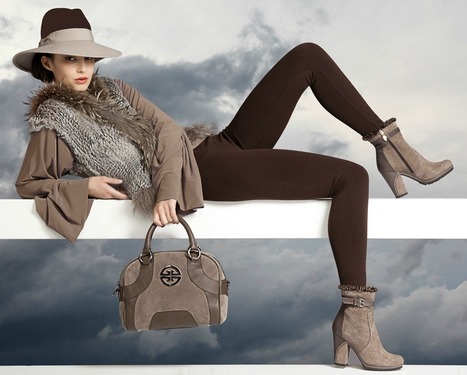
PAPRIKA means fashion and stylish Italian creativity, contemporary designs and intriguing femininity. PAPRIKA clothes and accessory are made with a genuine passion for quality and elegance, attention is paid to every little detail, from the mood of collections to the selection of materials, from the design of garments to the choice of combinations and finishes. PAPRIKA’s success is based on the continuous development of trendy new ideas. The products reflect a way of living and dressing that is focused on comfort and refined, essential taste.
PAPRIKA is a project with a heart that’s one hundred percent Italian. Italians are the stars who fashioned this entrepreneurial success and Italian is the craftsmanship that created the products, the clothes and the accessories. Every item of clothing is given the utmost care down to the smallest detail. The materials chosen are of absolute quality and the clothes, bags and hats are all exclusively made in Italy, as is the entire creative, production and commercial process of the brand.
More places in Italy you might not want to visit this Halloween
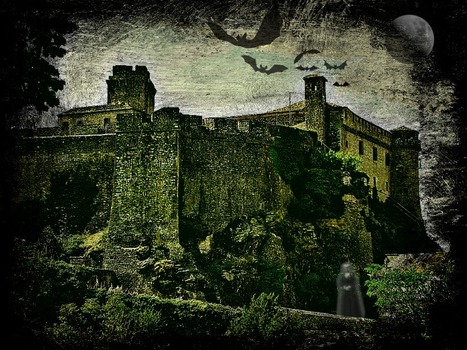
There are lots of eerie places in Italy: the catacombs in Palermo with its creepy mummified children, virgins and a few elderly people suspended from the walls. Then there’s the Capuchin Crypt in Rome with the bones of 4,000 monks on display. But those are mere child’s play compared to Italy’s supposedly haunted and appropriately gloomy medieval castles. Here are a few eerie stories to help breed some terrifying nightmares.
The Lady With Big Boots
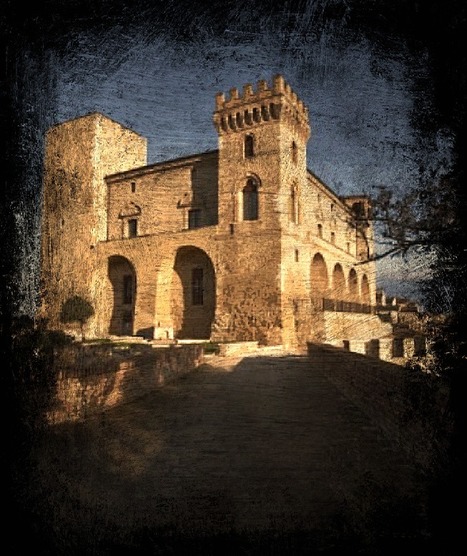
Crecchio Castle (Castello di Crecchio in the photo) in Abruzzo was built in the 11th century. According to many accounts heavy footsteps can be heard on the top floor, as a beautiful woman, probably wearing big boots, walks through the castle’s rooms. The woman with the heavy footsteps is supposedly the mistress of Baron De Riseis, who lived in the castle in the 19th century. I was in the castle one evening during a local festival, but all I could hear were the noises of real people on the streets. Some passages and corridors did look quite spooky in the flickering lights.
The Girl With Blue Hair
The legend of Azzurrina has been known in the area near Rimini for many centuries. In the 14th century there was Guendolina, a girl-albino with snow-white hair in the Montebello castle (castello di Montebello). Her parents were worried about the popular superstitions according to which albino-people were somewhat demonic. The father didn’t allow the girl to leave the castle and the mother coloured Guendolina’s hair dark but it always looked as blue as her eyes, so she was nicknamed Azzurrina (“azzurro” means “blue”). One day, on summer solstice, while playing in the basement of the castle, blue haired Guendolina disappeared. Some said her the father killed her but her body was never found. Now, apparently, every five years on June 21, people hear a strange sound in the castle: the sound of a girl crying, shouting for help and calling “mamma”. You can hear the recordings of the Center of Para-psychological Studies in Bologna here (fast-forward to 6:50). Or visit the castle during one of their late night tours. Wooooooo!
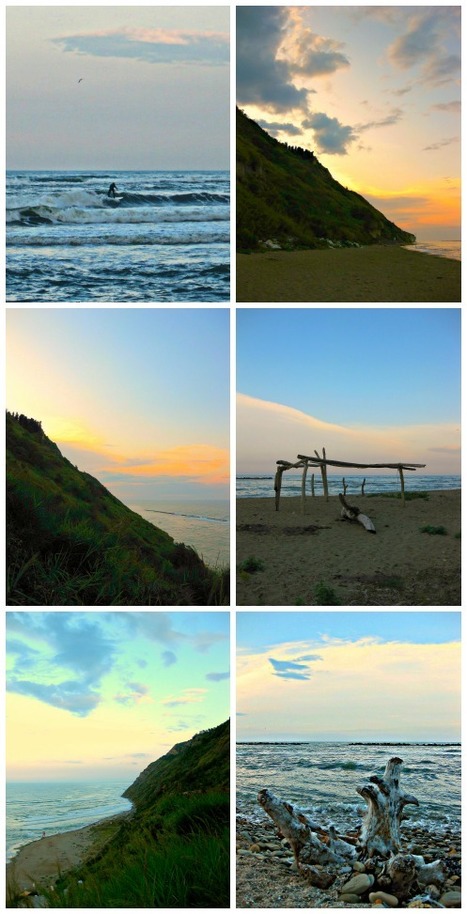
Subito a nord del porto di Pesaro s'innalza l'ultimo promontorio della costa occidentale adriatica, dopo di che la Riviera Romagnola e le limacciose spiagge della Pianura Padana, perlomeno fino a Trieste. Piuttosto che un singolo rilievo, si tratta di una fascia collinare a ridosso del mare, un susseguirsi di frastagliate falesie e minuscole valli. Le cime principali del sistema toccano appena i 200 m s.l.m., il rilievo maggiore è il Promontorio di Casteldimezzo (203m) ma ad essere più conosciuto è il Colle San Bartolo (201m), un picco a strapiombo sul mare dal quale prende nome il parco naturale che tutela l'area. Grazie a questo ente, un'area di grande pregio paesaggistico-naturalistico è stata salvata per il momento da speculatori di ogni sorta, ricconi con manie di onnipotenza e la progressiva cementificazione dovuta dall'espansione degl'ingombranti centri urbani che la circondano. Il territorio del San Bartolo è senza dubbio la perla del territorio pesarese!
La Piccola e graziosa battigia di Fiorenzuola di Focara.
L'unico modo per raggiungere via terra questo spicchio di costa è percorrendo a piedi una stradina ben asfaltata che dal borgo medievale di Fiorenzuola, scende giù per la falesia con interminabili serie di tornanti fino al mare.
Leggi tutto
Qualche foto...
La sera vista dal colle di Fiorenzuola di Focara. La piccola spiaggia protetta dal promontorio. la sera attraverso la falesia che cade in mare. I tronchi utilizzati dai bagnanti per creare suggestivi ripari in stile naufrago. Legno, acqua, e i tipici sassi delle falesie del San Bartolo. Serfista mentre cavalca la sua onda.
Via Mariano Pallottini
In the name of Italia Tartufi there is enclosed the whole story of a family all dedicated to the searching for truffles. The origins tell of grandfather Tarquinio who, moved by a passion for the pursuit of the delicious tuber, rized every morning with his dog Ufo to get in the woods of oaks and poplars. Every discovery was a party for him, sure the wife Italia would have been happy to prepare a convivial lunch for their children and grandchildren.
Products
White Truffle - Tuber magnatum pico: Available from October 1st to December 31st. Black Truffle - Tuber Melanosporum Vittadini: Available from November 15 to March 15. Black Truffle Uncinato - Tuber uncinatum Chatin Vittadini: Available from October 1st to December 31st. Black Summer Truffle - Tuber aestivum Vittadini: Available from 1 June to 31 August. Bianchetto - Tuber Borchii Vittadini O Tuber albidum Pico: Available from January 15 to April 15. More Products
Via Mariano Pallottini
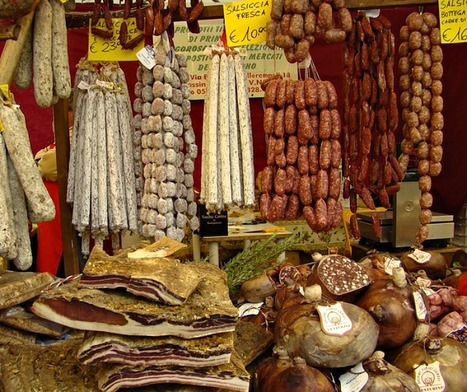
From Rome to Florence, one of the most exciting, and authentic, aspects of Italy’s cities have to be their food markets. Whether they’re selling produce, fish, meat, or (like usually!) all of the above, these food markets—usually featuring lively, yelling vendors and bustling, local shoppers—are a gem. (They’re also one of the best ways to get to know the region’s local food culture, and to figure out what’s in season!). And unless you’re with a local, you don’t always know about them! But we can help.
Here are five of our favorite markets in Rome, Florence, Venice, and more!
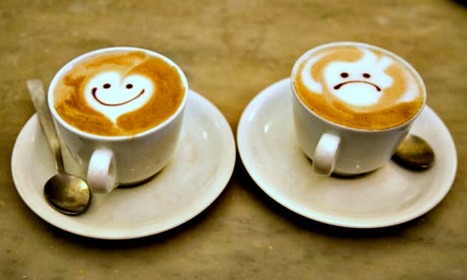
Having a cappuccino after a meal in Italy isn't considered sacrilege or barbarism or heresy or a crime, though you can be forgiven for sometimes getting an impression of that sort. No, it's simply un-Italian. The Italian reaction to this visceral affront can go from stoic forbearance to a furrowing of the brow, right to hyenic derision or a theatrical churning of the stomach.
Cappuccino here is generally considered a breakfast component, very often taken with a brioche – the now staple Italian breakfast – and most typically in a bar or cafe. Cappuccino can also be had as a snack in between meals, but never after one.
Simply put, ordering a cappuccino in a pizzeria is like yelling out for a bowl of breakfast cereal. You wouldn't do it. Would you?
Italy is home to large amount of grape varieties. Sangiovese, Barbera and Montepulciano d’Abruzzo are well-known throughout the world and are the basis for many fantastic wines. Most known where these grapes are grown but what is with Fiano d’Avellino, Vermentino, Aglianico or Corvina? The latter one for example is the basis for all Amarone wines.
Here is an alphabetical list most Italian grape varieties. The most important ones are highlighted.
Albana (white)
Native grape of the Emilia-Romagna. Albana di Romagna DOCG is famous throughout Italy.
Aglianico (red)
Primarily grown in Campania and Basilicata. Aglianico del Vulture DOCG is a stunning wine from Basilicata.
Aleatico (red)
Often found in Puglia and other Southern Italian regions. Many desert wines are made from this grape.
Arneis (white)
This grape has its home in Piedmont. Mostly grown in the hills northwest of Alba. Roero DOC wines made with Arneis are usually dry, full body white wines. Grappa is also manufactured from Arneis grapes.
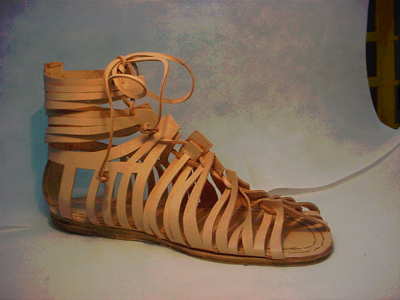
What did the ancient Romans wear on their feet? That’s what Anna asked herself. Drawing on stimuli from the impressive Roman ruins of “Urbs Salvia”, she tried to find an answer taking into consideration the fact that the Romans covered far more ground on foot compared with most people these days. In order to walk such enormous distances, they had to have had very comfortable and hard-wearing shoes.
The Lucina Calzature project was developed in order to offer a product which could best satisfy our millennia long desire for well-being and comfort. The realisation of the Lucina line of footwear has applied as philological an approach as possible in two main aspects: the basic material to be used, and the production technique to be followed. These questions were analysed on the basis of bibliographic knowledge of a historic and archaeological nature, and of noted information of literary and iconographic sources. The method of work followed, which may be defined as experimental archaeology, has allowed the production of goods which, although by form may be compared with the footwear of Roman times, they still respect modern day needs.
Its amazing how people today still use the same design to make shoes as the romans did so many years ago. It really stands as a testament to Roman ingenuity and engineering.
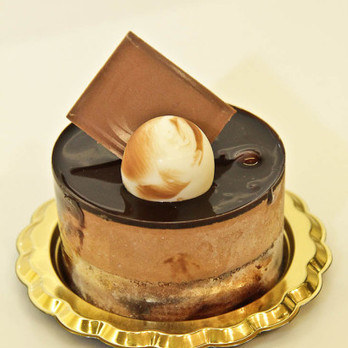
Pasticceria Cioccolateria Dal Mas a Venezia: storica pasticceria di produzione propria che dal 1906 vizia veneziani e passanti, ha di recente annesso una cioccolateria.
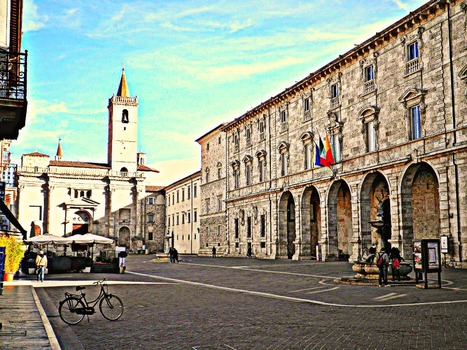
This is the diary of a visit to Ascoli Piceno. The article starts with a sort of neutral feeling of somebody don't know what to expect. In the end, these are the enthusiastics words used: <<<I left Ascoli Piceno with a feeling of contentment. I had seen some wonderful art and a beautiful old town that had retained its Medieval and Renaissance architecture whilst not seeming like a living museum. As we neared the train station with the sun setting and the chill creeping upon us I had made my first successful and enjoyable foray into the Marche region of Italy.>>
Read the full article - Curated by Mariano Pallottini
Giovanni Giusti is located in Le Marche in central Italy and it is a footwear brand known since 1964.
The company specializes exclusively in manufacturing women's shoes and handbags. Giovanni Giusti launches two seasonal collections per year.
Special attention to innovative natural materials and original fittings has proved to be the brand hallmark. Giovanni Giusti designers have succeeded in balanced combining fashionable style and everyday comfort.
Brand styles are produced in Italy and certified 100% made in Italy.
Dino Bigioni Shoes: Italian as no-one else. Even though the company's capacity has expanded, reaching an annual output of 120,000 pairs, its founders mission still remains: the production of “handmade” Italian footwear, based on a completely in-house production cycle, the careful selection of materials and the greatest attention to details.
Recanati (Macerata) October 29 - Italy's top heritage organization is collecting votes on whether it should protect two places that inspired a couple of great 19th-century poet Giacomo Leopardi's best-known poems as part of its Places of the Heart collection.
The Fondo per l'Ambiente Italiano (FAI) says that until November 30, fans of Leopardi can vote to protect the Colle dell'Infinito (Hill of Infinity) and the Piazzuola Sabato del Villaggio in the Romantic poet's Marche home village Recanati. The FAI works to preserve sites all over Italy that are deemed to be important to Italy's artistic and natural heritages.
The home where Leopardi was born in the late 18th century in Recanati is already a heritage site with a museum.
From there, visitors can follow some of his favourite walks, including the picturesque piazzuola (small piazza) and the Colle looking out over the rolling Marche landscape.
The two odes, 'L'infinito' and 'Il sabato del villaggio', are among Italy's most popular poems and are learned by generations of schoolchildren.
Jarrett Shoes for children provides a large range of models right for different needs and use: from ceremonial to sporty, from mocs to boots, from sneakers to flats and ankle boots. Created to provide different looks every day in mind: trendy, classic, elegant, casual, informal, sporty and mainly comfortably. Jarrett's shoes are totally made in Italy and are characterized by high quality materials and new leather for children who want move with men/women's fashion trends.
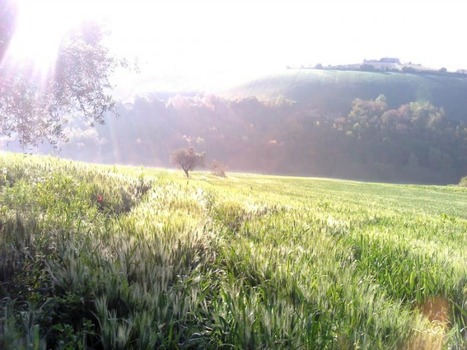
Description - We are an organic farm in the picturesque area of Le Marche Italy. We generally produce pasta wheat, sunflower seeds, olive oil and grapes for juice. The farm is 15 mins to the seaside and 35mins to the mountains. Before farming I worked in the music world touring bands, I still do a bit now and then. Area - Le Marche Type of work - Animal care, Farming, General Maintenance, Gardening Work - In the winter months we start pruning the vines and olive trees. This year we hope to demolish a section of our vineyard as it has become to old to cultivate and replant a new one. There is also a vegetable garden to regenerate. As you would expect these are weather dependent activities but you will be surrounded by beautiful countryside. Other than that general small scale farming which can be varied but generally not too strenuous (the tractor does that!) More a case of keeping it tidy and productive Languages spoken - English & Italian Accommodation - We operate a high quality holiday 3 bedroom apartment for tourists in the summer months but out of season it is vacant. It does have central heating, lounge, kitchen, bathroom, tv/hifi and internet. Seasonal veg depending what we have in the garden. Bikes are available and BBQ. What else - If you have no transport I can take you around and about. We are reasonably served by a good bus service and trains are 15 mins from the house to all parts of Italy. Click for more
Via Mariano Pallottini
Are you brave enough to visit these spooky locations in Italy on Halloween?
Have you ever felt scared while in Italy? There are places in Italy that will really send shivers down your spine and turn your hair white with fright. Halloween is upon us, so here are some spooky Italian locations to scare you! Visit them if you dare!
The Island of Death
Have you every heard of Poveglia Island? It lies in the Venice’s Lagoon? It is almost impossible to find a boat operator who will take a curious tourist there. Guide books describe the island as “not visitable”. In the area, where property costs an arm and a leg, Poveglia remains uninhabited, with only a few old buildings rotting slowly away and ghost stories aplenty. A forbidding place, if ever there was one, and here is why:
In the 15th – 16th centuries, when Europe was ravaged by plague, travellers arriving in Venice were placed in quarantine on the island. During epidemics the sick were shipped to die on Poveglia and their bodies were burnt in mass graves. Some say that as many as 160,000 people were buried there! Most of the graves remain untouched by archaeologists. Although in 1922 an asylum for the insane was built on Poveglia, nowadays nobody seems to want to build on the island despite its spectacular views of the lagoon. I wonder why? Sounds like an ideal spot for a Halloween party!
The ghost of love
Bardi Castle (Castello di Bardi) near Parma is supposedly one of the most haunted castles in Italy. The legend goes that in the 14th century a young officer called Moroello fell in love with Soleste, a beauty from a local noble family. The couple couldn’t display their love in public as Moroello was not of high enough standing and Soleste’s family would never have given the couple permission to marry. When the young officer left for a battle, the fair Soleste awaited his return on the walls of the castle. One day, after more than a month of waiting, Soleste saw a group of soldiers approaching the castle. They carried the enemy’s flags. Thinking that her lover had been killed, Soleste jumped off the high castle wall to her death. However the men were Moroello’s triumphant soldiers who were showing off the insignia of the army they had just defeated. When the Moroello found out what happened to the love of his life, he decided to join her and promptly threw himself off one of the castle’s towers. To this day the ghost of Moroello wanders the castle grounds trying to find Soleste. Full article
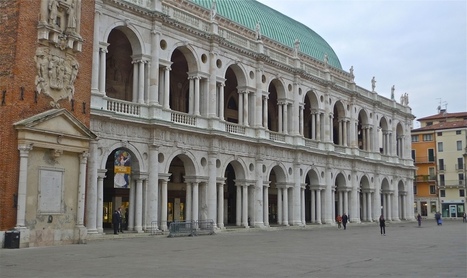
Widely considered to be the most influential individual in the history of Western architecture, Renaissance master builder Andrea Palladio created an architectural style known the world over as Palladianism.
The epicenter of his life’s work is stunningly on display in Vicenza — City of Palladio — in the Veneto region of northeastern Italy.
I can’t think of a better way to show you around my adopted hometown than via a “virtual” walking tour. Are you up for it? Great! Let’s head out.
Within the historic city walls, 23 individual buildings or sections of buildings were designed, reconstructed or attributed to Palladio. Among these is the just-restored Basilica Palladiana. We’ll stop here now, and save the other 22 sites for future passeggiate (walks).
Standing ornate alongside Vicenza’s “living room” — Piazza dei Signori — the Basilica was originally constructed in the 15th century as the Palazzo della Ragione where it housed the seat of government on the mezzanine and private enterprise on the ground floor. When part of the building collapsed, Palladio was commissioned by the Council of One Hundred, in 1549, to breath new life into it.
Savor Susan Van Allen's entertaining anecdotes and practical details as she takes you up and down the beautiful boot to immerse yourself in Italy's pleasures. Discover such delights as masterpieces that glorify womanly curves, the palace where Audrey Hepburn lived in Roman Holiday, gardens where courtesans once frolicked, spas for pampering, beaches for relaxing, wine bars and jazz clubs, adventures where you'll be making tortellini with grandmas, shopping for Italy's prized ceramics, skiing in the Dolomites, or setting up an easel to paint a Tuscan landscape. No matter your mood, even if you're simply armchair traveling, Italy awaits.
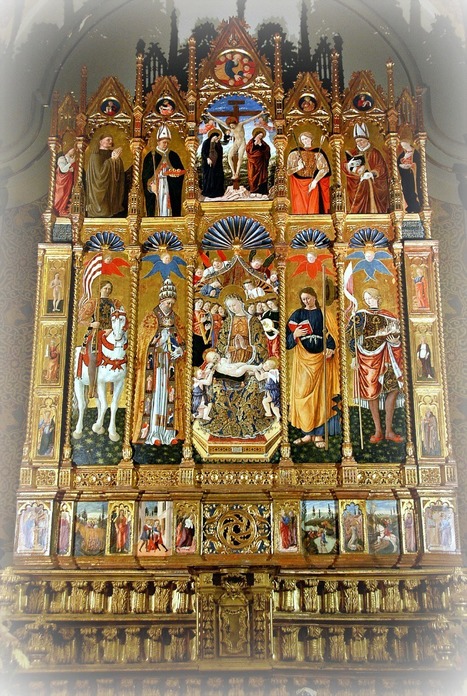
The polyptych of Belforte is one of the most mature works created by Giovanni Boccati who wanted to merge the memories of late gothic precepts with Renaissance influences. Boccati has given to the Saint Eustace church a fascinating masterpiece in gothic carpentry. Aware that the territory offers several examples of that so-called shady Renaissance, you must visit Belforte del Chienti to taste the symbolic art and the sumptuousness of the spiritual world of the time in a composition made up of deeply interlinked and inseparable elements. As the inscriptions read, the polyptych was made by Giovanni Boccati da Camerino in 1468 for the high altar of the Belforte church and commissioned by Taliano di Lippo, in accordance with the prior and the notables of the time. The whole complex celebrates the figure of Saint Eustace, who was the patron of the town and after whom the church had been named. His story is drawn from the Golden Legend, a collection of hagiographies written by Jacopo da Varazze in the eighteenth century, and can be read, counterclockwise, in the four panels of the predella.
To get content containing either thought or leadership enter:
To get content containing both thought and leadership enter:
To get content containing the expression thought leadership enter:
You can enter several keywords and you can refine them whenever you want. Our suggestion engine uses more signals but entering a few keywords here will rapidly give you great content to curate.


 Your new post is loading...