Solid tumors: latest on treaments and research pathways

glioblastoma, craniopharyngioma...

Your new post is loading...

Glioblastoma Multiforme Defined

In evaluating the varied kinds of brain cancers, you’ll discover that glioblastoma multiforme is taken into account to be absolutely the most malignant. One of these tumor is taken into account to be an Astrocytoma based mostly tumor. Glioblastoma multiforme is a kind of tumor that has been discovered to develop within the brain. It’s also known as GBM for brief.
No comment yet.

Celldex Announces Completion of Enrollment in Phase 3 Study of Rindopepimut in Frontline Glioblastoma

Three Phase 2 trials of rindopepimut—ACTIVATE, ACT II, and ACT III—have been completed in newly diagnosed EGFRvIII-positive GBM and have shown consistent improvements in both overall survival and median progression-free survival. The most common adverse events for rindopepimut include injection site reactions, fatigue, rash, nausea and pruritus. Rindopepimut is currently being studied in two clinical trials in EGFRvIII-positive GBM—an international Phase 3 study called ACT IV in newly diagnosed GBM and a Phase 2 study called ReACT in recurrent GBM.
No comment yet.

2 knock-out punches delivered to glioblastoma cells by orphan receptor proteins

Two related proteins exert a lethal double whammy effect against glioblastoma cells when activated with a small molecule, say researchers at Georgetown Lombardi Comprehensive Cancer Center.
No comment yet.

Early Trial Underway Testing Brain Cancer Drug

Kinex says in preclinical tests KX2-361 clears a wide range of brain tumor cells, including tumor cells resistant to common chemotherapy drugs, in 30 to 60 percent lab animals after 4 weeks of treatments. In these tests, KX2-361 induces more cancer cell death than chemotherapy drugs, and also generates an immune response to glioblastoma. In addition, the tests indicate the drug is absorbed when taken orally and achieves 75 percent penetration into brain tissue.
The company licensed KX2-361 to XiangXue Pharmaceuticals in Guangzhou, China for commercialization in China. XiangXue says it expects to begin an early-stage trial of KX2-361 in China following approval from regulatory authorities.

No comment yet.

Olanzapine inhibits proliferation, migration and anchorage-independent growth in human glioblastoma cell lines and enhances temozolomides antiproliferative effect

The authors previously hypothesised that the neuroleptic olanzapine may enhance antineoplastic effects of temozolomide the standard chemotherapeutic agent used in this disease. This study tested this hypothesis. The data show that the neuroleptic olanzapine enhances the anti–tumor activity of temozolomide against glioblastoma cell lines. Moreover, this is the first study to show that olanzapine provides on its own anti–cancer activity in glioblastoma and thus may have potential for repurposing.
No comment yet.

Glioblastoma (GBM)

Sections show the specimen to consist predominantly of necrotic tissue, in areas containing viable glioma that is high grade. The tumor cells display small cell morphologic characteristics, possible oligodendroglial features, and astrocytic elements with a fibrillar appearance. Mitotic figures are identified. Vascular proliferation is observed, including glomeruloid aggregates proliferating capillaries. As previously mentioned, tumor necrosis is extensive. Abnormally large ectatic vascular structures are also seen, and are consistent with a vascular malformation. Several vessels are thrombosed.
No comment yet.

Glioblastoma brain tumors treated with promising new technique

Tough-to-treat glioblastoma brain tumors may have met their match in a promising new treatment that “hijacks” what makes the deadly cancers spread so easily, turning that mechanism against the cancer itself.
The new treatment approach keeps cancer drugs out of the brain by directing tumor cells along an artificial track that leads them to tumor drugs, sparing healthy brain tissue that’s often damaged by treatment.

No comment yet.

Promising New Treatment for Glioblastoma

Glioblastoma, the most common type of brain cancer, is notoriously difficult to treat. Surgery and radiation are usually the first course of action, but the cancer often comes back. Now patients have a new option that is less invasive than surgery especially for hard-to-reach tumors and those that come back after initial surgery, called laser ablation.
After creating a dime-sized hole in the skull, the doctor threads a fiber optic cable into the area of the brain that contains the tumor with the help of a robotic device. Then he turns on a laser that heats the tumor until the cancer cells are killed.
No comment yet.

Gliomas and the vascular fragility of the blood brain barrier

It has been one hundred years since Edwin E. Goldmann discovered the blood-brain barrier (BBB). Using trypan-blue dye intravenous injections in several animals, he observed that it spread throughout the body, except for the brain and spinal cord, which remained unstained. When trypan blue was injected into the subarachnoid space at the lumbar level, or in the cisterna magna in young rabbits, the Central Nervous System (CNS), including the choroid plexus (CP), were stained (Goldmann, 1909; Bentivoglio and Kristensson, 2014), confirming the presence of a previously unknown barrier between the blood and CNS structures.
Krishan Maggon 's curator insight, December 15, 2014 4:03 AM
Front. Cell. Neurosci., 12 December 2014 | doi: 10.3389/fncel.2014.00418Gliomas and the vascular fragility of the blood brain barrierLuiz Gustavo Dubois1†, Loraine Campanati2†, Cassia Righy1, Isabella D’Andrea-Meira1, Tania Cristina Leite de Sampaio e Spohr1, Isabel Porto-Carreiro1, Claudia Maria Pereira3, Joana Balça-Silva4, Suzana Assad Kahn1, Marcos F. DosSantos2, Marcela de Almeida Rabello Oliveira5, Adriana Ximenes-da-Silva5, Maria Celeste Lopes4, Eduardo Faveret1, Emerson Leandro Gasparetto1 and Vivaldo Moura-Neto1,2*

NewGen Therapeutics Targeted Anti-Cancer Drug, NT-113, Demonstrates Compelling Activity in Glioblastoma Xenograft Models

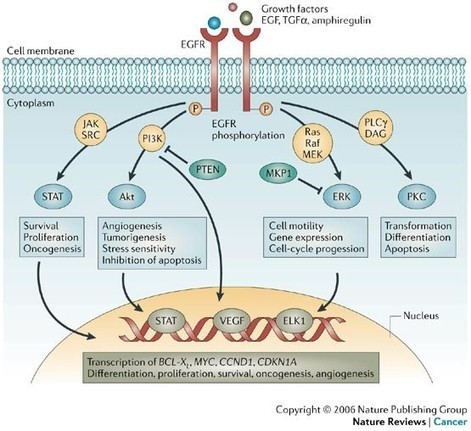
Researchers demonstrated that NT-113 was active against a variety of patient-derived GBM xenografts in which EGFR is amplified, overexpressed and/or expresses the disease-driving EGFRvIII mutation. In studies of intracranial mouse xenografts comparing NT-113 to the approved anticancer therapeutics lapatinib and/or erlotinib, NT-113 was associated with statistically significant improvement in survival. NT-113 both reduced tumor cell proliferation and induced apoptosis (controlled cell death). In previous pharmacokinetic studies, NT-113 demonstrated a long half-life and a high propensity to cross the blood brain barrier.

No comment yet.

Electrical scalp device can slow progression of deadly brain tumors

Maureen Piekanski, who has used an electrical device since 2011 to keep a brain tumor at bay and has far exceeded the 15 months doctors expected her to live after she fell ill, at her home in Throop, Pa., Nov. 14, 2014. Researchers have found that the device, which generates alternating, low-intensity electrical fields, so-called tumor-treating fields, can slow cancer growth and prolong survival in people with glioblastomas, the deadliest type of brain tumor
No comment yet.

Glioblastoma Multiforme Therapeutics in Major Developed Markets to 2020

The Glioblastoma Multiforme (GBM) treatment market is forecast to grow rapidly from $301 million in 2013 to $623 million by 2020, at a Compound Annual Growth Rate (CAGR) of 10.9%. Such significant growth comes despite the patent expiration of Temodar (temozolomide) and will be driven primarily by the market entry of the DCVax-L vaccine. This follows clinical trials showing that DCVax-L produces an Overall Survival (OS) of around 2.3 times longer than the current standard of care for newly diagnosed patients. Report Information
No comment yet.

How Avastin® (bevacizumab) treatment is given in rGBM

Avastin is given as an infusion. That means you receive Avastin through a small needle in your vein or through a port, which is a device placed under your skin.
Because Avastin is given as an infusion, infusion reactions may occur. Avastin infusions will be stopped by your doctor or nurse if infusion reactions are severe.

No comment yet.

Now an enzyme bullet to hit glioblastoma

An enzyme key to the survival and spread of glioblastoma cancer has been identified by a team of multicenter researchers. Since this enzyme is absent in healthy brain cells, it presents a promising target for ant-cancer drugs.
No comment yet.

Update on the measles virus, a novel therapy for glioblastoma

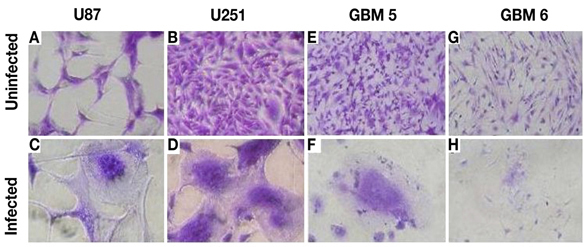
n the 1970s, it was reported that natural infection with the measles virus (MV) led to spontaneous regression of hematologic cancers in African children. This and other, similar reports led to investigations of the oncolytic, or cancer-fighting, properties of MV and other viruses and their potential in cancer treatment.
Although approved in Asian countries, virotherapy drugs have not yet been approved in the United States. Mayo Clinic is the first institution to use MV as a cancer therapy, including treatment of glioblastoma multiforme (GBM), the most lethal brain tumor.

No comment yet.

Dendritic Cell Vaccines Offer Promising Signals as Glioblastoma Therapy

Currently, Moffitt Cancer Center is participating in a multicenter phase III randomized double- blind clinical trial examining the efficacy of a DC vaccine, DCVax-L, derived from autologous DCs pulsed with GBM lysates (NCT00045968).22 The study, which began in December 2006, seeks to randomize 300 patients with newly diagnosed grade IV GBM in a 2:1 ratio to receive either DCVax-L or placebo. Participants are screened for the trial before they undergo surgical resection of the tumor; they then receive standard therapy, including radiation and temozolomide, before proceeding to randomization.
No comment yet.

Glioblastoma survivor shares his story

Matthew Futer is a seven-year glioblastoma survivor. This is his story. Houston Methodist's Dr. David S. Baskin, director of the Peak Center, talks about Mat...
No comment yet.

Defying odds on brain cancer, and inspiring students

Tim Lynch has a theory about why he beat the brutal brain cancer glioblastoma.
Even with intensive treatment, the average survival is about 15 months. As the tumor grows, it destroys the very abilities that define people as human - thinking, feeling, communicating.
No comment yet.

New Epidermal Growth Factor Strategies in the Clinic for Glioblastoma & Lung Cancer

New Epidermal Growth Factor Strategies in the Clinic for Glioblastoma & Lung Cancer http://t.co/SXD5ru1x3P
No comment yet.

Electric field therapy could stop tumor growth in brain cancer

Brain tumors are usually treated with an intense course of cancer’s Big Three: Surgery, radiation and heavy chemotherapy. Medical device startup Novocure is adding a new treatment option into the mix: Electrofield therapy, in which alternating electric fields shut down cellular division – curbing the growth of cancer. It’s called Optune.
No comment yet.

Tumor treating fields with temozolomide may increase PFS in patients with newly diagnosed glioblastoma

Adding tumor treating fields (TTFields) therapy to temozolomide significantly increases progression-free survival (PFS) for newly diagnosed glioblastoma patients versus giving temozolomide alone, according to data presented at 2014 Society for Neuro-Oncology (SNO) Annual Meeting, in Miami.
Additionally, the data indicate that the combination of treatments significantly increased median overall survival, as well as led to a 48% increase in the 2-year survival rate. These findings represent the first clinically and statistically meaningful improvement in survival rates for glioblastoma patients in almost a decade.

No comment yet.

A pilot clinical study of [Delta]9-tetrahydrocannabinol in patients with recurrent glioblastoma multiforme

Δ9-Tetrahydrocannabinol (THC) and other cannabinoids inhibit tumour growth and angiogenesis in animal models, so their potential application as antitumoral drugs has been suggested. However, the antitumoral effect of cannabinoids has never been tested in humans. Here we report the first clinical study aimed at assessing cannabinoid antitumoral action, specifically a pilot phase I trial in which nine patients with recurrent glioblastoma multiforme were administered THC intratumoraly.
Beeyond:

Very interesting description of protocol for intrq-tumoral delivery, which is itself known to yield to results not provided by intra-venous administration.

No comment yet.

Rindopepimut Plus Bevacizumab Shows Prolonged Survival in Recurrent Glioblastoma

The vaccine rindopepimut (CDX110) plus bevacizumab induced tumor regression in a subset of patients with recurrent glioblastoma, according to David Reardon, MD, clinical director, Center for Neuro-Oncology, Dana-Farber Cancer Institute, at the Society for Neuro-Oncology’s (SNO’s) Annual Meeting in Miami Beach, Florida.
Beeyond:

The title is somewhat misleading...

No comment yet.

Brain Cancer : When the first line of temozolomide treatment for glioblastoma stops working, what are the next steps?

Currently, the FDA has approved the anti-angiogenic agent, Bevacizumab, for the first line treatment of recurrent GBM. There are other FDA-approved therapies available for recurrent GBM. The optimal choice of treatment may also frequently be a combination of the above mentioned therapies.
No comment yet.

Celldex glioblastoma vaccine extends survival in Phase II

The quest to find cancer vaccines has been filled with roadblocks, and the story is no different with treatments for glioblastoma--the most common and aggressive type of brain tumor--which has so far eluded efforts to stave it off. But Celldex Therapeutics ($CLDX) has some positive new interim results that show it may one day be able to change that.
In a Phase II trial, its vaccine--rindopepimut, or Rintega--helped recurrent glioblastoma patients who took it with Roche's ($RHHBY) Avastin survive a median of 3.2 months longer than patients who took Avastin alone. While the group that took just Avastin survived for 8.8 months, the addition of Rintega took that to 12 months--a statistically significant benefit.

No comment yet.