


The years 2020 and 2021 have been anything but straightforward for Canada’s $139-billion agriculture and agri-food sector, after the global COVID-19 pandemic shocked the world’s economy and disrupted its supply chains.


 Your new post is loading...
 Scoop.it! The years 2020 and 2021 have been anything but straightforward for Canada’s $139-billion agriculture and agri-food sector, after the global COVID-19 pandemic shocked the world’s economy and disrupted its supply chains. 
No comment yet.
Sign up to comment
Scoop.it!

What a difference a year makes. The story of 2021 is certainly a lot different than a year ago.
Scoop.it!

WealthBriefingAsia - Exclusive Asian Wealth Management and Private Banking Intelligence
Scoop.it!

Le dernier rapport annuel de l’Agence internationale de l’énergie (AIE) l’a confirmé : le monde n’investit pas suffisamment pour répondre à ses besoins énergétiques futurs. Fait à souligner, ce constat touche tout aussi bien les énergies bas-carbone que les combustibles fossiles. Et assez ironiquement, les industries pétrolière et gazière sont aujourd’hui parmi les seules dont les investissements sont raisonnablement en phase avec les objectifs du scénario de neutralité carbone à l’horizon 2050.
Scoop.it!

The synthesis of modified nanoparticles for agriculture purposes has a promising future.
Scoop.it!

Soil biodiversity constitutes the biological pillars of ecosystem services provided by soils worldwide. Soil life is threatened by intense agricultural management and shifts in climatic conditions as two important global change drivers which are not often jointly studied under field conditions. We addressed the effects of experimental short-term drought over the wheat growing season on soil organisms and ecosystem functions under organic and conventional farming in a Swiss long term trial.
Scoop.it!

As 2021 ends, we take a retrospective look at five topics that were covered in our analytical work this year. These issues represent just a fragment of the World Bank's work, but they are key to reducing poverty and hunger while slowing climate change.
Scoop.it!
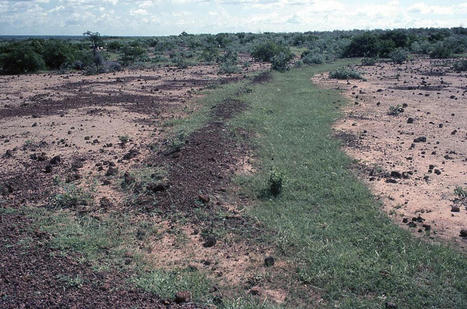
Pressure on land and water systems compromising agricultural productivity, food security
Scoop.it!

Green is a color that is almost universally associated with plants -- for good reason. The green pigment chlorophyll is essential to plants' ability to generate food; but what happens if they don't have enough of it? New work reveals the complex, interdependent nutrient responses underpinning a potentially deadly, low-chlorophyll state called chlorosis that's associated with an anemic, yellow appearance. It could usher in more environmentally friendly agricultural practices -- using less fertilizer and fewer water resources.
Scoop.it!

Insect and hydroponic crop farming, for both human food and animal feed, have the potential to increase access to nutritious food, while creating millions of jobs, improving the climate and the environment, and strengthening national economies, according to a new World Bank report ‘Insect and Hydroponic Farming in Africa: The New Circular Food Economy’.
Scoop.it!

Après les inondations de l’été 2021 en Allemagne, le réassureur MunichRe annonce une hausse significative des prix des assurances, mettant fin à la relative stabilité du marché européen de ces dernières années. Le modèle assurantiel est prévu pour encaisser des événements extrêmes certes, mais ponctuels.
Scoop.it!

D’après l’édition 2021 du rapport sur l’état des ressources en terres et en eau pour l’alimentation et l’agriculture dans le monde, les pressions exercée
Scoop.it!

With 23% of global emissions associated with land use, including 11% of global GHG emissions from deforestation and the conversion of natural ecosystems, is agriculture the next sector set for transition?
|
Scoop.it!

Acute scarcity drives the search for water underground. But the West’s major aquifers are in trouble, too.
Scoop.it!

Spatiotemporally consistent data on global cropland extent is essential for tracking progress towards sustainable food production. In the present study, we present an analysis of global cropland area change for the first two decades of the twenty-first century derived from satellite data time-series. We estimate that, in 2019, the cropland area was 1,244 Mha with a corresponding total annual net primary production (NPP) of 5.5 Pg C year−1.
Scoop.it!

Il y a peu de débats sur le fait que le rythme de la déforestation n'est pas soutenable. La déforestation et la dégradation des forêts sont la deuxième cause du réchauffement climatique, responsable d'environ 15 % des émissions mondiales de gaz à effet de serre. La récente COP26 l'a reconnu et s'est engagée à mettre fin à la déforestation d'ici 2030. Mais comment y arriver ?
Scoop.it!

Iran has been grappling with water stress since 2006 and the situation is forecast to be exacerbated by the next 15 years while reforming the irrigation method from traditional to modern will reduce water consumption and waste at least by half.
Scoop.it!

Cattle are part of a natural biogenic carbon cycle, and animal agriculture has a proven record of working toward a sustainable future.
Scoop.it!

Pierre Ibisch tire la sonnette d’alarme quant à la prolifération des routes en forêts. Second épisode de notre série « Forêts en danger ».
Scoop.it!

Bioenergy crop with carbon capture and storage (BECCS) is a key negative emission technology to meet carbon neutrality. However, the biophysical effects of widespread bioenergy crop cultivation on temperature remain unclear.
Scoop.it!

Roda Verheyen, one of the best-known environmental lawyers in Germany, and one of those who represented citizens in Germany's constitutional court case this year, says she believes there are three reasons for the increase in successful cases. "One is that courts take a long time to actually come to conclusions," she says. An increasing number of cases have been filed since 2014, so some are only now being heard after many years of work.
Scoop.it!

Indoor farming has become a popular solution for growers interested in more efficient and climate friendly agriculture. Paul Lightfoot, founder of BrightFarms is working on how agriculture can transition to a more regenerative model, and foods that have carbon neutral or carbon negative footprints.
Scoop.it!

Plastic pollution has become pervasive in agricultural soils, according to a new report released on Tuesday by the UN agriculture agency, posing a threat to food security, people’s health, and the environment.
Scoop.it!

Food and Agriculture Organization says most plastics are burned, buried or lost after use
Scoop.it!

L’agriculture est un secteur clé dans l’atténuation urgente du changement climatique. De nombreux instruments politiques d’adaptation du secteur agricole existent, mais l’analyse de leur efficacité sur le terrain révèle des faiblesses de mise en œuvre. Il est nécessaire pour les décideurs de créer des conditions propices aux politiques d’adaptation. Ce Policy Brief présente cinq axes prioritaires pour une mise en œuvre réussie des instruments politiques de transition climatique.
|




