

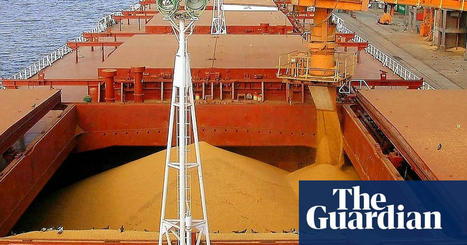
Researchers estimate that carbon emissions from transporting food are about 6% of the global total, with fruit and vegetables the largest contributor


 Your new post is loading...
 Scoop.it! Researchers estimate that carbon emissions from transporting food are about 6% of the global total, with fruit and vegetables the largest contributor 
No comment yet.
Sign up to comment
Scoop.it!

Le groupe de transport et de logistique marseillais devient coactionnaire de ce vaste projet industriel d'un nouveau genre : une unité de production de biométhane à partir de déchets jusqu'ici non recyclables. Une première mondiale.
Scoop.it!

From
www

Certaines techniques écologiques de fertilisation des sols augmentent le rendement agricole en l'absence d'engrais chimiques, selon une méta-analyse.
Scoop.it!

Blistering heat, stronger storms, droughts, floods and fires are putting food production at risk
Scoop.it!

Si ce n’était des champs de maïs qui l’entourent, le bâtiment ressemblerait bien plus à un petit entrepôt qu’à une ferme. Certes, le bassin de désinfectant dans lequel chaque visiteur doit se tremper les semelles en entrant laisse deviner qu’il ne s’agit pas d’un entrepôt normal. Mais rien, dans les longues rangées d’étagères vides qui s’y trouvent, ne laisse entrevoir quelque production agricole que ce soit.
Scoop.it!

From
www
Plastic has seeped into every aspect of our existence. Can we live without it?
Scoop.it!
Face aux prochaines épidémies liées au réchauffement climatique, les scientifiques tentent de trouver des solutions en amont.
Scoop.it!

Climate change has proven to have serious effects on human health, with changes in the air we breathe particularly affecting people with respiratory diseases.
Scoop.it!
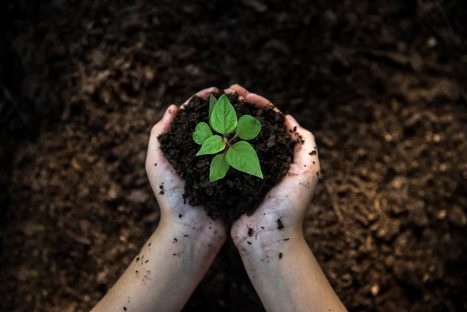
Here, we speak to Assistant Professor Christine Sprunger, who gives us expert insight on the universal need for soil health
Scoop.it!

Au nom de la protection de la nature, les colonisateurs ont créé des réserves d’animaux... en chassant les indigènes qui y vivaient. C’est ce double discours que les chercheurs déconstruisent aujourd’hui, pointe l’historien Guillaume Blanc.
Scoop.it!

Emerging technologies are reinventing agriculture – from precision irrigation systems to face recognition or deploying drones. But without regulatory frameworks, the impact of technology remains limited.
Scoop.it!

From
www
Modern technology is helping to reduce the impact of climate change on farming
Scoop.it!

Les années passent, et le GIEC continue d’avertir sur la nécessité d’agir et de changer drastiquement nos modes de vie, de productions et de consommation pour tenter d’échapper au “scénario catastrophe”. Malgré ces alertes répétées, rien ou en tout cas très peu de choses changent. Le principe reste celui du libéralisme et donc de la liberté d’agir même si cela est en contradiction avec les objectifs écologiques fixés.
|
Scoop.it!

From
earth
Aside from the obvious threat of public health, the subsequent effects of water shortage can vary from food insecurity to increased human conflicts.
Scoop.it!

Kellogg is working with rice farmers to introduce a new sustainable flooding method that would substantially decrease emissions but also protect bird habitat.
Scoop.it!
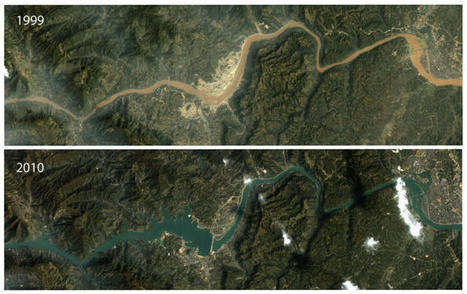
The way rivers function is significantly affected by how much sediment they transport and where it gets deposited. River sediment — mostly sand, silt, and clay — plays a critical ecological role, as it provides habitat for organisms downstream and in estuaries. It is also important for human life, resupplying nutrients to floodplain agricultural soils, and buffering sea level rise caused by climate change by delivering sand to deltas and coastlines.
Scoop.it!

From
www
New FAO/EBRD report shows pathways for decarbonizing agrifood systems
Scoop.it!

From
www
L’agriculture urbaine désigne les activités de production agricole et d’élevage dans les villes ou à proximité de celles-ci.
Scoop.it!

From
www
Roads pollute cities, eat up public space and fragment habitats. Could moving them underground help?
Scoop.it!

Industry and government are trying—again—to make biofuels a reality, this time for the airline industry
Scoop.it!
Prices of agricultural inputs, from seeds to fertilizes, reached record highs. See what it means for farmers, food security, and the planet.
Scoop.it!

Scientific American is the essential guide to the most awe-inspiring advances in science and technology, explaining how they change our understanding of the world and shape our lives.
Scoop.it!

Alors que l'hiver était dans le passé la saison de tous les dangers au niveau climatique, l'été est désormais devenu la période la plus à risque de l'année en raison des vagues de chaleur.
Scoop.it!

Soil degradation: Urgent action is needed to slow global warming and tackle food insecurity. Up to 40% of land has been degraded by poor farming practices.
Scoop.it!

Meet the American companies making lithium-ion battery recycling more profitable and sustainable than it’s ever been.
|




