


About a third of the variation in annual production of maize, wheat, rice and soyabeans is because of changes in rainfall and temperature.


 Your new post is loading...
 Scoop.it! About a third of the variation in annual production of maize, wheat, rice and soyabeans is because of changes in rainfall and temperature. 
No comment yet.
Sign up to comment
Scoop.it!

Will mountain goats be able to shed their thick winter coats in time for earlier warm seasons? The Mountain Goat Molt Project wants your help to find out.
Scoop.it!

From
phys

Once again, humanity might be well served to take heed from a history lesson. When the climate changed, when crops failed and famine threatened, the peoples of ancient Asia responded. They moved. They started growing differen
Scoop.it!

Four market mechanisms to help grow markets for plastics recycling.
Scoop.it!

Climate change is an “unseen driver” behind the thousands of Guatemalan, Honduran and Salvadoran migrants heading toward the U.S. border, one recent article suggested. Food insecurity and poverty in Central America come not just from violence and corruption but also from worsening droughts and changing weather patterns.
Scoop.it!

An area more than twice the size of South Korea was lost to deforestation in Indonesia between 2001 and 2016.
Scoop.it!
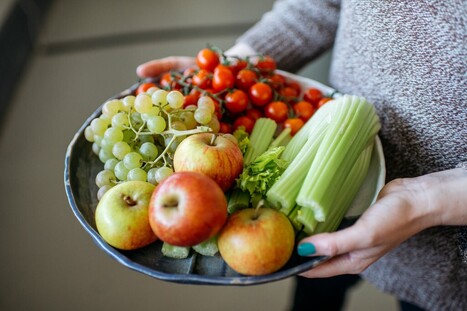
Think global, buy local – but, better still, choose vegetables and fruit. A change of diet can help save the planet from global warming and climate change.
Scoop.it!

Overfishing, climate change, pollution, habitat loss, coral bleaching, ocean acidification, illegal and destructive fishing, islands vanishing under rising seas, great garbage patches of plastic; if you’ve read the news lately, the outlook for our oceans is pretty bleak.
Scoop.it!

By 2050 one of the world’s key staple crops – the common bean – will be under “severe climate stress” and will have less nutritional value where it’s still possible to grow it, scientists at NUI Galway have predicted.
Scoop.it!

Ancient farmers experienced climate change at the local level through variations in the yields of their staple crops. However, archaeologists have had difficulty in determining where, when, and how changes in climate affected ancient farmers.
Scoop.it!

Multinational food and beverage companies, governments and NGOs have united behind a pledge to “eradicate plastic waste and pollution at the source” and develop circular economy models for plastics.
Scoop.it!

Why are people in Asia and the Pacific particularly vulnerable to climate change? The answers may lie in a combination of factors that literally creates a “perfect storm”: a high incidence of poverty, reliance on climate-sensitive livelihoods, water, food and energy insecurity, and dense populations concentrated in flood, cyclone, and drought-prone areas(link is external). Widespread degradation of the region’s ecosystems and high rate of biodiversity loss increase this vulnerability.
Scoop.it!

Climate-related litigations are set to break new grounds following a landmark report by the Intergovernmental Panel on Climate Change (IPCC) earlier this month, which provided lawyers with new evidence that limiting global warming to 1.5°C is still possible.
|
Scoop.it!

We can sequester carbon and improve our nutrition through regenerative farming of land and sea.
Scoop.it!

Ancient farmers experienced climate change at the local level through variations in the yields of their staple crops. However, archaeologists have had difficulty in determining where, when, and how changes in climate affected ancient farmers.
Scoop.it!

Oceans are heating up much faster than expected according to an independent estimate based on atmospheric a “whole-ocean thermometer.”
Scoop.it!

The huge loss is a tragedy in itself but also threatens the survival of civilisation, say the world’s leading scientists
Scoop.it!

Scientists are investigating ways to help plants cope with extremes they are faced with such as droughts and excess salt content in soil.
Scoop.it!

In a groundbreaking move announced by the Energy Market Authority (EMA) on Sep 21, Singaporeans will now have the power to choose their own electricity providers.
Scoop.it!

Sustainably feeding the next generation is often described as one of the most pressing “grand challenges” facing the 21st century. Generally, scholars propose addressing this problem by increasing agricultural production, investing in technology to boost yields, changing diets, or reducing food waste. In this paper, we explore whether global food production is nutritionally balanced by comparing the diet that nutritionists recommend versus global agricultural production statistics.
Scoop.it!

Climate change represents an urgent and potentially irreversible threat to human societies and the planet. The phenomena is derived by major elements, and causes of greenhouse gas emissions (GHG), including livestock, so, shall we vegan?
Scoop.it!

In Kenya nearly 90 percent of the food is produced by small scale farmer’s, according to the United Nation’s Food and Agriculture Organisation (FAO).
Scoop.it!

61 départements sont touchés par des restrictions d'eau. Cette sécheresse a un impact direct sur l'agriculture, mais le manque d'eau touche aussi le transport des marchandises.
Scoop.it!

Nagpur: At present, about 4 billion people in Asia and the Pacific (around 92% of the region's population), are exposed to dangerous levels of air pol.
Scoop.it!
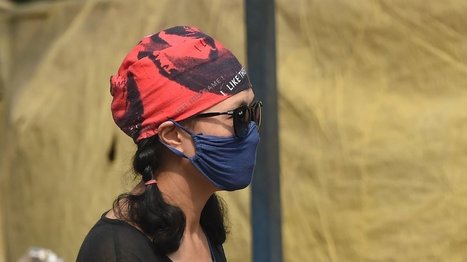
Selon un rapport de l'Organisation mondiale de la santé, rendu public lundi, près de 9o % des habitants de la planète respirent un air pollué, ce qui entraîne quelque 7 millions de décès par an dont environ 600 000 enfants de moins de 15 ans.
|




