


Sécheresses, pollutions et risques sanitaires : un état des lieux des ressources en eau de la planète à l'occasion de la prochaine journée mondiale de l'eau.


 Your new post is loading...
 Scoop.it! Sécheresses, pollutions et risques sanitaires : un état des lieux des ressources en eau de la planète à l'occasion de la prochaine journée mondiale de l'eau. 
No comment yet.
Sign up to comment
Scoop.it!

By 2040, rainfall on wheat, soybean, rice and maize will have changed, even if Paris Agreement emissions targets are met; projections show parts of Europe, Africa, the Americas and Australia will be drier, while the tropics and north will be wetter.
Scoop.it!
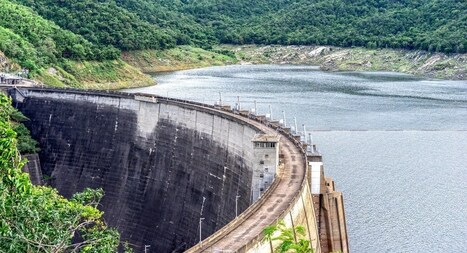
A new perspective argues that hydropower dams could lessen some of the impacts of wetlands on global warming while providing clean energy.
Scoop.it!

Surging consumption of natural resources accounts for half of the world's planet-heating emissions and over 90 per cent of the world's biodiversity loss.
Scoop.it!

Plusieurs pays européens se mobilisent pour faire adopter une stratégie européenne garantissant 100% d’énergie renouvelable d’ici 2050.
Scoop.it!

Une étude scientifique évalue la rapidité des changements durables de pluviométrie à venir sur l'agriculture mondiale, sous l'effet du réchauffement climatique.
Scoop.it!

nvestor concerns around reputational risk and climate change have spurred a new collective call on companies to cut climate and deforestation-related risks in global soybean supply chains. As the global demand for soybean products continues to increase, 57 investors with more than US$6.3 trillion in assets under management are calling on companies to disclose and eliminate deforestation risks in soybean supply chains, with a view to protect the long-term value of their investments.
Scoop.it!

There is great potential in the Caribbean for the restoration of degraded lands and enhancement of soil. Regenerative agriculture can profitably bring the region to carbon neutral status while improving food security and reducing the negative impacts on water supply.
Scoop.it!

Rapid population and economic growth are destroying biodiversity. A growing demand for agricultural products requires ever new cultivated areas. Even though technological advances are making agriculture more efficient, the growing population makes up for these successes. Effective nature conservation needs concepts against population growth and for sustainable consumption.
Scoop.it!

As the global obsession with plastic grows, how will it impact the health of our food system and ultimately ourselves?
Scoop.it!

The application portal for the Young Champions of the Earth prize, is open. We present you with the story of six environmentalists who are already making waves and changing the world. We hope these stories will inspire and motivate you to apply.
Scoop.it!

Près de la moitié des espèces d'insectes, essentiels aux écosystèmes, sont en déclin rapide dans le monde entier, selon une étude publiée le 11 février par des chercheurs de deux universités australiennes.
Scoop.it!

The UN Environmental Rights Initiative, launched in Geneva during the latest session of the UN Human Rights Council, is a major step for UN Environment in raising awareness of the need for state and non-state actors to promote, protect and respect environmental rights. The Initiative seeks to help citizens better understand their rights, as well as work with media, private sector and governments. The aim is to ensure that human rights defenders can carry out their activism safely, defend their local environments and the planet.
|
Scoop.it!

Le changement climatique et nos émissions de CO2 boostent la croissance des plantes et leur production de pollens, mais rend également ces derniers plus agressifs pour l'humain, d'après les experts.
Scoop.it!

The United Nations has vowed to eradicate extreme hunger and malnutrition on a self-imposed deadline of 2030. But it is facing a harsh realty where human-induced climate change – including flash floods, droughts, heatwaves, typhoons and landslides– is increasingly threatening agriculture, which also provides livelihoods for over 40 per cent of the global population.
Scoop.it!

A new study suggests that air pollution in Europe's two megacities ― London and Paris ― is improving, but not enough to meet EU standards.
Scoop.it!

New environmental research continues to alarm as three studies published within the past week amply demonstrate.
Scoop.it!
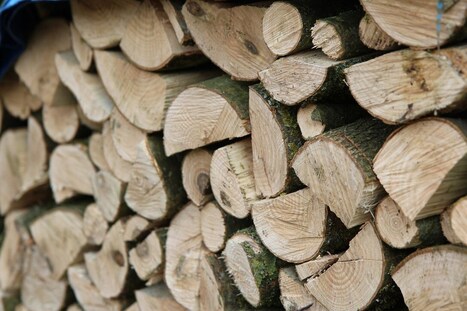
Des citoyens européens ont lancé une action en justice pour faire exclure le bois de la directive sur l’énergie renouvelable.
Scoop.it!

Some 1.2 billion people or 20% of the world’s 7 billion-population, are prone to diseases due to water poverty. Anthropologists dub some of whom as “water-refugees”.
Scoop.it!

By farming smarter we can also address undernutrition, water pollution and biodiversity loss.
Scoop.it!

Climate change has long turned from a narrow environmental problem into a significant factor affecting economic processes around the globe. Temperatures on the planet have risen by nearly 1°C compared to the pre-industrial era, and scientists have no doubts that this process will continue.
Scoop.it!

Paula Macé Le Ficher analyzes the ways in which farming and food issues have been integrated into calls for innovative projects organized in Greater Paris, and highlights the potential these programs have for fostering new developments in the field of urban agriculture—while remaining realistic about extent to which they might transform the urban food system in the Paris region.
Scoop.it!

L’Australie s’engage à planter un milliard d’arbres d’ici à 2030. C’est le Premier ministre Scott Morrison qui l’a annoncé à la presse la semaine dernière. « Ce qui m’intéresse, c’est faire pousser plus d’arbres et créer plus d’emplois. C’est aussi simple que cela », a expliqué samedi dernier le chef du gouvernement australien, lors d’un déplacement en Tasmanie.
Scoop.it!

Une fois perdue la biodiversité pour l'alimentation et l'agriculture (soit toutes les espèces qui sous-tendent les systèmes alimentaires et soutiennent les personnes qui cultivent et/ou produisent la nourriture) ne peut plus être récupérée.
Scoop.it!

With the global population projected to reach 11.2 billion by 2100 and 97% of population growth expected to be in developing regions, the Earth faces a strain on its resources. In Asia, the most populous continent in the world, rapid growth and economic development in the last century has taken a toll on the environment. To meet the increasing demands of the growing population, deforestation to clear land for human use has resulted in habitat destruction and loss of biodiversity. Human and industrial activities have also led to pollution as well as climate change.
|




