

La Amazonie du Brésil traverse l'un des moments les plus critiques de son histoire. Depuis 1970, elle a perdu une superficie forestière supérieure à la


|
Scooped by
Système de veille
onto DURABILITES ET RESSOURCES May 4, 11:10 AM
|
 Scoop.it!
La Amazonie du Brésil traverse l'un des moments les plus critiques de son histoire. Depuis 1970, elle a perdu une superficie forestière supérieure à la


 Your new post is loading...
Scoop.it!

From
phys

Life arose on Earth at least 3.5 billion years ago, and our planet has remained habitable ever since—not too hot, not too cold. These life-sustaining conditions are possible in part thanks to a built-in, carbon cycle–based climate "thermostat" that controls the amount of carbon dioxide in the atmosphere.
Scoop.it!
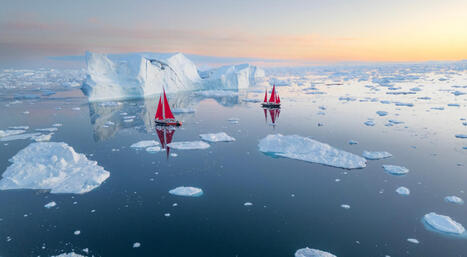
Le nitrogène arctique, actif sous la glace fondante, pourrait transformer les équilibres écologiques mondiaux.
Scoop.it!

From
www
L'Accord de Paris (2015) vise à limiter le réchauffement climatique à moins de 2 °C, et de préférence à 1,5 °C, par rapport aux niveaux préindustriels. L'atténuation (réduction des émissions de gaz à effet de serre) reste l'outil essentiel pour atteindre la neutralité carbone d'ici le milieu du siècle. On s'attend toutefois à un dépassement de cette limite de température. Le Programme des Nations unies pour l'environnement (PNUE) prévoit que le seuil de 1,5 °C sera franchi dans les prochaines années, le réchauffement pouvant atteindre un pic compris entre 2,2 °C et 3,6 °C au cours du siècle. Dans ce contexte, trois tendances caractérisent le débat sur la politique climatique.
Scoop.it!
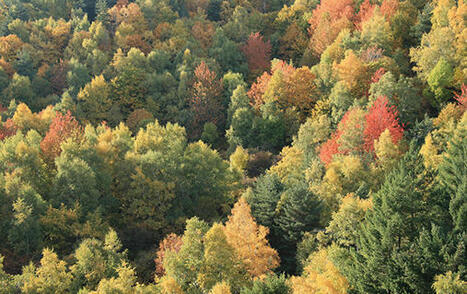
Beaucoup de lecteurs garderont en mémoire cet été 2026 qui a enchaîné les canicules et les sécheresses, menant aux conditions propices aux gigantesques feux de forêt qui ont sévi aux quatre coins de la France jusqu’au début de l’automne.
Scoop.it!

Sur le long terme, le PIB mondial diminue de plus de 20 % lorsque la température mondiale augmente de 1°C. Dans un scénario de changement climatique où la température augmente de 2°C supplémentaires d’ici 2100, le PIB est alors diminué de 46 %.
Scoop.it!

El Niño is a natural climate pattern that emerges roughly every two to seven years marked by warmer-than-normal water temperatures in parts of the equatorial
Scoop.it!

Alors que les sécheresses se multiplient en été, la réutilisation des eaux usées devient une solution pour l'irrigation. Mais ces nouveaux besoins risquent de pénaliser des cours d'eaux qui, sans eaux traitées, seraient à sec.
Scoop.it!

Rising atmospheric CO₂ could change wheat proteins, affecting baking quality and potentially wheat tolerability.
Scoop.it!

Planting cover crops or perennial plants can protect soil amid potential flooding. Congress must act to protect these practices
Scoop.it!

From
phys
The Atlantic meridional overturning circulation (AMOC) is thought to face a potentially existential threat from climate change. But attempts to model what happens to AMOC as the oceans warm show divergent outcomes, leaving its fate unclear. In a paper published in AGU Advances, Shantong Sun and Andrew Thompson use a hierarchy of models to show that the cross-hemispheric overturning could persist for centuries even as North Atlantic Deep Water (NADW) formation shuts down.
Scoop.it!

Earth’s climate system is moving deeper into uncharted territory. We present the 2026 update of planetary vital signs that track the state of Earth’s climate system, alongside indicators of the human activities driving ongoing change. Of 16 climate-related indicators, seven are currently at record extremes. Several indicators also show evidence of accelerating trends or abrupt shifts, raising concerns about increasing climate instability, interacting feedbacks, and the growing risk of crossing critical tipping points. Human activities, particularly fossil fuel combustion, remain the dominant drivers of these changes. Despite the worsening trends, encouraging signs of societal changes are emerging, including the rapid expansion of renewable electricity and battery storage, although progress remains far below the scale and speed needed to stabilize Earth’s climate system. Rapid reductions in greenhouse gas emissions, effective adaptation, ecosystem protection, and transformative societal change remain essential to reducing climate risks and securing a more resilient and sustainable future.
Scoop.it!

Près des côtes urbanisées, les poissons bénéficient d’une nourriture abondante mais présentent des signes de stress physiologique chronique, selon une étude publiée dans Nature Communications. Un phénomène comparable à un « effet malbouffe », qui pourrait faire des organismes marins de précieux indicateurs des pressions exercées par les activités humaines sur leur environnement.
Scoop.it!

A slowdown of ocean currents that would disrupt life on the continent on an unthinkable scale.
|
Scoop.it!
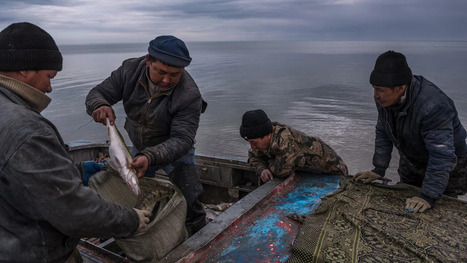
The southern remnant is probably still doomed, however
Scoop.it!
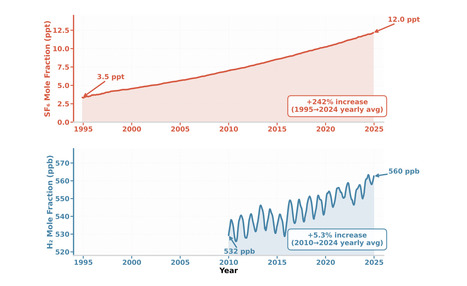
Increasing levels of anthropogenic greenhouse gases in the atmosphere continue driving changes in the global climate, with the last 11 years being the warmest recorded [1]. Increases in carbon dioxide (CO2) and methane (CH4) surface concentrations continue to dominate the changes in the radiative forcing of Earth’s climate. As countries respond and take steps to transform their energy systems towards decarbonization, careful attention should be given to two potent but less abundant trace gases closely related to electricity production and distribution: molecular hydrogen (H2) and sulfur hexafluoride (SF6). SF6 has been rising steadily over the past three decades in proportion to increased global electrification, as SF6 is used primarily as a spark suppressant in electricity distribution. The reasons for the increase of H2 over the past decade are currently unknown, but H2 has begun to be used as an energy storage medium that has strong potential in intermittent carbon-free energy production modes such as solar and wind.
Scoop.it!
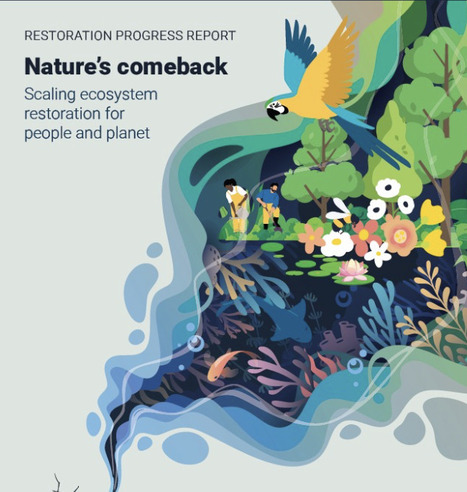
Published by FAO, UNEP and the Secretariat of the CBD at the midpoint of the UN Decade on Ecosystem Restoration, Nature's Comeback is the first comprehensive global assessment of restoration progress. It finds restoration under way at an unprecedented scale, with about 252 million hectares across 149 countries documented, yet the world remains off track to meet global targets and national commitments by 2030. Progress is uneven: land is advancing, while freshwater, marine and coastal ecosystems lag far behind despite degrading fastest, and weaker monitoring means they are likely undercounted. Lasting results depend on people, secure tenure and the leadership of Indigenous Peoples. Annual finance must more than quadruple, from US$64 billion to US$296 billion, through restoration economies that value nature. Building a global movement, political support and technical capacity are the foundations for action. Thirty per cent by 2030 is a milestone, not the end of the journey.
Scoop.it!

Découvrez comment Petal, le câble sous-marin transatlantique de Meta entre les États-Unis et la France, va pulvériser les records de débit.
Scoop.it!

Lithium’s dominance could be threatened by the emergence of batteries made with one of the most abundant elements in the Earth’s crust.
Scoop.it!

People succumbed to heat at highest rates in Malta, Italy and Hungary, with health issues, loneliness and poverty exacerbating toll
Scoop.it!

With conflict, economic headwinds and climate impacts reshaping the international agenda, COP31 arrives at a critical moment. Bhargabi, Pelin and their guests discuss what’s at stake in Antalya, and the prospects for progress on climate action.
Scoop.it!
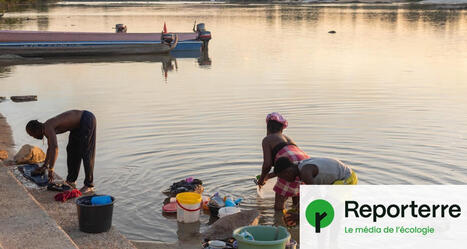
Comme l’ensemble du bassin amazonien, la Guyane subit un El Niño « exceptionnel ». La sécheresse historique menace l’accès à l'eau potable et l’approvisionnement en marchandises. « Bientôt, les pirogues ne pourront plus passer », s'inquiètent les habitants.
Scoop.it!

From
www
Des chercheurs se sont récemment appuyés sur des données satellitaires pour étudier l’évolution de l’affaissement des sols dans différentes grandes villes du monde. Ils ont ainsi découvert que certaines étaient particulièrement exposées à ce phénomène, tandis que d’autres restaient plutôt stables.
Scoop.it!

Scénarios du GIEC, trajectoires 1,5 °C, neutralité carbone : dans la fabrique des scénarios de demain.
Scoop.it!

Peru’s anchoveta have made up about a 10th of the entire global commercial fishing catch since 1970, more than any other fish. A combination of warming seas and decades-long overfishing spells disaster
|




