Execution is everything in entrepreneurship. But often your state of mind -- or perhaps more accurately, how you think -- will help determine ...
Via Justin Jones


 Your new post is loading...
 Scoop.it! Execution is everything in entrepreneurship. But often your state of mind -- or perhaps more accurately, how you think -- will help determine ... Via Justin Jones 
No comment yet.
Sign up to comment
Scoop.it!

Over the past several months, 1,200 entrants submitted their products, concepts, and apps. We narrowed the list down to a mere 54 finalists, and with the help of our esteemed panel of judges, we crowned the winners--forming a particularly diverse group that includes students and startups, old media and new technologies, all connected through the common thread of innovative design. Via Justin Jones
Scoop.it!

The Soho, London based Unbound – where all the best writers hang out – has a model where authors pitch ideas for books and supporters then pledge financial backing in return for rewards. Think Kickstarter for books and you’re close. Via Justin Jones
Scoop.it!

Experimenting is a core innovation skill. It helps you find ideas that work, it’s a great way to select ideas, and it is an important part of building an innovation culture. Via Justin Jones
Scoop.it!

We are entering the golden age of mobile. Mobile has become the most critical tool to enhance productivity and drive human ingenuity and technological growth. Via Justin Jones
Scoop.it!

Three entrepreneurs share their stories of success (and failure) in building multi-million dollar companies. Via Justin Jones
Scoop.it!
|

|
Rescooped by
shelbylaneMD
from Startups and Entrepreneurship
October 11, 2013 8:27 PM
|
Scoop.it!

In some situations multitasking is deadly. I recently read of a well-known plastic surgeon who was killed when he accidentally drove his car over a cliff while sending a Twitter message about his dog. Most of us understand the dangers of multitasking while driving but many don’t realize that multitasking can be killing productivity.
The term “multitasking originated in the computer engineering industry, referring to the ability of a microprocessor to process several task at the simultaneously. Our ability to multitask is not as efficient as we might think.
Persons charged with business development for most small to mid-size ad agencies often wear multiple hats. That increases the likelihood that they do a lot of multi-tasking and are less efficient than they could be.
We are not made for multitasking and it actually hinders our productivity:
If you want to be productive it’s best not to multi-task at all.
|
|
Rescooped by
shelbylaneMD
from FOOD? HEALTH? DISEASE? NATURAL CURES???
October 9, 2013 10:23 AM
|
Scoop.it!
What if Canada, Mexico and the United States became part of something like the European Union? According to conspiracy theorists, the North American Union is...
|
|
Scooped by
shelbylaneMD
October 9, 2013 10:14 AM
|
Scoop.it!

Here's a great little visualizer of how the...
|
|
Scooped by
shelbylaneMD
October 9, 2013 7:16 AM
|
Scoop.it!

Wharton management professor Peter Cappelli worked with Turnstone to identify the best 15 young companies to work for.
|
|
Rescooped by
shelbylaneMD
from Startups and Entrepreneurship
October 2, 2013 6:21 PM
|
Scoop.it!

Entrepreneurs are not always aware of the various financing structures that may be available to them when raising new capital to finance their growth. And, even if they are, they are not always sure what fair terms look like when receiving term sheets from investors.
EQUITY
Issuing stock in your company is the route most entrepreneurs pursue, especially for growth companies where cash flow is difficult to predict, hence making it tough to forecast repaying debts. Equity is typically secured from angel investors or venture capital firms.
Advantages: Does not have to be repaid, like debt does. Gives certainty of valuation for your company, which can also be a disadvantage if the value is very low.
Disadvantages: The most complex to structure (highest legal bills, longest time to close). Usually involves giving some level of board control to investors.
CONVERTIBLE DEBT
For situations where you do not want to set an equity valuation (to not impede subsequent financings from other investors), or you simply want the option of potentially paying back the cash, for a period of time prior to taking in permanent equity capital, a convertible note is the way to go. A convertible note is a hybrid, part debt and part equity, where it functions as debt, until some point in the future, when it may convert to equity at some predefined terms. Convertible debt is typically secured from the same angel investors and venture capitalists that fund equity deals and is usually used for smaller rounds of financing at the early stages of a company’s life
Advantages: Much quicker and cheaper than issuing equity, both for legal bills (can close in weeks, not months) and ownership dilution (deferred until down the road and you can use the note proceeds to increase the value of your company). It leaves valuation flexible in order to meet the needs of subsequent investors. Interest payments do not typically need to be paid in cash each month.
Disadvantages: You have a limited time frame before it needs to be repaid, or convert into equity.
VENTURE DEBT
For startups with an existing product/track record or existing or future assets to secure a loan, venture debt is another option to consider. Venture debt is a senior secured loan that sits on top of the pile, in terms of liquidation preference (repaid before all other debt or equity holders). Venture debt is typically issued by more aggressive bank lenders, like Silicon Valley Bank and Square One.
Advantages: The least dilutive to your ownership, allowing you to keep 100% control and economic upside.
Disadvantages: Do not take this on if you do not have 100% visibility into repaying the loan, as the bank can force you to liquidate the company to recoup their loan, forcing the company (or yourself as guarantor) into liquidation or bankruptcy. Interest payments need to be paid in cash each month.
|
|
Rescooped by
shelbylaneMD
from Startups and Entrepreneurship
September 14, 2013 12:54 PM
|
Scoop.it!

I recently came across an article on Harvard Business Review that I found challenging and applicable to any of us leading teams. The author presents twelve statements that good bosses believe.
1. I do not fully understand what it’s like to work for me.
It is important for us to recognize that our personal view of how we lead and the reality of how we actually lead are different. Recognizing this difference can help us treat those who work for us with humility as well as offer us the opportunity to improve our leadership by checking in with our employees and team members to clarify what has been communicated knowingly and unknowingly.
2. Having ambitious and well-defined goals is important, but it is useless to think about them much. My job is to focus on the small wins that enable my people to make a little progress every day.
This may seem like an odd statement to include when we talk extensively about the importance of establishing a specific mission, vision, and goals. They should be thoughtfully established and serve as the guide for all projects, but if you’re constantly readjusting them or measuring your team on a huge, overarching vision on a daily basis, then your team will never feel successful and become defeated easily. Celebrate small wins with your team along the way to achieving the bigger goals to inspire your staff.
3. One of the best tests of my leadership — and my organization — is "what happens after people make a mistake?"
Innovation is healthy but can only happen if people are allowed to try new things and maybe even fail. Rick Warren recently tweeted, “You must be willing to fail a lot to learn what works. At Saddleback we've tried more things that didn't work than did.” Innovation doesn’t happen in an environment where people are scared to fail. It only happens when they feel free to try new things and express their creativity.
What happens on your staff when someone makes a mistake? Are they criticized in front of the group or do you approach them one-on-one to understand their reasoning for making the decision? Think deeply about your response to this question and about the message you’re communicating to your staff when an employee makes a mistake.
4. My job is to serve as a human shield, to protect my people from external intrusions, distractions, and idiocy of every stripe — and to avoid imposing my own idiocy on them as well.
In a church setting, this cannot be overstated. If you are intentional about implementing your mission and vision, you will encounter “trials of every kind.” You set the precedent for your employees as to how they respond to questions, conflict, and stress. How are you setting them up for success by equipping your team to respond well to hardship?
5. How I do things is as important as what I do.
I was a summer “Work Crew” at Young Life’s Frontier Ranch back in the summer of 2000. One of the first things we were asked to do was to pick up every piece of trash we saw, at any time. The leadership cared about creating a distraction free and beautiful experience for campers. A few weeks into my month, I watched as the property manager, without knowing I was watching, went out of his way to pick up a small candy wrapper. I didn’t need to be asked to pick up trash again
|
|
Rescooped by
shelbylaneMD
from Ideas, Innovation & Start-ups
October 28, 2013 2:13 PM
|
Scoop.it!

If you’ve ever been to a startup event, you’d be awed by the intriguing ideas entrepreneurs come up with -- revolutionary jumps that change the way we think about the world, or small incremental ...
|
|
Rescooped by
shelbylaneMD
from Ideas, Innovation & Start-ups
October 28, 2013 11:20 AM
|
Scoop.it!

So what do disruptive questions look and sound like? They usually begin with “how,” “which,” “why” or “if” and are specific without limiting imagination.
They focus on generating solutions rather than begging long-winded explanations and place blame, as often-asked ‘close-ended’ questions always do.
|
|
Rescooped by
shelbylaneMD
from Ideas, Innovation & Start-ups
October 28, 2013 11:11 AM
|
Scoop.it!
Some of the greatest fortunes and empires in history were created by people who started with nothing. Today, we celebrate 25 of these iconic figures.
|
|
Rescooped by
shelbylaneMD
from Ideas, Innovation & Start-ups
October 28, 2013 11:10 AM
|
Scoop.it!

The surprising story of how Amazon.com became one of the most successful companies in the world
|
|
Rescooped by
shelbylaneMD
from Ideas, Innovation & Start-ups
October 28, 2013 11:09 AM
|
Scoop.it!

There’s no question in my mind that one of America’s greatest gifts to the world is our capacity for innovation.
From light bulbs and telephones to vaccines and microprocessors, our inventions and ideas have improved the lives—and even saved the lives—of countless people around the globe.
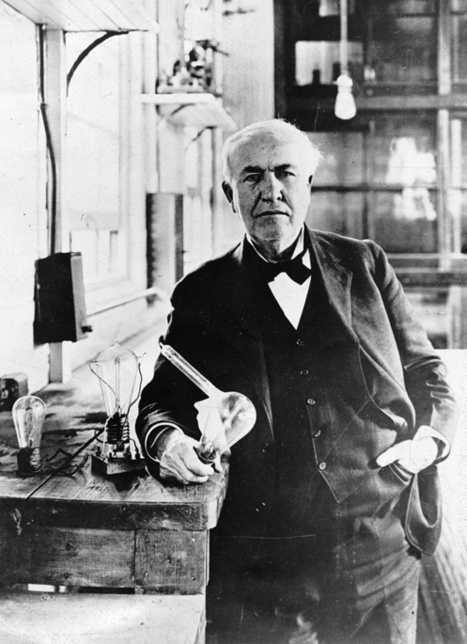
In the pantheon of American innovation, Thomas Edison holds a unique place. He became a symbol of American ingenuity and the conviction that inspiration and perspiration could lead to remarkable things.
|
|
Rescooped by
shelbylaneMD
from Ideas, Innovation & Start-ups
October 28, 2013 11:09 AM
|
Scoop.it!

With clients like Starbucks, Yoplait and Betty Crocker, DINE marketing president Chris Cornyn offers up business advice for entrepreneurs.
|
|
Scooped by
shelbylaneMD
October 28, 2013 11:03 AM
|
Scoop.it!

Court rules coder's computer can be suddenly snatched in 'software knockoff' spat (Yet again, it appears big business and the courts can do pretty much whatever they please...
|
|
Scooped by
shelbylaneMD
October 9, 2013 11:05 AM
|
Scoop.it!

We've heard that employers are to blame for the upsurge in part-time work. But Obamacare may make part-time status more attractive than working full-time.
|
|
Scooped by
shelbylaneMD
October 9, 2013 10:23 AM
|
Scoop.it!

Twitter is a really useful tool for anyone in finance, you just need to filter out the noise. Here's a list that will help with that.
|
|
Scooped by
shelbylaneMD
October 9, 2013 7:24 AM
|
Scoop.it!

A new OECD study finds that young adults in America have some of the worst math skills in the developing world.
|
|
Rescooped by
shelbylaneMD
from Startups and Entrepreneurship
October 2, 2013 6:51 PM
|
Scoop.it!

Lesson: Let Your People Go. When you find great talent, do what you need to in order to encourage and support them. Treat them justly and do what’s right for them and the organization over what’s right for you personally. Give them opportunities to excel and succeed and air cover if they fail. Be willing to take “personal” risks for the right employee.
Lesson: Light the Fire and Clear the Path. Guide your people’s passion and get out of the way: the autonomy and freedom I was given to create and do my job exponentially increased my passion, excitement and success. My manager-mentors made sure my passions aligned with organizational direction, gave me some high-level boundaries, resources, and introductions to make it happen. They removed obstacles, showed me how to handle challenges, provided opportunities, and took the blame while giving me the credit.
Lesson: Remember, They’re Human. Many companies treat their employees as employees — nicely and kindly, even generously — but not as humans. My manager-mentors made it clear that I mattered not just for what I could do, but also for who I was. It wasn’t just about the generous maternity leave or the work-from-home flexibility, although I was grateful for both. Boss #2, for instance, required that I take two consecutive weeks of vacation to fully relax. My assistant took care of everything and virtually banned me from checking email, even though we would still do the New York Times crossword puzzle every day — an important ritual for us no matter where I was in the world. While I had “official” vacation days, no one ever kept tabs on them unless the number to be carried over was too large. It was important to all my bosses that I learn from their successes, mistakes and not share their regrets.
Great lessons:
One huge lesson from the Worst office coordinator.:
The posted Memo starts with..
"Your Mother Doesn't Live Here". ...Clean up the kitchen, the bathroom, blah blah...."Your laziness habit must change"...
Whoa, I didn't know Paula Dean had a twin.
First...My mother is dead
Second...I'm not lazy...
I speak for quiet staff...too afraid to speak up in the 21st century because of a "JOB"
How incredibly shallow and well.....don't get m started.
It's important to treat everyone with respect "everyone"....
Even the sanitation engineers..
Insanity is rampant.
Look at the mass shootings.
People are harboring resentment and you don't know when someone will "SNAP".
Have we become so self righteous with our little "Boss" job that you can say.. "Yo Mama"
Why be the trigger for angst and hostility and religious wars, etc.
Just an opinion
Everybody has one
Truly,
The Help "X"
|
|
Rescooped by
shelbylaneMD
from Startups and Entrepreneurship
September 20, 2013 10:42 PM
|
Scoop.it!
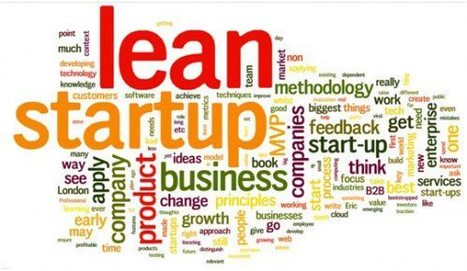
The principles of the lean startup movement are fantastic: companies should remain small and and validate their market and product as quickly and efficiently as possible.
There are many companies who execute this strategy flawlessly and reap the rewards.
There are also companies that hide behind lean startup philosophy to justify a directionless effort to build a company. Stated plainly, these companies don't have an idea, but test concepts in hopes of landing on something real.
Many people fail to realize that the lean startup movement is still dependent upon VISION.
A company with vision knows their space and has identified an opportunity. They test the opportunity they've identified [the problem] and are able to formulate a solution [their product] based on their interpretation of people's feedback against their domain knowledge [vision]. When their early assumptions are correct, the company only needs to make small corrections to reach their destination. When they're wrong, the company many need to pivot.
A successful pivot is still often directed toward the same broad market opportunity or customer segment -- it's just a change in strategy to reach a similar goal. Someone experienced in the field might say, there's an opportunity in social CRM and I think people need a desktop solution.
They may subsequently learn that the correct solution is always on hand and should be mobile based, so they pivot. This is like Columbus heading out to the new world and at least knowing it was "that a way."
A company without vision starts from a place of ignorance and is unable to respond to feedback as it arises. Even if their problem plus solution is only off by a few degrees, they may misinterpret the feedback and pivot wildly. From a distance, these companies are easy to spot because they thrash from idea to idea.
So, you're a prospective startup founder and you've read everything about the lean startup movement. Should you start a company? No, not if you don't understand a market and at least see a broad market opportunity. Lean startup methodologies are just a set of tools to help you achieve your vision.
How do you gain vision? Work in the field or look to your own interests. And if you're unwilling to do that because you just have to start your company now, at least do some serious research before taking any money. Money comes with expectations. When your half-baked idea fails, you'll be forced to come up with something else... which is how you end up pivoting and working on something stupid for several years of your life.
Do yourself a favor, develop some vision before you start your company.