Lancée en juillet 2024 par le Département de la Seine-Saint-Denis et Action contre la Faim, la carte Vital’im vise à faciliter l’accès à une alimentation plus saine. Après six mois d’expérimentation, un premier bilan encourageant se dessine.
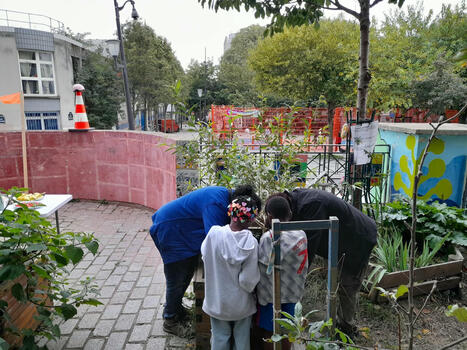
Les jardins partagés sont des espaces de jardinages urbains entretenus par plusieurs habitants et habitantes. Ils permettent à toute personne intéressée de jardiner, ce sont également des lieux de convivialité et d’apprentissage. Certains jardins se situent dans l’espace public tandis que d’autres trouvent leur place dans les copropriétés ou chez les bailleurs sociaux.
Sainte-Foy-la-Grande et ses environs, la commune de Bègles, le sud de la Gironde (autour de Captieux) et le quartier défavorisé de la Benauge et de Bordeaux Nord à Bordeaux sont les quatre territoires inclus dans l'expérimentation de la Sécurité sociale de l’alimentation (SSA). Une initiative orchestrée par le département de la Gironde, la ville de Bordeaux et le collectif associatif Acclimat’action(Lien sortant, nouvelle fenêtre). Avant son déploiement, une gestation de deux ans, destinée à un « prototypage » du dispositif, a été nécessaire : dans chacun des quatre territoires concernés, une caisse locale de l’alimentation a vu le jour. Elle réunit des habitants et des chercheurs, qui ont conçu collectivement les modalités de cette sécurité sociale de l’alimentation. L’expérimentation a démarré en avril 2024, pour une durée d’un an.
Over the last few decades, our food system has undergone profound changes. Food has never been available in such large quantities, or with such great diversity, even if it is not evenly distributed across the planet. Globalized and ultra-processed foods have invited themselves onto our tables, with major consequences for our health and the environment. But while modes of production and consumption have changed, food continues to shape our emotional and cultural experiences. It remains what connects us to ourselves, to others and, more broadly, to all living things.
Afin de lutter contre la précarité, un collectif d’acteurs locaux expérimente à Montpellier une sécurité sociale de l’alimentation. Le dispositif s’appuie sur des producteurs locaux, qui trouvent ici une garantie de revenus.
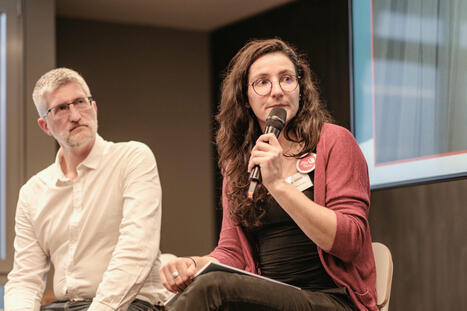
In this Urban Lunch Talk we will explore where urban production fits into today’s urban landscape. Do cities still have space for it, do they need it, and what value does it bring? A panel of experts will join us to discuss how urban production can drive a circular economy and explore how cities can balance spaces for production with other urban priorities.
En France, le système alimentaire hérité du XXe siècle pose des problèmes de santé publique et de respect de la biosphère. Comment le transformer ? Ce dossier met en lumière de nouvelles façons d'aménager les villes pour en faire des territoires nourriciers et les adapter aux crises contemporaines. ▼ Voir le sommaire du dossier ▼ En 2021, 14,2 millions de tonnes de produits agricoles et alimentaires ont été importées pour nourrir les Franciliens (Mariasine et al. 2024). Ces aliments ont été produits à une
In this last article in the series, I turn to what a resilient, sustainable food system could look like. I will first discuss the agronomic side of the system and then the socio-economic part. In my view they are just two aspects of the same system. I hope that I made it very clear, from the three previous articles, how intertwined the economic aspects of the system and the ecological aspects are. This is well reflected in the concept of agro-ecology.
Le mouvement citoyen Terres de lien pointe du doigt les faibles aides que l’État apporte aux collectivités souhaitant se doter d’un projet alimentaire territorial. Elles auraient pourtant un grand rôle à jouer en matière de souveraineté alimentaire.
PesticidesSustainable FoodEU FoodBiodiversity Soil Atlas The Soil Atlas 2024 not only highlights the consequences of the global loss of fertile soil, but also shows the potential of sustainable and fair land use for climate protection and biodiversity.
60 million tonnes of food waste and 12.6 million tonnes of textile waste are generated annually in the EU. The new measures provisionally agreed by the European Parliament and Council would introduce 2030 food waste targets and require producers to cover costs for collecting, sorting and recycling waste textiles.
International World Pulses Day, celebrated annually on February 10th or during the week leading up to this date, serves as a global reminder of the power of beans and pulses in nourishing communities, and building a more sustainable food future. Many cities committed to improving food systems are launching targeted initiatives to support the protein […]
OASIS – the Original Agroecological Survey and Indicator System Many indicator systems that assess the sustainability of agricultural systems have been developed in the past. OASIS, however, is one of the first analytical frameworks specifically designed to assess where a farm is on the trajectory of transition towards agroecology. OASIS allows the necessary data to […]
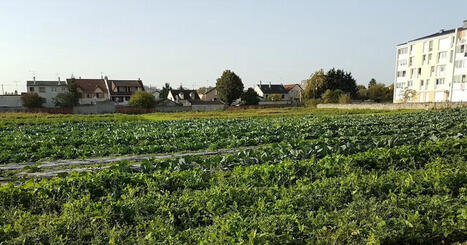
L’Île-de-France produit des millions de tonnes de blé mais importe l’essentiel de ses aliments. En cas de crise, son autonomie alimentaire ne dépasserait pas une semaine, soulevant des enjeux cruciaux de souveraineté et de résilience.
On Cloughjordan Community Farm it takes a village to grow 50 sorts of vegetables. The member-owned farm produces high quality, nutritionally dense veggies using agroecological methods. Community is central to the farm’s work, from its CSA scheme to volunteering, and most recently a big effort to plant 2,000 trees for syntropic farming. Letter from the farm by Oliver Moore. On Cloughjordan Community Farm it takes a village to grow 50 sorts of vegetables. Located at the heart of Cloughjordan ecovillage, an intentional community on 67 acres in the Irish midlands, the member-owned farm produces high quality, nutritionally dense veggies using agroecological methods. Community is central to the farm’s work, from its CSA scheme to volunteering, and most recently a big effort to plant 2,000 trees for syntropic farming. Letter from the farm by Oliver Moore.
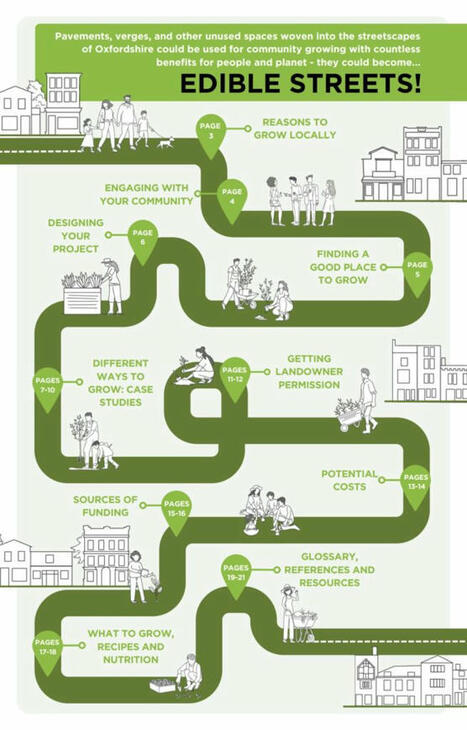
The Edible Streets: How-To Guide by Oxford Brookes University, School of Architecture, is a practical resource for transforming urban spaces into thriving, food-producing areas. Developed in collaboration with Oxfordshire County Council Public Health, it provides step-by-step guidance on integrating edible plants into streetscapes to enhance biodiversity, well-being, and community connections.
Bristol food producers have had hopes of lifeline-funding dashed after the UK national government abruptly closed subsidy applications. The disappointment follows elation born of farms under five hectares finally, in July 2024, being deemed eligible for the Sustainable Farming Incentive – a UK government payment system for those farming in an ecologically positive way – after years of campaigning by union the Landworkers Alliance and others.
Limoges se transforme en véritable potager urbain, où légumes et vergers remplacent peu à peu les massifs fleuris. Une démarche ambitieuse qui vise à nourrir les habitants en circuit court, tout en réinventant l’espace public.
By promoting self-sufficiency and localised farming, neo-peasant communities aim to offer an alternative vision to the capitalistic and productivist logic driving global agro-industrial expansion. Yet, despite recognising the similarities between the dynamics causing ecological collapse and those that marginalise women, these initiatives often reproduce the same male-dominated power systems. Even in progressive movements dedicated to degrowth, sexism can slowly creep in.
Is urban manufacturing bad for the environment? Or can it be green and play a role in the fight against climate change? We look at the current picture of production to see how sustainably urban manufacturers work and where there is room for improvement.
France has more than enough land to feed its inhabitants. Yet almost half of French farmland serves the global export trade. Food sovereignty will remain a pipe dream as long as the absurd globalised food system continues to hold sway, says a new report by Terre de Liens. The Rural Resilience project reports from the launch event in Paris. France has more than enough land to feed its inhabitants. Yet almost half of French farmland serves the global export trade. Food sovereignty will remain a pipe dream as long as the absurd globalised food system continues to hold sway, says a new report by Terre de Liens. The Rural Resilience project reports from the launch event in Paris.
Depuis 2020, la régie parisienne rétribue les exploitants implantés sur ses aires d’alimentation de captage pour les aider à utiliser moins d’intrants, voire accompagner leur conversion au bio. À la clé, 77 % de pesticides en moins.
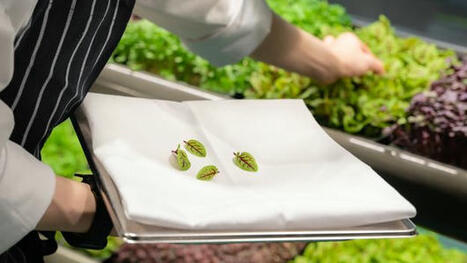
In some cities, as many as one in four office spaces are vacant. Some start-ups are giving them a second life – as indoor farms growing crops as varied as kale, cucumber and herbs.
The EU has unveiled its new Vision for Agriculture and Food which, despite the name, is not exactly what you would call ‘visionary’. So what does the EU’s new agricultural game plan envisage – or not – for the future of the sector, and does this spell the official death of the Farm to Fork strategy? Natasha Foote breaks down all you need to know.
To get content containing either thought or leadership enter:
To get content containing both thought and leadership enter:
To get content containing the expression thought leadership enter:
You can enter several keywords and you can refine them whenever you want. Our suggestion engine uses more signals but entering a few keywords here will rapidly give you great content to curate.


 Your new post is loading...
 Scoop.it!