Your new post is loading...

|
Scooped by
Energy Cities
October 7, 2021 10:04 AM
|
Achieving the UK’s goal of reaching ‘net zero’ emissions by 2050 will require far-reaching changes to transform the UK economy and put it on a more sustainable path. Greening the finance system is a key part of this transition. While aligning the private financial sector with the UK’s climate goals is an urgent priority, the scale and speed of the transition means that public finance must also lead by example.
|
|
Scooped by
Energy Cities
August 16, 2021 9:58 AM
|
"The platform – launching this year – aims to empower 1 billion people with distributed renewable energy (DRE). This is renewable energy generated from sources such as mini-grid and off-grid solutions, located near the point of use, rather than centralized sources like power plants," Ikea Foundation said in a statement.
|
|
Scooped by
Energy Cities
July 2, 2021 5:25 AM
|
This concerns the allotment of land for affordable housing
The Swedish city of Malmö might have found a way out of plaguing housing shortages with the development of a new model called Mallbo. This is an abbreviation of Malmö Allemansrätt Boende (Malmö Public Law Housing) and according to authorities, it represents both a model and a tool that will allow achieving the goal of a more sustainable housing market.
|
|
Scooped by
Energy Cities
July 1, 2021 7:16 AM
|
The EBRD has approved a new EUR 2 million credit line for financing investments in household energy efficiency in Kosovo*.
|
|
Scooped by
Energy Cities
April 8, 2021 6:01 AM
|
How can urban commons be financed? The Civic eState team explores social impact finance and financial investment with Eutropian, the European Investment Bank and the Trias Foundation
Despite the challenge posed by the pandemic for relational projects like Civic eState, the seven cities involved have not stopped working together – albeit digitally – and collaborating on shared horizons. Since the beginning of the lockdowns in various European countries, the Civic eState Network embarked on an exploration of possible financing instruments – like social outcome contracting and other social tools under the European Structural and Investment Funds(link is external) – to support the creation and management of urban commons in Covid and post-Covid times.
|
|
Scooped by
Energy Cities
April 6, 2021 10:49 AM
|
Energy Performance Contracting (EPC) is a well-tested and successful tool that has been helping building owners reach their energy and climate targets more quickly than with traditional implementation of energy saving measures. Still there is potential for more use of EPC to reach unrealised saving potential in public sector. To promote the use of EPC, this guide introduces an improved implementation model based on the present market situation and experiences in Denmark, Sweden, Finland, Norway, Poland, Estonia, Latvia and Lithuania. The main novelty aspect being contract-based partnership during the analysis phase of EPC projects.
Still there is potential for more use of EPC to reach unrealised saving potential in public sector.
To promote the use of EPC, this guide introduces an improved implementation model based on the present market situation and experiences in Denmark, Sweden, Finland, Norway, Poland, Estonia, Latvia and Lithuania.
The main novelty aspect being contract-based partnership during the analysis phase of EPC projects.
|
|
Scooped by
Energy Cities
March 17, 2021 6:54 AM
|
The European Investment Bank approved an investment of 3.7 billion euros, out of which, 381 million euros will go for transport, hospitals and schools. European cities and communities will benefit from the new EIB investment in various projects - some of which had already been started and others are just being approved. For example, in Jyvaskyla (Finland), the EIB has approved an investment to build 7 schools and day care centres whereas in Stockholm (Sweden) a commuter train modernisation project is underway. Wroclaw (Poland) has plans to improve energy efficiency, urban transport, education, sports and cultural facilities. Banja Luka, the second largest city in Bosnia and Herzegovina, will receive a new medical complex, including a training centre and a university clinic.
|
|
Scooped by
Energy Cities
March 16, 2021 5:30 AM
|
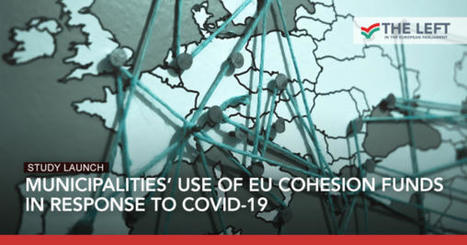
Municipal authorities across the EU are struggling to navigate through the Covid-19 pandemic, with many having to rely upon EU cohesion fund to maintain public services.
Our new study, written by three experts at the European Policies Research Centre Delft, ‘Community Support? Municipalities’ use of EU cohesion funds in response to Covid-19: current experience and lessons for the future’ looks in details how regional authorities and municipalities have had to battle against rising expenditure amidst falling tax revenue, and using cohesion fund to plug the gaps in public services when national governments have been unable to provide regional help and financial assistance.
The authors looked at six specific case studies – Lanarca in Cyprus, Corsica, Rotterdam, Slovenia and the German-Polish cross-border region of Frankfurt an der Oder/Słubice – and asked what questions can be learned from the successes and failures in the organisational and distribution of cohesion funds in the various EU’s crisis support packages,
How efficient and accessible are EU crisis measure like CRII+ and REACT-EU for municipalities? What lessons can be learned for EU policy, what recommendations can be given to Member States, regions and the local level? What are implications more broadly for EU regional cohesion policy?
|
|
Scooped by
Energy Cities
February 26, 2021 1:59 AM
|
Op verschillende plekken in Nederland zijn actieve buurtbewoners verenigd in energiecoöperaties. Vaak start het met gezamenlijk investeringen in bijvoorbeeld zonnepanelen of isolatiemaatregelen…
|
|
Scooped by
Energy Cities
February 10, 2021 9:45 AM
|
While climate impacts are already materializing, the regulators urge financial institutions to account for their exposure to “physical climate risks” when taking decisions, and to disclose how they do so. This represents a true challenge for financial institutions, in terms of expertise and risk management tools.
The ClimINVEST European project organized a direct collaboration between climate experts and financial institutions across Europe to identify and address the challenges of physical climate risk integration in finance. It results in publicly available resources that can be accessed through the figure below.
|
|
Scooped by
Energy Cities
February 10, 2021 9:03 AM
|
The Beacon is a quarterly newsletter with stories, news and developments on financial instruments in the context of Cohesion Policy. The winter edition, published last week, features among other things a significant study on residential energy efficiency financial instruments in Lithuania, two new videos on the combination of grants and financial instruments, as well as a new podcast episode on how ESIF Financial instruments support the development of the Venture Capital/Private Equity ecosystem in Greece.
|
|
Scooped by
Energy Cities
February 4, 2021 12:13 PM
|
Investing in energy efficiency and renewable energy has never been so rewarding and so easy. The new 'Federal Funding for Efficient Buildings' programme has been launched, featuring a streamlined application procedure for all funding – including large amounts. The Federal Government wants to achieve these savings primarily through the 'Federal Funding for Efficient Buildings' (Bundesförderung für effiziente Gebäude – BEG) (in German only) programme, which was launched on 1 January 2021 and forms a core element of the 2030 Climate Action Programme (in German only) . The funding is to give a powerful boost to the energy transition in the buildings sector and replaces previous programmes to promote energy efficiency and renewable energy in this segment. These include the successful 'CO2 Building Modernisation Programme' (implemented as the KfW 'Energy-efficient Construction and Refurbishment' programme) and the 'Market Incentive Programme' to promote the use of renewables for heating – applications for which hit a record high (in German only) in 2020.
|
|
Scooped by
Energy Cities
February 3, 2021 5:00 AM
|
The SocialRES partner Abundanceis a pioneer organizationin the field of democratic finance, a term that Abundance itself created to describe a financethat “works better when it is open to all”. Working with West Berkshireand Warrington Borough Council,Abundance hasrecentlydevelopeda new climate financial product which enables residents to invest in the decarbonisation of their region via their municipal government using a council climate bond.The product creates a powerful, low cost route for municipalities to raise finance from within their region, while also engaging residents with themunicipalitiesdecarbonisation plans in the process creating a collective sense of purpose around the delivering Net Zero at a regional level. Following the successful pilot of the Climate Bond with Warrington and West Berkshire, Abundance is hoping to launch bonds with three new councils in 2021.
|
|
|
Scooped by
Energy Cities
September 27, 2021 6:35 AM
|
This report analyses how the 25 largest European banks approach five critical climate and biodiversity-related themes: - Net-zero targets and alignment
- High-carbon disclosures
- Sector policies (fossil fuels, shipping, biomass)
- Biodiversity
- Executive remuneration
|
|
Scooped by
Energy Cities
July 2, 2021 5:29 AM
|
La Ville de Paris lance « Paris Sème », un dispositif de soutien destiné à renforcer la capacité d’investissement des actrice.s et acteur.s de la filière agricole de proximité. Pour cette première édition, les réponses sont attendues d'ici le 3 août 2021.
Ce dispositif vise à soutenir, au travers de subventions en investissement, les structures et projets relevant des secteurs de la production agricole primaire, de la transformation et de la commercialisation de produits agricoles ou de l’aquaculture et répondant aux enjeux de l'agriculture durable de proximité.
|
|
Scooped by
Energy Cities
July 2, 2021 5:15 AM
|
Art and culture are the most promising avenues to revitalize cities and neighborhoods. But to succeed as a driving force for lasting and meaningful area development, what do incubators, cultural houses and creative hubs need? In a virtual meet-up with twenty fellow city makers, Rinske identifies tools that city makers, governments and developers can use to help their cities thrive .
The need for ‘money to play with’, the importance of new business models and the need to ‘cast’ the ultimate mix of functions and users. Invite twenty city makers to share their thoughts in a virtual conference, and they’ll give you an abundance of tips on nurturing successful cultural and creative hubs. Because what makes one space a success from day one, while another fails to get off the ground? What are the do’s and don’ts of success?
|
|
Scooped by
Energy Cities
April 29, 2021 4:01 AM
|
This EEA report, which Ecologic Institute's McKenna Davis co-authored, provides up-to-date information for policymakers on the how to apply nature-based solutions for climate change adaptation and disaster risk reduction and at the same time making use of multiple societal benefits that these solutions can bring. Drawing on selected examples across Europe, the report shows how impacts of extreme weather and climate-related events are already tackled in this way. It also assesses global and European policies and how nature-based solutions are increasingly being integrated in the efforts to shift towards sustainable development.
|
|
Scooped by
Energy Cities
April 7, 2021 6:53 AM
|
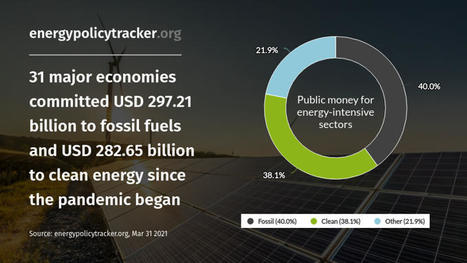
Are we building back better? Track climate and energy focused analysis of COVID-19 recovery packages, looking at support for fossil fuels and clean energy.
|
|
Scooped by
Energy Cities
March 25, 2021 4:44 PM
|
The European Committee of the Regions (CoR) has unanimously adopted an opinion on the Renovation Wave , the EU's plan to upgrade the energy performance of Europe's building stock. Accounting for 40% of Europe's energy consumption and 36% of greenhouse gas emissions (GHG), the renovation of buildings is key for the EU to reach climate neutrality by 2050. Cities and regions call for a revision of state aid schemes, more flexible budget rules to maximise investments and renovations, subnational targets for the renovation of buildings and the integration of renewable energy sources in renovation projects.
|
|
Scooped by
Energy Cities
March 17, 2021 5:48 AM
|
This document aims at briefly presenting benefits for a local authority to launch a process of assessing its budget under the prism of the climate, and the approach to be set up. It is intended for elected officials, service managers and anyone wishing to quickly familiarize themselves with this tool.
It is accompanied by a methodological guide, a technical appendix for the climate change mitigation component and a technical appendix for the climate change adaptation component (both also in French). These documents are available free of charge to all communities that would like to undertake a climate assessment of their budget.
TOC :
- Climate budget assessment in a nutshell
- Why to analyze budget through the prism of climate?
- In concrete terms, what is the recommended approach?
- Seizing the results
- Some answers to frequently asked questions
Document available in French only
|
|
Scooped by
Energy Cities
March 1, 2021 4:58 AM
|
Évaluer l’impact sur le climat de chaque euro dépensé par les collectivités locales : c’est le défi de l’Institut de l’économie pour le climat. Il teste cette méthodologi
|
|
Scooped by
Energy Cities
February 22, 2021 7:42 AM
|
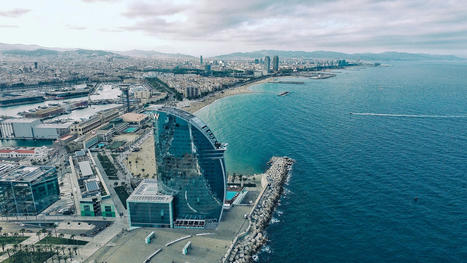
The City Council’s Municipal Institute for Urban Landscape and Quality of Life (IMPUQV) is offering subsidies to help protect and improve the urban landscape. With 1.3 million euros available, the funding is aimed at promoting the recovery of heritage while taking into account environmental sustainability and backing small commerce. In this respect, the call includes subsidies for commercial establishments carrying out work on their premises, which are a key part of Barcelona’s urban landscape. At the same time, the subsides include specific sections for protected historical premises and those without protection.
|
|
Scooped by
Energy Cities
February 10, 2021 9:23 AM
|
The Urban Innovative Actions (UIA) is an EU initiative incentivising cities to test new solutions to urban challenges. It is funded by the European Regional Development Fund (ERDF) with a total budget of €372 million during 2014-2020 and with a maximum contribution of €5 million per project.
The present study constitutes the first external assessment of the UIA while the implementation of the initiative is ongoing. Its findings must thus be seen as preliminary and not capturing a full impact that only an ex-post evaluation will be able to measure, as from 2024 at the earliest.
The assessment study evaluated the effectiveness, efficiency, relevance, coherence and EU added value of the UIA. It identified a range of innovations tested including the use of new techniques, social innovation, service delivery innovations, financial innovations and governance innovations.
|
|
Scooped by
Energy Cities
February 8, 2021 9:58 AM
|
Cette publication propose un tour d’horizon de la contribution de la Banque européenne d’investissement à la transition des régions charbonnières.
|
|
Scooped by
Energy Cities
February 3, 2021 9:16 AM
|
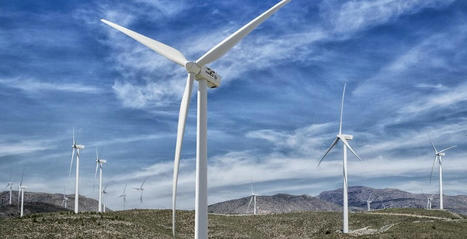
Spain has auctioned a total of 3 GW of renewable energy capacity under the country’s new auction design, the Contracts-for-Difference (CfD) model, resulting in the lowest ever price for new onshore wind energy in Europe, of EUR 20 per MWh, according to WindEurope.
The CfD model brings the lowest prices for renewables because it minimizes the financing costs of new projects. CfDs are cheap for governments, as governments get paid back as well as paying out. In this way, citizens win twice, both as consumers and taxpayers, according to WindEurope CEO Giles Dickson.
|