The EU’s climate chief Miguel Arias Cañete has vowed to increase the bloc’s funding for climate change adaption, pledging that 20% of the EU’s foreign spending would be allocated to climate-related projects.
"Grégoire Niaudet from Caritas France offers this ambitious overview of available sustainable finance policy tools. The original publication can be found in English and in French on Caritas' website."
The investment case for low-carbon energy is strong: increased economic growth and jobs, reduced transition risks, and the most cost-effective pathway to realising the goals of the Paris Agreement. Why, then, are EU energy ministers so reluctant to provide the legislative framework required to shift the trillions? writes Stephanie Pfeifer.
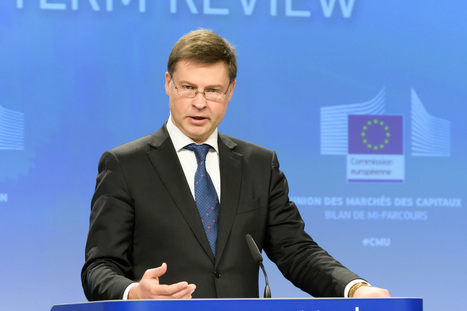
La Commission continue de peaufiner son projet de reporting climat qui devrait être annoncé au printemps prochain. Le vice-président Valdis Dombrovskis a néanmoins annoncé soutenir un allègement des règles prudentielles pour les projets verts.
The big majority of the EU building stock needs to be upgraded. It is well recognised that in order to achieve a decarbonised building stock by 2050, renovation will need to move at a faster pace and attract considerable investment. Public funding alone is not enough to meet this target. Innovative financing schemes that will progressively maximise the leverage ratio of public funds to private finance are necessary.
"A train ride offers time for reflecting on how the EU budget can be put to use for the common good. This blog post is the result of a small experiment whether I can write something meaningful during the 25 km commute from the small wine town Pezinok to Slovakia’s capital Bratislava. The wifi equipped train I’m using has electricity plugs and bike racks. It was financed with the help of European Structural and Investment Funds and is the kind of low-carbon, citizen-friendly transport solution that civil society groups across Europe want to see prioritised in the next EU budget."
The study ‘Macro-regional strategies and their links with cohesion policy’, contracted by Directorate-General for Regional and Urban Policy and conducted by a consortium led by COWI company, aims first at describing the main features of each macro-region (Baltic, Danube, Adriatic and Ionian, and Alpine) through a range of macroeconomic, competitiveness, integration and governance indicators. It assesses to what extent the strategies contribute to coordination and synergies between European Structural and Investment Funds and other EU policies and instruments.
Cities face particular challenges when it comes to accessing finance. Individual municipal projects, for example in the fields of social inclusion, urban regeneration or energy efficiency, can be too risky or too small for the market. At the same time, funding for integrated urban programmes can also be difficult to access, because they group several small projects across different sectors. Finally, cities can also face borrowing limits. URBIS intends to help cities tackle these specific issues. It will help them design, plan and implement their investment strategies and projects, with tailor-made technical and financial advice, also on innovative financing options. The objective is to see solid projects get off the ground in the short to medium-term, for examplein the field of urban climate actions.
Le Grand Paris, première région économique française, doit accélérer sa transition énergétique tout en faisant face à la croissance de ses besoins. La région Île-de-France ne produit que 11% de l'énergie qu'elle consomme, dont seulement 6 % est d'origine renouvelable.
Energy efficient mortgages could play a central role in Europe’s new strategy for sustainable finance, states a White Paper published on 26 October 2017 under the EU funded ‘Energy Efficient Mortgages Action Plan’ (EeMAP) Initiative - which sets out key recommendations towards the creation of an energy efficient mortgage product for Europe.
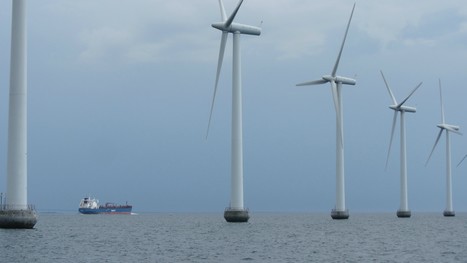
Renewable energy’s cost reductions may be tapering off, as investments levels are flat and system costs are becoming more important than component costs, writes Roger Arnold. This implies that policy support should shift to storage and infrastructural approaches.
The (much) higher use of loans and guarantees foreseen in the MFF post-2020 will produce significant changes in the management model of EU funding, and could even herald a structural evolution in the European project as a whole, write Francesco Molica and Nikos Lampropoulos.
Funding the Cooperative City: Community Finance and the Economy of Civic Spaces Edited by Daniela Patti & Levente Polyák (Eutropian Research & Action) Publisher: Cooperative City Books, Vienna, September 2017 Format: Paper size B5, 244 pages ISBN 978-3-9504409-0-4 The book is licensed under Creative Commons Attribution-NonCommercial-NoDerivatives 4.0 International (CC BY-NC-ND 4.0) More information: info@cooperativecity.org Please…
The SDG Knowledge Hub of the International Institute for Sustainable Development (IISD) provides the November update on global developments in climate adaptation finance. Climate Adaptation Finance Update: COP 23 Spurs Action on Resilience In November, multilateral development banks (MDBs) approved a number of large development projects with climate resilience benefits. Support was also confirmed…
This film describes the main types of financial instruments (e.g. loans, guarantees, equity and quasi-equity) that Member States and regions can choose to use in conjunction with the European Structural and Investment Funds. The film illustrates the key features and differences between such financial instrument products.
Spacehive is a civic crowdfunding platform based in London. The platform, established in 2012, supports projects aimed at improving local civic and community spaces. Besides collecting donations from individuals, Spacehive also connects initiatives with funding sources including city councils, companies and grant-makers. Furthermore, the organisation and its partners help people with project ideas to build support from a community, make viable plans and create stronger impact. By late 2017, Spacehive funded about 375 projects with an approximate £8 million.
There are many creative ways to finance small-scale energy efficiency projects such as building renovations, but they need to be discussed more at the European Commission level, and defined more precisely, Jessica Stromback told EURACTIV Czech Republic.
There are many creative ways to finance small-scale energy efficiency projects such as building renovations, but they need to be discussed more at the European Commission level, and defined more precisely, Jessica Stromback told EURACTIV Czech Republic.
"Today the EU institutions reached an agreement on the redesign of one of the bloc’s key climate policies, the Emissions Trading Scheme (ETS). The agreement coincides with the UN Climate Summit COP23 in Bonn, where countries should make good progress towards increasing their 2030 climate pledges, in line with the conclusions of the latest Emissions Gap Report published by the United Nations Environment. Instead of looking at ways to scale up climate action, the EU puts forward a reform that will keep its carbon market ineffective for another decade and falls dramatically short of what is needed to align it with the Paris Agreement. The EU also allows its flagship climate tool to keep funding coal – the dirtiest fossil fuel.
To get content containing either thought or leadership enter:
To get content containing both thought and leadership enter:
To get content containing the expression thought leadership enter:
You can enter several keywords and you can refine them whenever you want. Our suggestion engine uses more signals but entering a few keywords here will rapidly give you great content to curate.


 Your new post is loading...
 Scoop.it!