Your new post is loading...

|
Scooped by
Energy Cities
November 21, 9:11 AM
|
Governments across the continent have attacked green rules with increasing ferocity – all while professing their commitment to existing climate targets. The unusually wind-powered and cycle-friendly Nordic nation – whose ruling Social Democrats suffered a setback in elections on Tuesday – promised on Monday to cut planet-heating pollution by at least 82% by 2035 from 1990 levels. The goal inches past the UK’s landmark 81% target for that year and races ahead of the EU’s rather wide goal of 66.3% to 72.5%.
|
|
Scooped by
Energy Cities
October 9, 9:32 AM
|
A rising body of research is trying to quantify the impact of personal climate actions. The results show the most powerful impacts may come from some surprising places.
It's hard to get clear-cut evidence on what impact the personal actions we take in our lives can have on climate change.
While there has long been a focus on how to reduce the carbon footprint of what we buy, do and eat, it's harder to pin down the impact of many other measures people take, from community engagement and how we choose to vote, to where we save our money and the impact we can have in our workplaces.
|
|
Scooped by
Energy Cities
September 24, 8:06 AM
|
Learn how to incite individual behaviour change to support organisational measures: explore our factsheet | Climate Action Accelerator Reducing energy consumption is a crucial lever for reducing an organisation’s climate impact. Efforts to lower emissions related to energy involve a combination of technical improvements and changes at organisational level as well as behavioural changes at an individual level.
|
|
Scooped by
Energy Cities
September 19, 8:00 AM
|
Countries on Thursday agreed on a vague statement of intent in lieu of a new plan mandated by the Paris Agreement. The European Union’s leaders will arrive at a global climate summit next week with a vague promise to soon deliver a new emissions-cutting target after ministers struck a face-saving deal Thursday evening.
|
|
Scooped by
Energy Cities
August 29, 3:41 AM
|
With the number of passenger vehicles rising across Europe, cities are grappling with air pollution, traffic accidents, and the loss of public space. In Spain, the city of Pontevedra has managed to overcome these challenges, surpassing national air quality standards and creating safer streets. The key, according to the Galician municipality’s mayor, is an urban model that prioritises residents over cars – without imposing an outright ban on private vehicles.
|
|
Scooped by
Energy Cities
August 28, 4:20 AM
|
School catering can become a powerful tool for social, environmental, and economic policy, transforming a basic necessity into a valuable community asset. A series of case studies highlights how this can be achieved.
|
|
Scooped by
Energy Cities
July 17, 5:23 AM
|
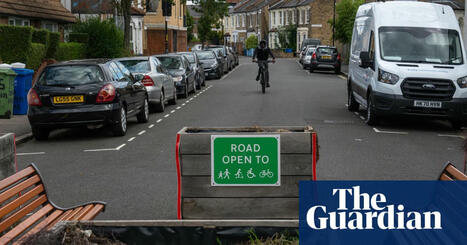
Low-traffic neighbourhoods cut road injuries and deaths by more than a third within their boundaries with no apparent negative safety effect on nearby roads, a study has shown.
Based on comparisons of more than a decade of road casualty statistics between 113 London LTNs and other roads that did not have them, the report’s authors found that LTNs were associated with a 35% reduction in all injuries, rising to 37% for deaths and serious injuries.
|
|
Scooped by
Energy Cities
July 8, 3:50 AM
|
The European Commission has tabled its proposal for the EU’s 2040 emissions reduction target, complete with flexibilities to help countries achieve it. Benjamin Görlach from think tank Agora Energiewende joins FORESIGHT Debates to discuss his thoughts
|
|
Scooped by
Energy Cities
June 6, 10:14 AM
|
Ten years after the landmark Paris Climate Agreement was decided, the social dimension of climate policy must play a greater role in government plans to curb emissions, Germany’s environment and climate minister, Carsten Schneider, has said. “Climate change has become a divisive issue around the world,” he warned, arguing that populist parties in many countries were eager to exploit the topic and to sow discord and obstruct effective policymaking.
|
|
Scooped by
Energy Cities
May 28, 2:36 AM
|
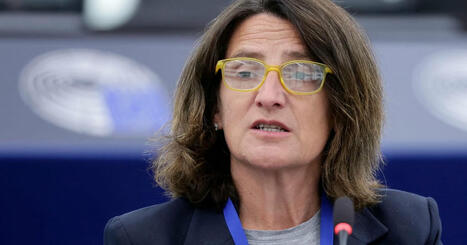
The European Commission will tell countries to cut 90 percent of their planet-warming emissions by 2040, but offer “flexibilities” to make the goal politically palatable, EU climate chief Teresa Ribera told POLITICO.
Yet she warned that giving too many concessions risks excessively weakening the target — which the EU executive is hoping to present on June 4 or the week after, according to two officials.
|
|
Scooped by
Energy Cities
April 4, 10:28 AM
|
In today’s episode of The Jolt, Sam and Dave look into how the Nordic nations are leading the way in the energy transition, plus Greece plans something big for its coal regions
|
|
Scooped by
Energy Cities
March 31, 10:31 AM
|
The Energy Performance of Buildings Directive (EPBD) is a key pillar in reducing Europe’s energy dependency and cutting emissions, ensuring a highly efficient and decarbonised building stock by 2050.
|
|
Scooped by
Energy Cities
March 21, 5:39 AM
|
Buildings in the worst energy efficiency categories have above-average carbon emissions, so targeting them first for refurbishments would have a significant climate impact, according to a report published by the German National Academy of Sciences. Insulating and converting such buildings to a climate-neutral heating supply is an important lever to rapidly reduce emissions in the building sector, which have remained stubbornly high for years.
|
|
|
Scooped by
Energy Cities
November 13, 8:51 AM
|
The European Union must slash its emissions to one tenth of 1990 peak levels by the end of the next decade, the European Parliament agreed on Thursday in a series of sometimes secret votes, with the yes camp outnumbering the noes by almost two to one. Despite concerns over growing opposition within the ranks of the centre-right European People’s Party (EPP), 409 lawmakers backed a deal agreed earlier in a centrist alliance with the Socialsts & Democrats, liberal Renew group and the Greens.
|
|
Scooped by
Energy Cities
October 9, 9:12 AM
|
In episode two of the Urban Question, we discuss the impact growing cities have on the planetary boundaries In association with Bloxhub and WRLDCTY, The Urban Question is a special series of the Urban Report podcast from FORESIGHT Climate & Energy, examining how cities are adjusting to a 21st-century citizen “We have to combine a low-emission building with high-absorption city nature.” Welcome to The Urban Question, a special series of the Urban Report podcast from FORESIGHT Climate & Energy in association with Bloxhub, the Nordic hub for sustainable urbanisation and the WRLDCTY forum.
|
|
Scooped by
Energy Cities
September 24, 2:18 AM
|
Rather than impose permanent changes outright, the city’s pop-up pedestrianization scheme, Living Stockholm, makes select streets car-free for fixed periods of time — usually in the summer, when locals are keen to enjoy the outdoors. It’s a strategy that has helped residents buy into the idea that public spaces reserved for driving and parking can be used for so much more.
|
|
Scooped by
Energy Cities
September 2, 6:05 AM
|
Entre 2012 et 2022, Paris a vu ses niveaux de pollution baisser de manière significative. Selon le dernier rapport d’Airparif, ces progrès tiennent autant à la modernisation des véhicules qu’à la réduction du trafic et aux politiques menées sur d’autres sources de pollution.
|
|
Scooped by
Energy Cities
August 28, 4:30 AM
|
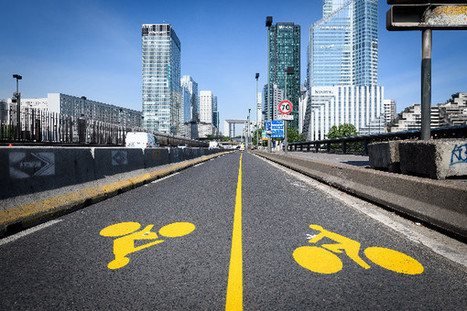
En quatre ans, la Métropole francilienne a déployé 137 km d’infrastructures cyclables et vise à doubler ses réalisations. Et si les élections municipales étaient l’occasion de changer la hiérarchisation des modes de transport urbains ? Pourquoi ne pas imaginer que les prochaines équipes municipales fassent passer les modes de déplacement doux en tête devant les transports collectifs et la voiture ? Nous n’en sommes probablement pas encore là.
|
|
Scooped by
Energy Cities
August 27, 8:49 AM
|
SUMMER SERIES 2025 — So far this year, the European Commission has sought to strike a balance between the need to decarbonise and increasing global competitiveness. Here are FORESIGHT's most popular podcasts on the policy powerhouse in 2025 to date
|
|
Scooped by
Energy Cities
July 10, 3:25 AM
|
The Commission’s proposed 2040 target is now in the hands of the European Parliament and EU countries, who must reach an agreement on the goal quickly to meet international deadlines. Lena Schilling, the negotiator for the Greens political group, joins Kira to explain what she thinks will happen next
|
|
Scooped by
Energy Cities
June 19, 4:05 AM
|
The built environment is responsible for a significant portion of global emissions. Min Guan of the Energy Transitions Commission joins The Urban Report to discuss how we can achieve zero-carbon buildings, from scaling low-carbon cement and steel to retrofitting inefficient homes
|
|
Scooped by
Energy Cities
May 28, 8:31 AM
|
Speaking during a debate in the Scottish Parliament, Martin said: “To deliver a just transition we must continue to work with communities, businesses, industry and the people of Scotland to plan for a future where Scotland is a leader in low-emission systems and technologies with all the jobs and the reduction in the cost of living that can come from that.
|
|
Scooped by
Energy Cities
April 17, 6:06 AM
|
Few countries in Europe have experienced the destructive effects of climate change like Spain. Aitor Zulueta from Vitoria-Gasteiz in northern Spain joins the Urban Report to discuss the city's efforts to adapt to increasingly extreme weather and the importance of acting rapidly to cut emissions
|
|
Scooped by
Energy Cities
April 2, 10:00 AM
|
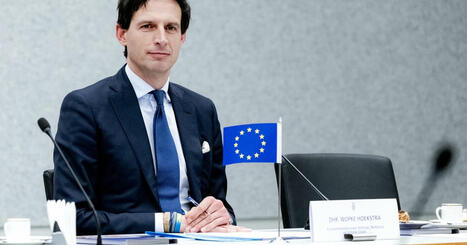
The European Commission wants to keep a 90 percent emissions-cutting target but to change how countries calculate their progress. EU Climate Commissioner Wopke Hoekstra is considering options to soften the bloc’s 2040 climate goal as he tries to contain a backlash against Europe’s climate ambitions.
|
|
Scooped by
Energy Cities
March 27, 10:56 AM
|
From superblocks to port electrification plans, Barcelona’s traffic pollution is slowly improving.
Reducing traffic in Barcelona by 25 per cent would prevent 200 premature deaths a year, according to a new study.
The Spanish city has the highest density of cars in the EU at almost 6,000 vehicles per square kilometre. Cutting down on combustion engines is no mean feat, but new research from the Barcelona Institute for Global Health (ISGlobal) shows the life-saving difference it would make.
|