Your new post is loading...

|
Scooped by
Energy Cities
November 28, 3:34 AM
|
Créée dans les années 1970 pour répondre à des enjeux d’urbanisme, la régie agricole de Toulouse s’est transformée jusqu’à prendre un virage clair en 2020 : soutenir la souveraineté alimentaire de la ville. Agriculture 100 % bio, circuits courts, production de pain pour la restauration scolaire, filière viticole structurée… À travers le Domaine de Candie et ses 250 hectares de terres agricoles intra-muros, la métropole a pour objectif d’alimenter les 35 000 repas municipaux journaliers. Le tout, en faisant rayonner le “bien manger” auprès des habitants et des restaurateurs.
|
|
Scooped by
Energy Cities
November 14, 5:35 AM
|
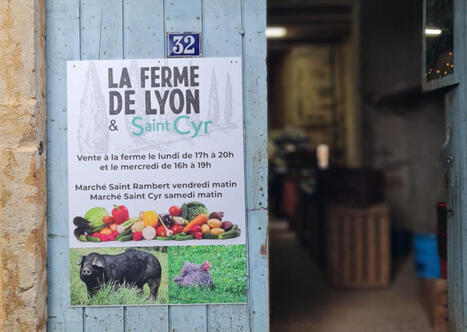
La métropole de Lyon est entrée au capital de la « dernière ferme de Lyon » menacée de disparition sous l’effet de la pression foncière. En devenant actionnaire de cette coopérative agricole, la collectivité entend pérenniser l’activité de l’exploitation.
|
|
Scooped by
Energy Cities
October 30, 11:34 AM
|
A new study on U.S. meat consumption suggests we’ve been missing a crucial piece of the carbon footprint puzzle: where our meat actually comes from.
Researchers found that a person’s “hoofprint,” or meat-related carbon emissions, can vary more than threefold depending on the city they live in, even though Americans eat roughly the same amount of meat nationwide. The difference, they say, lies far beyond city limits.
|
|
Scooped by
Energy Cities
October 3, 5:29 AM
|
Diet allows modest meat consumption and would also slash food-related climate emissions by half, says report by 70 leading experts from 35 countries
|
|
Scooped by
Energy Cities
September 30, 5:29 AM
|
In the quest for sustainability within our food systems, changing eating habits has become a critical goal. While various governance strategies have been proposed to facilitate this shift, their effectiveness can vary widely.
|
|
Scooped by
Energy Cities
September 26, 2:32 AM
|
Une centaine d'associations interpellent Sébastien Lecornu pour la publication de la SNANC, bloquée depuis 2 ans par les lobbies agro-industriels. Enjeux : santé publique, climat et réduction de la consommation de viande en France.
|
|
Scooped by
Energy Cities
September 24, 2:29 AM
|
From war zones to inner-city London, a new generation of land defenders are digging in – reclaiming soil, space and power through community gardens and regenerative action
There is power in a garden. There is power in the land.
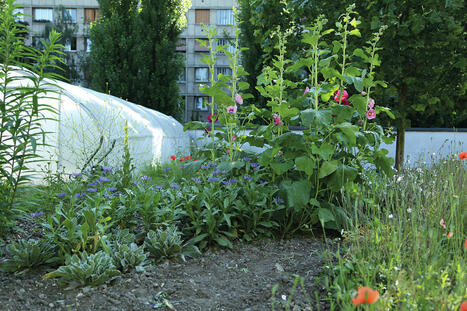
And across the world, from Ukraine to Zambia to south London, gardens are springing up and blossoming in some of the most unlikely places. They’re doing so thanks to a rising wave of land defenders: people reclaiming the right to grow healthy food for themselves and their communities, in a world that is increasingly squeezing that into the margins.
|
|
Scooped by
Energy Cities
September 4, 8:38 AM
|
The Vatican's first-ever vocational school aims to offer on-site training in sustainable gardening, organic winemaking, and olive harvesting.
The Vatican is inaugurating an ambitious educational centre inspired by Pope Francis’ ecological legacy. It is a 55-acre utopian experiment in sustainable farming, vocational training and environmental schooling for kids and CEOs alike on the grounds of the papal estate on Lake Albano.
|
|
Scooped by
Energy Cities
August 28, 4:20 AM
|
School catering can become a powerful tool for social, environmental, and economic policy, transforming a basic necessity into a valuable community asset. A series of case studies highlights how this can be achieved.
|
|
Scooped by
Energy Cities
August 27, 3:13 AM
|
Europe’s food system is failing the very people it’s meant to serve, as decades of trade-driven, industrial agriculture have left local farms disappearing, biodiversity declining, and citizens paying hidden social and environmental costs. Far from delivering true food security, this fragile model depends on distant supply chains and cheap imports often produced under standards Europe itself wouldn’t accept.
|
|
Scooped by
Energy Cities
July 8, 9:19 AM
|
La ville de Paris favorise l’installation d’agriculteurs urbains pour renforcer sa production agricole et reconnecter ses habitants au vivant. Elle a créé, en 2015, l’appel à projets «Parisculteurs» pour mettre à disposition des agriculteurs urbains professionnels du foncier agricole aménagé à faible coût. Elle sélectionne les terrains avec un cahier des charges strict et choisit les lauréats en évaluant leur modèle économique et agricole.
|
|
Scooped by
Energy Cities
June 6, 6:11 AM
|
With many Europeans facing a cost-of-living crisis, access to healthy food options is dwindling. At a recent policy breakfast in the European Parliament, MEPs, and organizations representing restaurants, retailers and consumers exchanged best practices for facilitating access to decent and healthy food while reducing waste
|
|
Scooped by
Energy Cities
May 23, 6:06 AM
|
La Sécurité sociale de l'alimentation Une carte vitale pour mieux manger Vous trouverez dans ce numéro : > Notre grand dossier : La Sécurité sociale de l'alimentation Les initiatives de SSA se multiplient dans les territoires, à travers la création de caisses d’alimentation animées par des collectifs citoyens. Ce dossier raconte ce bouillonnement constaté tant dans l’Aude que dans le Couserans, à Lyon, Toulouse ou Montpellier, et analyse les enjeux qu’elle soulève : écologiques, agricoles, sociaux, économiques et sanitaires. Car la SSA participe à la reterritorialisation du système alimentaire, de l’agriculture locale et des circuits courts jusqu’aux consommatrices et consommateurs, en passant par les chaînes de production, de transformation et de distribution. > Un entretien croisé entre la chercheuse Dominique Paturel et le député Boris Tavernier sur le droit à l’alimentation. > L’histoire d’une commune qui s’est alliée aux luttes militantes : Melle, dans les Deux-Sèvres, qui a accueilli le Village de l’eau, en juillet 2024, pour alimenter le débat sur les méga-bassines. > La démarche du Pays de Saint-Malo qui a pris le parti d’associer les habitants et les agriculteurs au plan sécheresse préventif. > Nos hérauts en transition : la coopérative citoyenne Virgocoop, en Occitanie, qui s’emploie à retisser une filière chanvre textile ; le mouvement Réserves de nature, qui s’engage pour protéger la biodiversité en Ardèche et dans le sud du Gard ; la Métropole de Lyon, qui déploie des bornes de collecte des déchets alimentaires sur tout son territoire. Consulter le sommaire A paraître le 25 avril Parution : avril 2025 · 164 pages Illustrations : Élie Bonhomme. Maquette : Arekusu S’abonner à DARD/DARD
|
|
|
Scooped by
Energy Cities
November 24, 9:56 AM
|
On a blue-skied summer morning, Place Pasteur in the historic center of Besançon is abuzz with colorful market stalls selling trinkets and antiques. But it’s also here that residents bring a different kind of valuable good every weekday, to give away for free.
|
|
Scooped by
Energy Cities
November 6, 8:28 AM
|
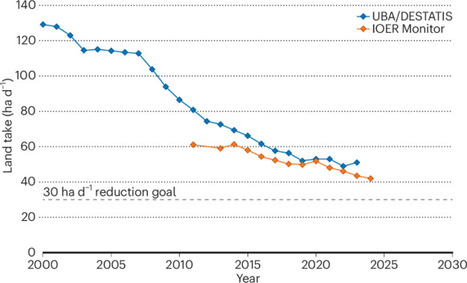
The authors discuss the challenges of curbing land take and the complexity of achieving the net-zero limit. They call for a shift in perspective beyond the restrictive logic of traditional land-use planning and suggest that the regenerative potential of cities be unleashed.
|
|
Scooped by
Energy Cities
October 9, 10:13 AM
|
Nikos Chatzilias spends his days tending to buzzing bee colonies with a unique view out over the rooftops of Greece’s capital.
He is among the dozens of Athenians who have embraced urban beekeeping to support local ecosystems, reconnect with nature and enjoy honey flavored by each neighborhood’s local plants and flowers.
|
|
Scooped by
Energy Cities
September 30, 5:30 AM
|
A new study reveals that Sweden has a high potential to achieve carbon neutrality by 2045 through changes in its food system. Key strategies include adjusting diets, phasing out fossil fuels across the food chain and reducing food waste. Together, they can help us stay within the planetary boundary for climate and improve people’s health.
|
|
Scooped by
Energy Cities
September 26, 5:06 AM
|
Social and environmental movements from around the world gather at the 3rd Nyéléni Global Forum this week, as the need for food sovereignty could not be more urgent.
Environmental injustice and climate chaos accelerate daily, driven by a global neoliberal economic structure rooted in patriarchy and colonialism.
Agribusiness and fossil fuel corporations deepen hunger, destroy biodiversity, displace peoples and poison communities - all while profiting from the crisis they created.
|
|
Scooped by
Energy Cities
September 26, 2:12 AM
|
The Basque Country, committed to sustainability, has embraced this cause with the “Soil Protection Strategy Euskadi 2030”. This comprehensive protection initiative recognises the complexity of the issue and highlights how a healthy soil is a diverse and multifunctional ecosystem crucial to achieving climate neutrality, a circular and clean economy, to reverse biodiversity loss, provide healthy food, safeguard human health and tackle desertification and soil degradation.
|
|
Scooped by
Energy Cities
September 5, 9:41 AM
|
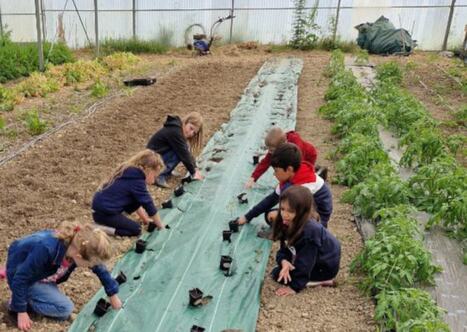
À Lagraulet-du-Gers, l’équipe municipale sert des repas 100 % bio aux enfants de l’école du village avec des légumes produits par ses soins et étendra le service à quatre communes d’ici la rentrée prochaine.
|
|
Scooped by
Energy Cities
August 28, 4:22 AM
|
The project is a direct response to the ever-pressing global need to tackle the climate crisis through the lens of culture: it is born from the conviction that culture, especially in the form of cinema, has the power to engage with one of the most critical challenges of our time: environmental sustainability.
|
|
Scooped by
Energy Cities
August 28, 4:16 AM
|
IN A NUTSHELL:
Despite claims that eating locally is the most important factor in making sustainable food choices, production is what generates the majority of food related emissions, not transport.
|
|
Scooped by
Energy Cities
July 24, 9:56 AM
|
Discover why EU seed law reform threatens farmers' rights, biodiversity, and food resilience, and why we need to protect seed exchange.
|
|
Scooped by
Energy Cities
June 26, 1:34 AM
|
Our food system uses 40% of petrochemicals and 15% of fossil fuels – yet it's left out of the climate conversation. Here's the path to fossil-free food.
|
|
Scooped by
Energy Cities
May 28, 3:01 AM
|
Our global food system has a significant impact on the environment. It accounted for more than 30% of global greenhouse gas (GHG) emissions in 2020, over 80% of tropical deforestation and biodiversity loss, and 70% of global freshwater withdrawals. It also has the potential to sequester substantial amounts of carbon.
|