
With the University of Wisconsin's board expected to vote soon on new tenure policies, Raymond W. Cross, the system's president, describes the challenges he faces in both reassuring professors and making lawmakers more supportive of higher educ
Get Started for FREE
Sign up with Facebook Sign up with X
I don't have a Facebook or a X account


 Your new post is loading...
 Your new post is loading...
Your new post is loading...
 Scoop.it!
With the University of Wisconsin's board expected to vote soon on new tenure policies, Raymond W. Cross, the system's president, describes the challenges he faces in both reassuring professors and making lawmakers more supportive of higher educ 
No comment yet.
Sign up to comment
Scoop.it!

Some time ago I asked our senior academic managers to revisit the essential elements of our student learning environment. As the college continued to grow rapidly, we knew re-examining our basic assumptions and practices related to student learning would only get more difficult as the numbers of faculty, courses, students and learning resources increased exponentially.
Scoop.it!

In 1986, I returned to Malaysia with a PhD in Physics and was thrusted into the world of distance education in the Universiti Sains Malaysia (USM) on the island of Penang in Malaysia. Distance
Scoop.it!
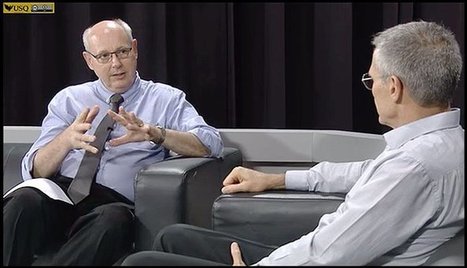
The other day I had the pleasure of interviewing Dr Hennie Esterhuizen, the Manager of e-Learning Support at North-West University in South Africa. He and a colleague had come to USQ on a bit of a
Scoop.it!

While test scores can predict academic success, self-management and relationship skills may better prepare students to thrive and graduate.
Peter Mellow's insight:
This article in the Atlantic made me reflect about our way of learning and the way we work. We often focus on technology solutions as that is the rapidly changing landscape we currently live in, and these solutions are often enabling. However while I've tried to weave social learning into the fabric of my work here, perhaps we need to consider emotional aspects as well?

Peter Mellow's curator insight,
March 2, 2016 4:57 PM
This article in the Atlantic made me reflect about our way of learning and the way we work. We often focus on technology solutions as that is the rapidly changing landscape we currently live in, and these solutions are often enabling. However while I've tried to weave social learning into the fabric of my work here, perhaps we need to consider emotional aspects as well?
Scoop.it!
Scoop.it!

The student experience is always high on the agenda for any educational establishment.
Scoop.it!

If you’ve been working in higher education (HE) for a while, you’ll know that the latest Higher Education Commission (HEC) report ‘From Bricks to Clicks: the Potential of Data and Analytics in Higher Education’ is welcome research. It brings into the spotlight the conversation about the strategic role that data and digital can play in HE.
Scoop.it!

Blogging is now an essential weapon in most scientists’ armoury
Scoop.it!

Early in my career, I remember a math teacher who was brilliant in the subject. His knowledge and understanding of the subject was astounding, yet his students struggled. Concepts that were easy to…
Scoop.it!
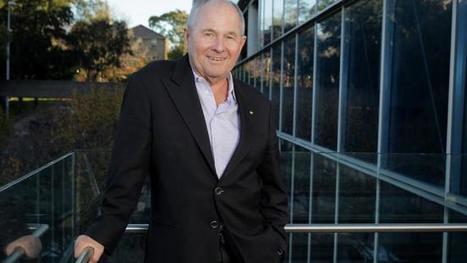
I love this “One thing I’m very well aware of is the (higher education) model is going to need to change and it will change fast,” he said. “I think education is going to be completely different 10 years from now. Those universities that adapt to online education, that adapt to portability of their courses, that have a larger footprint than just the north of Australia, are going to be far more flexible in meeting that change.”
Peter Mellow's insight:
I love the quote!
Scoop.it!

A purposeful integration of our teaching persona helps link students with content in subtle ways, leading to more meaningful learning. Here are 5 examples.
|
Scoop.it!

One of the great things about the academic community is its culture of collaboration and communication, particularly when figuring out ways to better support the student experience. True, there remains a competitive culture, as seen in our student tours, college athletics branding and college rankings.
Scoop.it!
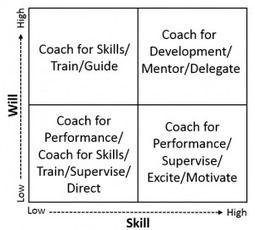
As leaders and managers in higher education, we often find ourselves in situations that require us to think outside the box in our interactions with faculty to continually improve student success in our classrooms. Our instructors are the face of our college in student interactions and should always be “top of mind.” Instructors help us meet and often exceed our goals and our students’ expectations, but what do we do when we have low performers?
Scoop.it!

Stephen Mumford is boycotting any university where handguns are allowed in class – and he wants others to join him
Scoop.it!

An American documentary about sexual violence in university campuses is sending shockwaves across the globe, with Australian institutions launching a joint response.
Scoop.it!
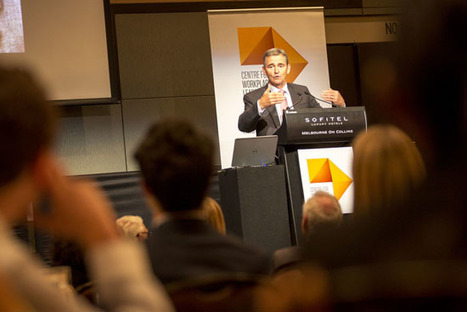
A new series of leadership masterclasses is underway, presented by the University’s Centre for Workplace Leadership.
Scoop.it!
Peter Mellow's insight:
The Stanford University Project for Education Research That Scales (PERTS) creates and evaluates mindset interventions that have the potential to raise academic achievement on a massive scale.
Scoop.it!
With this 5-step plan, you can learn to use meetings to communicate more efficiently, get things done, save people time, and do your job better.
Scoop.it!

In response to the growing demand from the education community, we are addressing requirements for cost-effective, appropriate and reliable connectivity services overseas.
Scoop.it!

Students tend to nominate entertaining or ‘sexy’ academics, says paper
Scoop.it!

In the second blog from nominees for Most Innovative Teacher of the Year at the THE Awards, Luke Burns calls on lecturers to embrace technology and a sense of theatre
Scoop.it!
The Novartis Professor of Leadership and Management at Harvard Business School is well known for her work on teams. In the spirit of ideas worth spreading, T...
Scoop.it!
Forget the monolithic change management programs and focus on the elements of your culture that drive performance.
Peter Mellow's insight:
Thanks to Paul Duldig (UniMelb) for this link.
|