
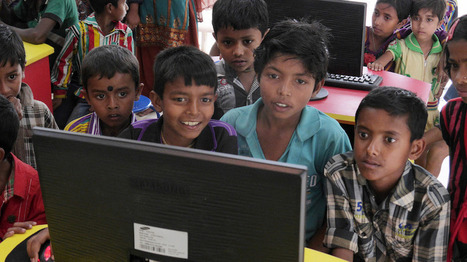
“If you give a group of children a set of questions and a computer with an internet connection, they will be able to find answers — whatever the difficulty level. Interestingly, the more random the group, the better,”


|
Scooped by
Anthea Arkcoll
onto EDEL subject scoops April 3, 2014 9:05 AM
|
 Scoop.it!
“If you give a group of children a set of questions and a computer with an internet connection, they will be able to find answers — whatever the difficulty level. Interestingly, the more random the group, the better,”


 Your new post is loading...
 Your new post is loading...
Your new post is loading...
Scoop.it!
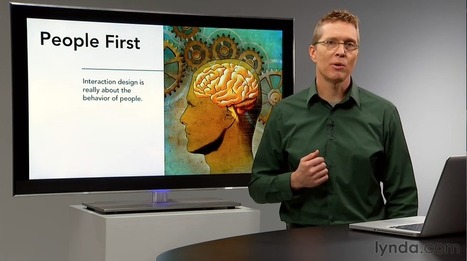
The purpose of this episode and blog post is to introduce you to the Storyline Ecosystem . There are many web links and resources here – if you are serious about interactive student centric learning and in particular simulations … bookmark them all and visit regularly. Much of what follows not only works in Articulate Storyline but such other simulation development tools as Simwriter and even can be embedded or linked to Apple iBooks and iTunesU courses. Via Allan Carrington
Anthea Arkcoll's insight:
Allan Carrington, a distinguished Australian educator, shares his blog post on the Articulate Storyline authoring software. I always find his viewpoint of value, as I regard him as an educator deeply immersed in transformational learning. I divert to mention that his blog makes provision for leaving audio comments as well as text comments, and he has a page dedicated to collaboration, on which he lists his areas of experience and current areas of interest, and invites like-minded parties to contact him to explore areas for collaboration. Then there's the equity and diversity page…. My favourable opinion of this scoop might be influenced - just a little - by the fact that he refers to Tom Kuhlmann of the Rapid Elearning Blog - the very first blog I ever followed.- and the Articulate Storyline community which I find incredibly active and generous. In fact I'd regard them as the learning equivalent of the Genius bar at Apple stores. But back to Storyline... I've chosen to focus most on how the flexibility of Articulate Storyline allows for the creation of simulation and branched learning experiences, and for scaffolding reflective practice. At this point in time simulations, digital storytelling, gamification and reflective practice are my hot topics. The first affordance is that of creating either simple or complex branched learning. As in all cases of branched learning, the designer is responsible for ensuring that the features and complexity of interactions do not overwhelm the learner, or become the focus of the experience to the detriment of the intended learning.
Timers can be included on individual pages, meaning that a time flow can be included in the activity (augmentation level of the SAMR model). For example if the learner has not selected an option within a predetermined time frame they may lose the option of choice and be directed down a specific path, or the scenario may report the presenting symptoms of the patient have progressed. Since hyperlinks can be incorporated, the learner could be directed out to other websites - perhaps to add insights to a preconstructed form on a wiki, or to make comments on a class blog. This also allows the opportunity for 'independent research points' where the learner is encouraged to search external information sources for material to determine their actions in the simulation eg. might leave the simulation to search the websites of peak professional bodies for current policy or best practice recommendations (augmentation on the SAMR model). Media files can be embedded in the activity by the developer , so that provides the potential for including audio or video materials which provide the perspective of different individuals and encourages a multidisciplinary approach. For example a child with hearing loss might describe the difficulty they experience listening in the noise of the classroom and social environments. The parents describe the impact of the hearing difficulty on the family as a whole and the concerns they have for the impact of hearing loss on their child's life now and into the future. Siblings might describe the impact on family communication patterns and the reactions of others outside the family. Additional clips could provide the viewpoint of other educational and allied health professionals such as teachers, learning support tutors, speech pathologists etc. In my setting I regard this as bordering between modification and redefinition on the SAMR scale, as accessing this rich network of experience would be impossible in synchronous, face to face learning, working with groups average one to five learners at a time, with a need for the learning opportunitiesto be available on an ongoing basis. This scaffolding of experience means the learner is more likely to recognise the value of creating a personal support network and maintaining involvement in professional network groups, using social media tools such as LinkedIn, Facebook and Twitter as well as the forum areas of industry specific professional organisations and client support groups. Text entry fields can be used to create "Stop and Think' points where individual learners are required to pause and enter their reflection on the factors which influenced their path selection in branched learning. In small group activities the same principle could be applied to create 'Stop and Negotiate' points where the group as a whole must negotiate which path is taken, and document the factors and group dynamics which influenced their choice. The quality of reflection could then be rated and used to shape the feedback provided to the learners. This approach could be used as a way of developing awareness of different cultural perspectives in a diverse group. In my situation where there is a small professional workforce which often has limited cultural diversity amongst the learners themselves, it would be a way of addressing sensitivity to the cultural needs and sensitivities of our clients. A powerful way to model reflective practice, when working with branched learning simulations, would be to include a point, or points, along the branching where the learner is asked to reflect on their choices to date and to decide if they would change any of their decisions if given the opportunity. If the learner did elect to go back and take an alternative path they could be given the opportunity to decide how far back in the decision making process they return. (redefinition on the SAMR scale). It should be noted that the learners are not able to upload media files directly into published Storyline activities, and so for this reason it is most powerful when link outs are used to take advantage of the affordance of other tools, such as wikis, where in completing the activity, learners could create and upload a role play of the interaction which might occur at a case conference meeting. Alternatively, the branching capacity of Storyline could also be used to create scenarios to provoke discussion around topics which are sensitive in medicine, such as euthanasia, or determining whether the same rigour is applied in deciding whether to order precautionary investigations when the client is very elderly, for example investigation of potential acoustic neuroma, or allocation of public health funding for cochlear implants for clients over 90 years of age.. The use of 'Stop and Think' or 'Share an Opinion' data fields allows for evaluation of the development of thought process using a scale such as the seven point scale of reflective thinking proposed by King and Kitchener (1994) covering, pre-reflective, quasi reflective and reflective thinking. This allows the learning environment to be structured to assess how people decide what they believe about vexing problems and the process of reaching judgments about complex or controversial problems. Simulations provide a safe learning environment to explore challenging issues around service delivery. The ability to embed media files in the activity can also be of benefit in this situation. It has been reported that when exposed to depictions of healing in media, students experience an emotional idealism which, while short lived, enables them to focus on the overriding positive aspects of the calling to work in health care and consequently better cope with dire situations encountered during training. In summary, I regard Articulate Storyline as useful tool for constructivist learning, both afforadances that accommodate both cognitive and social constructivism. King, K. M. B . & Kitchener, K. S. (1994). Developing reflective judgment: inderstanding and promoting intellectual growth and critical thinking in adolescents and adults. SanFrancisco: Jossey-Bass. Kumagai, A.K. (2008). A conceptual framework for the use of illness narratives in medical education. Academic Medicine, 83, 653-658. Shapiro, J. & Rucker, L. (2004). The Don Quixote effect: why going to the movies can help develop empathy and altruism in medical students and residents. Families, Systems and Health: The Journal of Collaborative Family HealthCare, 22, 445-452. Shapiro, J. & Rucker, L. (2003). Can poetry make better doctors? Teaching the humanities and arts to medical students and residents at the University of California, Irvine, College of Medicine. Academic Medicine, 78, 323-328.

Allan Carrington's curator insight,
March 27, 2013 3:02 AM
Articulate Storyline is the next generation of elearning development software. It is what I refer to as “80/20 software”. 80% or people will use 20% of the features and functionality 80% of the time and find it a satisfactory investment. (Some-what like Photoshop actually) While the 20% of people who push the envelope, learn and use 80% of the power of SL will most likely end up as excellent educators, with outstanding student outcomes and even a few prizes along the way.
Scoop.it!

From
ed

Use engaging videos on TED-Ed to create customized lessons. You can use, tweak, or completely redo any lesson featured on TED-Ed, or create lessons from scratch based on any video from YouTube.
Anthea Arkcoll's insight:
Mainsrtreaming constructivist learning 101! TED-ED incorporates tools to build a lesson around any of their talks or Youtube videos, and then provide a youtube video of how to do it! This is scaffolding in action, supporting educators in flipping lessons, providing sample questions but encouraging teachers to create their own. Building in links to external sources and allowing material to be customised. I love TED talks and this is another great feature.
Scoop.it!

"We may not have ended up where we intended to go, but we ended up where we needed to be." Douglas Adams
Anthea Arkcoll's insight:
A useful blog to follow, providing reviews and updates on education focused technology. Video storytelling and gamification are two areas I'm exploring and this site provided some useful reviews.
Scoop.it!
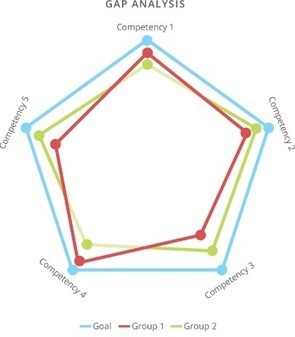
SofDecisionSim™, a cloud and mobile-based simulation platform, enhances decision-making and assesses the competency gap between training and patient outcomes.
Anthea Arkcoll's insight:
Software for generating scenario based simulations, with a medical emphasis. Simulations are an excellent way of creating situated learning cases that match the proximal zone of development of the learner. A basic characteristic of a constructivist learning environment is the use of learning groups consisting of small numbers of heterogeneous students. Software based simulations allow multiple small groups to operating simultaneously, offering a scalability seldom found with physical simulations. Problem based learning is one of the pedagogical models which meets the goal of constructivist learning. Within the medical field, cognitive apprenticeships and communities of practice are other pedagogies which provide a constructivist approach. The requirement of teachers to provide relevant authentic tasks for their learners, who may display marked variation in development, places a heavy demand on preparation of learning materials. Tools such as Decision Simulation, which are tailored to the medical field and are more intuitive in the structuring of information for facilitators in the field, can reduce production time. Despite this it takes considerable resources to create simulations. The complexity of scenarios in Decision Simulation are controlled by the activity designer. Rich media can be embedded in or linked from the software (augmentation in the SAMR model). Then fidelity of the simulation should be appropriate to the current skill level of the learner and the complexity of the learning target. Too much realism and complexity can be distracting for novice learners (Maran and Glavin, 2003). This software was selected by the Med Star National Rehabilitation Hospital when conducting studies on the efficacy of simulations, due to the ease of authoring and customising scenarios (Schladen and Pineda, 2009). The cost of packages such as Decision Simulation mean that it is primarily taken up by large medical organisations, medical training institutions and government departments, such as the US Department of Veterans' Affairs. The main reason that I was drawn to investigate it was the apparent quality of the metrics collected. As Eric Mazur says, "the plural of anecdotes is not data". The metrics makes this software a quality tool for assessment purposes as well as for training and performance management. The immediate provision of specific and quality feedback is a key to the recall of information. The feedback in Decision Simulation can be given immediately to reinforce a behaviour, deferred so the learner experiences the consequence of their decision making or withheld for the purpose of assessment. it is adaptive and can be personalised to the individual learner, showing their profile of performance against objectives which are determined at the time of designing the module. Although it should be noted that equally important as the structure of the feedback is the manner in which it's delivered. Is should affirm learners on aspects performed well and encourage them to gain their own insights into their performance, focusing on solutions to any problems rather than the problem itself (Rock, 2009). Value lies in the inclusion of metrics such as the order of decisions, and the time taken to reach decisions, in addition to analysis of specific clinical choices (redefinition on the SAMR model). This should provide a greater insight into the learners confidence as well as assessing competence and areas of potential knowledge gap. The software can create simulations targeting individuals (e.g. for performance management) small groups, interdisciplinary teams or large groups. Sessions may be synchronous or asynchronous, Particularly for synchronous learning 'think aloud' activities can be incorporated to target both reflection and practice in articulating thoughts and decision processes. I see tools such as this having great value in providing information about every learner, in a way that general tutorial sessions don't, as performance is not dependent on their comfort and willingness to speak out in front of the group. The storytelling nature of well crafted simulations can serve as the key to create emotional engagement, which in turn supports learning by facilitating the flow of content from short to long term memory. Maran, , N. & Glavin, R. (2003). Low -to-high-fidelity simulation - a continuum of medical education. Medical Education. 37, Suppl1: 22-28. Rock, D. (2009). Your Brain at Work. Harper Collins, New York:NY. Schladen, M.M. & Pineda, C. G. (2009). Enhancing clinical education and training, improving care. Patient Safety and Quality Healthcare. Lionheart Publishing. Marietta:GA.
Scoop.it!
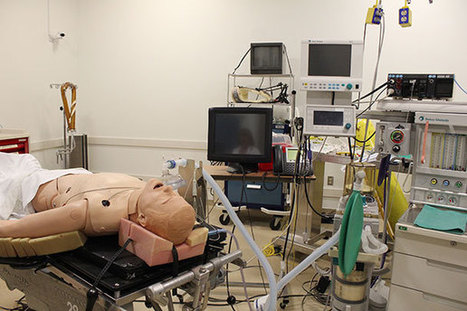
"There's an entire floor dedicated to simulation" "The sixth floor was left unfinished in anticipation of … needs that have not yet been anticipated." "...keep in mind: Duke waited 80 years for this. "
Anthea Arkcoll's insight:
If you're prone to drooling grap a tissue before you read this post... in fact grab one anyway. This author describes features of the new Duke University medical centre, the best example I've found of a medical learning space specifically designed to support constructivist and transformational learning. Importantly, it appears this is combined with learning design that places an emphasis on collaboration and problem based learning, as reconfigurable classrooms and 70 inch touch screens are only as good as the use that is made of them. Further link on the efficacy of simulations http://www.ncbi.nlm.nih.gov/pmc/articles/PMC2966567/

Marina Cousins's curator insight,
April 6, 2014 2:46 AM
This type of learning is predominately in hospitals and universities by using technology like this example in this picture, every practiitioner has the opportunitity to practice their advance life resuscitation skills.
However, this technology is not available on a general ward when a facilitator wishes to undertake a micro-learning session.
The facilitator using the above technology to enhance learning incorporates the following learning theories: cognitive, collaboration and constructivism. 
Anthea Arkcoll's comment,
June 13, 2014 5:31 AM
Paul it sounds like you have some experience with the use of simulations. Since most procedures in audiology are relatively non-invasive our version of high fidelity simulation is testing colleagues and family members. Standardised patients aren't routinely used in audiology as the cost would be prohibitive. We do have some pretty low fidelity simulations - the cap of biro makes a pretty good simulator for the size of an ear canal (provided there's no hole in the end of the cap) and we use this to practise some elements of hearing aid fittings. Given we don't have the Duke university budget, we may have to stick with that.
Anthea Arkcoll's comment,
June 13, 2014 5:38 AM
You make a very good point about the interdisciplinary education, and it is very challenging to make that happen if those other disciplines aren't directly collocated. While we have health professionals from other disciplines speak at our annual clinical conference, I'm now looking to start developing a library of video or podcast interviews that can be incorporated into more computer based simulations.
|
Scoop.it!
“If you give a group of children a set of questions and a computer with an internet connection, they will be able to find answers — whatever the difficulty level. Interestingly, the more random the group, the better,”
Anthea Arkcoll's insight:
Self Organised Learning Environments are the passion of Sugata Mitra. His "hole in the wall" experiments, in which he placed a free computer, with internet access, in a Delhi slum is social constructivism at its purest. The street children, who had no knowledge of English, taught themselves both the use of both the computer and English. Replications of this study led to the concept of a School in the Cloud. At these, Schools in the Cloud, a 'granny cloud' of remotely located teachers provide mentoring over Skype. Mitra describes the result as minimally invasive learning. Awarded a TED prize in 2013, Mitra is using the million dollars to establish 7 School in the Cloud learning labs in the UK and India. Is this a model for future education? Engaging curiosity + technology to access information + remote mentoring = learning spaces of the future. The success of this program may in part be predicated on the self-selecting nature of the students - those who do not have in interest in academic learning will never engage with the program. This contrasts with the challenges reported by friends who teach upper high school classes, when up to a third of the students in the class are present due to a lack of alternatives rather than a desire to learn. There is the potential for increased numbers of these students in high school and vocational training with the introduction of new government 'earn or learn' requirements. I am not sufficiently familiar with the VET sector to judge the likelihood that there will be an expansion of course options to accommodate for this. links to TED talks: http://www.ted.com/talks/sugata_mitra_build_a_school_in_the_cloud http://www.ted.com/talks/sugata_mitra_shows_how_kids_teach_themselves
Scoop.it!

Google Glass looks exciting for the medical world, and presents a particularly powerful opportunity for medical education.
Anthea Arkcoll's insight:
Google Glass provides a heads-up-interface to the net. The other major affordance for learning is of video recording and streaming. Use of Google glass affords medical personal direct and continual access information to inform decision making in real time, without compromising the sterile environment of medical workplaces such as the operating theatre. The ability to take video recordings, which provide the practitioner's viewpoint enables the creation of truly high fidelity simulations. Data from monitoring instruments can be streamed to Google Glass to inform the surgeon, and by having the same data displayed on screens for learners they will be able to observe how the data shapes the decision making process. While there is existing capacity to record in operating theatres, the nature of the recording equipment has generally required a certain distance be maintained from the 'hotspot' unless it has been by use of a camera attached to an operating microscope to capture image of procedures. These cameras have a limited scope of application and show one small, albeit vitally important, part of the total operating field. Google Glass has the capacity to provide a broader line of sight view, more closely resembling a surgeon's visual field. Addiitionally, as they are minimally intrusive, sets could be worn by each person in the operating theatre, providing the perspective of each of the different health professionals, and providing a rich experience of the interaction between them (redefining on the SAMR model). Students and junior staff. The University of California, San Francisco has approved use of Google Glass in surgery, with over 10 surgeries to date carried out with Google Glass. The health industry has been a strong early adopter of this technology, seeing the benefit of handsfree technology. Part of the appeal of Google Glass to me is that it is hardly more intrusive than many of the headworn lights that otologists use during face to face patient consultations. As such technologies become more commonplace, clients are much more likely to be comfortable in consenting to recordings being made and it will have less impact on the natural flow of the clinical interaction. Just as the first Google Glass users have been uploading videos of their 'glass experiences', the medical community could create a library of clinical cases. One of the strengths of learning simulations is that they overcome the ad hoc nature of case presentation during training programs and in general practice. While cognitive apprenticeships are a pedagogy of constructivist learning, this enables better scaffolding of the learning experience. When worn by students they would allow the texting of prompts or suggestions from an experienced mentor or recording of the interaction for self-analysis or feedback from a supervisor. In the future job aids or performance support guides could be designed specifically for this type of display, when used in combination with a GPS enabled mobile phone, guides could be specific to the location within a hospital that the wearer is in at the time. For example reminders of the infection control measures etc. ( a behaviouralist approach). Already an application has been created for 'wearable health records' which connect to cloud based or electronic medical records. It has been reported that patients may be granted access to these records and having the ability to see an examination from the doctor's perspective may be a powerful counselling tool and way of sharing health information with significant others (modification on the SAMR model). It provides the doctor with the ability to access specific pieces of a client's health history without having to shift their visual focus away from the patient, which would allow access to the information while conducting procedures. The issues of patient consent and maintaining appropriate privacy settings are critical from a quality of care perspective, although not reported to be a major issue in practice. The authors note that 'device value needs to be taught... " This is true of the take up of any new technology by educators. There are also issues of social and professional etiquette - for instance that surgeons not stream score updates from the rugby world cup to Google Glass while operating….. Due to the limitations of its voice operated interface, in situations where the handsfree function is not critical, it may often be used in combination with a mobile phone. Linking to a mobile phone is also necessary to allow any GPS enabled functions - for example if a student was wearing Google Glass while observing a consultation and they wished to access demographic data or data on the incidence of specific diseases. I consider there to be affordances to support constructivist learning. There are many ways of augmenting documents and data access, but also the potential for redefinition, with learners constructing and sharing their learning experience. This positive view of Google Glass in the medical setting is in direct contrast to media reports of a strong negative perception amongst parts of the general community. In fact some social commentators have suggested that one of the affordances of Google Glass is to be punched in the face by a total stranger while walking down the street, and the creation of the term 'glass holes'. In a world where privacy is rapidly becoming a thing of the past, it appears that for some, Google Glass is just too conspicuous a reminder that digital natives are as much creators of media as consumers of media - and that all those caught in their field of vision may become involuntary participants. further links: more about Google Glass http://www.forbes.com/pictures/fghi45fdei/google-glass/ Brennan, M. D. & Monson, V. (2014). Professionalism: good for patients and health care organisations. Mayo Clinic Proceedings, 89(5), 644-652. Schladen, M.M. & Pindea, C. G. (2009). Enhancing clinical education and training, improving care. Patient Safety and Quality Healthcare. Lionheart Publishing, Marietta: GA.
Scoop.it!

Digital story telling tool to create 3D pop-up books. American Association of School Librarians voted this Best website for teaching and learning in 2011.
Anthea Arkcoll's insight:
Digital story telling is a fantastic constructivist tool. Great potential to collaborate to create the story outline then populate it. Both the creative process and the product should be highly appealing to young learners. Free version allows up to 10 books to be created, each of up to 10 pages. Can upload artwork or characters as well as drawing on an open clip art library. The addition of voice recordings or sound effects, the ability to revise and play offline is only available by subscription $9.99 US per month or $49.99 US per year.
Scoop.it!
Anthea Arkcoll's insight:
A journalism teacher uses analysis of a Superbowl commercial to expound on principles of storytelling. As one of the most expensive pieces of marketing material in the world, it could be regarded as a distillation of best practice. The production values are well above the level of video storytelling I'm considering, and the play by play description covers aspects I wouldn't incorporate into projects, but there are also basic principles scattered throughout the commentary. Tips such as:
Adapting this to the classroom setting, groups of learners could nominate a favourite tv 'story' ad and analyse it for story development, character, setting, tension, climax, resolution etc. Then sharing their findings with the group, or if the class or school has a movie night, they could be presented as the trailer to the movie. The prospect of having a real audience would make the activity more authentic.
|






Self Organised Learning Environments are the passion of Sugata Mitra. His "hole in the wall" experiments, in which he placed a free computer, with internet access, in a Delhi slum is social constructivism at its purest. The street children, who had no knowledge of English, taught themselves both the use of both the computer and English. Replications of this study led to the concept of a School in the Cloud.
At these, Schools in the Cloud, a 'granny cloud' of remotely located teachers provide mentoring over Skype. Mitra describes the result as minimally invasive learning.
Awarded a TED prize in 2013, Mitra is using the million dollars to establish 7 School in the Cloud learning labs in the UK and India.
Is this a model for future education?
Engaging curiosity + technology to access information + remote mentoring = learning spaces of the future.
The success of this program may in part be predicated on the self-selecting nature of the students - those who do not have in interest in academic learning will never engage with the program. This contrasts with the challenges reported by friends who teach upper high school classes, when up to a third of the students in the class are present due to a lack of alternatives rather than a desire to learn. There is the potential for increased numbers of these students in high school and vocational training with the introduction of new government 'earn or learn' requirements. I am not sufficiently familiar with the VET sector to judge the likelihood that there will be an expansion of course options to accommodate for this.
links to TED talks:
http://www.ted.com/talks/sugata_mitra_build_a_school_in_the_cloud
http://www.ted.com/talks/sugata_mitra_shows_how_kids_teach_themselves