Humans have been telling stories with pictures since the days of cave paintings, so we should be pretty good at it by now. All right, uswant to increase your business? Then translate your business stories into videos. I know I know, who's got the time in which is the best tool to use? Most of my stories I share with my clients in the board room. When I think of taking some of my business stories and creating a video or two to share on my website, I get just completely overwhelmed. But this info graphic drives home the necessity of creating these videos so that your stories can do your marketing for you. For example, for those of you who have products 85% of customers are likely to purchase purchase a product after watching a video on your website about it. Wow! For service businesses, 65% of the C suite or top senior executives of the company will continue to research you after viewing one of your videos. Wow again! there are quite a number of articles in this collection about tools and strategies for creating effective digital stories. So dig in, learn lots, and work creating these videos into your schedule. And I'll work hard on trying to take my own advice! This review was written by Karen Dietz for her curated content on business storytelling at www.scoop.it/t/just-story-it ;
Marty Note
Karen (@Kdietz) is a great storytelling resource. I agree with all of these ideas especially moving stories to video. I just got back to my desk after shooting a "Conversation" with my boss Jon Jordan about Ecommerce.
Easy, painless and fun and the video will attract 10x the followers of the same information written into a blog post. Visuals are crushing textuals so be sure to incorporate these tips into your storytelling. Oh, and don't forget STORYTELLING is your marketing strategy.

Social business technologies and initiatives are becoming more important to business and must continue to show business value. Organizations today are starting to realize measurable business value from their social business initiatives. However, most firms have yet to measure the return on investment of their social business investments, according to a recent survey by Mzinga, Teradata Aster, and The Center for Complexity in Business at the University of Maryland’s Robert H. Smith School of Business. According to the study, organizations today are primarily using social technologies for the following: 64% for marketing initiatives 47% for customer support 39% for employee collaboration 27% for sales The data points suggest that social business technologies and initiatives are becoming more important to business in general and it’s only a matter of time that they be considered normal business practices. Forty-nine percent of those surveyed for the Infographic said, “Yes, I’ve attained measurable business value through the use of social technologies. But I haven’t used it to its full potential yet.” By Michael Brito. http://bit.ly/Nojt60 Download Exploring-The-Use-Of-Social-Technologies-And-Big-Data-Analytics-In-Business. http://bit.ly/TjX1ka Source. http://bit.ly/Q5QrJg
Marty Note - Can't believe we are still debating this issue of Scocial ROI, but we are so here is a good bullet to load in your gun the next time someone attacks social as a game.

It kills me when there are linking opportunities right under my nose. No one has made me realize this more than Adam Melson. How to build relationships (then links) Please, please, please do not use this approach to ask for a link back. It’s a great way to build relationships with journalists and webmasters. They know who you are so why not reach out and ask to work together on a project (depending on what they’re saying about you…).
Marty Note
I concur and suggest begging for backlinks is a nonstarter anyway. If you want a backlink from a PR6 or above they know what they have and will either charge you (thus violating Google's directive to NOT pay for links) or treat your request like it doesn't matter (because to the rich the needs of the poor rarely do matter).
There are two ways I found to get links from high PR sites: * create highly "purple" content. * do a site you want a link from a favor.
Purple content, as in Purple Cow the book by Seth Godin, is viral and walks around the web on the strength of its shares. High PageRank sites will want to be included in sharing great content. Be sure to return he favor and share theirs.
Solving a problem can be anything from finding a broken link to suggesting a book or related content either on your site or someone else's. You can also comment on their posts as that can help build a relationship. You don't become BFFs in a minute, so expect the kind of relationship building that can lead to positive links to take some time.
Begging for links seems an impossible journey now, so don't waste your time. This link from Level343 is a good way to help writers and so develop relationships. I like this approach too since it creates the invisible quid pro quo we westerners respect.
Telling great stories has never been more important. Google's Panda and Penguin changes prize site heuristic measures such as Time On Site, Pages Viewd and their algorithm has always hated high bounce rates. Stories help improve heuristics and reduce abandonment and bounce. This article includes 5 tips to help your website tell better stories.

Did you know that that 40% of web visitors never return to a website after a bad browsing experience? Businesses by and large have come to understand the value of creating compelling content for attracting and retaining web visitors. But it is also important to ensure that a website is designed in a way that ensures a compelling user journey.
You surely don’t want your visitors to head to the exit door of your web real estate as soon as they have entered, right?
The question remains – what makes for a bad web experience? According to Kissmetrics, things such as poor navigation, obtrusive use of video and audio, boring content and design, and poor legibility can put online users off and result in excruciating bounce rates.
Kissmetrics provide the answer in this infographic, visualising some examples of what not to do when designing your website but also dishing out advice on how web design mistakes could be fixed.
Marty Note
An important list. Of the items on this infographic Bad Nav is my favorite target when I'm looking to increase conversion from a site. Navigation can be bad in many ways including:
* Not aligned to keywords (so not aligned to how customers THINK). * Bait and Switch - pitch one thing deliver another. * Landing pages don't make sense or are too confusing no secenttrail. * Scenttrail is off - words in nav don't match landing environments.
The best nav fits Google and its landing pages like a glove. Google is an important place to start for more reasons than you realize. Sure you need traffic from Google, but those search counts also represent a large and more important idea. Search counts represent the semantic way your products and services are understood in the world.
You may understand your products and services as Y and the world understands them as X. I that case go with X is my best consulting advice because the way you think about something only matters on your about page. After that you want to match the market.
Here are a few stories from the commerce space that caught my attention this week.
Marty Note
This faceoff over the future of money is starting to feel Rumble In The Jungle or 2 Men Enter One Man (or company) leaves. Control the money and you control almost everything else and thus why the poker is exciting, costly and killer.
The interesting part of this faceoff is who will win the CONFIDENCE that money has become. Money isn't a physical thing anymore. Money is the reputation you've earned expressed in real time via social signals, your past (online and off) and an algorithm's understanding of your soul. This fight is over who will control Web 3.0 and the coming Semantic Web so stakes couldn't be higher.

Take a spin through the free app for iPad to discover art in a whole new way. Explore collection wheels of colors, words and curators.
Marty Note The app is everything the Met's New MyMet is not. Art.com's Circles app is fun, easy to use, fast and inspirational; the app creats a new kind of intimate product engagement.
The idea is organize your products in the usual way and then create an unusual access, an strange and creative engagement that creates upsell and cross sell by virtue of what your customers do with your tool. You don't describe the path as much as you create the tool and stand back and watch.
Circles is the new ecommerce, the we have these things and want to tell these stories but the over and hierarchy is up to you the customer. We merchants are curators and party hosts. We make sure no one gets too drunk to drive home, punches a friend in the nose or missing the magic going on in the other room.
Art.com has it going on. They are creating the new commerce that starts with a responsive set of ideas layers in data and then blows up the usual suspects to create new ways in, new "user in control" or "users who feel in control" ways into your data. We merchants displace traditional approach to sit back and watch how our customers play with our new toys. We make sure we learn and create the next cool ideas even before circles has a chance to get old.

Why It May Be Time to Sell AmazonForbesThis is especially true for a company such as Amazon (AMZN), which remains in a neck-and-neck battle with Apple (AAPL) and Google (GOOG) for technological supremacy.
Marty Note
It never ceases to amaze me how misunderstood Amazon's (AMZN) ecommerce benefits are by Wall Street. This article says Amazon is battling Apple (AAPL) and Google (GOOG) for "technological supremacy". Yeah, not so much as it turns out.
Google and Apple make money in very different ways. Google makes money from the arbitrage of keywords (advertising or what it has become) and Apple is a product company. The sales of Apple's best sellers are probably greater on Amazon than their own site. Apple is not built for ecommerce Amazon is built to sell things online to people.
Amazon embraced platforms way before anyone realized how important the User Generated Content (UGC) they generate would be so valuable to ecommerce. Amazon has many other first mover advantages including:
* Over 1B indexed pages in Google. * An incalculable number of Page 1 Google listings.
* A PageRank of 8. * An algorithm almost as fine as Google's and arguably better at arbitrage.
The cumulative impact of these benefits creates the great wall of the Internet. In online commerce there is Amazon and then, far off down the road, is everyone else. The Internet's "rich get richer" nature means Amazon's castle can't be stormed short of some major disruption.
The combination of Social, Local and Mobile could be the disruption that hurts Amazon if they don't respond. SoLoMo is an alternative universe wild and untamed. Of the three companies mentioned by this article Apple is in the best position vis a vis SoLoMo, but only slightly. Because I use an iPhone doesn't give Apple the edge on where I go on my iPhone.
The app store does give Apple a large moat, but not an unbridgeable one. Android proved that and the distributed nature of phones means scale in hardware and software is almost impossible for any single company to achieve.
Apple recognized this and so created the ability to use their platform something Apple does only when not doing so is suicide (and even then). Amazon, Apple and Google all face a new world of smaller presentation on mobile devices powered by GPS.
That is a significantly different world that no one has a clear strangle hold on it. Apple may lead, but Google caught up and in some important ways passed them with their more open platform. The problem with open platforms is they are so open quality is harder to police and domination is more difficult.
No matter who wins the hardware the real battle is in the new world of distributed apps and mobile commerce. Responsive design is going to be the rule of the land here soon and it brings many new and important constraints such as SPEED, functionality and the difference in the search function since there is a need to add in PLACE.
It may be time to sell all three of these stocks if you don't have an iron stomach because these three horses are neck and neck coming into the home stretch and there are no guarantees a dark horse won't appear and win the SoLoMo race.
If you are playing with house money, and you should be by now on all three, hang in. If not and you have profits take some and hang on as it is going to be a wild 18 to 36 months as SoLoMo sorts out.
A technological convergence is remaking bricks-and-mortar stores as the future of retail is upon us.
Marty Note
Agree this is a tipping point year with mobile hitting stride, predictive analytics moving from backsteat to front and some lean, mean fighting ecommerce machines out there using more and more, faster and faster, better and better as their guide to the new Ecommerce revolution. I've been an Internet marketer a long time, since 1998, and this feels like a watershed year.

Excerpt from the article: Let’s get started with our step-to-step guide for creating SEO landing page (that converts! Step 1: Set your landing page goals
Step 2: Develop Search Personas
Step 3: Create content with search personas in mind
Step 4: Arranging the layout of your SEO landing page
Step 5: Keep the most important element above the fold
Step 6: Use Pictures to Boost Conversions
Step 7: Make Use of Videos
Step 8: Be persistent with your call-to-action
Step 9: Leverage Testimonials
Step 10: Use Heatmaps to easily identify the focal point areas
Step 11: Write effective headlines to drive traffic Curated by Agostino Caniato:
http://bit.ly/Landing-Page-World To deepen the points just mentioned read the full article here: http://bit.ly/RnDayH
Marty Note
Don't usually think of SEO "landing pages". Usually use "landing pages" to describe where paid traffic lands, but the distinction is lost when traffic and its origins are becoming as murky as it is now. Semantics aside this ariticle is full of some of my best tricks including personas, pictures and CTAs (call-to-actions).
Nasty Gal, a site dedicated to selling (Index Ventures invested in Nasty Gal - http://t.co/sVziqPht #Nasty Gal #IndexVentures #Ecommerce...)...
Marty Note
Great name, great concept, beautiful women and $40M in the bank, so success is going to happen for Nasty Girl.

If you work in online marketing, you should be familiar with Google Trends for Search, which will show you the change, over time, in search volume for the keywords you enter. As you are doing keyword research, I highly recommend adding the monthly Trends column to your results page so that you are able to see which terms are gaining traction in which months, and which are not.
Marty Note
I love the IDEA of this post, but have had real difficulty applying the overlay of using the most powerful marketing tool ever created to proactively guide future decisions. I believe the obstruction is in our hubris. We marketers tend to believe in our ability to be one with the crowds we serve.
Here is the rub to my 12 year Internet marketing career. No matter how simple and clear we thought we mad something in our little team lab we inevitably had to make tweaks once the thing we were so sure represented the mind of the mob was actually being used by our mob.
This is the Hisenberg uncertainty thing. We bring our own baggage to any decision. Once a feedback loop is established we can strip away that baggage and simply respond to what is happening now. The good news is once the mob speaks via metrics their voice is hard to deny. Why that voice is so much easier to see in retrospect instead of as this excellent article projects in advance is a mystery wrapped in an enigma.
We BUY with emotion and JUSTIFY with logic This article imples in a world of data we reverse human nature. Love the idea here and if your company has been successful forming up proactive around data instead of opinion, ego and hubris please share HOW you did so :). The ZEN required to achieve what is suggested in this post is so valuable, so immediately available and present the companies that learn and apply it will create advantage.

We have reached the dog days of summer when I, along with millions of other parents, eagerly prepare to send our kids back to school. A large part of this preparation is the exciting, often mind-numbing and definitely expensive back-to-school shopping. The National Retail Federation (NRF) estimates during August and September shoppers will spend a total of $83.8 billion. Smart shoppers are increasingly utilizing mobile devices, including tablets, to search, compare and even transact the best back-to-school deals while they are in-store or online. Homework is not just for the kids anymore.
The NRF survey cites that mobile continues to be a primary driving force in the retail industry and that next to the holidays, back-to-school is the one of the biggest shopping seasons of the year. Some key stats from the NRF’s 2012 Back-to-School and College Surveys:
More than 50% of those surveyed who own smartphones will shop in some way via their mobile device for both school and college merchandise.
Smartphone usage to research products and compare prices back-to-school for K-12 is 33.3% and college 31.5%.
Nearly seven in 10 tablet owners will utilize their tablets to shop for school and college items.
58.7% of smartphone owners looking for school merchandise will use their mobile devices.
These numbers rise among 25-34 year olds, with the majority of smartphone owners in this age group using their devices to research products and compare prices for back-to-school (54.2%) or college (50.1%).

What is the difference between asking for reviews and soliciting them? It seems that a number of SMBS have discovered that one leads to jail time. Google has been throwing out reviews left and right of late. This is not a bug but the outcome of a newly aggressive review spam filter.
Marty Note
Wow, every now and again I read a random thing and it bums me out for days. This note on Google's random and hard to understand crack down on reviews is a bummer. Reviews are any ecommerce site's lifeblood.
Since reviews = MONEY to ecommerce we created a "Buzz Team" when I was Director of Ecommerce. We invested heavily in teaching the Buzz Team how to write reviews. We would never teach WHAT to say, but how to say things in fair and keyword dense ways was a lesson worth teaching.
This excellent post from Kike Blumenthal makes it sound like our Buzz Team is on the wrong side of a new review law that seems capricious and cruel. One question I still have is Google policing their reviews or all reviews. I suspect it is the later, that Google is using new algorithm to decide if your review is too pat, too good.
This seems related to their new Panda based machine learning, the magic bifocals that can see through walls of spam. Like optimized linking reviews will need to BE not just appear random. That means teaching reviewers how to spell and use specific language is probably OUT.
Unfortunate since we used to get a lot of, "It’s great," or "It sucks" reviews. There is a comment about attack reviews too and that is a concern since attackers always seem to know how to make their content play well with Google (i.e. random, natural sounding but killer use of keywords).
All ecommerce merchants should read this post about Google's latest Panda / Penguin roust and prepare for rain.

This article is from Brian Solis , and in collboration with Barnickel Design, they have created this infograph that clearly shows that there is a perception gap what customers want and what executives think they want.based on research from Pivot referring "The Perception Gap"
Jan Gordon: My commentary
Hopefully this article and findings will help to provide some clarity so marketers can begin to engage with their customers, in a way that is meaningful to them. Word of mouth spreads like wildfire and you'll want to make sure your business is listening, engaging and responding to their needs before someone else does. Here are some highlights: ** 76% of marketers feel they know what their customers want yet only 34% have asked customers **59% of social customers wish to engge businesses for buying insights and customer service respectively, on the contrary only 37% of marketers believe that these services re in demand by their customers **Take a look at Actual Consumer usage VS marketers' perceptions of consumer usage on the infograph, there is definitely a gap in perception here mobile social apps **15% of consumers use them on Linkedin, marketers think it's more like 36. 7% **twitter 35% useage - marketers perceive this to be 82% Daily deal & coupon sites **Facebook usage is 35% **Marketers perceive this to be 56% Selected by Jan Gordon covering "Curation, Social Business and Beyond" Read full article and see infographic here: [bit.ly/MMPPdI]
Gamification White Paper from Atlantic BT with tips on how to use games and gamification to achieve Internet marketing objectives.
Marty Note
Finally have my gamification paper revised and easy to download (no more Tweets to get the paper). Gamification is hot because it works creating sticky content, loyalty and great word of mouth. Feedback on this white paper explaining how to apply games, game theory and gamification to Internet marketing have been positive such as this tweet:
@sebwy

The conversion rate of the typical sales website is dreadful. In your average bricks and mortar store the conversion rate is around 18%; most people who walk into a shop do not buy anything, but thankfully for the storeowner, quite a few do.
Marty Note
This is a tricky Scoop. The attached article is right and wrong. The core idea, more simplicity, is good, is correct despite the article not really understanding much about WHY simplicity is such a good idea for ecommerce. As a Director of Ecomerce for 7 years I learned to balance statistics like these:
* 4.5% Site Conversion Rate.
* Over 100,000 transactions a year. * Sales exceeded $6M my last year. * AOV (Average Order Value) was $62. * Cart abandonment got as high as 65% before we trimmed it back.
The web functions differently than brick and mortar. The law of large numbers applies - get even a small amount of conversion from a large set and you make out fine. That said the tiniest move in conversion rate meant millions of dollars to the bank.
Here is the rub. I could have tuned the site to 20% conversion at any time AND GONE BROKE. At one point I did manipulate PPC increasing ROAS (Return On Ad Spend) from $3 to $1 to $6 to $1. The number of transactions decreased. The number of people into our list decreased. The overall health of the business decreased.
The note about British sites converting at 5% isn't a very helpful statistic since Britain’s Ecommerce is 5 full points ahead of America's. Not sure why Britain’s ecommerce is so much more. It could be the cost of gas or more choice online, but if you review the Boston Consulting Group's Digital Manifesto (video http://youtu.be/IO7oMbR4UU0 ) you will see how Britain is ahead in adoption so apples to apples conversion rate comparisons are difficult.
Next we went down to $1 to $1 in PPC spend with the corresponding increase in transactions and in people into our list. The problem was, once again, the business was unhealthy and unsustainable.
We ended up back at $3 to $1 ROAS as that made PPC sales close to breakeven and profits came from the Lifetime Value (LTV) of new names on the file.
This well-meaning "Internet Psychologist" wants to understand something that is complex - the seesaw nature of Internet marketing. Don't read his brief article to understand ecommerce better, you won't. Read it to discover a truth every Internet marketer knows - simple beats complex. Here is a quote from the "Internet psychologist":
"Why is it that compared with the “real world” the online conversion rate is so poor? After all, in theory it should be better. Buyers can have all the information they need, they can check out reviews from other buyers, they can talk to people on social networks about your products and services and they can compare prices. All within the comfort of their fireside armchair."
Again, I could have tuned our ecommerce site to 20% convesions AT ANY TIME. Here is how:
* Reduce traffic exploration to known and highly converting sources. * Kill high traffic and low converting marketing such as affiliate program, shopping comparison, catalog, email - our most profitable but not highly converting channel. * Reduce Stock Keeping Units to ONLY what converted above some arbitrary number, say 10% for the year and junk everything else. * Reduce pagespread and product offerings.
Take those actions and your site converts at 20% or better for the 90 or 120 days you have before going out of business (lol). The damage to SEO and money to the bank would kill the now highly converting site these actions created.
Conversions are not the only equation that matters. Money to the bank matters. Satisfied customers and repeat purchases matter. The solution, and this is something the Internet Psychologist really doesn't understand, is creating a blended and so most optimal Internet marketing approach.
Find the most optimal point between costs and profits, traffic and conversions, and simplicity and complexity. In each relationship a point of diminishing returns, where you put in more and take out less, can be reached and should be avoided.
In another series of test we found a clearly definable 90% to 10% rule. 10% of the links on any page control 90% of the clicks. Our old home page had close to 40 links with 5 getting the vast majority of the clicks. Simplicity would clear out the unused clicks and focus on the 5 that were getting all the attention anyway.
The interesting question, and a test I never ran, is if you move to 5 will 2 links get all the traffic? I suspect this is a fractal and reducing the choices would contribute more traffic to fewer links until some point of diminishing returns is reached.
That kind of "Paradox of Choice" simplicity (great book by Schwartz) would increase conversions without a corresponding negative impact on something else. Create a "Simplicity Project" before the holidays. Create an A/B test that reduces the links or page elements by 10% and see if that action doesn't help the page's conversion rates.
If the application of Occam's Razor helps start cutting. No matter how deep you cut you can always cut more as the truth of the Internet Psychologist's main point will out - simple beats complex and Test, Test and TEST some more.
Mobile Email Marketing infographic
Marty Note
Phones curate email. If your email doesn't look good on every mobile device your open rates will go down along with your conversions. It is easier to delete emails you don't want from a mobile device. Don't be one of those "don't want" emails just because your email looks bad. Emails must be adaptive at least or you will lose a lot of people off your list and your email marketing dollars, usually the most profitable channel for many B2C retailers, will suffer.
Content Experiments is a new tool in Google Analytics that aids the conversion optimization practice, especially for ecommerce marketers.
Marty Note
ScentTrail Marketing, my blog, was an experiment. Now, almot 92,000 views and 5 years later it may be the biggest content marketing experiment I've ever conductded.
What do you think of more customers and potential customers who want to hear from you?.
Good quality permission-based data that maintains your delivery
reputation and converts into revenue.The 9 strategies that doubled the email database for Lucky Voice and the metrics showing relative value of each method.
Marty Note
Doesn't get much more important in ecommerce than your email list. The highest profit margin, by far, was contributed by our email marketing channel. Great tips here on how to grow one of any website's most valuable assets - your email marketing list.
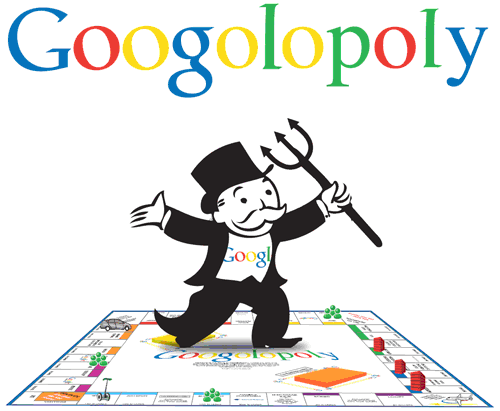
Article submissions and reciprocal linking. Ignoring social signals and too much focus on ranking. Optimizing only for Google and creating content that’s thin. These are a few of my least favorite SEO things.
Marty
Yes I could add 10 more, but start here or STOP here.
Brian Yanish :Excellent comment (@MarketingHits):
« With Google's personal search results other customer/visitor touch points are going to become more important than ever before. Be it Twitter, Facebook, or Pinterest, getting the new visitor to your site from a source other than Google will play an major factor in that visitors future Google results. SEO just got harder! »
Marty
Yes SEO got harder AND easier. Harder because the horse race for social touch points is ON. If your competitor gets 100,000 Facebook LIKES before you that will HURT your SEO and organic traffic. Easier because you can leverage social as a channel against Google. Here is how the channel diversification idea works. Let's say your current converting traffic by channel looks like this:
* Google Organic 30%.
* Google PPC 40%. * Social 5%.
* Email marketing 20%. * Other 10% (like mobile or affiliate).
70% of your converting traffic is coming from Google. You are not highly diversified. If Google puts a hurt on your organics you are going to have to increase your PPC spend just to stay even. You may reach the dreaded "point of diminishing return" and see your PPC contribution to profits (if you are lucky enough to get any net net PPC contribution) slide.
Now think of this new distribution:
* Google Organic 35% (because social helps with this). * Social 20%. * Google PPC 20%. * Email marketing 20%. * Other 10% (mobile and affiliate).
Your converting "portfolio" is more diversified and profits are up. If something bad happens you have more than one way to make up for it. You can double down on PPC without getting near point of diminishing return or open the valves and flood your other fields with support. You aren't dependent on ONE channel (never a good idea).
The Phase II part of your channel plan should be building your mobile list and making mobile 20% of your converting traffic allowing a further reduction in PPC and being present in a profitable way on people's phones and the future of commerce.
What do Agile Marketing and the dominance of the U.S. Women's Olympic gymnastic team have in common?
Marty - Great post from my friend Jim Ewel (@JimEwel) and one of the leaders of the Agile Marketing movement Jim Ewel.

Think you know social? Think again.
These are so true. And it's about time someone said so.
Marty Note
Agree these statements are TRUE and won't be a huge surprise to most of the power social media advocates I follow in Scoop.it. Gee the idea that money still wins OMG what a Friday revelation. We are digital revolutionaries; we are here in social media out of love not money.
As revolutionaries we don't require that others understand or believe in our values. Our social media values such as:
* Truth lives in Social Media over the long run. * Passion can be seen, felt and appreciated in social media. * BIG people in social media mentor, help and care for the "smaller" and "newer" players. * Love is the killer app and it lives and reproduces well in social media.
If Micky D's wants to sell some more Big Macs with social media it doesn't taint it character, value or the truths this article doesn't mention. I don't view the social media ideas discussed here as "unpleasant". Having the Big C is unpleasant. The fact children can get the Big C is criminal, but the other side of social media just IS.
I appreciate the excellent scoop by Adrian and the Fastcompany article. Everyone has a mortgage to pay and Fastcompany is retooling nicely for whatever the heck this digital revolution is bringing to the magazine business (less money more readers I suspect), so its all good.
It's Friday :).
Disneyrollrgirl opens our eyes to the world of editorialised e-commerce (RT @eBayFashion_UK: Navaz @Disneyrollrgirl opens our eyes to the world of editorialised e-commerce http://t.co/HPTYipzf...)...
Marty Note
I was married to a talented buyer for 20 years. I don't think my ex's skills are as out of fashion as much as the medium has changed. Large department stores seem to be dinosaurs walking the earth. Today my ex would create Boing Boing, Daily Candy or its equivelant and create authority and influence with millions. The skils are still valuable even as the medium has changed to aplify and explode them.
The ecommerce pro and driving force behind Elastic Path's award-winning blog, Get Elastic, explains the buzz around APIs.
With interest building around the use of application programming interfaces (APIs) to, as Forrester Research’s Brian Walker puts it, “open up the commerce platform,” we turned to Elastic Path’s Linda Bustos for the lowdown. As the director of ecommerce research and a conversion optimization consultant at the digital commerce software firm, she separates fact from hype to identify trends online marketers need to understand. But you likely already know and love her as the lead blogger and developer of the popular Get Elastic blog.
|
Scoop it Creator
Martin (Marty) Smith
FOLLOW US
|