Your new post is loading...
Climate change is making life tougher. Across Africa, failed harvests, shrinking water supplies and more extreme weather are leaving millions of people hungry and forcing many from their homes. When communities compete for land and water, the risk of conflict can grow. African governments are now developing a Common African Position on Climate, Peace and Security to tackle these problems together. But will it lead to real change on the ground?(...).
The Water-Energy-Food (WEF) nexus is now a key framework for understanding how water, energy, and food resources depend on one another in pursuing sustainable development. This scoping review examines the methods, geographical distribution, policy recommendations, and research gaps in one part of this literature. Following(...).
UNESCO’s Intergovernmental Hydrological Programme (IHP) has reached a major milestone with the adoption of Youth4Water, its first flagship initiative entirely dedicated to young people. Approved at(...).
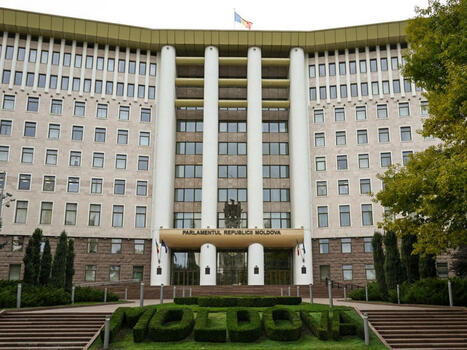
La Moldavie, candidate à l’adhésion à l’Union européenne, a décrété l’état d’urgence face aux tensions qui menacent son approvisionnement en énergie et en eau.
Une vaste prolifération de microalgues, qui s’étend sur près de 100 kilomètres le long du littoral, a perturbé le fonctionnement de cinq des six principales usines de dessalement d’Israël.(...).
Prévue sur 30 mois, de mars 2026 à septembre 2028, cette initiative permettra de poursuivre la restauration du patrimoine, de renforcer les capacités locales, d’améliorer l’accès à l’eau potable et(...).
The contamination of groundwater with trace metals is an increasing environmental and human health problem in susceptible coastal environments. This is the first integrated assessment of hydrogeochemistry, trace metal distribution, water quality, and human health risks in groundwater and surface water resources of Manoka Island, a coastal setting in Douala Basin, Cameroon. Physicochemical parameters and trace metals (Fe(II), Mn, Al, As, Cd, Co, Cr, Cu, Ni, Pb, V and Zn) of 25 water samples (3 boreholes, 17 hand–dug wells and 5 surface water sources) were analyzed by ICP–OES. pH ranges from 6.10 to 7.13 and EC ranges from 7 to 29,400 µS/cm. Trace metal concentrations exhibited marked spatial variability, with all samples exceeding WHO drinking water limits for Pb and V, and exceeding guideline values for Cr, Fe(II), As and Zn in 80%, 44%, 8% and 8% of samples, respectively.(...).
Even South Africa’s remote sacred springs are not untouched: research found microplastics in all nine tested, including waters used for healing and drinking.
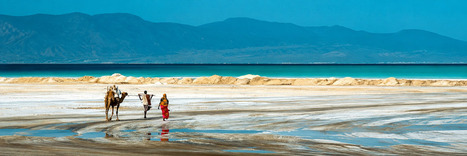
From 15 to 17 November 2026, the African Water and Sanitation Association (AfWASA) will bring together its members and key sector stakeholders in Djibouti for the 98th Session of its Strategic and Technological Council (STC). Held under the theme “Innovative Solutions for Sanitation and Water Security in Africa”, the meeting will focus on practical solutions to help the continent address increasing water scarcity, sanitation challenges and the growing impacts of climate change.
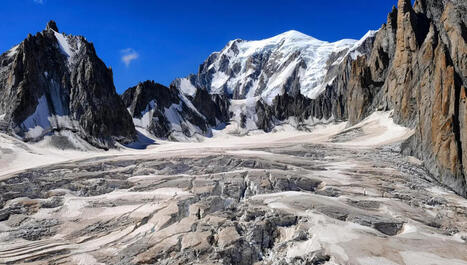
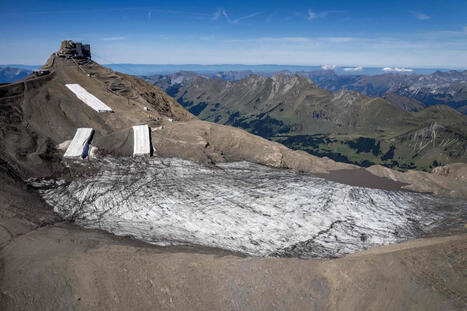
Dans son rapport annuel sur l’état des ressources en eau douce sur Terre publié ce jeudi 17 septembre, l’Organisation météorologique mondiale constate la poursuite du déclin des réserves d’eau douce et du recul des glaciers.
Dans les régions du delta du fleuve Rouge et du Mékong, au Vietnam, la teneur en arsenic des eaux souterraines est parfois 100 à 300 fois supérieure aux recommandations limites préconisées par l'Organisation mondiale de la santé (OMS). Ces sources alimentent en eau des millions de Vietnamiens et constituent un risque majeur pour la santé publique.
Du 30 mars au 3 avril 2026, le PNUD, le ministère de l'Énergie et de l'hydraulique et la République d'Italie ont lancé les études de faisabilité pour la réhabilitation du système d'adduction d'eau potable de Brazzaville, un projet phare du plan Mattei porté par le Djoué II, qui bénéficiera à plus de 2 millions d'habitants et s'affirme comme un projet pilote de la coopération Italie–Congo à fort impact social et de genre.
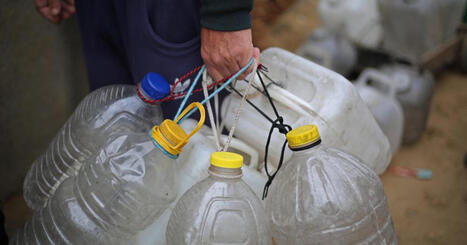
Frequent water and power cuts, long queues for bottled water, poultry farms destroyed by the heat: these have been the scenes across Tunisia this summer as millions of people were affected by shortages…
|
Tunisia and the African Development Bank signed two financing agreements in Tunis on 22 September 2026, totalling about $240 million to modernise the potable water systems around the capital, Tunis, and to help rehabilitate ageing production units of the state-owned Tunisian Chemical Group (GCT).
Excessive heat, water shortages, rising sea levels: A place's habitability depends first and foremost on physical thresholds. But it also depends on the relationship between a space and the people who live there, which plays a key role in how people adapt to climate change.
The Board of Directors of the African Development Fund, has approved, on 21 September 2026, a grant of $9.82 million to support the implementation of the Enhancing Water, Sanitation and Hygiene Adaptation Project in Eritrea. The project will be implemented in coordination with the Government of the State of Eritrea, the United Nations Children’s Fund (UNICEF). The funds come from the Climate Action Window, a specialised climate finance mechanism backed by the Fund, the African Development Bank Group’s concessional lending window for low-income and transitional countries on the continent.
Digne d’un scénario dystopique, la guerre de l’eau est devenue réalité. En Cisjordanie, colons et soldats israéliens empêchent la population palestinienne d’accéder aux puits tandis qu’en Ukraine, les forces russes se servent de l’eau comme d’une arme.
Le Conseil d’administration du Fonds africain de développement a accordé, le 21 septembre 2026, un don de 9,82 millions de dollars américains pour soutenir la mise en œuvre du Projet de renforcement de l’adaptation en matière d’approvisionnement en eau, d’assainissement et d’hygiène en Érythrée. Le projet sera mis en œuvre en collaboration avec le gouvernement érythréen et le Fonds des Nations unies pour l'enfance (UNICEF).
La Tunisie et la Banque africaine de développement ont signé, le 22 septembre 2026 à Tunis, deux accords de prêt et de garantie d’un montant total de 240 millions de dollars américains (environ 700 millions de dinars tunisiens) afin de moderniser le réseau d’eau potable du Grand Tunis à travers la Société nationale d’exploitation et de distribution des eaux (SONEDE). Le financement servira également à réhabiliter les unités du Groupe Chimique Tunisien (GCT).
Bangladesh Drinking Water Crisis: Despite abundant rainfall, the Bangladesh water crisis leaves millions without safe drinking water due to severe groundwater depletion and poor management.
The UN says climate change is having a serious effect on the global supply of fresh water. Rivers and lakes are drying up while glaciers are retreating according to a new report.
From Sri Lanka to South Korea, governments are preparing for droughts, wildfires, typhoons and floods – with climate plans facing their biggest challenge to date
Les réserves mondiales d'eau douce baissent de façon persistante depuis 2014-2016, alarme un nouveau rapport de l'Organisation météorologique mondiale. "Nous sommes en train de vider nos réserves", se désole sa secrétaire générale, Celeste Saulo.
L’année 2025 a été l’une des plus sèches depuis trente-cinq ans en matière de débits fluviaux, constate l’organisme des Nations unies dans son bilan mondial annuel de l’état des ressources en eau publié jeudi.
ABSTRACT. This study analyzes how population health is impacted by environmental degradation, chemical exposure, and water contamination in 35 middle-incom(...).
|


 Scoop.it!