
Software Development Hub
15.5K views |
+1 today


Model Driven, Domain Specific Languages, Meta Programming
Curated by
Srdjan Strbanovic
 Your new post is loading...
 Scoop.it! 
Metaprogramming: Open Sourcing Canappi. In an effort to illustrate how Metaprogramming works, I have decided to open source Canappi (there is no license attached, feel free to use it whichever way you want, that includes building mobile development... 
Scoop.it!

Introducing the Mo+ language and the Mo+ Solution Builder IDE.; Author: Dave Clemmer; Updated: 6 Jul 2013; Section: Code Generation; Chapter: Development Lifecycle; Updated: 6 Jul 2013 (RT @codeproject: Mo+ - A model oriented programming language ...
Scoop.it!
How to write your own DSL (Domain Specific Language) http://t.co/44mXL6dZJ0
Scoop.it!

If you have worked in a project that have several developers and several repositories, then you know that tagging can be pretty annoying.
Scoop.it!

Joe Armstrong outlines the architectural principles needed for building scalable fault-tolerant systems built from small isolated parallel components which communicate though well-defined protocols.
Scoop.it!

I recently covered the release of Dropbox Platform, and my thoughts on the impending cloud storage lock in here. I was also fortunate enough to run across what the guys over at NimbusBase are doi...
|
Scoop.it!

The Rx library utilizes the power of LINQ to make difficult asynchronous problems simple.
Scoop.it!
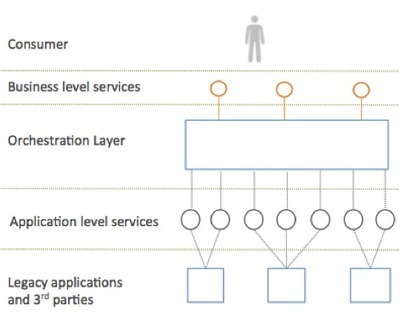
I studied Requirements Engineering a few years ago, which left me with a lasting appreciation of two facts. Firstly, the majority of IT projects fail. Secon… (#DevOps and SOA.
Scoop.it!

@jbogard @adymitruk I feel your pain Jimmy, I tried to put a tag on this but it got stripped out: http://t.co/Y0fuqs5kFo
Scoop.it!
This post will get Elixir installed and introduce you to two important parts of Elixir:Immutable Data and Pattern Matching.
Scoop.it!
|


|
Scooped by
Srdjan Strbanovic
August 2, 2013 2:33 PM
|
Scoop.it!

Common architectural mistakes that can kill a project.
|
|
Scooped by
Srdjan Strbanovic
August 2, 2013 9:43 AM
|
Scoop.it!
In computer programming, flow-based programming (FBP) is a programming paradigm that defines applications as networks of "black box" processes, which exchange data across predefined connections by message passing, where the connections are specified externally to the processes. These black box processes can be reconnected endlessly to form different applications without having to be changed internally. FBP is thus naturally component-oriented.
FBP is a particular form of dataflow programming based on bounded buffers, information packets with defined lifetimes, named ports, and separate definition of connections.[1]
The FBP development approach views an application not as a single, sequential, process, which starts at a point in time, and then does one thing at a time until it is finished, but as a network of asynchronous processes communicating by means of streams of structured data chunks, called "information packets" (IPs). In this view, the focus is on the application data and the transformations applied to it to produce the desired outputs. The network is defined externally to the processes, as a list of connections which is interpreted by a piece of software, usually called the "scheduler".





