

From
mailchi


 Your new post is loading... Your new post is loading...
 Scoop.it!

No comment yet.
Sign up to comment
Scoop.it!

“This annual assessment provides law enforcement agencies, policy makers, and prevention and treatment specialists with essential intelligence to assist in establishing law enforcement priorities, formulating counterdrug policies, and allocating resources. The NDTA also serves as a critical tool for informing and educating the public about the current drug threats. DEA’s goal in publishing the NDTA is to save American lives by raising awareness and understanding of these threats. . .. The 2024 NDTA highlights the dangerous shift from plant-based drugs to synthetic drugs. This shift has resulted in the most dangerous and deadly drug crisis the United States has ever faced. These synthetic drugs, such as fentanyl and methamphetamine, are responsible for nearly all of the fatal drug poisonings in our nation.”
Law Offices of David A. Black's insight:
It is interesting that synthetic drugs are now more common, more dangerous, and cheaper than plant-based drugs. But why? One reason could be the war on drugs made the farming of plants like opium and coca virtually impossible, and dramatically increased the cost of illegally importing the same. A small amount of fentanyl, though, travels easily across borders, and meth can be manufactured in an RV.
The assessment above contains a number of key facts regarding illegal drug activity in the United States. The first is the number of drug-related deaths in the United States. In both 2022 and 2023, the DEA says that over 100,000 people suffered drug-related deaths. Second, it appears clear that synthetic drugs – primarily fentanyl and methamphetamine – are the greatest contributors to drug-related deaths in the United States. Historically, attention had primarily been focused on (plant-based) drugs such as heroin and cocaine.
Scoop.it!

“The American Medical Association (AMA) voted to support eliminating criminal penalties for drug possession for personal use at the annual House of Delegates in Chicago on Wednesday.”
Law Offices of David A. Black's insight:
Earlier this month, the House of Delegates of the American Medical Association voted in favor of eliminating all criminal penalties for possession of drugs for personal use. The delegates reviewed instances where decriminalization seems to have worked, getting people into treatment, and reducing mortality. One of the delegates noted that the country has tried to “criminalize” our way out of the drug crisis, but it simply has not worked. Others described the war on drugs as akin to stating that “the beatings will continue until morale improves.” The question remains whether the states will adopt that position and alter the current drug laws.
Scoop.it!

“A major drug trafficker linked to a string of juvenile fentanyl overdoses in north Texas pleaded guilty today to multiple drug crimes, announced U.S. Attorney for the Northern District of Texas Leigha Simonton. [The man], 22 was charged via criminal complaint in February and indicted later that same month. On Tuesday, he pleaded guilty to conspiracy to possess with intent to distribute fentanyl and distribution of fentanyl to a person under 21 years of age.”
Law Offices of David A. Black's insight:
Drug overdoses have unfortunately become more and more common in recent years. Fentanyl use has played a significant part in the overdose increase, including overdoses leading to death. A man has recently been convicted of conspiring to possess (with the intent to distribute) fentanyl to a minor. The arrest and conviction come after a number of juveniles overdosed on fentanyl in Texas, according to the criminal complaint filed in the United States District Court for the Northern District of Texas.
Scoop.it!

“In addition to the 1.6 million people incarcerated in federal and state prisons, there are more than 600,000 people locked up in more than 3,000 local jails throughout the U.S. Over 70 percent of these people in local jails are being held pretrial — meaning they have not yet been convicted of a crime and are legally presumed innocent. . . . Despite falling crime rates, the likelihood of arrest has increased modestly for violent and property crimes and dramatically for drug crimes over the past three decades.”
Law Offices of David A. Black's insight:
The article we quoted focuses largely on the inherent unfairness of a cash bail system. In essence, it effectively means that you are innocent until proven guilty – provided you have enough money for bail between the time of your arrest and your trial. What caught our eye in particular is that notwithstanding falling crime rates, arrests have increased for violent crimes and property crimes – but the most dramatic increase in arrests has been for drug crimes. The irrationality of the increase in drug arrests is even more apparent when you consider the growing body of research that shows incarceration is ineffective in preventing drug use. We are hopeful that both the bail system and the level of drug crime arrests will change over the coming years.
Scoop.it!
“The U.S. Food and Drug Administration on Tuesday warned health care workers to look out for patients who may have been exposed to a potentially deadly animal sedative, possibly through illicit drug use. The veterinary medication xylazine is sometimes added to fentanyl, heroin or other drugs, after either being diverted from the legal animal supply or illicitly produced, the FDA said.”
Law Offices of David A. Black's insight:
For quite some time, we’ve been hearing about illegal drugs laced with fentanyl, often resulting in serious medical consequences for the users, including overdoses and deaths. But earlier this month, the U.S. Food and Drug Administration announced what for many was a startling announcement – the FDA warned health care workers to be on the lookout for patients who may have been exposed to xylazine, a sedative used by veterinarians as a pain reliever and tranquilizer for animals. The announcement states that the xylazine may have been diverted from legitimate shipments or produced illegally. In either event, it is not safe for humans. It is often mixed with illicit opioids, including fentanyl. The problem is not an isolated one. The National Institute on Drug Abuse estimates, for example, that between 2015 and 2020, the percentage of overdose deaths in Pennsylvania involving xylazine (usually along with other drugs) increased from 2% to 26%.
Scoop.it!

“The Mexican government is using video of homeless people and open-air drug users in Philadelphia’s embattled Kensington neighborhood in a national ad campaign to try to scare young people away from drugs. The spots never identify the city or neighborhood shown. But just how or why the Mexican government decided to use street scenes from the U.S. to scare Mexicans — who have their own drug problems — is not clear. Critics say the ads recycle scare tactics about drugs rather than offer help or treatment.”
Law Offices of David A. Black's insight:
There has been a surprising switch involving the usual stories of drug smuggling and the reasons for and extent of the illegal drug problems in the United States. The specifics of the switch: the Mexican government is using videos depicting drug-users and homeless people in Philadelphia in an apparent attempt to scare Mexicans, particularly youngsters, away from drug use. Although the ads never speak about Philadelphia or identify the location of the videos, those who have seen the ads say they are from the city’s Kensington neighborhood. While the objective of anti-drug ads is laudable, it is somewhat ironic that Mexico is the source of most of the fentanyl sold in the United States.
Scoop.it!

“Snapchat's disappearing message feature helped enable the sale of fentanyl to teenagers who went on to die of overdoses, a lawsuit claimed. According to a filing in a Los Angeles court seen by Insider, parents of teens who died from Fentanyl overdoses are pursuing Snap for strict product liability over what they claim is a design defect in the social media app Snapchat. The lawsuit stated that Snapchat is marketed to minors, and that the erasing messages function encourages drug dealers to use the social media app.”
Law Offices of David A. Black's insight:
Snapchat is a phone app that allows photos and videos to be sent to other users. Unlike those sent by text or email, however, the messages sent on Snapchat disappear within seconds. It is this feature that is an issue in a lawsuit filed against Snapchat in Los Angeles. The plaintiffs allege in the case that the disappearing function permits users to evade law enforcement detection and parental supervision, encouraging its use by drug dealers. The plaintiffs include parents of a teenager who overdosed on fentanyl after obtaining it through communication on Snapchat. The company has denied the allegations.
Scoop.it!
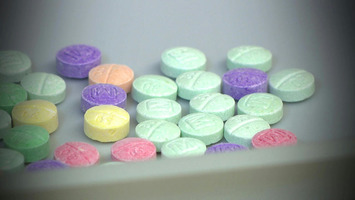
“For several weeks, there have been reports on the dangers of a drug known as the ‘rainbow fentanyl,' with law enforcement agencies, including the United States Drug Enforcement Administration (DEA), issuing alerts after suspected overdoses and deaths. According to the DEA, the rainbow colors could lead children to mistake them for candy and make them more appealing to young people. . . . However, some experts now say the danger of ‘rainbow fentanyl’ to children is low.”
Law Offices of David A. Black's insight:
The news has recently reported the appearance of what has been named “rainbow fentanyl.” It consists of fentanyl – an extremely powerful synthetic opioid – in the form of colorful tablets. Many people are concerned that it is aimed at children, supposedly because kids might mistake the drugs for candy. Although that might be a valid concern, the DEA tells us that kids are not the real target. The purpose of the new form of the drug is to evade detection from law enforcement when smuggling the drugs into the country.
Scoop.it!
“The pardon will affect thousands of people convicted of cannabis possession under federal law, everyone found guilty of merely having small amounts of pot since doing so became a nationally based crime in the 1970s. The feds are still running the numbers but statistics so far indicate that about 6,500 people were convicted of possession of small amounts of weed between 1992 and 2021, for instance . . .. [However, the President added], ‘The federal government currently classifies marijuana as a Schedule 1 substance,’ Biden said, ‘more serious than fentanyl. It makes no sense.’”
Law Offices of David A. Black's insight:
While the recent headlines on the subject of pot focus largely on the presidential pardon for simple possession, the fact remains that marijuana is still classified as a Schedule I drug under federal law. This is a category reserved for drugs which are prone to abuse and have no accepted medical value. This places marijuana alongside drugs such as heroin and LSD. In his message about the pardon, the President also directed that the status of marijuana be reevaluated as a Schedule I drug. Among other things, this may signal, according to some, the beginning of an end to the federal prohibition on pot.
Scoop.it!

“Traffic deaths decreased in Utah after the state enacted the strictest drunken driving laws in the nation five years ago, new research published Friday by a U.S. government agency shows. . . . In the study published by the National Highway Traffic Safety Administration, researchers wrote that, in the years after Utah changed the drunken driving threshold from .08% to .05% blood-alcohol content, the number of crashes and fatalities fell even though drivers logged more miles.”
Law Offices of David A. Black's insight:
Utah has the strictest DUI law in the United States. We’re not talking about penalties – plenty of states have severe sanctions for driving under the influence. Rather, the Utah DUI law sets the DUI blood alcohol content (BAC) threshold at 0.05%, while every other state in the country (as well as the District of Columbia) sets the BAC limit at 0.08. A study published by the NHTSA appears to show that the reduction in the BAC limit has reduced the number of crashes and fatalities in that state. Some, however, disagree with the study’s conclusion. They point to the fact that, for example, traffic fatalities have been dropping in Utah since before the measure went into effect in 2018 and have also dropped in about thirty other states where the BAC limit is 0.08%.
Scoop.it!

“Police say the man who killed two people while driving the wrong way on Loop 303 last week had a blood-alcohol content more than three times the legal definition of impaired. According to investigators Fabian Javier Grimaldo, 21, was driving a pickup truck north in the southbound lanes of Loop 303 early Friday morning and slammed head-on into an SUV. . .. Public court documents say a Department of Public Safety trooper noted several signs of impairment while giving Grimaldo a field sobriety test. She also smelled alcohol on his breath. Investigators say Grimaldo was taken to a hospital, where bloodwork put his BAC at 0.238. That’s above the legal threshold for a potential charge of Super Extreme DUI.”
Law Offices of David A. Black's insight:
Not all DUI charges are the same. In Arizona, a number of factors can affect both the level of the charge and the potential penalty if you are convicted. As a general matter, a simple DUI, where your blood alcohol level is below 0.15 (extreme DUI), and where you have no prior drunk driving or drugged driving convictions, is a class 1 misdemeanor. Nevertheless, the penalties can be significant and costly. You can usually expect to spend at least a day or so in jail, plus pay fines and assessments of $1,250, legal fees, and the cost of the installation and maintenance of an ignition interlock device. You will also have to attend traffic school. However, if the conviction is for DUI while driving in the wrong direction on a highway, the offense is aggravated DUI. This is a class 4 felony, and, in addition to the costs and other penalties, the law requires that you spend a minimum of 4 months in prison. In the article we quoted, there will obviously be other charges, including homicide, as well as enhanced costs and fees due to the allegedly high blood alcohol content.
Scoop.it!
“Governor Charlie Baker is putting new pressure on the Massachusetts Legislature to finally pass his proposed crackdown on drugged driving, instead of letting the measure — initially filed in 2019 — again die in committee. During a recent legislative hearing, a number of his administration’s highest-ranking public safety officials urged lawmakers to advance the bill, arguing it would save lives by making it easier for police and prosecutors to detect, arrest, and convict drivers high on marijuana and other substances. But as state legislators chew on their testimony, prominent experts are stepping forward to warn the plan is fundamentally flawed.”
Law Offices of David A. Black's insight:
A bill pending in the Massachusetts legislature is facing stiff opposition. The bill, which seeks to expand the drug recognition expert (DRE) protocol, includes a 12-step process – including heart rate, blood pressure, officer observations, muscle tone and other factors – to determine whether a driver is impaired, and if so, by what substances. While some members of the legislature tout the bill as potentially saving lives by making it easier for police to make arrests for drugged driving, many experts disagree. In fact, one retired judge takes issue with the fact that the legislation seeks to tell the courts what information can be admitted into evidence. She calls the purported basis for the law “junk science to the nth degree.” The proposed law has been pending since 2019, but thus far has died in committee.
Scoop.it!

“A new bill signed into law last month by Governor Ducey legalized the use of testing strips to detect the presence of fentanyl in controlled substances. In the wake of skyrocketing drug deaths due to opiate overdoses, the new law will allow the purchase of the strips by anyone in Arizona (including those who use illegal drugs and their families) to learn whether a substance contains fentanyl. For those who don’t know, fentanyl is an opiate that is estimated to be as much as 100 times stronger than morphine and about 50 times stronger than heroin. In many cases, fentanyl is added to street drugs to increase their effect – unfortunately, the added opiate has also contributed to the high number of overdoses and overdose deaths.”
Law Offices of David A. Black's insight:
In this blog post, the Law Offices of David A. Black discusses legislation in Arizona concerning fentanyl testing strips. A new law, which went into effect in mid-2021, was enacted in the wake of increased drug overdose deaths. The law now permits people to possess and use the strips to determine whether a product, even an illegal drug, contains fentanyl. Until the passage of the law, possession of a fentanyl testing strip, although it does not contain fentanyl or any illegal drug, was illegal under A.R.S. 13-3415F(2), which classifies drug testing equipment as “drug paraphernalia.”
Scoop.it!

“Charges against the now-disgraced NYPD detective Joseph Franco are being welcomed by the families of more than 130 more New Yorkers as it is leading to the dismissal of their family members’ charges. Franco was reportedly caught framing innocent individuals last year and this is the second wave of case dismissals tied to his corruption. Last April, Brooklyn District Attorney Eric Gonzalez’s Conviction Review Unit asked for the dismissal of 27 felony convictions and 63 misdemeanor convictions based on Franco’s corrupt policing. Now, that number has grown as Bronx Supreme Court Justice David Lewis granted the motion to drop the felony cases against 133 defendants who were indicted between 2011 and 2015.”
Law Offices of David A. Black's insight:
When a police officer gets caught framing innocent people, the effects can go far beyond the particular case involving the frame-up. The illegal action by the officer essentially poisons every case in which he was involved prior to being caught. When a New York Detective, Joseph Franco, was caught last year framing people for drug crimes they did not commit, it created an avalanche of applications for the dismissal of charges and the release from jail by those who were charged and/or convicted in cases in which Franco played a part. So far hundreds of cases have been dismissed, and reports indicate that the number could reach 500. Meanwhile, Franco has been indicted for official misconduct and perjury.
Scoop.it!

“There is now widespread, bipartisan agreement that mass incarceration is a huge problem in the United States. The rates and levels of imprisonment are destroying families and communities, and widening opportunity gaps—especially in terms of race. But there is a growing dispute over how far imprisonment for drug offenses is to blame.”
Law Offices of David A. Black's insight:
Ten years ago, a critique of the U.S. criminal justice system found that the war on drugs disproportionately affected African Americans. A recent study now claims, however, that the peak number of state prisoners incarcerated for drug crimes was only 22% and uses that number to challenge previous conclusions about the overall effect of the war on drugs on the prison population in general, and on African Americans in particular. But these statistics do not tell the whole story. In the words of Mark Twain, there are “lies, damn lies and statistics!” In this case, the new study misses the point. The issue is not how many people are incarcerated at any one time. The important question is how many people are incarcerated for drug-related crimes over a given period of time. Since the penalty for most drug crimes is lighter than, say, for violent or more serious crimes, and those incarcerated for drug crimes tend to be repeat offenders, that 22% number will skyrocket with thousands of additional drug-related incarcerations when the statistics are properly used.
Scoop.it!
Law Offices of David A. Black's insight:
The effects of the pandemic have been widespread. As noted in this article, every state in the nation has reported an increase in overdose deaths and related problems during the pandemic. In addition, fewer people are being admitted for drug treatment. In many states, including Arizona, the increase in the number of teen drug overdoses is alarming. While there is no way to prove with mathematical certainty what caused the increase in the overdose rate, the pandemic has intensified several of the risk factors normally associated with the increased use of drugs. These include money problems, anxiety, and social isolation, all of which appear to be common effects of the pandemic. Not only do these increase the likelihood of drug use, there has been a corresponding rise in the use of tranquilizers (such as Xanax). Last, but not least, use of the powerful drug fentanyl has become commonplace. In some cases unknown to the user, their drug of choice has been laced with fentanyl, increasing the likelihood of an overdose.
Scoop.it!

“There’s an ever-growing consensus that treating drug abuse as a crime rather than a public health problem is an ineffective waste of taxpayer money and criminal justice resources. Now there is additional evidence: Tens of thousands of cases involving small amounts of illicit drugs churn through the Cook County justice system each year, only for these cases to be dismissed, as the Sun-Times and the Better Government Association reported in their recent investigation, “The costly toll of dead-end drug arrests.’”
Law Offices of David A. Black's insight:
There have been endless debates over the “War on Drugs,” and how best to deal with the problem of drug crimes, a problem that has been growing for decades. The crux of the issue is that a significant percentage of our incarcerated citizens consist of people who are serving time in jail or prison because of drug use and abuse. It can be direct, e.g. arrests for possession for sale and similar offenses, or indirect, e.g., thefts committed by drug-addicted persons to obtain money to feed their habit. The more we focus on incarceration, and the less on treatment, the recidivism rate remains high. Moreover, the cost in terms of taxpayer dollars is overwhelming. This consists most directly of the dollars spent on increased law enforcement and on incarceration itself. But there is another cost, and that is the cost of “dead-end drug arrests.” These are arrests that are never prosecuted, but which may, nevertheless, cost the person arrested his or her job, housing, and freedom.
Scoop.it!

“Overwhelming evidence shows that using a new syringe with every injection prevents injection-related blood-borne disease transmission. Additionally, there is promising research suggesting that the distribution of fentanyl test strips to people who inject drugs changes individuals’ injection decisions, which enables safer drug use and reduces the risk of fatal overdose. However, laws prohibiting the possession of syringes and fentanyl test strips persist in nearly every state.”
Law Offices of David A. Black's insight:
Drug paraphernalia laws exist on both the state and federal level. In general, those laws prohibit the possession of items that may be used in the manufacture or consumption of illegal drugs. There are numerous issues that can arise in drug paraphernalia cases, not the least of which is defining what these objects might be. Packaging, the possessor’s prior drug record, and even advertising, can determine whether an object is “drug paraphernalia” and therefore illegal. In addition to the definitional issue, there are items generally considered “drug paraphernalia” in most circumstances, which, although illegal to possess, could assist in decreasing the number of both drug overdoses and disease transmission. These include fentanyl testing strips and new syringes. According to the American Public Health Association, the laws making possession of these items must be repealed to reduce overdose deaths and related harms. We agree.
Scoop.it!
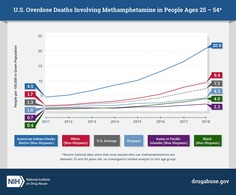
“Methamphetamine overdose deaths surged in an eight-year period in the United States, according to a study that will published today in JAMA Psychiatry. The analysis revealed rapid rises across all racial and ethnic groups, but American Indians and Alaska Natives had the highest death rates overall. The research was conducted at the National Institute on Drug Abuse (NIDA), part of the National Institutes of Health.”
Law Offices of David A. Black's insight:
In discussions regarding drug abuse, in general, and drug overdoses, in particular, the recent focus has been almost exclusively on opioids. This involves overprescribing of opiates, illegal sales, and other issues. Much less has been reported on a number of other drugs, including methamphetamine. According to an article published last month by the Journal of the American Medical Association Psychiatry, not only have amphetamine deaths increased, but they have affected certain ethnic groups more than others. For example, among American Indians and Alaska Natives, meth-related deaths have more than quadrupled since 2011. The highest increase during this period was among non-Hispanic Blacks. The increase, according to the article, is due in part, at least, to decreased access to education, high poverty rates and large disparities in the delivery of adequate health services.
Scoop.it!
“Police-created crime is not a path to public safety. In most cases, undercover police stings target individuals who officers know nothing about, including whether they were already committing the targeted crime. Rather, these stings tend to ensnare the most vulnerable individuals, often by focusing on low-level drug crimes and poverty-induced offenses. Creating crime—in particular crime that is accompanied by enhanced or lengthy sentences—exacts a high financial and ethical cost to our criminal legal system, but does not leave our communities safer.”
Law Offices of David A. Black's insight:
In a recent article written by a University of California law professor, a strong argument is made that undercover police stings not only create crimes where they might not otherwise occur – providing defendants with a possible entrapment defense – but also focus on the most vulnerable individuals who are targeted for low level drug crimes, and who may end up facing lengthy prison sentences. The professor argues convincingly that undercover policing has run amok in the United States, with no significant target. For example, when going after a major illegal drug operation, the sting almost always focuses on – and ends up with the arrest of – the lowest level participants allegedly involved. The cost, the article goes on to point out, is way out of line with the benefit, both in terms of police manpower and the cost of incarceration. This is in addition to charges which are eventually dismissed based on the entrapment defense.
Scoop.it!

“Beginning late last year, adults in Arizona became legally entitle to possess up to one ounce of marijuana and grow up to 6 marijuana plants in their homes. . .. There are some restrictions on the new law, and you should expect additional regulations to be set by the Arizona Department of Health Services.”
Law Offices of David A. Black's insight:
Effective January 1, 2021, the legal use of recreational marijuana became a reality in Arizona. In a recent blog entitled New Arizona Laws, Phoenix criminal defense attorney David A. Black explains that notwithstanding the passage of Proposition 207, in which voters opted for legalization of pot, there are a number of restrictions that people should be aware of. The new law does not mean that marijuana use is permitted under all circumstances. Some of the restrictions include:
Finally, the law permits those previously convicted of certain marijuana offenses to request that the court expunge the record of the conviction.
Scoop.it!

“Over 81,000 drug overdose deaths occurred in the United States in the 12 months ending in May 2020, the highest number of overdose deaths ever recorded in a 12-month period, according to recent provisional data from the Centers for Disease Control and Prevention (CDC). While overdose deaths were already increasing in the months preceding the 2019 novel coronavirus disease (COVID-19) pandemic, the latest numbers suggest an acceleration of overdose deaths during the pandemic.”
Law Offices of David A. Black's insight:
We have all had our lives disrupted by the pandemic. Even for those who have not contracted the COVID virus, daily life has changed dramatically for almost all of us. At the same time, deaths due to drug overdoses have increase significantly. During the one-year period ending in May of 2020, the United States recorded its highest number of overdose deaths ever. While it is true that the drug overdose numbers were on the rise before mid-2019, the increases seen since COVID are nevertheless dramatic:
While there are a number of plausible reasons for the increase, the Centers for Disease Control and Prevention also points to the disruption in daily life caused by the pandemic, stating that is has had a major effect on those with substance abuse disorder.
Scoop.it!
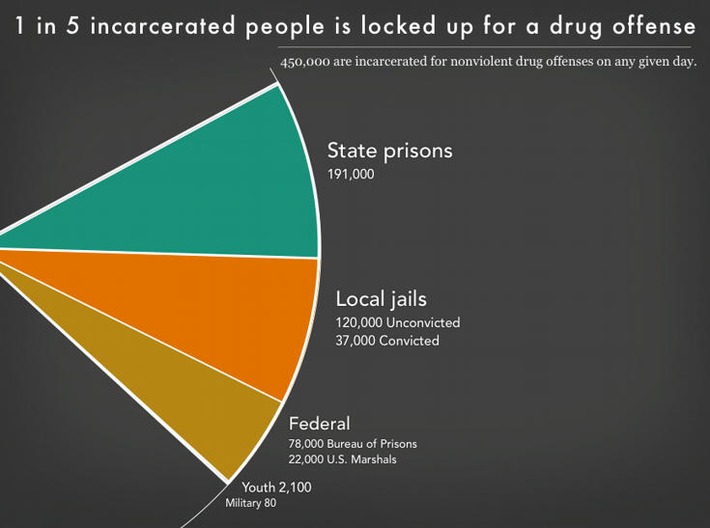
“As the U.S. confronts a growing epidemic of opioid misuse, policymakers and public health officials need a clear understanding of whether, how, and to what degree imprisonment for drug offenses affects the nature and extent of the nation’s drug problems. To explore this question, The Pew Charitable Trusts examined publicly available 2014 data from federal and state law enforcement, corrections, and health agencies.4 The analysis found no statistically significant relationship between state drug imprisonment rates and three indicators of state drug problems: self-reported drug use, drug overdose deaths, and drug arrests.”
Law Offices of David A. Black's insight:
According to the PEW Charitable Trusts, the massive increase in drug arrests over the last 20 years has been ineffective in stopping drug problems, drug abuse, or drug overdose deaths. During almost 4 decades beginning in 1980, the number of people held in state and federal prisons in the U.S. increased more than ten-fold. At the same time, prison terms for drug crimes increased, and the cost of housing prisoners convicted of drug offenses rose almost 600%. While drug penalties and imprisonment figures vary from state to state, PEW reports that the increase in drug arrests and convictions, as well as the increase in penalties (longer sentences), have not made a statistically significant impact on drug use or drug abuse. This gives weight to the argument that the “war on drugs” was and is essentially a politically motivated scheme, designed not to deal with drug problems, but rather to target specific ethnic and age groups.
Scoop.it!

“Members of the wealthy Sackler family, owners of OxyContin maker Purdue Pharma LP, have long denied that the $10 billion they transferred from their company over the course of a decade was an unlawful attempt to shield assets in anticipation of litigation over their role in the opioid crisis. But a review of emails, memos, depositions, legal motions and other documents unsealed late on Friday in Purdue’s bankruptcy proceedings show Sackler family members discussed potential litigation exposure at least as early as 2007, a full decade before they faced a new wide-ranging legal attack and significant financial transfers stopped. The documents were unsealed in response to legal actions from Reuters and other news organizations seeking to remove their heavy redactions.”
Law Offices of David A. Black's insight:
In the face of over a decade of litigation, the owners of the company that manufactured OxyContin are accused of transferring $10 billion to avoid the financial consequences of the opioid litigation that has been ongoing for years. To date, the opioid epidemic has claimed the lives of hundreds of thousands of people in the United States. In November the manufacturer, Purdue Pharma, pleaded guilty to criminal charges relating to misconduct in handling opioids, and the Sackler family agreed to pay $225 million to settle numerous civil lawsuits relating to the issue. The current issue is whether the $10 billion transfer was an attempt to illegally shield assets from opioid litigation claims.
|

Curated by Law Offices of David A. Black
Law Offices of David A. Black
40 North Central Avenue #1850 Phoenix, AZ 85004 (480) 280-8028 http://www.dbphoenixcriminallawyer.com/ 
Other Topics

Assault
In this section, Phoenix criminal defense attorney David A. Black talks about assault, aggravated assault, battery and related crimes

Domestic Violence
David Black is an experienced Phoenix criminal defense attorney. He represents clients charged with domestic violence offenses.

Drug Crimes
In this section, Phoenix drug crimes lawyer David A. Black talks about recent developments in the area of drug crimes and defenses.

DUI
David Black is a top DUI attorney in Phoenix. Under this topic, David discusses recent DUI news from across the country.

White Collar Crimes
|





Deaths attributable to the drug fentanyl have been in the news for over a decade. According to the National Institute on Drug Abuse, fentanyl overdoses led to the deaths of more than 70,000 Americans in 2022. A new study shows that the number of deaths appears to have peaked since that time, and that the decline has continued. Experts say that the decline is the result of several factors, including less potent products, fewer people using the drug, and the availability of Narcan (a medicine that reverses opioid overdoses). From the point of view of the criminal justice system, we note that the experts do not include harsher sentencing as a cause of the reduction in overdose deaths.