Your new post is loading...

|
Scooped by
DD
January 27, 2016 4:23 AM
|
2016 will be the year of conversational commerce.
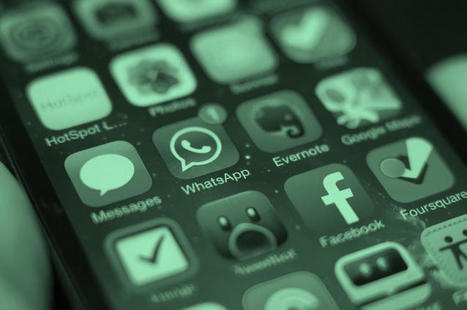
Before I begin, I want to clarify that conversational commerce (as I see it) largely pertains to utilizing chat, messaging, or other natural language interfaces (i.e. voice) to interact with people, brands, or services and bots that heretofore have had no real place in the bidirectional, asynchronous messaging context. The net result is that you and I will be talking to brands and companies over Facebook Messenger, WhatsApp, Telegram, Slack, and elsewhere before year’s end, and will find it normal. Indeed, there are several examples of this phenomenon already, but those examples are few and far between, and fit in a Product Hunt collection rather than demand an entire App Store (wait for it).
|
|
Scooped by
DD
January 26, 2016 6:17 AM
|
Today’s CX is increasingly driven by technology-fueled consumers and their rising expectations—and not so much by your competitors. The consumer is clearly in control and has been for some time. Social media and emerging platforms, such as (especially) mobile messaging, are not fads but mainstream components of communication by consumers and businesses, and should not be siloed from other areas of marketing.
The chief marketing officer has become more accountable for revenue and ROI, and the ubiquity of mobile and social has caused the CMO to become responsible for customer experience (CX). This necessitates a digital-first skill set, more science than art, as automation becomes mainstream in more areas. The cloud creates the opportunity for the entrepreneurial CMO to be fluid and respond to rapid change, and forces the CMO and CIO to collaborate. Creativity and content are still in huge demand, but channeled and applied differently today.
|
|
Scooped by
DD
January 19, 2016 4:31 AM
|
In a digital economy, companies are constantly faced with opportunities, challenges and threats. Business changes are critical to successfully navigate in this environment, but there are plenty of pitfalls to watch for along the way. Some companies, like those in the media space, are probably closer to the head of the pack in addressing these issues. They’ve either survived or not at this point. Others, in areas like retail and financial services, are in the eye of the storm, while industries like oil and gas and consumer goods see this more as an issue on the horizon.
Regardless of where they are in dealing with digital disruption, everyone’s assumptions about what is necessary to succeed are being shaken up. Digital disruption comes at you in unexpected ways, and businesses need to be prepared. MIT’s Center for Information Systems Research (CISR) has been studying this issue for years through case studies, interviews and surveys. Based on that research, we’ve identified five propositions about thriving during digital disruption.
|
|
Scooped by
DD
January 13, 2016 9:02 AM
|
Consumers’ appetite for trendy clothing is fueled not only by fast fashion, but by contemporary, high end, not-quite-luxury designers that have grown organically online and gained followings on social media, like Mansur Gavriel and Prabal Gurung. Such competition didn’t exist in the past, when the barrier to entry for a fashion designer was higher, without the e-commerce store. According to an Exane BNP Paribas study, the barrier to entry in fashion is lower than ever, thanks to a surge in talent and wholesale opportunities online.
|
|
Scooped by
DD
January 7, 2016 10:58 AM
|
In 2015, a host of trends converged to put the focus of investors and entrepreneurs squarely on messaging interfaces, and the growing number of bots that live inside them. On smartphones, WeChat, WhatsApp, and Facebook Messenger emerged as some of the most popular apps in the world. Meanwhile, Slack put messaging and conversations at the center of work — and opened itself up to accommodate developers’ bots. Advancements in natural language processing made it easier to build software that understands our requests and personalizes its responses.
As 2016 dawns, there’s a sense in Silicon Valley that the decades-old fantasy of a true digital assistant is due to roar back into the mainstream. If the trend in past years has been assistants powered by voice — Siri, Alexa, Cortana — in 2016 the focus is shifting to text. And if the bots come, as industry insiders are betting they will, there will be casualties: with artificial intelligence doing the searching for us, Google may see fewer queries. Our AI-powered assistants will manage more and more of our digital activities.
|
|
Scooped by
DD
January 4, 2016 12:26 PM
|
For tech-savvy marketers and brands, sensors are bound to be big business—once everyone has figured out what to do with them.
According to branding and marketing experts, we're still in the early days for sensors, which are devices that detect or measure a physical property and record or respond to it in some way. If that sounds vague, that's because it is; sensors are part of wearables, smartwatches, beacons, smartphones and virtual reality–all of which will be on display at this week's Consumer Electronics Show in Las Vegas. Think of sensors as the eyes and ears of computers.
|
|
Scooped by
DD
January 4, 2016 10:49 AM
|
There’s one thing that inevitably happens whenever someone gets their first taste of virtual reality.
Take a Gear VR to a party, for example, and let a bunch of friends and family try it out, and the same thing will happen again and again: Each person will pick up the headset, say something a little dismissive about VR while they’re starting to put it on, and then...."Amazing," and a big, wide smile.
|
|
Scooped by
DD
January 4, 2016 5:46 AM
|
The reality is that we live on the edges of profound new technologies that could each individually changes everything or come together and change nothing.
Here are the enight digital trends for the year of 2016.
|
|
Scooped by
DD
December 29, 2015 4:51 AM
|
In 2015, news on the Internet no longer belonged to the web alone.
This was the year that Snapchat, previously best known as a messaging service for ephemeral photos, launched its own version of the news called Discover. It was the year that Facebook figured news articles on the web loaded too slowly, so it decided to make them instant. It was the year that Apple’s latest version of iOS came with its own app for reading news on iPhones. Meanwhile, Twitter got into the news game with Moments, its attempt to make the service easier for n00bs to understand by using real humans to curate the news tweet by tweet.
|
|
Scooped by
DD
December 18, 2015 5:58 AM
|
Wanted around Wired's San Francisco headquarters on any given day and you’re likely to encounter quite a zoo: hoverboard-riding video shooters dodging begoggled editors who are testing beta VR hardware; one of our favorite TV makers coming in for a meeting; security writers debating the latest cyberwar skirmish around the corner from a conference call with the founder of the Valley’s latest unicorn company; and dogs (10 of them, by my count).
But this time of year, the always lively view from my desk takes on an especially electric feel as we train our focus on a new horizon. So to give you a sense of what we’re gearing up to cover in 2016, I tapped the hive mind of writers and editors and pulled together a list of the big developments we expect to be following as the year unfolds. There’s a lot to look forward to.
|
|
Scooped by
DD
December 14, 2015 12:10 PM
|
As humanity debates the threats and opportunities of advanced artificial intelligence, we are simultaneously enabling that technology through the increasing use of personalization that is understanding and anticipating our needs through sophisticated machine learning solutions.
In effect, while using personalization technologies in our everyday lives, we are contributing in a real way to the development of the intelligent systems we purport to fear.
|
|
Scooped by
DD
December 8, 2015 3:56 AM
|
Microsoft Research is the 1,000-strong arm of the company that deals with The Future. Its job is, essentially, to focus more on what comes next than what comesnow.
Microsoft's Researchers have set out 16 predictions for 2016. Here they are:
|
|
Scooped by
DD
December 7, 2015 4:00 AM
|
How you feel about virtual reality likely depends on a few factors. One, your history as a tech early adopter; two, your desire to spend even more time staring deeply into a screen; and three, whether you’ve been burned before (Google Glass, anyone?). But for the fashion industry, for whom technological advances mean the potential for new and interesting ways to entice buyers, virtual reality represents the possibility for something else entirely. Imagine, for instance, a fashion show without seating charts and assorted egos, without traffic jams or late-arriving models or the same five to seven minutes of canned small talk before you take your seat. Or imagine, anyway, the ability to skip past those parts and fast-forward to the good stuff, and all from the comfort of home—being able to attend without, well, even being invited. As Misha Nonoo, who forewent atraditional show to premiere her Spring collection on Instagram, told Vogue Runway Director Nicole Phelps earlier this week: “That’s the beauty of digital; somebody has a front row seat while sitting in their armchair.”
|
|
|
Scooped by
DD
January 27, 2016 6:15 AM
|
Apple posted its quarterly earnings after the bell on Tuesday, showcasing record profits of $18.4 billion.
While the release made it easy to determine that 74.8 million iPhones were sold, in line with analyst estimates, Apple’s “other” category makes it difficult to assess how many Apple Watches and TVs were purchased.
|
|
Scooped by
DD
January 25, 2016 5:16 AM
|
Facebook is preparing for a world in which video is no longer flat.
The social network’s push into virtual reality with its Oculus Rift along with similar initiatives by Microsoft and Google is expected to create a flood of video for the devices. Meanwhile, companies like GoPro fb are developingcameras that people can use to film themselves in 360 degrees while skydiving and snowboarding.
|
|
Scooped by
DD
January 18, 2016 5:03 AM
|
Since launching its $10 Cardboard VR headsets almost two years ago, Google has had a very strange, very Google relationship with virtual reality. Though it feels like a hobby of Google’s engineers, Cardboard has quietly sold over a million units. It has sent another million to New York Times subscribers, it has snuck onto the iPhone, and it has some major design talent, Google’s former head of Search design Jon Wiley.
Now, Google is formalizing its intent as Clay Bavor, vice president for product management, who has overseen Google apps like Gmail and Docs while also leading Cardboard under that umbrella, is dropping all other responsibilities to focus on Google VR. This division will include Cardboard, as well as their VR projects like Expeditions, Jump and any other VR efforts.
|
|
Scooped by
DD
January 11, 2016 3:49 AM
|
Looking at the list of finalists for the Crunchies, you could get the impression that the greatest advances of 2015 were sharing and delivery apps, software platforms, and pencils. Yes, these are cool. But much bigger things happened last year.
A broad range of technologies reached a tipping point, from science projects or objects of convenience for the rich, to inventions that will transform humanity. We haven’t seen anything of this magnitude since the invention of the printing press in the 1400s. And this is just the beginning.
Starting in 2016, a wider range of technologies will begin to reach their tipping points. Here are the six amazing transformations we just saw.
|
|
Scooped by
DD
January 5, 2016 4:01 AM
|
Although virtual reality (VR) and augmented reality (AR) have existed in some form for decades, only recently have they garnered mainstream attention.
VR is blowing up right now, and its content and hardware advances have been exciting to watch. In a short amount of time, content creators have made some mind-blowing advances in storytelling with this new technology. Brands, movie studios, gaming companies and news organizations are all tinkering with this tool and channel. VR will gain ascendancy throughout 2016, but my money’s on AR becoming the dominant technology in our daily lives.
|
|
Scooped by
DD
January 4, 2016 10:58 AM
|
Robots in movies are usually clever, cute, and friendly. But for decades, real-life robots have been basically awkward, clumsy, and really not-so-smart hunks of metal. That’s drastically changed in the last two to three years, as both robot hardware and AI software have improved by leaps and bounds. This year, we’ve seen robots do all kinds of things that were previously the realm of sci-fi.
Some are assisting us mere humans at all kinds of mundane tasks, such as making pancakes, folding laundry, forming new habits, and finding beer pong buddies. Others are extending human capabilities, especially in the area of prosthetics (seethis drummer who plays better with his new robot hand than his original one) and surgery. Still, others are all-out replacing what humans do: Today, robots can be security guards, bus drivers, farmers, and journalists—and they haven’t hit their limit yet.
|
|
Scooped by
DD
January 4, 2016 10:29 AM
|
Artificial intelligence is changing not only the way we use our computers and smartphones but the way we interact with the real world.
2015 is the year artificial intelligence technology took off in a big way in the real world. DuLight and the Google chatbot may be experiments, but Facebook’s face recognition, Microsoft’s Skype translation, and Google’s Android voice recognition are very real—and available to all. Google is also using this technology to drive its Internet search engine, the linchpin of its online empire. Twitter is using it to identify pornography, which gives people the opportunity to block it. Baidu uses it to target advertisements and identify malware.
|
|
Scooped by
DD
December 29, 2015 5:22 AM
|
Beauty brands have brought augmented reality from an interesting idea to an effective marketing tool on mobile this year by tapping into its ability to drive trial, a strategy which other marketers could benefit from following.
Retailers and brands such as L’Oreal and Sephora have connected with their audience more closely through augmented reality pushes in which users were able to test out and interact with products without having to enter stores. With many believing that this is just the beginning for the technology, brands should jump aboard now and focus on creating a convenient experience for consumers.
|
|
Scooped by
DD
December 22, 2015 4:24 AM
|
Running a business is tough. But for some, the chance that one can leave their mark on the world—or, as Steve Jobs famously put it, “make a dent in the universe”—is wildly alluring. A few even manage to pull it off.
In 2015, a few tech companies did more than make a dent. They showed that technology now defines the terms of business. Sure, they also made billions. But more significantly, they forced the rest of the world to reckon with the ways they reshaped the landscape.
|
|
Scooped by
DD
December 15, 2015 11:25 AM
|
When it comes to Internet accessibility, having a strong Wi-Fi connection is just the beginning. What's the use of even the fastest internet speeds if you can't read the words on the page? Even if global access to Internet becomes a reality, language barriers make complete accessibility an impossibility. Language diversity, or lack thereof, is a major problem on the web. Only 5% of the world's 7,100 languages are accessible on the Internet. Though about 80% of those languages are spoken by 100,000 people or less, this is no doubt a sizable problem when it comes to the goal of global connectivity. In a survey of the top 10 million websites on the web, almost 55% of sites used the English language to deliver their content.
|
|
Scooped by
DD
December 11, 2015 12:17 PM
|
There are now more than 2 billion active social media users worldwide, and that sum is growing at a brisk clip of 25% each year. Businesses haven't failed to noticed the runaway expansion of social media. Nine out of 10 U.S. companies are now active on social networks. The same overwhelming percentage of those are reporting seeing increased exposure as a result, and more than half say their social media efforts are boosting sales.
So what’s in store for 2016? Here’s a look at five trends that appear set to change how businesses use social media in the year ahead.
|
|
Scooped by
DD
December 8, 2015 3:52 AM
|
In an analysis of 2015’s award-winning mobile marketing campaigns, Millward Brown and the Mobile Marketing Association found that the best efforts tended to embrace mobile innovation and immersive experiences to connect with audiences on a deeper level.
Key trends include the rise of virtual and augmented reality, how micro-video is being stitched into a longer narrative and social’s strength at super-charging interactivity.
|