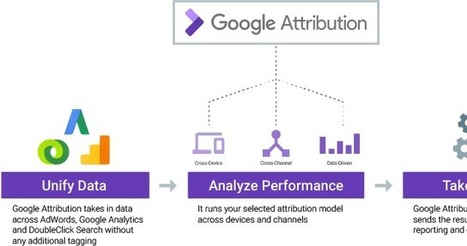
Supreme Court Canada decision. Guardian summary.
https://www.theguardian.com/technology/2017/jun/28/canada-google-results-supreme-court


 Your new post is loading...
 Scoop.it! Supreme Court Canada decision. Guardian summary. https://www.theguardian.com/technology/2017/jun/28/canada-google-results-supreme-court

No comment yet.
Sign up to comment
Scoop.it!
This post offers some thoughts on the opportunities and challenges of blockchain technology, with reference to the new DECODE project.
Scoop.it!

Police forces have raised child safety concerns about a new Snapchat feature that reveals users' locations amid fears it could be used for stalking.
Scoop.it!
case studies between 2015 and 2017 from Brazil, Canada, China, Germany, Poland, Taiwan, Russia, Ukraine, and the United States.
Scoop.it!

The updated Global Open Data Index has been published today, along with our report on the state of Open Data this year. The report includes a broad overview of the problems we found around data publication and how we can improve government open data
Scoop.it!

Open data is a vital pillar of open science and a key enabler for reproducibility, data reuse, and novel discoveries. Enforcement of open-data policies, however, largely relies on manual efforts, which invariably lag behind the increasingly automated generation of biological data. To address this problem, we developed a general approach to automatically identify datasets overdue for public release by applying text mining to identify dataset references in published articles and parse query results from repositories to determine if the datasets remain private. We demonstrate the effectiveness of this approach on 2 popular National Center for Biotechnology Information (NCBI) repositories: Gene Expression Omnibus (GEO) and Sequence Read Archive (SRA). Our Wide-Open system identified a large number of overdue datasets, which spurred administrators to respond directly by releasing 400 datasets in one week.
Scoop.it!
The following blog series aims to share some of the themes, presentations and discussions from a NESTA workshop on the future of the personal data economy.
Scoop.it!
From
harzing

Reports on presentation at "The Future of Research Assessment Peer Review vs. Metrics" Compares H scores from scopus, web of science and web based metrics.
Scoop.it!

But research organisations say proposed directive does not go far enough and could hinder links with companies
Scoop.it!
Cybersecurity in the European digital single market
Scoop.it!

By Elizabeth Denham, Information Commissioner. In March we announced we were conducting an assessment of the data protection risks arising from the use of data analytics, including for political purposes. Engagement with the electorate is vital to the democratic process. Given the big data revolution it is understandable that political campaigns are exploring the potential…
Scoop.it!
From
ico
The ICO has seen a number of data protection issues arise due to the use of surveillance technology.
|
Scoop.it!

If Facebook already knows how you feel from reading what you post, soon it will know from reading the expressions on your face.
Scoop.it!
From
europa
The European Commission has fined Google €2.42 billion for breaching EU antitrust rules. Google has abused its market dominance as a search engine by giving an illegal advantage to another Google product, its comparison shopping service. Google response https://www.blog.google/topics/google-europe/european-commission-decision-shopping-google-story/
Scoop.it!
The project on machine learning aims to stimulate a debate, to increase awareness and demonstrate the potential of machine learning and highlight the opportunities and challenges it presents.
Scoop.it!
Progress on digital government is ‘painfully slow’ report by Institute for Government
Scoop.it!

Providing an analysis of Open Data and Open Science policies across Europe, today we are releasing a new report. Produced in collaboration with the Digital Curation Center (DCC…
Scoop.it!

From
www
USACM-EUACM Statement on Internet of Things Privacy and Security
Scoop.it!

The African Centre for Statistics at the Economic Commission for Africa (ECA) has launched the Africa Data Revolution Report 2016, a biennial report highlighting developments in African national data ecosystems
Scoop.it!

With Open Data Day 2017 now two months behind us, it is time to look back and reflect on all that has been happening around the world during this year’s celebration of open data. First of all, it w…
Scoop.it!
The Open Data report is a result of a year-long, co-conducted study between Elsevier and the Centre for Science and Technology Studies (CWTS), part of Leiden University, the Netherlands. The study is based on a complementary methods approach consisting of a quantitative analysis of bibliometric and publication data, a global survey of 1,200 researchers and three case studies including in-depth interviews with key individuals involved in data collection, analysis and deposition in the fields of soil science, human genetics and digital humanities.
|