Your new post is loading...

|
Scooped by
heather dawson
April 14, 2021 6:59 AM
|
Learn how the World Bank provides a blueprint on how to harness the power of data for development, to ensure no one is left behind in the latest edition of the World Development Report.
|
|
Scooped by
heather dawson
April 12, 2021 6:51 AM
|
Explore the "JournalismAI Case Studies" view on Airtable.
|
|
Scooped by
heather dawson
April 2, 2021 12:46 PM
|
|
|
Scooped by
heather dawson
March 26, 2021 2:34 PM
|
|
|
Scooped by
heather dawson
March 26, 2021 1:51 PM
|
Recent developments in frontier technologies, including artificial intelligence, robotics and biotechnology, have shown tremendous potential for sustainable development. Yet, they also risk increasing inequalities by exacerbating and creating new digital divides between the technology haves and have-nots. The COVID-19 pandemic has further exposed this dichotomy. Technology has been a critical tool for addressing the spread of the disease, but not everyone has equal access to the benefits.
|
|
Scooped by
heather dawson
March 24, 2021 4:25 PM
|
This volume presents the key outcomes and research findings of the Digitranscope research project of the European Commission Joint Research Centre. The project set out to explore during the period 2017-2020 the challenges and opportunities that the digital transformation is posing to the governance of society. We focused our attention on the governance of data as a key aspect to understand and shape the governance of society. Data is a key resource in the digital economy, and control over the way it is generated, collected, aggregated, and value is extracted and distributed in society is crucial. We have explored the increasing awareness about the strategic importance of data and emerging governance models to distribute the value generated more equitably in society. These findings contribute to the new policy orientation in Europe on technological and data sovereignty and the sharing of data for the public interest. The digital transformation, the rise of artificial intelligence and the Internet of Things offer also new opportunities for new forms of policy design, implementation, and assessment providing more personalised support to those who need it and being more participative throughout the policy cycle. The use of digital twins, gaming, simulation, and synthetic data is just at the beginning but promises to change radically the relationships among all the stakeholders in governance of our society
|
|
Scooped by
heather dawson
March 23, 2021 4:59 PM
|
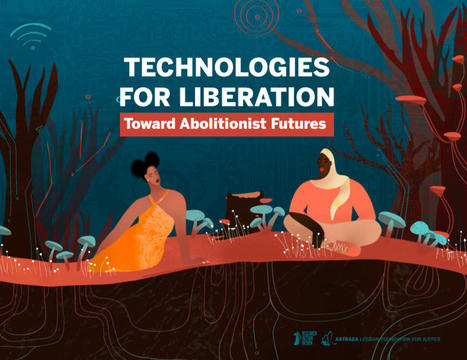
This report is based on rich interviews and engagement with movement technologists, organizers, researchers, and policy advocates about what liberation from surveillance and criminalization can actually look like. Astraea and Research Action Design (RAD) created this report as a resource for funders to understand what is at stake and what opportunities exist to support critical organizing at the intersections of decriminalization and technology. Throughout this report, you will read about surveillance, carceral technologies, criminalization, and policing. In some instances, we speak about these practices in tandem, and, in others, we hone in on one to provide deeper insight, but please bear in mind that these processes and practices—and their consequences—are inextricably linked.
|
|
Scooped by
heather dawson
March 11, 2021 4:14 PM
|
The Journal of Librarianship and Scholarly Communication This paper argues that linguistic features common in discourse around Open Access Publishing are socially constructed in ways that lend themselves to implicit bias against the Open Access (OA) movement. These biases materialize through common linguistic practices such as de-centering OA and highlighting the uncertainty of OA Publishing, resulting in “patchy endorsements” of the status quo of Subscription Publishing. Following previous research that demonstrates how educational content on OA can lead to cognitive load and biases that reinforce the status quo in scholarly publishing, we analyze publicly available, online content from our own institutions with an eye towards how these biases manifest specifically in the practice of librarianship. Using examples from this analysis, we suggest strategies and intentional language that can be used by librarians and other OA advocates to counteract bias and shift towards a construction of OA Publishing as the status quo. While many strategies and difficult negotiations are needed to functionally establish OA as the default in scholarly publishing, language choice is a device through which advocates at any level can advance towards an open-centered culture.
|
|
Scooped by
heather dawson
March 4, 2021 9:28 AM
|
Opscidia’s ontology generator The purpose A key problem in building efficient text-mining tools is to have proper domain-specific ontologies that can be used as building blocks for other text-mining applications. These ontologies can have many usages for researchers, innovators, librarians, and others. The value of the Ontology Generator There are a lot of tools to text-mine non-technical texts and bring interesting concepts and main topics out of it. Some of these tools are based on ontologies to make Named-Entity Recognition for instance. Most of the time, these ontologies are produced by experts and very often, they simply don’t exist as soon as the topic is too narrow or technical. The project aims at addressing the difficult challenge of scientific topic detection on a text corpus that has no already human-made ontology. Researchers, Innovation professionals or librarians face this kind of challenge when they try to classify documents in a very specialized domain, or when they look for the next promising technologies in a specific domain for example. Hence, generating a specific ontology has many usages: it can be used as the first layer of larger intelligence tools, or as a classification tree for documents, or as a tool to explore a domain.
|
|
Scooped by
heather dawson
March 3, 2021 3:31 AM
|
Examining the risks, opportunities, and challenges posed by the public health surveillance crucial to stemming the Covid-19 pandemic.
|
|
Scooped by
heather dawson
February 25, 2021 3:39 PM
|
Data Feminism offers strategies for data scientists seeking to learn how feminism can help them work toward justice, and for feminists who want to focus their efforts on the growing field of data science. But Data Feminism is about much more than gender. It is about power, about who has it and who doesn't, and about how those differentials of power can be challenged and changed.
|
|
Scooped by
heather dawson
February 24, 2021 7:51 AM
|
This report explores how data and technology are shaping the future of vulnerability, particularly through new and evolving forms of inequality, intrusion and insecurity.
|
|
Scooped by
heather dawson
February 20, 2021 8:52 AM
|
This report aims to provide insights on the cybersecurity challenges specifically connected to the uptake of AI techniques in autonomous vehicles. It starts by describing the dynamic policy context with which this initiative is aligned, at both the European and international levels. Institutional and private actors have been very active to outline the high-level principles and standards that should govern the development of AV, either explicitly, with dedicated automotive guidelines, or through the definition of sets of practices driving the expansion of AI and cybersecurity. In this respect, the European institutions have conducted various initiatives for developing trustworthy AI, where cybersecurity and intelligent transportation play a significant role.
|
|
|
Scooped by
heather dawson
April 14, 2021 3:55 AM
|
|
|
Scooped by
heather dawson
April 7, 2021 3:23 AM
|
, the Ada Lovelace Institute commissioned Survation to conduct a telephone-based, nationally representative survey of 2,023 UK British adults, to explore public attitudes towards a range of technologies deployed during the Covid-19 pandemic for health outcomes, including mental and physical-health apps, symptom-tracking apps, digital contact-tracing apps and vaccine passports.
|
|
Scooped by
heather dawson
March 31, 2021 3:32 AM
|
This toolkit has been developed as a resource for data stewards and responsible data leaders at public, private, and civil society organisations, who are seeking new ways to create public value through cross-sector data collaboration.
|
|
Scooped by
heather dawson
March 26, 2021 2:13 PM
|
|
|
Scooped by
heather dawson
March 24, 2021 4:27 PM
|
Artificial intelligence has entered into the sphere of creativity and ingenuity. Recent headlines refer to paintings produced by machines, music performed or composed by algorithms or drugs discovered by computer programs. This paper discusses the possible implications of the development and adoption of this new technology in the intellectual property framework and presents the opinions expressed by practitioners and legal scholars in recent publications. The literature review, although not intended to be exhaustive, reveals a series of questions that call for further reflection. These concern the protection of artificial intelligence by intellectual property, the use of data to feed algorithms, the protection of the results generated by intelligent machines as well as the relationship between ethical requirements of transparency and explainability and the interests of rights holders. This report is based on a background paper to the JRC report "Artificial Intelligence: A European perspective" (2018).
|
|
Scooped by
heather dawson
March 24, 2021 4:21 PM
|
The purpose of this study is to identify and analyse a set of successful data ecosystems and to address recommendations in support of the evolution of contemporary spatial data infrastructures that can act as a catalyst of data-driven innovation in line with the recently published European data strategy. The recommendations provided here cover insights into the approaches that can be undertaken in order to ensure the evolution of contemporary spatial data infrastructures into self-sustainable data ecosystems.
|
|
Scooped by
heather dawson
March 15, 2021 1:39 PM
|
|
|
Scooped by
heather dawson
March 11, 2021 4:13 PM
|
Further opportunities with UNESCO for the international scientific community to participate and voice perspectives on Open Science are now available.
|
|
Scooped by
heather dawson
March 4, 2021 9:25 AM
|
Developed by experts from Science Europe's Member Organisations, this guide aims to align research data management (RDM) requirements across various research organisations.
|
|
Scooped by
heather dawson
February 26, 2021 12:40 PM
|
A visual explainer on why we need a tracing app, how it would work and the risks it entails Measures such as lockdowns and contact restrictions were taken by the majority of countries. They help to slow down the spread of the virus and relieve pressure on health systems. But there is an obvious downside. The interventions radically restrict our fundamental rights, bring large parts of the economy in a state of despair, and increase social inequality. What could be an alternative that would effectively help us fight the virus and save us from this dilemma? The newly formed consortium DP3T (Decentralized Privacy-Preserving Proximity Tracing), under which scientists from renowned European universities and research institutes have joined forces, advocates for voluntary tracing apps that anonymously record our physical contacts and notify us in case of a possible infection. Possible infections could thus be detected early and therefore, at least in theory, any chain of infection could be interrupted.
|
|
Scooped by
heather dawson
February 25, 2021 3:32 PM
|
|
|
Scooped by
heather dawson
February 20, 2021 8:55 AM
|
This report focuses on the evolution of cloud computing, which is being transformed by technology innovation and evolving supply-and-demand dynamics. The targeted industry audience of this report is twofold: - European IT service providers and cloud service providers: As shown in chapter 2.1.1, large numbers of stakeholders are active in the ecosystems of large players at the local and national levels, particularly in the IT services and software-as-a-service (SaaS) market segments. The market trends discussed in this report open new opportunities for these industry stakeholders. European policy strategies to support European data infrastructure sovereignty and cloud services federations will also create a more favourable environment for European cloud actors. - European cloud users, particularly SMEs, adopting cloud computing both directly and indirectly (i.e. companies producing for instance connected cars embedding 5G connectivity modules over which services are provided using the cloud as a backend): Users should be aware of technology and evolving supply trends to make the best choices for the cloud infrastructures they need to support their digital transformation initiatives.
|


 Scoop.it!