The aim of this report is to at collecting novel and pressing policy issues that can be addressed by Computational Social Science (CSS), an emerging discipline that originates from the increasing availability of computational resources and digital trace data and which seeks to apply data science and simulation methods to social sciences. The questions were sourced from researchers at the European Commission who work at the interface between science and policy and who are well positioned to formulate research questions that are likely to anticipate future policy needs. In particular, the report attempts to identify possible directions for CSS starting from the demand side, making it an effort to consider not only how science can ultimately provide policy support — ‘Science for Policy’ – but also how policymakers can be involved in the process of defining and co-creating the CSS4P agenda from the outset — ‘Policy for Science’. The report is therefore expected to raise awareness on the latest scientific advances in CSS and on its potential for policy, integrating the knowledge of policymakers and stimulating further questions in the context of future developments of this initiative.
Artificial intelligence (AI) is spreading through society into some of the most important sectors of people’s lives – from health care and legal services
A joint research conducted by Maldita.es (http://maldita.es), Tactical Tech and SocialTIC (https://socialtic.org) looks at how financial technology (fintech) apps focusing on personal budgeting handle their users’ data privacy as well as how users themselves manage their personal information inside these apps. "The Depth of Your Virtual Purse: What do fintech apps know about you?
The WHO policy brief Ageism in Artificial Intelligence for Health examines the use of artificial intelligence (AI) in medicine and public health for older people, including the conditions in which AI can exacerbate or introduce new forms of ageism. The brief presents legal, non-legal and technical measures that can be used to minimize the risk of ageism in AI and maximize AI’s benefits for older people as these technologies become more commonly used across the world.
This study of data services librarians is part of a series of studies examining the current roles and perspectives on Research Data Management (RDM) services in higher education. Methods: Job analysis interviews provide insight and context to the tasks employees do as described in their own words. Interviews with 10 data services librarians recruited from the top 10 public and top 10 private universities according to the 2020 Best National University Rankings in the US News and World Reports were asked 30 questions concerning their overall job tasks and perspectives on RDM. Five public and five private data services librarians were interviewed. Discussion: The results indicate that there may be different types of data services librarians depending on the mix of responsibilities. Academic librarianship will benefit from further delineation of job titles using tasks while planning, advertising, hiring, and evaluating workers in this emerging area. There remain many other explorations needed to understand the challenges and opportunities for data services librarians related to RDM. Conclusions: This article concludes with a proposed matrix of job tasks that indicates different types of data services librarians to inform further study. Future job descriptions, training, and education will all benefit from differentiating between the many associated research data services roles and with increased focus on research data greater specializations will emerge.
The need for research universities to understand expectations for scholarly publishing across a wide array of disciplines is vital to their self-understanding and to decision-making arising from that understanding. Administrators, staff, and faculty members serve on college-level executive committees, provost-level promotion and tenure committees, and committees that oversee campuswide recognition of research excellence. They engage in processes that allocate research funding in response to competing proposals from several fields, or that authorize and oversee the development of cross-disciplinary programs. They develop strategic plans shaped by an awareness of the strengths, needs, opportunities, and vulnerabilities of units across the university. In these processes, they are called upon to assess the scholarly output of faculty in disciplines representing a wide variety of publication cultures. They see the vitas of faculty in many fields and career stages, and come to realize, for example, how different the CV of a chemist is from the CV of a historian. Over time, experienced administrators and faculty develop an intuitive understanding of these differences, but even that understanding can be strengthened and extended by data that reflect essential dimensions of discipline-based publication patterns.Different disciplinary cultures have different understandings about the use of bibliometric data to influence decision-making, some embracing it, others resenting it. Bu
by Janja Komljenovic Universities worldwide are increasingly interested in digital technologies and how they can support higher education. A recent study by the European University Association found that most European universities are already using or planning to use data-rich products and services, such as artificial intelligence, machine learning, learning analytics, big data, and the internet…
In La Nación’s experience, internal collaboration can also foster support for AI development within the organisation and uncover more resources. The team is working on a Spanish-language version of the gender gap tracker, a tool originally devised to measure the ratio of female-to-male sources...
Whereas social media provide individuals with new opportunities to access information, express opinions, and participate in democratic processes, they can also undermine democracy by distorting information, promoting false stories and facilitating political manipulation. This EPRS paper provides an overview of the key risks social media pose to democracy related to surveillance, personalisation, disinformation, moderation and microtargeting. It also discusses key approaches to tackling social media risks to democracy in the context of EU policy.
South-South Ideas paper, authored by Prof. Nir Kshetri at the Bryan School of Business and Economics, University of North Carolina—Greensboro, USA; and Dr. Hany Besada, Senior Research and Programme Advisor at United Nations Office for South-South Cooperation (UNOSSC).
Consumer and business finance companies and microcredit organizations have had limited success in serving the needs of economically-active low-income families and micro-enterprises in Southern countries. Recent advances in computing and telecommunications technology are dramatically transforming this landscape by changing the way the financial industry operates. A key mechanism underlying this transformation concerns the use of Big Data in assessing, evaluating and refining the creditworthiness of potential borrowers. Important technological and strategic driving forces are behind the implementation of Big Data techniques for such purposes. The objective of this paper is to examine this issue from the perspective of Southern economies. The approach of this study can be described as theory building based on multiple case studies. The study analyses seven cases of financial technology companies operating in the Global South.
The paper investigates how various inherent characteristics of Big Data volume, velocity, variety, variability and complexity are related to the assessment of the creditworthiness of low-income families and micro-enterprises. The paper looks at various categories of personal financial and non-financial information being used as proxy measures for a potential borrower’s identity, ability to repay and willingness to repay. The analysis of the paper indicates that the main reason why low-income families and micro-enterprises in emerging economies lack access to financial services is not because they lack creditworthiness but merely because banks and financial institutions lack data, information and capabilities to access the creditworthiness of this financially disadvantaged group.
This working paper discusses the changing role of students in British higher education governance over the three societal periods: the welfare state, the market society and the digital economy. Within the past three decades, the student has shifted from a partner with significant involvement in...
The current digital content industry is heavily oriented towards building platforms that track users’ behaviour and seek to convince them to stay longer and come back sooner onto the platform. Similarly, authors are incentivised to publish more and to become champions of dissemination. Arguably, these incentive systems are built around public reputation supported by a system of metrics, hard to be assessed. Generally, the digital content industry is permeable to non-human contributors (algorithms that are able to generate content and reactions), anonymity and identity fraud. It is pertinent to present a perspective paper about early signs of track and persuasion in scholarly communication. Building our views, we have run a pilot study to determine the opportunity for conducting research about the use of “track and persuade” technologies in scholarly communication. We collected observations on a sample of 148 relevant websites and we interviewed 15 that are experts related to the field. Through this work, we tried to identify 1) the essential questions that could inspire proper research, 2) good practices to be recommended for future research, and 3) whether citizen science is a suitable approach to further research in this field. The findings could contribute to determining a broader solution for building trust and infrastructure in scholarly communication. The principles of Open Science will be used as a framework to see if they offer insights into this work going forward.
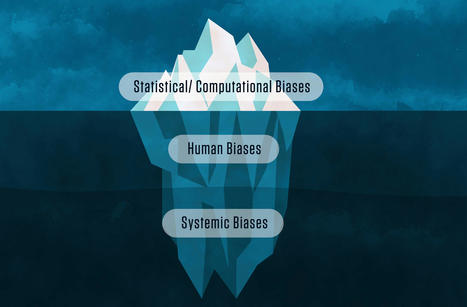
A more complete understanding of bias must take into account human and systemic biases, which figure significantly in the new version. Systemic biases result from institutions operating in ways that disadvantage certain social groups, such as discriminating against individuals based on their race.
Google is releasing the code for an open source tool called Harassment Manager that will help bulk filter and report potentially toxic comments. Thomson Reuters Foundation journalists will begin using a version of the tool in June.
AI is perceived to perpetuate existing bias across the digital space. But can it also help us counter and mitigate the effects of gender disparity? Three recent projects demonstrate how AI-powered tools can help raise awareness on issues with misrepresentation of women in the news:
https://pudding.cool/2022/02/women-in-headlines/ When Women Make Headlines is an analysis by The Pudding of the (mis)representation of women in news headlines, and how it has changed over time.
https://www.aijoproject.com/ In the AIJO project, journalists from eight different organisations worked together to identify and mitigate biases in gender representation in news.
https://github.com/fer-aguirre/pmdm The Political Misogynistic Discourse Monitor is a web application and API that journalists from AzMina, La Nación, CLIP, and DataCrítica developed to uncover hate speech against women on Twitter.
In this virtual workshop, journalists behind the three projects will describe how they taught the machine to recognise what constitutes bias and hate speech. They will share practical information on how they run their experiments and what they learned. Join us to learn more about the opportunities that AI can offer to mitigate gender misrepresentation in news. __________
Who’s speaking?
Bárbara Libório, Data Journalist & Journalism Manager at AzMina in Brazil, who is part of the team working on the Political Misogynistic Discourse Monitor: https://twitter.com/baliborio
Delfina Arambillet, Data & Innovation Journalist at La Nación in Argentina, who was part of the team working on the AIJO project: https://twitter.com/DAarambillet
. JournalismAI is a project of Polis – the journalism think tank at the London School of Economics and Political Science – and is supported by the Google News Initiative.
In this Insight Report the World Economic Forum’s Taskforce on Data Intermediaries explores the potential to outsource human decision points to an agent acting on an individual’s behalf, in the form of a data intermediary.
Heli Kautonen, PhD, works as Director of the Finnish Literature Society Library in Helsinki, Finland. Earlier, she has worked for digital cultural heritage in different positions for over 15 years. She was one of the managers in the team at the National Library of Finland, which built the Finna...
In November and December 2021, we surveyed over 1500 people involved in data journalism worldwide in what we believe is the biggest effort to measure the state of data journalism to date. The results provide an excellent overview of the various aspects of the field: the community’s demographics, the skills and tools, and the impact of the pandemic.
As the use of biometrics becomes commonplace in the era of artificial intelligence (AI), this study aims to identify the impact on fundamental rights of current and upcoming developments, and to put forward relevant policy options at European Union (EU) level. Taking as a starting point the proposal for a regulation of the European Parliament and of the Council laying down harmonised rules on AI, presented by the European Commission in April 2021, the study reviews key controversies surrounding what the proposal addresses through the notions of 'remote biometric identification' (which most notably includes live facial recognition), 'biometric categorisation' and so-called 'emotion recognition'. Identifying gaps in the proposed approaches to all these issues, the study puts them in the context of broader regulatory discussions. More generally, the study stresses that the scope of the current legal approach to biometric data in EU law, centred on the use of such data for identification purposes, leaves out numerous current and expected developments that are not centred on the identification of individuals, but nevertheless have a serious impact on their fundamental rights and democracy.
This project is not about pre-selecting participants or content that meet any kind of criteria. The point is to work with a whole variety of descriptions and images, and not in any sense to ‘cherry pick’ descriptions or images in order to make our lives easier.
To get content containing either thought or leadership enter:
To get content containing both thought and leadership enter:
To get content containing the expression thought leadership enter:
You can enter several keywords and you can refine them whenever you want. Our suggestion engine uses more signals but entering a few keywords here will rapidly give you great content to curate.


 Your new post is loading...