



Cybersecurity tool sprawl is a major problem. Learn how a portfolio strategy can help CISOs identify which products and services businesses need.


 Your new post is loading...
 Scoop.it! Cybersecurity tool sprawl is a major problem. Learn how a portfolio strategy can help CISOs identify which products and services businesses need. 
No comment yet.
Sign up to comment
Scoop.it!
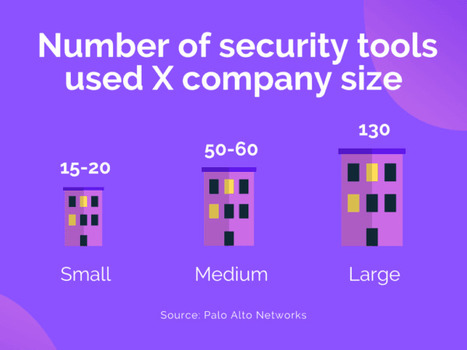
Years of rapidly evolving threats enriched the security solutions of organizations. Most of them operate tens of instruments purchased from different vendors without proper integration. The result is a tool sprawl, inefficient, difficult to apprehend, and expensive—the exact opposite of what was first intended.
Scoop.it!

With cyberattacks becoming more sophisticated and widespread, keeping your security stack up-to-date is critical. The threat landscape is evolving constantly, and yesterday’s security tools cannot defend against today’s cyber risks.
Scoop.it!

75% of security and risk management leaders — up from 29% two years earlier — are looking to decrease the diversity of the vendors they use to provide software security tools and services.
Scoop.it!

Automate common incident remediation tasks to enable faster response, fewer errors, and greater productivity across your organization.
Scoop.it!

Attacks on critical infrastructure are skyrocketing, putting our daily lives at risk. Don't miss this eye-opening report on the urgent need for better
Scoop.it!

Integrated siloed cybersecurity is key to cyber-defense. Security leaders should drive vendors to provide highly integrated solutions.
Scoop.it!

Disenchantment with automation was clear from the new ThreatQuotient survey.
Scoop.it!

Are you tired of sifting through endless alerts? The era of Security Automation is here! Learn how it's changing the game for SOC teams.
Scoop.it!

8% work more than 55 hours per week, which the World Health Organisation (WHO) deems “a serious health hazard.”
Scoop.it!

When there are too many security testing tools, it can be difficult to keep up with all their findings. Read the blog to learn how to get out of remediation quicksand.
Scoop.it!

New research suggests that money is being spent, but throwing cash at security problems isn't resolving anything.
Scoop.it!

Securing a company’s tech stack and effectively mitigating risk is a balancing act. There are many different aspects of an effective security program to consider. You have to be able to effectively identify risk, implement controls, continuously monitor your controls to ensure they still solve the risk appropriately, maintain the solutions and ensure they are working as expected, etc. All the while making sure you still have enough bandwidth to solve the next risk. If your solutions are not scalable, they will hamper you down the line.
|
Scoop.it!

Confusion, false positives, visibility, and lack of a unified approach are the biggest cloud security issues.
Scoop.it!

Cybercrime poses a significant threat to industries and individuals alike. However, there are some less obvious but just as damaging issues that we need to be wary of, too. The new menace threatening cyberspace is burnout.
Scoop.it!

Unstructured data can be processed to support security teams
Scoop.it!

While having the right tools to manage today's influx of data is crucial, cybersecurity teams need skills to comb through this data.
Scoop.it!

It is crucial that before purchasing a new cybersecurity tool or hiring specialists, you understand their functionality and purpose.
Scoop.it!

Research from Adarma finds that wellbeing and diversity continue to be at the forefront of cybersecurity professional’s minds – and crucial for the future of the industry.
Scoop.it!

Cybersecurity automation has steadily gained traction as organizations seek to improve efficiency, address talent gaps, and keep up with escalating threats. However, our latest State of Cybersecurity Automation research shows that while more businesses are utilizing automation, they continue to grapple with obstacles that prevent them from fully capitalizing on its benefits.
Scoop.it!

Data breaches cost businesses $4.45 million on average in 2023! Don't let your organization become a statistic.
Scoop.it!

Cyber security professionals’ home lives are being damaged by increasingly challenging workloads
Scoop.it!

Many organizations face siloed and disjointed threat detection and response systems as part of their security program. Learn how to treat the affliction known as piecemeal detection and response.
Scoop.it!

In the face of rising operational complexity paired with cyber risks, 75% of organizations want to consolidate their cybersecurity vendors.
Scoop.it!

Having strong cybersecurity is a balancing act where quality comes before quantity.
|




