Your new post is loading...

|
Rescooped by
DD
from SOCIAL LISTENING
June 24, 2014 4:55 AM
|
After years of chasing Facebook fans and Twitter followers, many companies now stress quality over quantity in their social-media strategies. They are tracking mentions of their brand, then using the information to help the business.
Read more here...
|
|
Scooped by
DD
June 20, 2014 8:08 AM
|
Facebook's recent focus on direct-response advertising is leaving fewer options for marketers with branding goals, though this focus positions the company to compete more closely with Google for advertising dollars. In the US, nearly 60% of all ad spending goes toward direct-response goals.
Read more here...
|
|
Rescooped by
DD
from ECOMMERCE
June 19, 2014 1:31 PM
|
In this new video, L2 Founder Scott Galloway discusses why Amazon Engine Optimization will become as important to businesses as Search Engine Optimization. 30% of e-commerce searches begin on Amazon vs. 13% on Google. But search engine visibility is more of a marketing opportunity than a sales channel, as only 2% of brand page visits leads to sales. Or, as Galloway says, 98% of site visits are marketing opportunities. Therefore, brands should look at their product pages as packaging that drives online and offline sales. As for reaching consumers, Amazon’s media business will soon be bigger than Twitter’s as there is no other place farther down the purchase funnel to reach consumers.
|
|
Rescooped by
DD
from DIGITAL ANALYTICS
June 17, 2014 11:36 AM
|
At L2′s Social is Media Clinic last Thursday, representatives from Twitter, Facebook / Instagram, Youtube, and Pinterest discussed why their platform deserved the largest amount of brands’ social media ad budgets. With social media advertising budgets rising and organic reach to audiences in decline, the need for brands to carefully plan the right cocktail of social media budgets across platforms, and between organic and paid content, is imperative.
Thomas Puckett, Brand Strategist at Facebook and Instagram, discussed the importance of Facebook’s advanced behavioral targeting strategy and also highlighted the usage on the platforms, where 23% of time on mobile smartphones is spent on Facebook or Instagram apps. Twitter’s user base comprises 16% of those of Facebook and Instagram combined in our Intelligence Report: Instagram. Instead of focusing primarily on statistics, Twitter presenter Kunur Patel, Content Planning Manager at Twitter, used a Zzzquill case study to show the unique potential that advertising on the platform can provide. When users tweeted about tiredness, ZzzQuill automatically followed up with the sponsored tweet, “seriously, these tweets will still be here tomorrow, let’s go to bed together ZzzQuill.” With a lower audience reach, smart advertising remains Twitter’s strong suit.
Read more here...
|
|
Scooped by
DD
June 16, 2014 8:33 AM
|
Facebook, a company not necessarily known for transparency regarding data privacy issues, announced on Thursday it was giving users more insight to and control over how their personal information is used by advertisers. But also included in that announcement were details of how Facebook was increasing interest-based targeting capabilities.
That is, Facebook simultaneously made its ad targeting capabilities more robust, yet easier for users to opt-out of.
Agency executives welcomed the move for being both pro-consumer and as way for brands to waste less time and money advertising to consumers whose interests were incorrectly marked.
Read more here...
|
|
Rescooped by
DD
from CRM
June 16, 2014 6:20 AM
|
Booking abandonment in the travel industry is higher than in other e-commerce sectors, because consumers are more likely to do extensive comparison shopping. Just 2% of hospitality site visitors complete a reservation, 67.6% of hotel and lodging bookings are abandoned. A few Prestige Hotel brands, among them One & Only, Jumeirah and Millenium Hotels, are taking action against abandonment by retargeting the partially interested consumers. Millenium Hotels sends travelers who don’t complete booking personalized emails in their local language, along with a proposed itinerary and property review score. Jumeirah takes a quantity-based approach, sending multiple emails with prices in the consumer’s local language. One & Only creates a sense of urgency by sending emails with time-sensitive offers.
|
|
Rescooped by
DD
from BRAND CONTENT
June 16, 2014 5:37 AM
|
French fashion house Louis Vuitton is encouraging its Twitter followers to pin their favorite Father’s Day gift items as a way to outsource advertising to promote products.
By engaging its audience, Louis Vuitton is allowing consumers to advertise products through Pinterest as other pinners search the homepage for gift ideas. The response in turn spreads the awareness of those products by reaching more people.
Read more here...
|
|
Scooped by
DD
June 11, 2014 5:46 AM
|
LVMH-owned Champagne maker Moët & Chandon is welcoming social media followers to participate in a summer-long photo contest.
Each month the theme will change, but the underlying tone will be represented by the hashtag #IceChallenge. Since participants can upload their image on any social media platform and tag the brand and the contest, Moët & Chandon will likely reach a wide range of its consumers.
“Images are king when it comes to conveying a lifestyle of a luxury brand,” said Jeff Cohen, director of social media at MDG Advertising, Boca Raton, FL.
Read more here...
|
|
Rescooped by
DD
from BRAND CONTENT
June 11, 2014 5:21 AM
|
French atelier Christian Dior is expanding its wonDiorland initiative’s digital touchpoints with exclusive mobile content that enhances the desktop experience.
By entering a device-specific four-digit code found on Dior’s mobile site for wonDiorland, the consumer can discover additional content developed from the brand’s latest fragrance, Dior Addict. The addition of this mobile-to-desktop tactic aligns with Dior’s ongoing approach for the fragrance launch that includes a dedicated Facebook account to attract brand enthusiasts.
Read more here...
|
|
Scooped by
DD
June 5, 2014 6:28 AM
|
|
|
Scooped by
DD
June 2, 2014 5:15 AM
|
Sephora, a leading specialty retailer in beauty announced partnership in the Milan location launch of a new 3D augmented reality mirror by ModiFace that simulates cosmetics on a user’s face photo-realistically in real-time, with expectations to transform how women shop for cosmetics.
The augmented reality technology, which was first debuted at the 2014 International CES in Las Vegas, expects to make color testing easier by simulating makeup products on a user’s face to show what they would look like in real-time and without having to upload a photo. Created by ModiFace, the technology is also being introduced to standalone retail kiosks equipped with a touchscreen monitor and camera, as well as a mobile application that can be used on tablets at beauty counters or on consumers’ own handheld devices. While 2D try-on tech has been increasing in popularity among online and in-store merchants, ModiFace said 3D is naturally progressive step.
Read more...
|
|
Scooped by
DD
June 9, 2014 5:04 AM
|
L'Oreal Ombre hair color products -- born last year from a project that mined YouTube data to tap into a hair-highlighting trend -- have become the first brand to use a technology that places ads on publisher sites based on the hair color of women in photos.
The ad-targeting technology from in-image ad platform GumGum earlier this month began placing ads for L'Oreal Freia and Preference Ombre products within photos across its network of 1,000 news and entertainment sites from such publishers as Tribune Co., New York Times Co., and E.W. Scripps Co. Different products are featured based on the hair color of the women in the photos. The ads themselves appear at the bottom of the photo within editorial content, and in some cases within a "canvas" ad unit that temporarily takes over the image shown.
Read more here...
|
|
Scooped by
DD
May 22, 2014 3:31 AM
|
Mobile ads might take on a new meaning in a few years, at least according to Google. The search giant believes it's possible that it may serve ads on a different set of "mobile" devices in a few years, including thermostats, glasses and watches. That's according to a letter filed with the Securities and Exchange Commission in December and disclosed on Tuesday, as first pointed out by The Wall Street Journal.
"We expect the definition of 'mobile' to continue to evolve as more and more “smart” devices gain traction in the market," Google wrote in the filing. "For example, a few years from now, we and other companies could be serving ads and other content on refrigerators, car dashboards, thermostats, glasses, and watches, to name just a few possibilities."
The prediction in that letter came just weeks before Google announced its acquisition of Nest, a smart thermostat maker, for $3.2 billion in cash. At the time, many joked (or perhaps feared) the possibility that Google would inject ads into the thermostat to make more money.
|
|
|
Rescooped by
DD
from DIGITAL IN RETAIL
June 24, 2014 4:50 AM
|
French department store chain Printemps is helping consumers find exactly what they are looking for in-store with a new mobile application.
The app uses geolocation to let users pinpoint brands, services and their friends inside the chain’s Paris Haussmann flagship. Since consumers are very likely to be on their mobile device while in-store, it makes sense for a retailer to aid their shopping experience with an app.
“Printemps wants to help consumers navigate their flagship retail store and are using Bluetooth to enable that indoors navigation,” said Simon Buckingham, CEO of Appitalism, New York.
Read more here...
|
|
Scooped by
DD
June 19, 2014 2:13 PM
|
Running an auction in less than one-tenth of a second is solving a lot of advertising problems, billions of dollars at a time. But in most major ad campaigns, there are still situations where planning ahead is critical. As Jeff Green, CEO of The Trade Desk, puts it, "Would you wait to buy your ad slot for the Super Bowl until the day of the game?"
The answer, of course, is no. Big-ticket ads such as those are at the center of a media plan, and they require certainty. The central dilemma in the Super Bowl analogy is real-time advertising’s biggest challenge: There are almost no guarantees in real-time bidding. The promise of RTB lies in its granular audience targeting, but buying ad space in real time doesn’t offer marketers the traditional assurances of key inventory, which is often seasonal.
Read more here...
|
|
Rescooped by
DD
from BRAND CONTENT
June 19, 2014 1:13 PM
|
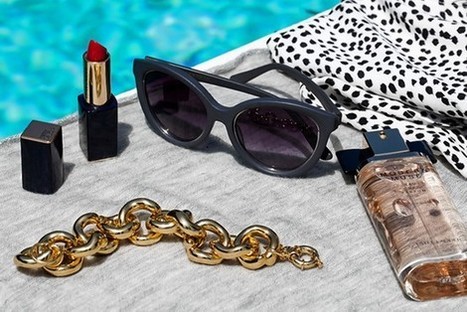
A photo popped up on the Estée Lauder Instagram feed over Memorial Day weekend showing a slew of colorful swimsuits sprinkled with makeup and skin-care products, all scattered by the side of a pool.
As bright and breezy as the post appeared, its creation was anything but. The picture was one of more than 250 images to come out of a rapid-fire, two-day social-media photo shoot for the brand in Los Angeles in late April. A professional prop stylist had carefully placed each string on the 13 bikini tops and draped nine bathing suit bottoms and two one-piece suits. He then carefully arranged 62 Estée Lauder products—including 12 lip glosses, 10 eye shadows and three fragrances—at just the right haphazard-looking angle.
Read more here...
|
|
Rescooped by
DD
from BRAND CONTENT
June 16, 2014 9:32 AM
|
Swedish multi-national clothing retailer H&M has partnered with Ogilvy & Mather Advertising, Shanghai to create a new mobile experience that combines fashion and music to promote the company’s Divided men’s and women’s summer clothing collection, which includes shirts, dresses and shoes.
H&M Loves Music is a different kind of product catalogue. It is actually a digital platform that allows fashion and music lovers to create their own personalized tracks and “remixes” by browsing through the new summer collection and adding their selected fashion items into a music sampler.
Read more hrere...
|
|
Scooped by
DD
June 16, 2014 8:12 AM
|
For a company that once shied away from pelting its users with ads, Facebook has become very, very good at delivering personalized advertisements in your news feed. It's why something as benign as a four-pack of undies you were browsing on Amazon can relentlessly follow you into your Facebook stream, retargeting you again and again.
That kind of technology is not very smart on its own, mind you. But it is about to feela lot smarter. Starting soon, Facebook will use app and website usage data to help advertisers deliver even more finely tailored ads. You might not be familiar with the term "interest-based advertising," but it's become the ad-delivery method du jour for companies like Google.
Basically, it combines in-network data (what you do on a site like Facebook) with stuff you do on other websites. Facebook is essentially taking all that internal and external passive data, rolling it together, and using it to shape the way it sells you goods in the future. Here's how Facebook explains it
Read more here...
|
|
Rescooped by
DD
from DIGITAL ANALYTICS
June 16, 2014 6:18 AM
|
For many brands marketers, Facebook is the hub for social marketing strategy, with all other networks branching off from there. This has become more of a challenge in recent months, as organic reach on the network plummets and Facebook continues to make algorithm changes that encourage a renewed focus on content quality, as well as ad spend over organic promotion.
With that in mind, we decided to look at the top brands on the network, and how these changes have impacted overall engagement. The correlation between the biggest Facebook algorithm changes and overall engagement were clear as day.
Read more here...
|
|
Scooped by
DD
June 11, 2014 10:26 AM
|
Instagram is taking its advertising strategy global.
The photo-sharing service owned by Facebook announced on Tuesday that it will begin showing in-feed ads to international users "in the coming months," according to a company spokesperson. Instagram will start with three countries — Canada, the United Kingdom, and Australia — but more countries could be added in the future.
It's unclear how many of Instagram's 200 million-plus users are outside the United States — the company doesn't break down its user demographics publicly. Instagram also did not identify any of its upcoming international advertisers, but a spokesperson did say that the ads will be tailored and targeted to the individual regions.
Read more here...
|
|
Rescooped by
DD
from MOBILE
June 11, 2014 5:24 AM
|
Italian fashion house Fendi is connecting with aspirational consumers through a new mobile application for tablets that uses its Baguette as a blank canvas for creativity.
Through the “myBaguette” app, consumers can virtually paint their own Baguette and share it with a community of other registered users. This app creates an interactive experience for consumers regardless of their ability to purchase a physical Baguette, and will further fans’ loyalty to the brand.
Read more here...
|
|
Rescooped by
DD
from SOCIAL LISTENING
June 10, 2014 6:00 AM
|
fter weathering months of criticism at the hands of brands and their agencies, Facebook finally replied on Thursday to the stream of complaints about decreased organic reach.
Organic reach on Facebook — the number of Facebook users who see any given post from a Facebook page — has fallen off for brands in recent months due to an internal tweak, causing some to call Facebook a “bully” that hoodwinked marketers.
Facebook had previously told brands and their agencies that the key to effective marketing on the social network was accumulating likes and followers. Agencies and brands spent years doing just that, operating under the belief that they’d be able to access the audience they generated for free. In April 2012, brands were reaching about 16 percent of their fans on average. That number has reportedly slid into the low-single digits, but Facebook would neither confirm or deny that figure.
Read more here...
|
|
Scooped by
DD
June 4, 2014 9:12 AM
|
Obviously, Influencer Marketing is not something new. Even when Internet didn’t existed, there were journalists, writers, thought leaders etc. But now since Internet has democratized everything, journalist, reporter, movie stars, politicians are not the only people who can influence.
What it means for your business?
You as an Online Fashion Brand can leverage Influencer Marketing to drive tons of exposure for your brand on the Internet. The thing is that your customers are more likely to trust buying recommendations when they come from someone they know, rather when it comes directly from you. They know that you have a direct financial benefit behind promoting your own products. Think about it in a personal context. You will usually not trust a person at a cocktail party, who comes up to you and brags about himself or herself to convince you to be a friend. The chances that you will trust the person are very low. On the other hand, if you meet the same person through a mutual friend who vouches for that person, you would befriend the person easily.
Read more here...
|
|
Scooped by
DD
May 26, 2014 5:11 AM
|
American clothing, accessories and leather goods brand Coach was runner-up and ‘Genius’ brand in our Digital IQ Index®: Luxury – China. Behind Coach success was a mix of successful social and user-generated campaigns and a focus on user-experience. Coach is one of five brands in the China LuxuryIndex that offer free shipping for any order size on its e-commerce site. On mobile, Coach is one of six brands to offer m-commerce on a mobile optimized site. The brand also attracts visits and followers on mobile app WeChat by offering a weekly lottery and membership cards embedded in the brand’s WeChat account. In social, Coach has enlisted celebrities and fans. The #Coach New York Story# campaign leverages the brand’s U.S. heritage with a series of profiles of supermodels Liu Wen and Karlie Kloss and other New York-based artists. For Mother’s Day, Coach launched the #My First Coach# campaign asking users to submit pictures of themselves and their mothers for a chance to win a Coach jewelry box. More than 5,000 users submitted and the campaign received two million impressions in three weeks, successfully resonating with women of the previous generations and the savvy Sina Weibo users of the current.
|
|
Scooped by
DD
May 22, 2014 3:33 AM
|
BMW is making American fans go throughInstagram to reserve one of 300 30th anniversary M5 editions through Instagram. The brand posted a series of photos each revealing a digit of the reservation phone line. The last one was posted today. BMW has produced 300 models of the anniversary edition, 30 of which are imported to the U.S. Prices start at $138, 275.
Due to a plethora of filters and apps to make good-looking photos, Instagram lends well to promotion for luxury goods. BMW, for example, has 1.1 million followers. But brands have been slow in connecting engagement on the platform (15x that of Facebook) to sales. Our Intelligence Report: Instagram finds that placing the platform’s user-generated photos next to product images boosts conversion but up to 7%, but just 14% of brands in the L2 study do so.
Most brands incorporate user-generated content as a banner on site with services such as Olapic and Curalate. BMW’s Instagram promotion or reservation system is a creative way to connect purchasing and engagement, and get its most valuable customers become followers.
|