


Find out more about the role of insurance in sustainable construction and climate risk mitigation in this interview with Liz Henderson of Aon.


 Your new post is loading...
 Scoop.it! Find out more about the role of insurance in sustainable construction and climate risk mitigation in this interview with Liz Henderson of Aon. 
No comment yet.
Sign up to comment
Scoop.it!

The term “soil sealing” is the process of covering natural soil with impervious materials to make it stable for building new settlements. Unfortunately, the process can lead to the acceleration of biodiversity loss, the generation of carbon emissions and increased risk of flooding. What can be done to mitigate this problem that is directly linked to population growth and economic development? What solutions can we employ to curb its spread?
Scoop.it!

Lauren Sorkin, Executive Director of the Resilient Cities Network, explains at Climate Week in New York how urban resilience must be proactive to prepare cities for an uncertain future.
Scoop.it!

Energy performance, environmental footprint, quality of materials... find out more about the challenges of this standardisation on the international stage.
Scoop.it!

Architects are facing a paradigm shift: environmental issues now have to be given the same priority as economic or societal equations in building or renovation projects. Evolution or revolution? For the 2024 edition of the Architecture Student Contest, an international jury was responsible for selecting the winners from over a…
Scoop.it!

Discover the next part of our series ‘Architects’ views on sustainable construction’, in which they explain how to get things moving.
Scoop.it!

Ann Thompson is Executive Vice President of Architecture and Design at Related Midwest, the largest privately held real estate company in the [...]
Scoop.it!

"Air conditioning is at the heart of a worldwide controversy, as it is accused of exacerbating global warming. Find out more in this article"
Scoop.it!
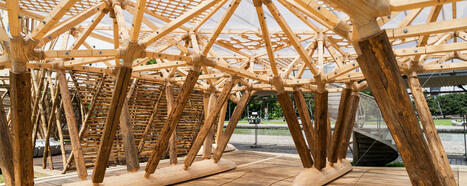
Find out how 20 French architecture schools are taking inspiration from the Olympic Games to create innovative pavilions.
Scoop.it!

What were the key strategies and initiatives that Helsinki implemented to achieve a 60% reduction in carbon emissions? Helsinki has been conducting climate policies for a long time, but I would say that the current and the previous council periods have really been the one’s when our ambition has been…
Scoop.it!

Discover the winning projects from the Architecture Student Contest 2024, focusing on sustainability and innovation to transform a district of Helsinki.
Scoop.it!
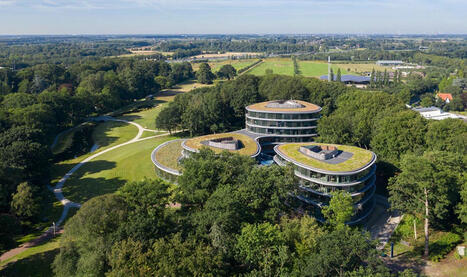
Discover 5 exemplary European reversible and modular construction projects, sustainable solutions for a more circular city.
Scoop.it!

How can architecture respond to environmental challenges? Discover the solutions offered by the winners of the Global Award 2024.
|
Scoop.it!

Find out how architects are at the heart of the changes taking place in our homes and the sustainability dynamics that are fuelling changes in the construction industry.
Scoop.it!

Meet Thomas Rau, an architect renowned for his extensive contribution to the development of sustainable architecture and raising awareness of the circular economy.
Scoop.it!

Hannah Audino, from the Energy Transitions Commission (ETC), leads efforts on decarbonizing buildings and financing low-carbon projects. Former PwC economist, she shares insights on the energy challenges in the construction sector.
Scoop.it!

Architects are at the heart of the changes that are transforming the construction sector. This dossier brings together their views on the architecture of tomorrow.
Scoop.it!

From sourcing to waste, follow the path of a responsible building site: discover the best practices for sustainable and eco-responsible construction.
Scoop.it!

"The construction sector, which still accounts for one-third of global energy demand, has embarked on a profound transformation of its practices to contribute to a more energy-efficient future. The series "Energy Challenge: Experts' Visions" gives a voice to those who are driving change."
Scoop.it!

In this article, Jamie Fergusson shares with us his expertise and his vision of a construction finance sector in full transition.
Scoop.it!

In this interview with Chilean architect Rosanna, find out more about her demanding and committed vision in three questions.
Scoop.it!

Significantly reducing carbon emissions for any new construction or renovation project requires both technical and theoretical qualifications, which differ greatly from traditional methods. Training programmes in sustainable construction must therefore encompass a broad range of skills and disciplines while adapting to very different market and resource contexts. A thriving offer…
Scoop.it!
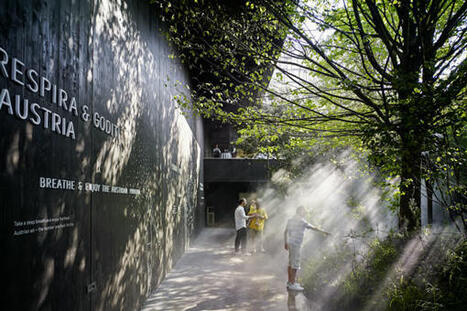
"Jana Revedin is an architect, doctor of architectural and urban sciences and full professor at the École Spéciale d’Architecture in Paris. In 2006, she created the Global Award for Sustainable Architecture™"
Scoop.it!

Explore how major cities worldwide combat land subsidence and flooding risks caused by rapid urbanization and rising sea levels.
Scoop.it!

How can sustainable construction help accelerate the energy transition of cities? I. S.: Cities are responsible for around two-thirds of energy consumption, and building construction is responsible for the lion’s share. So sustainable construction is key to the energy transition – principles like vernacular architecture, low carbon materials, highly efficient…
|




