



Former Roman Catholic nun and best-selling religious historian Karen Armstrong, who created TED's Charter for Compassion, shares how she found her faith after losing her way.


 Your new post is loading...
 Your new post is loading...
Your new post is loading...
 Scoop.it!
Former Roman Catholic nun and best-selling religious historian Karen Armstrong, who created TED's Charter for Compassion, shares how she found her faith after losing her way. 
No comment yet.
Sign up to comment
Scoop.it!

Major South African faith groupings have called on the public to restore compassion to religion, to ensure that the youth are given accurate information about other traditions and to encourage a positive appreciation of cultural and religious diversity.
This comes after faith groupings agreed on a “Charter for Compassion” to restore compassionate thinking and action in religious, moral and political life.
by LAEA MEDLEY
Scoop.it!

Recently, I interviewed Jon Eliot Ramer, an American entrepreneur, civic leader, inventor, and musician. Former Executive Director of the Interra Project, Ramer is co-founder and Chief Technology Officer at Ideal Network, a group-buying social enterprise located in Seattle, Washington that donates twenty-five percent of every purchase to a local non-profit or school. He is also the designer and co-founder of the Compassionate Action Network, an organization that led the effort to make Seattle the first in the world to affirm Karen Armstrong’s Charter for Compassion. In his initial role as Executive Director, Jon conceived and launched the Ten Year Campaign for Compassionate Cities, which has now spread to over fifty cities worldwide.
by Rahim Kanani
Scoop.it!
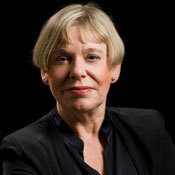
Three and half years ago, religious thinker and author Karen Armstrong created a Charter for Compassion, a document that sought to activate the Golden Rule around the world and restore the principle of compassion to the center of morality and religion.
Since it's launch in November of 2009, more than 76,000 people have signed and affirmed the charter.
By Susan Baller-Shepard,
Scoop.it!

The Unitarian Universalist Congregation of Woodstock is launching a new discussion group based on the book 12 Steps to a Compassionate Life, by British writer and former nun Karen Armstrong. Armstrong is author of acclaimed books such as "A History of God," "The Battle for God: Fundamentalism in Judaism," "Christianity and Islam," and "The Bible: A Biography."...
According to Lisa Jacobsen who will coordinate the discussions, “Social Justice begins withthe compassion in our own hearts – and can only grow as our capacity to becompassionate increases. In this era of increasingly violent polarization, we invite you to join with members of our local multi-faith community and a large international on-line community to spend the next year in developing your moredeeply “compassionate self.’”
Scoop.it!

The Compassionate Action Network reports the following, “Spalding University, located in Louisville, Kentucky, is the first university in the world to be designated a “Compassionate University” by the International Institute for Compassionate Cities. The decision by the Spalding leadership to meet the requirements of the Institute was made as the Louisville Metro Council voted to make Louisville a Compassionate City.
Scoop.it!
"The principle of compassion lies at the heart of all religious, ethical and spiritual traditions, calling us always to treat all others as we wish to be treated ourselves. Compassion impels us to work tirelessly to alleviate the suffering of our fellow creatures, to dethrone ourselves from the centre of our world and put another there, and to honour the inviolable sanctity of every single human being, treating everybody, without exception, with absolute justice, equity and respect.
Scoop.it!

The Keene Public Library will be hosting a special reading group to study Twelve Steps to a Compassionate Life by Karen Armstrong. The first meeting of the group will be held Tuesday Feb. 28 at 7 p.m.
The Keene Public Library is one of 30 librarys to receive a $2,500 grant from the American Library Association (ALA) and the Fetzer Institute to host a year-long series of programs “Building Common Ground: Discussions of Community, Civility, and Compassion,” which is part of a a national initiative to enhance the quality of life and learning within the community through a series of library programs. This is just one in a number of civic engagement initiatives tailored specifically to engage the Keene community
Scoop.it!

CAN is a network of self-organizing groups who share a common vision for a compassionate world. It's easy to get started or donate to help build a global movement.
Scoop.it!
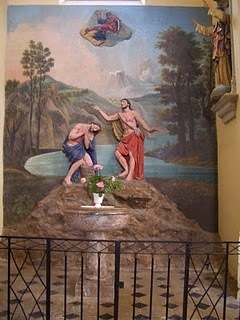
I heard of Karen Armstrong a year or so ago when some one introduced me to her TED lecture Let’s Revive the Golden Rule – given in July 2009. All religions teach the Golden Rule in some form: Do to others how you would wish them do to you, or in the negative version – do not treat others as you would not want to be treated yourself
Scoop.it!
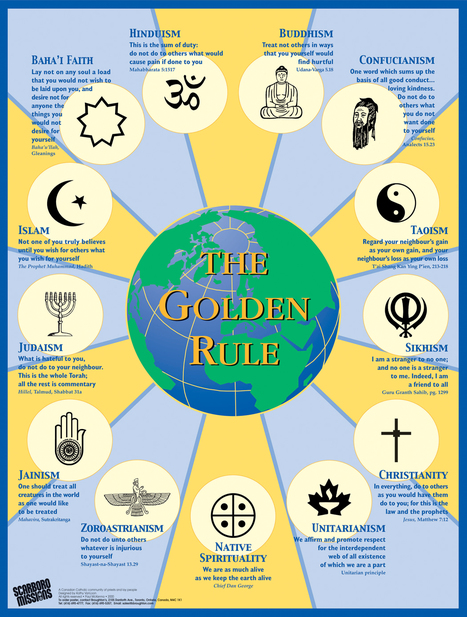
The students will also be introduced to a universal, moral principle known as the Golden Rule. And they will consider how the Golden Rule, the ethic of reciprocity, can be applied in their lives – at home, at school, in the local community and in the global community.
Scoop.it!

Karen Armstrong on her book 'The Twelve Steps to a Compassionate Life'...
Scoop.it!
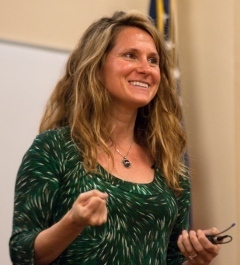
Religious scholar Karen Armstrong inspires students at City College to initiate change in society.
|
Scoop.it!
The religious scholar and former nun has called upon faith leaders to collaborate to promote peaceful coexistence.
Scoop.it!
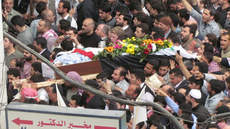
Modern western cultures have shifted their focus from groups and classes to the individual and his or her personal right to pursue happiness. Each one of us feels that whatever is within the mantle of our skin is 'self', and whatever is outside is something else, something 'out there'.
In this vision of the world, you and I are two separate entities with very little connection between us. This view of human nature raises a terrible question: is there anything inside us that makes us care about other people? The response of the international community against the Syrian government gives us a positive message: it seems that we do care...
Scoop.it!

Two years ago we launched the Charter for Compassion and yet the people who have come forward to help us have not been religious leaders but business men and women. This is great, because business people know how to strategize and work practically. And they are doing so - in the United States, Pakistan, and the Middle East.
We have launched a ten year campaign to build an international network of compassionate cities. This doesn’t mean that these cities are already compassionate, but that they are working hard to implement the ethos of compassion realistically, practically and creatively in the difficult circumstances of the 21st century.
by Karen Armstrong
Scoop.it!
An interview with Basalt, Colorado's Police Chief, Roderick O'Connor about compassion, Basalt as a Compassionate City, police work, and the future of the Int...
Scoop.it!
Adrianna Torres is an activist for the Latino community in Basalt, Colorado USA. In this video, she talks about her experience and the experience of her community in their relationship to Compassionate Basalt.
Scoop.it!
Simon Fraser University’s Centre for Dialogue will host a citywide conversation on compassion with world-renowned author Karen Armstrong for the 12-day period March 19–30, 2012.
Scoop.it!

SFU is bringing the world’s leading author on religions to Vancouver in mid-March for a remarkable series of events focussed on compassion. I’ll use this blog to try to keep you informed about them as her arrival nears.
Scoop.it!

Welcome to the official Facebook Page about Charter for Compassion. Join Facebook to start connecting with Charter for Compassion. Affirm the Charter today. Each name added makes the compassionate voice a more potent force in the world. Let us make the silent majority a challenge to extremism and hatred.
Scoop.it!

“Armstrong’s book presents the opportunity to think deeply about the place of compassion in the world’s religious traditions and to explore one’s own faith while learning about the core values of others,” said Rev. Moore. “Our class is reflecting on the urgent need for religious leaders to refocus the heart of their various faith traditions upon commonly held compassion for all people.”
Scoop.it!
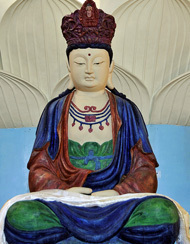
I recently attended a talk with Joseph Goldstein, one of the leaders in the field who have introduced mindfulness to the West. One of the key themes of his talk surrounded to topic of compassion.
Scoop.it!

The Unitarian Universalist Association (UUA) is one among a diverse group of interfaith religious organizations that have partnered with the "Charter for Compassion" community. This collaborative effort seeks to be a witness to the centrality of compassion in all of the world's religions—and to help build a more "peaceful and harmonious global community" through that witness.
Scoop.it!

It's primary goal is to provide a means for children and those around them to understand how to treat themselves and others with love, kindness and ultimately with compassion in simple, easy to understand language. By implementing The Golden Rule, "do unto others as you will have done to yourself", world peace can be achieved. It begins with our children.
|




