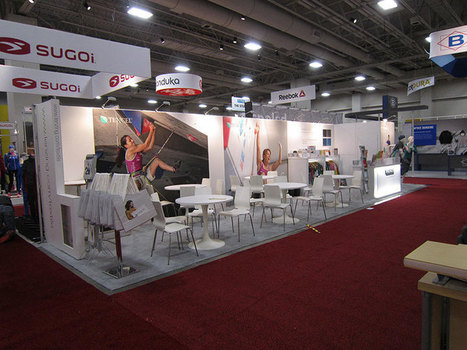
When exhibiting at a trade show, trade show marketing and promotion should always be a top priority. Industry professionals are attending the show to educate, network, and build relationships which means they are open to learning about the products and services your brand offers, so it’s important to get your brand in front of them.
In 2013, TSNN found that 67% of trade show attendees can be seen as new prospects and potential customers. With trade shows attendance records on the rise this means that an encouragingly high percentage of attendees at these events are leads that can generate sales for your brand. But, in order to do so, your company should know exactly what trade show marketing tactics to use when making those sales.
Below we’ve listed a handful of tips about the dos and donts of selling your brand to trade show attendees.
Trade Show Marketing: Selling to Attendees – What to Do
Ask Questions Your sales team and trade show booth models should ask specific questions that are geared toward your product and the consumer’s inherent need to own it. When the customer’s own answers lead them to the realization that they need your product in their life, then it would be consistent in their cognition to buy!
Engage Build Rapport When it comes to trade show marketing tactics that will make a difference for your brand, building rapport is one of them. Rather than jumping right into the conversation and bombarding the attendees walking by your booth, it makes more sense for your sales team to first create connections with the customers. When a relationship is established, it is natural for the consumer to show more interest in what you are saying and be more open to your suggestions.
Give Honest Quotes Tell your consumers the honest price of your products and service and ensure them that the quote you give them is reliable. Companies that shift their pricing and make minor alterations after engaging with consumers about the contract price will lose trust and loyalty.
Trade Show Marketing: Selling to Attendees – What Not to Do
Do Not Low Ball Low balling or similar tactics are not great strategies for making a sale. Consumers are aware of these techniques and it will most likely cost your company a sale. There are more effective persuasive techniques to utilize for closing a sale.
Do Not Talk Negatively About Another Brand or Product Customers do not respond well to negativity. This type of comparison technique might seem like a company’s last resort and will probably turn customers away from your brand. Instead, keep the conversation focused on your brand and the benefits you offer to your customers.
Do Not Be Overly Aggressive There is a fine line in sales and trade show marketing between having energy and being aggressive. A good way to gage your trade show energy is by reading the attendee. What does their body language say? If they are backing away from you or looking away regularly it is possible that the vigor of your sales routine is too much. Slow your roll and let the attendee talk about their needs and what type of product or service they are looking for to solve their problems.
Sometimes subtle things can be the difference between a sale and a disinterested customer. Keeping these tips in mind will help to shape your sales process into a successful system that results in a positive ROI for your brand after every trade show exhibition.
While trade shows are an opportunity to build brand awareness, the main reason businesses participate in these events is to generate leads. You want to get contact information and initiate conversations with people who are likely to become your customers. That’s usually the main aim.
However, capturing leads isn’t as easy as it sounds. Attendees won’t just give you their contact information because you showed up at the event or because your booth looks good. If you want to get their contact details, you need to work for it.
Here are six ideas to consider;
Ensure that your best lead generators are in attendance
Every company has its go-to staff when it comes to lead generation. While others might struggle with initiating conversations, these staff members only need a few seconds to get prospects’ attention. Since not everyone at the trade show will be a potential customer, you need these lead generators to quickly identify serious prospects. This way, you’ll avoid time-wasting and manage to qualify more leads in a shorter time.
Give away cool stuff
Providing cool stuff to prospects through promotional marketing is known to be quite effective as long as you hand out relevant and helpful products. You can give away bags, writing instruments, t-shirts, USB devices and so forth. Just make sure that whatever you give away is relevant. While giving away the product, you’ll get the chance to speak to the prospect and even ask if they’d like to hear from you at a later date.
Set up as many appointments as you can before the event
Planning has always been the key to success when it comes to trade show exhibitions. If you plan well, you will definitely get more qualified leads. As part of the planning, make as many appointments as you can. HubSpot even recommends organizing a pre-event such as a happy hour meeting. You can offer free drinks and appetizers for prospects who attend. And while you do this, take the opportunity to build rapport and credibility.
Share leads with other vendors
This might sound odd but it’s a very shrewd lead capturing strategy. Not every exhibitor at the trade show will be your direct rival. The idea is to identify such non-rivals and partner with them in such a way that both parties benefit. This works especially well if the two partnering businesses are promoting complementary products. You can profitably trade your leads.
Speak at the event
Speaking at the event only boosts your perception among the attendees. People will see you as an industry expert and will therefore want to come to your booth, giving you another excellent opportunity to pick up a few phone numbers, mail, and email addresses. However, headline speaking roles can be very competitive. Should you miss out, arrange your own by scheduling speaking sessions at your booth!
Act as an ambassador of the trade show
If you have staff actively helping out to make the event a success, prospects will notice your brand even more easily. As you promote it on the internet on social media, forums, and other online channels, your brand will remain at the front of the minds of web users who interact with the promotional material. And when the event finally arrives, they will be longing to see what you’re offering.
Finally, follow up
It makes little sense to work so hard giving out and accepting business cards and then failing to put them to use. So, follow up on the leads you generated, nurture them, and see if you can squeeze several sales and long term customers from them.
You are starting the marketing planning process for 2017. Your company is doing well but targets 5% growth in sales for the coming year, in light of a new product that will launch at the end of this year. So you sit down and map out all the trade show events where you will exhibit, sorting them by national and regional shows along with your target audience for each. You prepare this spreadsheet so that when your boss asks what you need to be effective in driving sales for your company in 2017, you can easily share your roadmap to success via trade shows.
But what if he or she comes back with a challenge like, "That is an awesome plan, but we need to trim it down a bit." Now what do you do? Optimizing your trade show budget can be a tricky thing, especially with costs going up every year. Here are some ideas to help you maximize your efforts.
1. Prioritize the costs and benefits for each show.
Understand all the costs and benefits of each trade show event you are considering and prioritize them. In a 2015 study, Forrester Research estimated that trade show marketing constitutes 14% of the overall marketing budget. So pull out those old notes and review the costs and benefits of the show in prior years. Ask yourself what trends appear for each show. Are more of your ideal prospects attending - or less?
Evaluate overall show costs.
An overall rule of thumb is that your booth space will be about 1/3 of the total cost of the show. Make sure to take into account all the costs of the space, including the booth itself, drayage, shipping, setup, and staffing costs, travel and time.
According to the Exhibitor Magazine Economic Forecast 2013, the average trade show budget will include:
Exhibit space - 36.5% Exhibit design/construction - 10.8% Exhibit shipping - 10.3% Show services - 12.2% Exhibit promotion - 6.1% Show travel/lodging - 13.5% Graphic design/production - 6.0% Other exhibit related items - 4.6%
You should review each show to determine if your costs and budget are in line with these typical percentages. If not, it may be time to rethink your budget and ask yourself how to minimize some of these costs. Can you have fewer people manning the booth? Does it make sense to create a newer, lighter-weight booth to reduce your drayage and shipping costs? Can you update an existing booth by just adding new graphics?
Calculate your return on investment (ROI).
It is important to figure out your trade show costs versus the number of attendees at each show and the potential return on your investment in sales. The ROI can be calculated by taking the sales revenue generated from trade show leads and dividing it by the total cost of exhibiting at that show.
Sometimes the ROI calculation is not that simple; as there are many ways to help your company grow their business by 5%, if that is your directive. ROI in actual sales is the easiest way to show results to your corporate team, but if your objective of the show is not to generate leads per se, the returns are harder to calculate.
Other business goals of a trade show event may include:
Creating awareness and building your brand Enhancing existing client relationships Announcing a new product launch Learning more about your competition
When dealing with less tangible returns, it is important to incorporate some hard facts along in the ROI report. For example, "Ted met with our best customer, who plans to increase their purchases during the year by 10%.”
Know the show rules to save on shipping costs.
It is possible to save hundreds of dollars at your events by understanding the tricks of the trade, most of which deal with the shipping, setup and freight.
For each show, it is critical to download, read and highlight the show manual. Each show is different in the rules by which they operate. It is up to you to understand those rules and take advantage of potential cost savings.
Some simple things you can do to minimize your shipping costs are to:
Ship to advance warehouse, which means that 30 days prior to the show, your booth graphics must be completed so that the booth can ship out on time. Include products and supplies with your booth to decrease the number of separate items that must ship to the show location. Take out things not needed for that show. If you don't need three counters for a particular show, don't ship all of them. Make your freight as lightweight as you can. Fabric graphics help keep the shipping weight down. Minimize your material handing (drayage fees). This is calculator can help you figure out your drayage costs. Play around with the numbers and you will be surprised at the difference in costs between advance warehouse and direct shipping.
Solidify your client relationships and market position.
Attendees to trade shows are serious about purchasing and solidifying relationships with their vendors. That means that trade shows are here to stay as an important marketing tool. According to Regalix Research on the State of B2B Marketing, trade shows were the most effective offline distribution channel for accomplishing marketing goals, with 84% of respondents putting events (exhibitions, conferences, trade shows, etc.) in the top spot for effectiveness.
Tradeshow Success is built on a lot of moving parts, and it’s often hard to know exactly how successful the show is unless you track the details. So let’s dive in a little and see what 8 essential tradeshow metrics mean the most to your overall success.
Booth visitors: knowing the overall number of booth visitors, or at least a valid estimate, can give you valuable information, especially in a year-to-year comparison at the same show, and from show-to-show. Even though when you measure show-to-show it’s a bit of an apples to oranges comparison, it does give you intel to help judge the show’s effectiveness.
Leads generated: one of the more straight-forward metrics you can track, but it’s important to break them down into at least thre
e levels: hot, warm and cool. This will give the sales team the information to correctly follow up on the hot ones right away and the warm and cool ones later.
Sales as a result of the leads: track how many new customers came out of the show in the first three months, six months and year (depending on the type of product or service you offer). Track the overall sales amount. It’s harder to track B2B sales from a tradeshow simply because you might not get a new customer until a year or more has passed.
New leads: a slight differentiation from all leads, this breaks out the brand new potential clients from those that you’ve had some sort of contact before. Valuable information, indeed.
New customers: same with customers – how many news ones did you get as a result of a show vs. how many are repeat customers that happened to be at the show and buy something because of the show.
Budget: actual vs. estimated. Keeping track of the investment is important; knowing how much over or under budget is critical.
Cost per lead: divide the overall cost of the show by the number of leads gathered to get a cost per lead.
Return on Investment: divide the overall net profit you’ve gained over three, six, twelve months by the net profit from the show (gross profit minus the cost of attending the show).
There are other numbers you can track, but if you do nothing but track these metrics you’ll have a lot more insight into the kind of success your tradeshow marketing program is giving you.
Trade shows are a great way to mix with others in the industry and to increase visibility, whether you’re looking for a sale, to make important introductions or for the perfect service provider.
One of Toronto’s leading aftermarket specialists Tony Macri, owner and founder of TM Custom, shares his tips on making the most of industry trade shows.
Choosing the right event
Before committing to a show, research exhibitors, both past and present, and assess whether their products or services are a right fit for your business. If you’re an exhibitor, do the same to assess whether the attendees will be receptive to your product or services.
Try to set up appointments with exhibitors or other attendees before the show to arrange face-to-face meetings. Shows are great for building new relationships, so don’t leave all your meetings to chance. You want a mix of some pre-established meetings, with room leftover for in-the-moment drop ins.
Exhibit and visit
Before you decide whether to exhibit or attend, think about your ultimate goals for the show. As a prospective exhibitor, if you are introducing a new service or client-lead sourcing, exhibiting will help increase your brand visibility.
For those who decide not to exhibit, visiting other exhibits and retail booths is a hands-on way to research the competition and get a feel for industry advances you may have missed in recent months.
As a potential attendee, if you are attending to find the latest innovations and to learn how to grow your business, then make sure you have done your research to see what seminars and booths you want to visit, and that you have enough representatives to walk the floor.
Either way, if you’re primarily at the trade show to establish new relationships, have somebody there to man the floor and represent you at industry get-togethers to add value in a different way.
Be knowledgeable
People often go to trade shows with the intent to source a new product or third-party service, so if you’re an exhibitor, be sure to know this service inside out; and if you’re attending the show, it’s imperative to do some research ahead of time, study the schedule of events and have a map handy of the trade show floor.
Network effectively
You never know who you’re going to work with, so be open to anyone and everyone. Stock up on business cards before the show, and be sure to pick up other people’s business cards throughout the event.
Trade shows are also a way to reconnect with people you have met before and to build on already established relationships, while also making new ones.
Trade shows can be an excellent way to help your business grow and expand your influence. To make the most of your trade show appearance, your organization needs to stand out from the competition. There are several distinct ways you can make your trade booth a conversation piece of the show and leave a lasting impression with attendees.
Freebies
It’s no secret that everyone enjoys free stuff. Offering free samples of your product or discounts for future services to trade show attendees drives traffic to your booth and to your business. Having unique free items that stand apart from the usual pens and stationery creates a unique appeal for your brand. Promotional items should set your brand apart, and when attendees see them in the hands of others, they should want to ask, “Hey, where did you get that?”
Consider branded items like mints, gum, or other nontraditional promotional items that will leave an impression. When you’re offering trade show specials, make sure your visitors know how to take advantage of the offer. Sometimes you can create a lasting impression by simply encouraging attendees to follow you on social media for live updates during the event. This keeps foot traffic circulating back to your booth, and you can even raffle off prizes.
Create a Memorable Booth
Your booth should be more than a few tables full of pamphlets and folding chairs. Take the time to design an attractive, eye-catching booth that will drive foot traffic toward your brand. Location matters as much to trade shows as it does to real estate, so securing a prime location for your booth will be vital to boosting foot traffic. Your booth also needs to be approachable, and staffing enthusiastic and knowledgeable hosts will ensure that you make a lasting impression on attendees.
Guerilla Marketing
Marketing needs to be as inventive and clever as it is valuable and informative. Guerrilla marketing is the concept of approaching marketing efforts in memorable ways that encourage potential customers to take the next step and engage with your brand.
You may want to post your brand’s promotional items near transportation hubs that will be likely to ferry attendees to the show, so they know to look for you once they arrive. Some brands go above and beyond standard marketing efforts with flash mobs or musicians who perform while attendees are waiting to enter.
Successful guerrilla marketing requires careful research and planning. You may need to make moves before the show even begins, and this will drive interest so that attendees will be looking specifically for your booth as soon as the trade show starts. Social media is a great way to boost the reach of your marketing efforts; many attendees will be looking up info and posting about the show beforehand.
Generating new business leads. Attracting interest in your brand. Learning about trends in your industry. These are all excellent aspects of trade shows and expos, which can help your company create more revenue and prepare for the future in a more intelligent manner.
But enjoying trade show success is about more than just showing up at the expo. There are key tactics you can use to maximize the marketing success of your trade show. Here are 5 of those tactics.
Draw attention to your exhibit and create sustained interest with promo models
Spend enough time at trade shows and you’ll realize that many booths and exhibits are pretty boring and unexciting. Snazz up your exhibit by surrounding it with attractive and personable promo models.
Promo models at your exhibit should be articulate and well-trained in engaging with your specific target market or consumer type. In this way, not only do they grab attention for your booth, but they also act as effective champions for your company. By drawing interest to your exhibit — and sustaining that interest through conversations with your audience — you will increase the number of qualified leads.
What’s more, promo models are highly effective at trade shows for any type of industry. For instance, promo models from Femme Fatale Media recently worked the PDAC 2016 trade show, which caters to those in the mineral exploration industry and attracts an audience of 22,000 attendees.
Stock your exhibit with a trade show giveaway item
“At every tradeshow there are a few ‘must-have’ takeaways that everyone wants to get their hands on…the item needs to be useful, not just at the tradeshow, but also after the show,” says Shane Shirley, CMO of SBS Brands.
Shane Shirley suggests using eco-friendly, reusable bags with your company logo as a trade show giveaway, though there are many other possibilities, too — USB drives, keychains, and water bottles. This will help people remember your company long after the trade show.
Tip: To increase the number of giveaways that your attendees take away, have promo models hand them out to potential leads.
Use the right materials for your trade show exhibit
It’s important that your exhibit stands out from all the other booths out there, and one practical way of doing that is through upscale-looking exhibit materials.
Experts advise using materials that communicate a brand’s sophistication while being easy to set up and take down. Suggestions include faux brick (which are made from foam but look like real bricks), thermal foil for logos — giving a high-end look, and high-end flooring such as elevating the exhibit floor.
Take advantage of Facebook and other social media outlets
With a sprawling digital presence, Facebook is increasingly becoming a popular tool for those involved in trade show marketing. For example, a Boston-based musician booking company named Sonicbids executed a set of Facebook strategies prior to a trade show,boosting attendance by around 30%.
So how should you utilize Facebook for your trade show marketing? First, create and launch a Facebook event page about a month before the exhibit takes place. Use this page to invite existing clients and potential leads, and be sure to add the RSVP option on the page. Then, in the weeks before the show, let your followers know about the activities and in-booth offerings you are planning. The key is to create a buzz among friends, clients, and other interested individuals, who will share great content — thereby gathering more interest for your specific exhibit.
Harness the power of experiential marketing
To really get attendees excited and amped up about your product and company, create a unique, compelling experience at your exhibit. “Giving trade show attendees a visual and tactile experience via demos or hands-on time is a crucial activity,” notes Martha White in BizBash.com.
Adidas, for example, has mastered the art of experience marketing. At one trade show, attendees were allowed to test the shoes out by running in a very large hamster wheel. Of course, you don’t have to create something like that, but it’s important that — at the very least — you have hands-on demos, as well as comfortable places for your audience to sit during the demonstrations.
By immersing your attendees in a unique, bold experience, your exhibit won’t be forgotten — and it will create a positive impression on potential clients. Tip: Did you know promo models are great for an experiential marketing approach to your trade show? Promo models can help with demos and other aspects of experience marketing.
There are a lot of different ways to go about marketing your business. If you want, you can go the traditional route and pay for advertising in media outlets like newspapers, TV stations and radio broadcasts. You can also go online, either with banner ads on websites or more creative strategies like content marketing or social media. In any event, there's no shortage of ideas.
A trade show presents you with a dedicated group of people ready to discover your brand.
Trade shows, however, stand above all those other marketing ploys. While the others can all be successful, none of them are quite like the trade show, which gives you a dedicated group of audience members who are there in person, and ready to discover your brand.
Attending a show can be expensive at times, but there's reason to believe that doing so is more than worth the investment you put in. There's just no replacement for a great trade show.
Uncovering unique marketing value
There's no doubt that if you want to try other marketing methods, they can be effective to a certain extent. If you put an ad in the newspaper, some people will see it. If you use pay-per-click to get more Google hits, it will indeed produce traffic. But those methods don't involve the targeted, personal touch that a trade show does.
According to the Center for Exhibition Industry Research, trade shows are unique when it comes to marketing activation potential. A recent CEIR report entitled "The Changing Environment of Exhibitions" revealed that 99 per cent of marketers have found value in shows that they didn't get elsewhere. More specifically, 60 per cent agreed that they benefited from the ability to see a lot of customers and prospects all at the same time.
Placing ads in the media still works, but it's not the same as attending a conference and seeing dozens of potential customers in the flesh. There's really no substitute for that.
How to maximise your trade show ROI
Trade shows offer tremendous potential, but it's also expensive for companies to send their employees. When they do, they want to make sure they're getting a maximum return on their investment.
Do you have a booth design that will grab people's attention?
One way for your business to do this is to have a well-planned, targeted strategy. Only attend a show if you know that a certain number of qualified buyers will be there.
Once you're at the event, you can zoom in on those individuals and really invest your time and energy into winning them over. Then, after the event is completed, you can then follow up with the leads you developed and start to build strong customer relationships.
Of course, that's the long-term process. In the short term, what you really need is a trade show booth that will grab people's attention and get them interested in your business.
Booth design plays a pivotal role
Design is a pivotal part of trade show success. If you have a display at your booth that's catchy, engaging and really sells the value proposition of your business, that's half the battle right there. However, it's not always easy to create such a booth. Even if you're smart, capable and understand your business well, the process is still complicated, and it's probably best left to professional exhibit designers.
Luckily, we have a team of them on staff at Proj-X Design. We're proud to be the foremost designer and builder of exhibition stands in Australia, but we work internationally as well, thanks to a global network of suppliers. No matter where you are or what sort of trade show marketing project you're planning, you can contact us today and we'll be ready to help.
Trade shows can be a great place for your business to start earning a reputation and making connections with customers.
However, the type of connections you form at the booth is often far more telling than the number of interactions you have. A properly planned trade show campaign will allow you to expand upon your current inbound marketing techniques, rather than slipping back into your old low conversion outbound marketing habits.
Trade show marketing should be about forming new relationships, not necessarily making one time sales.
Stop thinking short term, instead think long term.
Here are some of our thoughts about the mindset of successful trade show exhibitors.
Set the Right Goals
Trade show marketing can be expensive, and return on investment is a touchy subject when it comes time to measure the success of your event.
Before you sign up for a large booth and begin printing banners, slow down for one second and consider what it is that you are trying to accomplish at the show.
The truth is most people at trade shows do not come with an open wallet.
Instead they are there to compare and learn. They want something to think about, they want quick and dirty facts that they can look into when they get home. They want to meet the people of your company and find someone they trust to provide them with a product or service.
In short, if your whole trade show marketing plan is to show up and make sales, you'll probably be disappointed.
Instead, what if you can get one hundred new email subscribers who want to hear more about your service later on, when they are not being bombarded by sounds and noises from every direction?
What if you can set up ten new appointments for one on one consultations or quotes next week?
What if you can invite fifty new people to download your latest ebook?
All of these metrics are measurable, and a step toward building a long term customer relationship that does not focus on prying their money out of their hands today.
Make It Painless
By the time you've made it to the booth, you know that trade show marketing is exhausting.
It's also exhausting for the people visiting your booth. They are being rushed along amid a current of people. There are flashing lights and loud speakers. And nearly everybody has a free t-shirt, bumper sticker and lanyard that they are lugging around from every vendor they have visited prior to you.
Make yourself a zone of comfort for your guests.
Set up your booth so that people can step out of the tide of people, and really take a moment to converse in peace and quiet. If you want to give something away, how about a reusable shopping bag with your branding for them to put all of their other goodies in?
Make it easy for them to read some quick facts about your product or service on a bulletin, and invite them to sign up for an email list so you can get in touch with them after they have gotten some rest and can be fully present to hear the rest of your spiel.
The trade show environment is taxing on everyone involved, and by the end of the first day, most guests are already burnt out on vendors asking for their money.
The reality is that most small vendors cannot compete with the A-list presenters anyways.
However, you can offer a personalized experience and a genuine interest in improving their lives by taking the pressure off.
You can create hard goals that can be easily tracked without trying to push the hard sale.
By focusing on inbound strategies instead of outbound, trade show marketing can be a natural extension of your existing campaigns.
As the world moves to the internet to do business, people have begun questioning the effectiveness of Trade Shows in today’s marketing toolkit. As more and more business and networking happens online, marketers may ask ‘Why spend big bucks and participate in Trade Shows?’
Trade Shows are a powerful marketing tool that brings together buyers and sellers in one place, allowing them to interact and do business within a short span of time. They are an effective platform for meeting new customers and showcasing brands and services. Trade Shows also offer an unmatched opportunity to study the market, analyze competition and learn about new developments and trends. The focused environment at Trade Shows enables attendees to benefit from educational and networking programs where they can grow their expertise and trade experiences.
The prospect of marketing your business at a trade show can be an expensive venture to consider. The cost of renting the space for your exhibit and creating an exhibit display can add up quickly, making you wonder if the investment is worth it.
However, looking at the trade show ROI reported by other companies, it becomes clear that trade shows and conventions offer an opportunity for greater exposure, acquiring new customers, and seeing what your competition is doing.
If you’re new to the trade show marketing game or if you’re on the fence about whether or not the benefits outweigh the cost, here are three reasons why this marketing strategy is a business goldmine.
Use a Custom Design Exhibit to Amplify Your Brand at a Trade Show
Trade shows are unique in that they combine two powerful advertising vehicles: social media and word of mouth. By now many business owners are familiar enough with social media marketing campaigns and the benefit that they can have on their bottom line. At the same time, they are also aware of the power of a good personal interaction between a company representative and a current or potential client. Marketing at a trade show combines both of these profitability powerhouses.
The key to success lies in having a custom design environment. With a well-designed custom exhibit, you can connect with attendees through hands-on product demonstrations and engaging conversations with your team in a unique environment.
Once attendees interact your brand in this way they will share their experience via word of mouth and social media.
Engage New Clientele at a Trade Show with a Custom Exhibit
Trade show marketing is a highly effective way to create dozens of new business opportunities. Consider how you normally acquire new business: self-promotion, industry and consumer advertisements, perhaps even cold-calling.
Now think how much time you could save if you generate hundreds of new clients within the span of a few days at a trade show. You could potentially generate enough new leads to keep your business busy for months even after the trade show is over – and that’s from marketing at only one show.
The way to achieve this is with a custom-designed exhibit environment. A custom environment attracts attendees to your exhibit space with bold brand messaging that’s visible from all areas of the convention floor. Once attendees enter your exhibit, they’ll be snapping pictures, sending tweets and checking into the event on their social profiles to tell everyone about the experience they had with your brand.
Keep an Eye on the Competition at a Trade Show
Finally, marketing at a trade show is a great opportunity to see what else is going on in your line of business and how the rest of the competition is measuring up. During their downtime, your team can take a look other exhibit booths to get a sense of the kind of marketing campaigns that work and those that don’t. It will give you a good sense of the playing field and how you can anticipate your competitor’s next move.
Trade shows can be draining. From the time spent planning, to the actual cost of the booth, we often see clients become overwhelmed with it all. Is it really worth all the time, money, and effort? We think so—and here’s why.
For all companies, the success of the business depends on the communication it has with its market. Despite the obstacles and costs, trade shows serve as great opportunities for brands to openly interact with prospects, customers, and vendors.
ATTRACT NEW PROSPECTS AT TRADE SHOWS
“Be on the offense, not the defense.”
One of the most prominent goals for a company is to be seen. Trade show exhibiting gives brands the possibility to do just that. In just a few days, exhibitors get seen by hundreds, if not thousands of people. Trade shows are not generally open to the public and are mostly attended by company representatives and buyers. A study conducted by the Center for Exhibition Industry Research found that 86% of show attendees are the decision-makers within their respective companies—meaning your audience is highly qualified and targeted.
Trade shows are among the best places to actively find and interact with new prospects. While cold calls and email campaigns may yield satisfactory results, there’s a high probability that many of your efforts will die in the voicemail box or spam folder. With trade show exhibiting, you eliminate those drawbacks through face-to-face interaction—allowing your message to shine through.
YOUR BOOTH COMMUNICATES YOUR BRAND
In addition to the basics like your brand’s name, products, services, and history, your trade show exhibit can communicate so much more. It can explain who you are, how you can help, and most importantly, what sets you apart. A company’s personality and value can sometimes get lost through digital marketing—which is why we’re such advocates of face-to-face interaction.
THE TRADE SHOW FLOOR IS WHERE PROFESSIONAL RELATIONSHIPS BLOSSOM
Trade show exhibiting allows you to interact more closely with your customers and prospects. Relationships through personal interaction are more natural and create trust quicker than phone or email conversations. Studying your target audience also becomes easier through face-to-face interaction. Trade shows give you the opportunity to communicate openly with your prospects to find out what they want, not what you want them to be interested in. You can then alter your marketing and sales plans to cater better to your audience. It’s a win-win!
KEEP UP WITH YOUR COMPETITION
Exhibiting is an effective way to study the competition within your industry. While you likely don’t have regular insight as to what they’re doing beyond digital marketing, trade shows act as an open forum. You can better understand what your competition is offering and use that information to set your brand apart (ensuring your prospects do business with you,not your competitors.)
You may even get some ideas of your own, such as how to improve your products, enhance your services, or reconfigure your trade show booth to make it more attractive among the masses of exhibitors.
IT’S EXPENSIVE NOT TO EXHIBIT
Think about the costs of losing new customers to your competitors. Trade shows are for companies that are actively pursuing new business, and those that don’t exhibit risk missing out on those targeted prospects walking the show floor.
WE GET IT—TRADE SHOWS CAN BE COSTLY
The costs of exhibiting can seem frightening at first. In reality, it’s only scary if you don’t have a proper plan in place.
“Failing to plan is planning to fail.”
The benefits of trade show exhibiting can easily fall through the cracks without proper planning and implementation. It’s important to make sure you have a pre-, during-, and post-show marketing plan in place to ensure you stay on track to meet your goals. We offer a free resource to help with planning, from marketing worksheets to tips for measuring your ROI. Check out our ‘Smart Marketer’s Guide to Trade Show Marketing’ for more details.
Building custom exhibits from scratch can get expensive—but there is a solution! for your company it’s too expensive to buy a booth, there is a solution! We offer a wide variety of trade show booth rental options that range in size and layout, and can be customized to fit your brand’s needs. Rentals can cost less than half of a purchased unit and can be produced in a fraction of the time. Check out our rental catalog for the different possibilities.
These two exhibitions have been developed for the MICE industry, but with different opportunities for participants. Being both exhibitions organisers and exhibitors themselves, Compex® has learned how to maximise the opportunities presented by participation in these shows and Nigel Walker, Director at Compex® has put together his top tips for maximising your ROI through exhibitions.
The objectives need to be clearly defined once this is done to ensure that the correct personnel are manning the stand. If the objective is to sell, such as at a consumer show, then the best salesmen need to be on the roster. If the objective is brand awareness or relationship management, then it is important to have the marketing personnel and some senior management on the stand. The objectives should also be in line with the expected audience at the show. Understanding of the audience is a key factor to a successful show.
Create a manning roster for the duration of the exhibition, which should be distributed to all staff involved. The roster should be agreed to long in advance to ensure that there are no conflicts. It is critical to have the correct number of personnel on the stand which will be determined by the show. Too many people and the stand can be crowded, too few and potential leads will be lost as there is no one to handle requests. At Meetings Africa we found the ideal number to be three – two people used the diary system and the additional person to handle the walk past requests. This system served us very well. It is very difficult to man a stand for eight hours a day three days in a row, while maintaining energy levels and enthusiasm. Allow personnel short regular breaks. It also creates impromptu interactions with visitors and other exhibitors. However, this must be managed as an empty stand is a very poor reflection on not just the stand, but your company as a whole.
Stand layout needs to be in line with the objectives. Should you be showcasing and selling a product this must be clearly on display without creating clutter. If the objective is discussions on the stand, an open inviting stand with a comfortable table and chairs is ideal. Many exhibitors make the fatal mistake of either overloading the stand with products or with furniture and both lead to an uninviting stand that will have a negative effect on the stand’s effectiveness. If it is affordable, the use of a stand builder is highly recommended as these professionals will help ensure your stand layout is appropriate and unique. A good company should be able to do this even within tight budgets.
A cardinal sin many exhibitors make is waiting on the stand and expecting visitors to come to them. Visitors see many stands in a day and unless your product or stand is truly revolutionary they will simply walk by. The solution is to be engaging by greeting visitors as they walk past. Be active on the stand, the visitors are there to participate and people respond to people, therefore most will respond positively to you making the initial contact.
Interaction management is a skill that most successful exhibitors use well. It is the difference between knowing when a lead is simply a walk past visitor who may have a fleeting interest in your product, and those who have genuine need for your company’s offering. The skill is identifying the difference and knowing how to handle both effectively and efficiently.
Should you require collateral make sure it is concise and interesting, visitors experience alot of clutter at a show and you need to stand out to stay relevant. It is important to note that in today’s green conscious environment it is advisable to look into electronic options like emailing brochures, not only does it save the environment but will also save you direct costs.
It is vital to track leads after the show, as you cannot measure ROI without real data such as contracts signed post show. It also helps to motivate personnel next time by being able to refer to previous successful shows which have led to real business.
The most important thing to remember is that the exhibiting experience can only be as good as you make it. With a little bit of effort and forethought the experience will be both enjoyable and worthwhile. Walker concludes, “By understanding your audience and fundamentally – your objective, you can ensure that any costs required to participate within an exhibition can return to your bottom line time and again.”
A boring trade show booth won’t attract much attention. However, when you add the right activities, you may be the hit of the entire show. Everybody loves to play games, win prizes, enter contests and enjoy being entertained. Even the most boring industries can spice things up with the right trade show booth activities.
Games are a huge draw, especially if they are fun, provide a challenge and cause competition. Who doesn’t love going to the carnival and winning the prizes? When you take this same concept to your trade show booth, you may just have a show stopper.
From the simple basketball game to a more interactive water shooting game, there are plenty to choose from. However, you don’t want to just choose any game with the expectations that you’ll have a line at your booth. The right game makes the difference, not just any old game.
When the game drives competition between friends or has a high score, it will drive traffic to your booth. Other types of games that will drive traffic include anything interactive, anything challenging or anything with a sought after prize for the winner(s).
Contests
While a contest may not cause people to stop and play, it can drive plenty of traffic. The key to a great contest is offering an excellent prize. Whether you use a spinning wheel or a drawing, it’s all about the prize. The better your grand prize and the better your consolation prizes, the more people will want to enter your contest.
Interactive Experience
You don’t have to have a game or a contest to gain traffic. Anything interactive will help to make you the hit of the show. For example, if you sell golf clubs and you have your booth set up for demos on virtual screens, you’re sure to have a line of people ready to swing away.
When people can touch and feel what you offer, they will stop and interact with your staff. If you provide a product that allows for interaction, design your trade show booth around it. If not, you can always come up with another way to provide an interactive booth for your next trade show.
Relaxing Setup
While a relaxing setup isn’t an activity, you can turn it into one. Consider making your booth the “coffee shop” of the show. Providing an area to lounge, charge a mobile device and just take a break can make your booth very attractive. It can also give your staff time to speak with those attending the show as they enjoy a hot or cold beverage and take a load off.
There are many fun activities you can add to your trade show booth if you want to gain traffic. Consider adding a fun game, a contest, making your booth interactive or even becoming the “coffee shop” of the show.
Technology has changed the way Trade Shows are managed and perceived today. Apps have helped Trade Shows develop greater engagement by making delegates more central to proceedings, empowering them, and enhancing their event experience. Specialized Trade Show apps like Dazzletoday are increasingly becoming important as they enable personalised digital interaction with customers. They influence how attendees are attracted to Trade Shows, how information is shared and how attendees are engaged before, during and after events. With the help of apps, attendees can plan their own bespoke event experience, ensuring they are more engaged and that their time is managed more efficiently.
The digital connectedness that event apps create, allows for streamlined communication and information exchange between brands and audiences involved in Trade Shows.
CANADA Speaking: Jumping right into business is considered rude. Each meeting should begin with several minutes of small talk. Avoid controversial topics like religion, politics, or jokes at Canada's expense. Instead, stick to safe topics such as the weather, your accommodations, and complimentary talk of a show's host city. Attire: American-style business attire is suitable for meetings in Canada and with Canadian attendees. Anything happening in the major Canadian cities' financial districts – like Toronto's Bay Street – will be an occasion for more formal attire, such as suits and ties. Anywhere else, buttoned-up shirts paired with slacks or even jeans are usually appropriate for business meetings. Formality: Interrupting someone while they are speaking is ill-advised, as is commenting aloud on someone's accent. Rather than draw attention to the fact that you can't understand the way something is being said, ask guests if they would mind repeating themselves. Canadian businesses are oftentimes more multicultural than their U.S. counterparts. In addition to English, French and a number of Asian languages are often spoken within the walls of companies based out of Toronto, Montreal, and Vancouver. Dining: Business meetings will usually be catered to a certain extent, primarily with juices and light snacks. But wait until your host invites you to partake before helping yourself.
MEXICO Introductions: Women should be the first to initiate a handshake, which takes a gentler form than the sturdy U.S. gesture you may be used to. Match your guests' pressure, as overwhelming their shake can be seen as a sign of dominance. Don't be surprised if both women and men offer you a quick kiss on the cheek. Timeliness: Punctuality is overrated in many Latin American countries, with Mexico being no exception. Meetings will often begin 10 to 15 minutes after the scheduled time. Titles: Your hosts may affectionately refer to you as friends or make polite jokes at your expense. A relaxed smile will go a long way here. Initially refer to your host or guest as Señor or Señora, but adjust accordingly if you are asked to use their first names instead. Body Language: Keep your hands off your hips, as that posture may be inferred as a sign of anger. Mexicans may stand closer to you when speaking than you are used to, and animated conversations are often punctuated with touches to the arm or shoulder. Speaking: Mexicans will often acknowledge U.S. political news, and won't shy away from offering their opinions. It is best not to rock the boat by signaling your opinion. Rather, simply agree the news is happening. Also, avoid referring to yourself and other U.S. residents as "Americans." Beyond our borders, the term is used to describe those who call any of the countries in North or South America home. So calling yourself American can be interpreted as suggesting that Mexicans are somehow not Americans also.
BRAZIL Speaking: Many Brazilians have studied English, and they will often welcome an opportunity to practice their craft. But remember that Brazilians speak Portuguese, not Spanish, as their primary language. Attempting to speak Spanish with a Brazilian will be interpreted as an embarrassing insult. Dining: Brazilians are beer drinkers, even during business dinners. And they prefer their boozy beverage served "estupidamente gelada," or as cold as physically possible. As such, large bottles are served to a table one at a time and poured into tiny glasses meant to be imbibed as quickly as possible, almost like a shot. If your host is ordering more, then it is considered polite for you to keep up. Formality: Business meetings often meander off topic, touching upon the personal lives of participants. Body Language: As in many countries, the U.S. gesture for "OK" has a different meaning in Brazil and should be avoided. A thumbs up, on the other hand, is acceptable. Introductions: Brazilian handshakes are generally as firm as those stateside, but may last longer. Don't pull away as quickly as you normally would. Timeliness: In the country's cosmopolitan cities such as São Paulo, Rio de Janeiro, and Brasilia, punctuality is critical. But in smaller cities, tardiness is expected.
UNITED KINGDOM Timeliness: To foster productivity, many British companies have instituted meeting rules and regulations. These can cover a wide array of parameters, from restricting meetings to specific hours of the day, to only holding meetings in rooms without chairs to keep the get-togethers reasonably brief. Attire: Curiously, while men can generally wear the same dark suits that they would otherwise wear for meetings in the United States, there is a notable exception when working in the United Kingdom: Striped ties should be avoided, as individual colors and patterns can signify hometown pride or bitter rivalries, or even be interpreted as offensive. Introductions: Handshakes require a light touch in the United Kingdom, where eye contact is kept to a bare minimum. Shaking hands with someone in London can at times feel like it is barely being tolerated, even though it is a necessary part of the introductory process. Dining: Business is an entirely appropriate topic of conversation when dining with U.K. prospects or partners, and informal meetings between co-workers in restaurants or more relaxed "gastropubs" are occurring with increasing regularity. Speaking: People in the United Kingdom are notoriously private – stiff upper lip and all that – and will avoid speaking about their personal lives. So do not pry into the private lives of your guests. The British have zero desire to share personal information or expend energy on small talk.
FRANCE Introductions: Handshakes are generally just a bit less firm and a touch shorter in France than in the United States. Eye contact should be held when shaking hands with everyone in the room. The infamous French double-cheek kiss is only performed once a business relationship has been long established, and should never be initiated by the visitor. And if you eventually graduate to the kiss, it is performed alongside the cheek into the air. Speaking: The French hold their language in high esteem and think highly of people from other countries who have committed the time and effort to learning to speak it. As such, French speakers can expect a level of professional intimacy afforded to them that may strengthen the bonds of a business deal. If you do not speak French, apologize for being unable to do so. Attire: Dressing for business meetings in France can be intimidating, since class and status is inferred by the quality of the clothing. Men should never loosen their ties or take off their suit jackets unless invited to do so, and women are often judged by the quality of their shoes. Invitations to informal meetings still require a suit and tie, while other events such as formal dinner parties may necessitate wearing a tuxedo or evening gown. Titles: Address everyone by their job titles and their last names until invited to do otherwise. If a professional title isn't obvious, use "monsieur" and "madame." Dining: In France, the knife is to be held for the entirety of the meal in one's right hand, while the left hand is used to pick up the fork only when you are prepared to take a bite of food.
GERMANY Formality: Titles are important in Germany, where each person should be referred to by his or her professional title or position and last name. Body Language: Don't keep your hands in your pockets, as doing so suggests low class or slovenliness. Introductions: If Oprah were to visit Germany, she may rightfully proclaim, "You get a handshake! And you get a handshake! Everybody gets a handshake!" Quick, firm handshakes should be exchanged between everyone in the room, from the executives to the mail lady, or even any children that happen to be present. It is also polite to use the greeting "Guten tag" (good day) or "Guten abend" (good evening). Attire: Bright and bold colors should be avoided. Dress conservatively in form-fitting suits or dresses akin to what you might wear in the states. Socks should be dark, plain, and without patterns or logos. Speaking: Direct conversations toward the most senior-ranking person in the room during meetings and presentations, at least initially. Feel welcome to address other individuals as they are called upon first by their own team leader. Timeliness: Punctuality is very important in Germany. Be on time for every meeting. Arriving just two or three minutes late can be extremely insulting to a German executive, especially if you are in a subordinate position.
UNITED ARAB EMIRATES Attire: In much of the Middle East, women are expected to dress very conservatively, showing as little skin as possible. At the very least, visiting American businesswomen must wear clothing that covers their shoulders and reaches past their knees. Introductions: Handshakes tend to linger longer than those stateside and should be performed from the most senior member in the room to the least. After giving your name, offer the phrase "assalamu alaikum," meaning "may peace be upon you." Formality: Arabs generally address one another with a respectful title and their first name. Address the topmost officer as Sheikh or Sheikha, meaning "Chief," and all others in the room as Sayed or Sayeda – Mr. and Mrs. – along with their first name. Likewise, don't correct your hosts if, for example, they call you Mrs. Lisa or Mr. Ken. Speaking: Doing business in the UAE's biggest cities like Dubai and Abu Dhabi takes time. Initial meetings are not intended for the discussion of business. Instead, both sides meet to feel each other out, demonstrating their character and attitude. And be aware that verbal agreements are treated the same as those carved in stone. Body Language: All public interaction with your hands must be performed with the right hand, whether you are handing someone a letter, shaking hands, or holding a fork in a restaurant. The left is thought to be unclean. Dining: Alcohol is legal in some Western-style hotels and restaurants, but it is prohibited in the vast majority of the country. It will rarely be offered to you in business settings or dinner meetings, and ordering it in such settings is not recommended.
INDIA Timeliness: One of the biggest cultural hurdles for Americans in India is the nation's relationship with time. Indians will often use "10 minutes" to express half an hour of time, and running five minutes late can easily mean three or four times as much. U.S. business travelers should continue to arrive for meetings on time, but avoid outwardly expressing dissatisfaction if things don't get moving until well after a meeting's scheduled start. Introductions: Although Western businesspeople are increasingly expected to introduce themselves with a firm handshake, the traditional Namaste greeting is still widely used in India. To perform the greeting, bring your hands together in front of your chest as if to pray, and bow slightly. Alternatively, saying the word "namaste" aloud can be used to communicate the same thing. Formality: The words "please" and "thank you" are generally absent from Indian culture, and your usage of them can create anxiety and indebtedness for your host or guests. So rather than thanking someone for welcoming you to their office or taking you to dinner, for example, express your gratitude via compliments such as "It is a pleasure to be here among your team" or "This meal has been delicious." Body Language: Waving and shaking your raised hand doesn't mean "hello" in India. Instead, the gesture is interpreted as "no" or "leave me alone." Dining: In traditional Indian dining environments, the meal will often be eaten with hands instead of utensils. But eating with your left hand is held in extremely poor taste. Also, be certain to wash your hands both before and after the meal.
CHINA Introductions: Introduce yourself to everyone in order of seniority within the company. Defer to the greeting that your Chinese host (or guest) initiates, whether it be a gentle nod or a brief handshake with a light touch, followed by a slight but deliberate 45-degree bow. Anything deeper in a professional setting might be interpreted as mocking your host. Dining: Be prepared to put yourself in the hands of your host, who will do all of the ordering for the table. If you are asked what foods you are interested in trying, feel free to offer an opinion, but it is generally better to defer to your host's judgment. The host will be the only one to speak to the waiter and to deal with paying the bill. Restaurant bills are never split among groups in China, and your host may be embarrassed if you offer to chip in. Body Language: Giving and receiving business cards – or pamphlets, restaurant checks, or handouts during meetings, for that matter – should always be performed with both hands. And business cards should be read and acknowledged before tucking them away. Formality: Remain calm and composed at all times. In China, outward displays of emotion are seen as an embarrassment to those around you. If you feel your anxiety rising, explain to your hosts that you would appreciate their help in understanding the matter. Deference is the name of the game in Chinese etiquette, in the boardroom and out in public. Speaking: Wait to be called upon before chiming in. Avoid talk of death and comparing your experiences in China to those in other Asian nations.
JAPAN Body Language: Closing your eyes when being spoken to is considered a signal of deep concentration and focus on what is being said, rather than an indication of boredom or drowsiness. If you suspect your audience is dozing off, carry on speaking normally. Once you've finished, your guests will open their eyes. Speaking: The word "hai"– or yes – is said repeatedly throughout meetings by all participants in the room. But don't misconstrue what is actually being communicated. "Yes" doesn't indicate agreement, but rather serves as an acknowledgement that what you are saying is being heard and understood correctly. Introductions: Skip the handshake in exchange for a deep, thoughtful bow to your hosts or guests as you introduce yourself. The deeper the bow, the more respect is demonstrated. Business cards printed in Japanese should be offered to each person in the room. Timeliness: Tardiness will not be tolerated, so always plan to arrive at meetings with time to spare. Using the Japanese public transportation system as an example, any train or bus arriving more than one minute past its scheduled arrival time is considered late. Dining: Wait for your host to begin eating before indulging in your own meal. And always leave a small amount of food on your plate, as clearing it will be interpreted as a sign that you are not full or satisfied.
AUSTRALIA Introductions: During introductions, give everyone in the room a firm handshake with eye contact. Offer both your first and last name, and repeat back the first name of the person you're shaking hands with. For example, "Hello, I'm David Haynes. It's nice to meet you, Leah." Titles: After you've introduced yourself to the group with both your first and last name, feel free to address everyone in the room by their first name alone. Dining: Heed the old adage your grandparents taught you: Elbows off the table. When you've finished your meal, place your fork and knife next to each other on the plate. Tipping is generally included in the bill, but exemplary service should be met with an additional amount. Offer to pick up the bill, but allow your host to pay if he or she insists. Formality: Australian etiquette is generally akin to what we're accustomed to stateside. Assume a relaxed but professional demeanor. Speaking: Don't hesitate to add your opinion to a conversation. Australians will generally welcome another cook in the kitchen when discussing business, as long as you don't repeatedly interrupt another speaker or offer off-topic conversation. Body Language: Avoid making a peace sign with your palm facing you – such as when signaling "and second of all …" An inward-facing peace sign is equivalent to giving the middle finger in the United States.
It’s countdown time – your booth space is reserved, hotel reservations confirmed, and your employees are ready to go to the tradeshow to represent your company. You’ve made a significant investment of time, money, and resources.
Maximize that investment with these 6 tips:
Start with strategy. In the rush of registering for a booth, take a step back and consider the reasons you are exhibiting at the tradeshow. What do you expect to accomplish? How will you leverage the exposure of having a booth with the show’s attendees? If you start with a strategy and a focus, you are more likely to have a successful outcome at the tradeshow.
Plan PR, social media and marketing. Having a few key messages for all communications at the tradeshow will help you stick to your strategy and achieve your objectives. We recommend weaving these messages into your media outreach, social media and marketing at least one month prior to any tradeshow. For publicity, prepare a press kit in advance of the show that promotes your messaging and differentiates you from similar products or services. For social media, prepare your posts in advance, and engage with your audiences before, during and after the show. Your booth, logo, packaging, brochures, and all other marketing materials should be consistent in their themes, messages, styles and colors.
Consider promotional items. Most exhibitors order all kinds of promotional goodies to hand out to attendees, but the truth is that most attendees will drop the goodies into the trash bins as they leave the show. An alternative solution is to provide attendees with something that reflects your company’s value and messaging. Any giveaway should support your strategy and objectives for the show.
Train your booth staff. Your booth team represents your company, and for the few days of the tradeshow, they will be your ambassadors. We recommend that you train your booth staff beforehand, and provide a briefing packet for their reference during the show. It is also a good idea to conduct a huddle with your booth staff upon arrival and periodically during the show to review your expectations and answer their questions. Download our checklist for training your tradeshow booth staff below.
Be prepared for media. The tradeshow affords the opportunity to meet prospects, generate solid leads, and make sales, but you also need to be prepared for journalists who visit the booth. Be sure that you have press kits available for media to take, with your contact information clearly positioned in the materials. Start a conversation, and offer to speak with the journalist on the spot, or suggest a time later in the day when you can focus on the journalist’s questions without interruption. Remember that the conversation with the media should emphasize your values and messages for that media outlet’s particular audience.
Develop a solid follow-up plan. Most conference attendees leave the show and promptly head for the airport, already thinking about the work week ahead. To stay top-of-mind, we recommend developing a thorough follow-up plan that enables you to connect with leads you met at the show. Your follow up may be by phone, email, postcard, or in-person, and no matter how you do the follow up, it must have a specific call to action. With each follow up task, study the prospect, and be prepared to explain how you can help solve their particular need.
To attract newer audiences, to keep bringing back attendees, as well as to provide higher value to exhibiting companies, show organizers need to adopt advanced digital matchmaking and networking solutions.
The nature of face to face business events has changed radically in the 21st Century. Though still instrumental in bringing people in an industry together and thus driving innovation and economic growth, almost everything about how such events are organized has been transformed by sophisticated digital technology. Time and capital are at a premium, while competition for potential participants’ attention is fierce. Given this ground reality, the presence of smart solutions to provide an immersive experience and derive higher ROI from event participation can be the deciding factor in the overall success of a business event.
If your event is still relying on old-fashioned, paper-driven techniques for connecting exhibitors with matched attendees, then you may be under-serving your industry without quite realizing it. Here are the key reasons why show organizers need to provide an enhanced digital planning and networking experience at their business and professional events.
Attendees come to trade shows to stay updated on industry trends, see the latest technology solutions in action, and find new products and services that meet their business requirements. They also look for new introductions, forming stronger connections with current and prospective suppliers. In all probability, a majority of your repeat attendees are buyers or decision makers for purchases. Finding their best exhibitor and product matches, and scheduling appointments are increasingly the most popular features demanded by such attendees. Moreover, with innumerable demands on their time and attention at the face-to-face event, they want to start planning and connecting with exhibitors much earlier in the show cycle.
Exhibitors Are Looking for Increased ROI
If your event caters to a substantially large range of segments and categories, then it can be a huge challenge driving meaningful traffic to exhibitors’ booths and justifying their investment in your event. Technology can help you speed up the matchmaking process, ensuring that attendees can find exhibitors serving their product interest, and exhibitors can get qualified leads among registered attendees who have buying or decision making authority. Once their matched attendees are engaged, exhibitors can also send them personalized invitations to special events in their booths on the show floor.
Tech Immersion is a Reality
Technology has permeated almost all aspects of the event attendance experience. This is not a trend, it’s a reality. Nearly all attendees come to the show floor with a digital device, and they are progressively more comfortable using these onsite to find their way around, identify the booths they plan to visit and communicate with exhibitors before heading their way. If your event website and mobile app come equipped with fast, effective search, matchmaking and appointment scheduling tools, then you are creating a truly compelling and successful experience for your event participants.
Growing Number of Millennial Buyers and Decision Makers
The growing number of millennial professionals who are also buyers and decision makers at business events means there will be a higher rate of attendees who are early adopters of technology. The rise of social and professional networking means that though they may be new to the face to face networking milieu but they are already savvy at connecting with their peers online. For this section of your audience, the experiences and emotional connections that they form through their own interaction matter more than relying on a brand’s past reputation. This means that show organizers will need to fulfil their expectations by providing more engaging memorable moments online, during the search and planning stage itself.
Organizers Need to Extend the Life of Their Show
For consumers, opportunities are endless but productive time is increasingly scarce and memories are short-lived. There are numerous demands on your potential participants’ attention and resources. To thrive in a highly competitive and distracting environment, show organizers have to extend the year round visibility and audience engagement with their brand. By keeping the networking tools active on the event website, and opening up extended networking opportunities for attendees and exhibitors after the live event, show organizers can actually extend the long term value of their brand.
In Conclusion
Event organizers who implement the latest advances in matchmaking, networking and scheduling technology will experience the highest rates of success in engaging their audience, and in providing higher participation ROI to them.
Read more at http://www.eventmanagerblog.com/trade-shows-will-never-be-the-same-again#dDWKLeOhPEpqfhTd.99
You have to think like your customers. Will they need more images? A slogan to remember you by? Engaging with what attracts them, not just what is a priority for you, and understanding the difference, is key
Plastering the walls of your exhibition stand with with your logo and monicker, especially if your name corresponds with what you do as a company, will go a long way to help your brand stick in an attendee’s mind. At its basest, memory comes from repetition. Have your logo legible, everywhere and the repetition will ingrain it in your customer’s memories.
Of course, you have to get it noticed. Backgrounds can be ignored if they do just that, fade into the background. To catch your potential customer’s eye, or if you have limited space, target signage areas like: posters, flyers and business cards to display your logo or brand name.
At a trade show or exhibition, quick judgements are paramount. Colours could make the difference between a wanderer walking up to your booth, or wandering on to the next stand. In terms of brand identity, consistent colours across adverts, brochures, posters, uniforms, name tags and everything else will make your brand stick in people’s minds.
You can create more muted or vibrant stands by using your brand colours either as your stand theme, or picking complimentary contrast colours to make it stand out more.
3. Staff – engaging and outgoing
One of the most important factors for trade show brand-building is your staff. The behaviour of those manning your stand is, as in any business, an extension of your brand. Engaging and happy staff make your brand more inviting. Equally, moody or reclusive, rather than outgoing, stand staff will be a hinderance to how your business is received.
Select team members to work your trade show stand who are confident talking about your brand, as well as comfortable approaching exhibition attendees. Timid staff won’t inspire people to approach you. But be aware of different “shopping” styles. Some prefer to browse and engage staff when their ready, others can be receptive to your staff making the first move.
4. Interactive technology – evolve the experience with gadgets
With recent developments in technology, interactive trade show stands will arguably become the new norm. REWIND, the VR agency behind flight simulators for Red Bull and a 360 degree video for Bjork, note that virtual reality production isn’t just associated with gaming anymore: it’s now fast transforming the marketing landscape. If you can afford it, and you want your company to be seen as cutting edge, or even just up to date, adding immersive aspects to your stand is a must.
There is only one thing worse than being talked about, and that is not being talked about." -Oscar Wilde
Although Wilde died in 1900, people are still talking about him and his "wildeisms" are still quoted. The goal of every company exhibiting in a trade show is to keep that talk going and translating into business. Trade shows represent huge opportunities to create new relationships, raise brand awareness, and make some noise. In other words, keep people talking!
Exhibiting at a trade show is the quintessential occasion to come face-to-face with qualified prospects for your products, all the while representing a large percentage of your company's marketing budget. So making the most of the time and money invested in exhibiting means carefully avoiding trade show mistakes that sabotage all your efforts.
Planning and getting ready to exhibit at a trade show is hard work, not to mention the actual time spent on your feet engaging with people and potential customers.
With that being said, thoughtful preparations can help you avoid trade show mistakes and pitfalls, and keep everyone talking about you, here are 4 trade show preparation tips to help.
Make Sure Your Exhibit Actually Communicates What You Do
Try this simple experiment the next time you attend or exhibit at a trade show. Stand in front of each booth you come to for about 15 seconds, read all the signage and collateral information and then determine what that company actually can do for their customers. In many cases you will not be able to correctly determine the company's effectiveness.
What matters most is that you effectively communicate what you bring to the table. Rather than using buzzwords and cutting edge images answer these questions. What problem can you solve? What solutions do you bring to your industry? What help do you give to your customers? How easy it is to use your systems? How much money can you help them save?
Engage With Customers Before The Trade Show
Reach out to customers with the purpose of generating appointments and leads at least six weeks ahead of the event. According to Ken Krogue of InsideSales, you should never go to a trade show where you can't generate more leads than you will need in order to pay for the event before you even get there.
Treat appointments like appointments, set unique, specific, pre-arranged times to meet clients during every spare moment of the trade show. According to FranklinCovey, the largest time management company in the world,people don't forget appointments set at unique or weird times like 10:35 a.m. or 1:05 p.m. Make sure to follow-up immediately if a customer misses the appointment.
Stand Up, Stand Out and Be Ready
Many times exhibitor staff can be seen sitting behind a table. The reasons range from being uniformed, to tired, to simply not knowing how to work at a trade show. Make sure your staff has all the information and training they need to be a valuable asset for your company. Keep track of all the questions that are asked at the events you and your staff attend. Summarize the answers for everyone working the booths or meetings.
Consider having a top-level employee present to make on-the-spot decisions or negotiations. According to theCenter for Exhibition Industry Research (CEIR) 72% of visitors say the show itself influences their buying decisions and 76% ask for quotes with 26% ending up signing purchase orders.
Be assertive, sharp and kind. The booth should be clean and tidy, the staff courteous and well-informed. In today's age of social media, one unhappy customer or prospect can derail even your best efforts.
Speak Out and Pitch Your Industry
Make your own opportunities and take advantage of times to speak at trade show events. Invite everyone in your prospect database to come and hear you speak at the show.
If your content and research are good, people, even competitors, will flock to hear you. By providing industry answers and solutions to difficult problems, people will turn to you for help in their businesses.
Pitch your industry, not your products, everyone walks away unhappy if a seminar is just a masquerade for a sales pitch...have faith in yourself, your business, your content and your industry.
Trade shows are a great way to get out there and really interact with your customers face-to-face and introduce yourself to potential new clients. The industry contacts, new leads, media exposure, experience and feedback that you could gain from attending an industry exhibition is invaluable.
However, your trade show presence can be a hit or miss when it comes to various aspects including staffing, booth display, promotional items, materials and more.
One of the key elements of an effective trade show presence is your exhibition stand. If you don’t get what you need from it, your presence at an industry trade show can go unnoticed and become a costly exercise.
1. Exhibition planning is everything.
Work out what your objectives are (e.g., to meet existing customers, generate leads, or obtain product feedback, etc.) and establish how you will measure them. Once you have this is mind, it’s time to work out how your exhibition stand will work and flow to get you your results. There are some good tips here.
2. Consider various portable display sign types.
You can’t predict everything that will happen during a trade show, but with some planning, you can maximize your company’s visual impact by choosing a quality exhibition stand. Look at the floor plan, and see where your stand is positioned.
How do you want it to work? Do you want people to come into your exhibition stand and walk around, or is it a front facing affair where you will hand out information? Make sure people can get to you, but before that, you need to ensure they can find you!
Banner stands are portable exhibition display units that are designed to carry an eye catching graphic. Banner stands are ideal for use at trade shows and conferences since they are easy to transport and setup. For example, roller banners are a brilliantly flexible way of promoting your company; given they are self-supporting they can be put up anywhere to convey your presence clearly and positively.
3. Pay attention to banner display design.
People aren’t looking to read large blocks of text on a banner. Instead, think about images and keywords: What key terms do you want attendees to associate with your business? Keep the important branding aspects (i.e., logo, tagline, slogan, etc.) at the top of the banner, where they are clearly visible and not easily blocked by traffic. Your brand name should be large enough to be seen and recognised at a distance.
Photo: Exhibition Stand Kit; Source: marlerhaley.co.uk
Think about your target market – and bear in mind that you may be reaching a different audience at exhibitions. For example, if you primarily sell direct to consumers, you may be at an event where you are dealing with retail distributors and buyers. Cater your display messaging to the audience.
4. Brief your staff on exhibition goals and pre-event tasks.
Fully brief the team who will be manning your exhibition – remind them why they are there, what their objectives are and who to target. Create a list of key questions that are likely to come up and make sure they are prepared.
Talk to your team about body language, how to make the booth area welcoming and smart communication tips to keep attendees engaged. Also make sure you have adequate marketing materials (e.g., leaflets, flyers, brochures, etc.) for easy distribution along with any promotional items or giveaways.
Meanwhile, get in touch with key contacts before the event and let them know that you will be there. Use social media to spread the word.
It's Friday and that means it is time for another weekend challenge. Today, I am going to talk to you about trade shows, so grab your pen and your paper an
Not every lead is a good fit for a product or service -- no matter how strongly a salesperson believes they are (or wants them to be). Buyers don't buy just because they have a serious need, a looming deadline, or money to burn. They buy because of a combination of all of these factors, and more. During the qualification call, salespeople can't simply focus on establishing a fit on one of these criteria. They have to establish a fit on all the relevant factors. While the specific sales qualification questions a rep asks will depend on the product or service they sell, here are 18 solid conversation starters that can help you recognize who's a successful customer in the making, and who's barking up the wrong tree.
1) WHAT'S THE BUSINESS PROBLEM YOU'RE SEEKING TO FIX WITH THIS OFFERING?
Change isn't easy, and businesses don't undertake system overhauls and new implementations just for the fun of it. If there's no real problem the prospect is trying to solve, there's no real reason for them to buy. Establish pain (either from a known issue, or from a problem the prospect wasn't even aware of) before diving into other questions.
2) WHAT'S PROMPTING YOU TO DO SOMETHING ABOUT IT NOW?
Prospects who have recently experienced a significant trigger event, such as a change in leadership, market shift, legal problem, or major company development, will have more incentive to address the issue now rather than later.
3) WHAT HAS PREVENTED YOU FROM TRYING TO SOLVE THE PROBLEM UNTIL NOW?
Do other priorities keep taking precedent? Is there a bend in the path to a solution? Learning what has historically blocked the way to fixing this problem can help the salesperson understand where it falls on the list of priorities, as well as alert them to potential pitfalls.
4) HAVE YOU TRIED TO SOLVE THIS PROBLEM IN THE PAST? IF SO, WHY DIDN'T THAT SOLUTION WORK?
Alternatively, it could be that the prospect has attempted a solution before, but for whatever reason, that patch didn't stick. Digging into what went right and wrong with past projects could reveal that what you thought was a perfect fit isn't actually so great -- or that your prospect needs what you sell ASAP.
5) WHAT HAPPENS IF YOU DO NOTHING ABOUT THE PROBLEM?
If the answer is "well, not much," the prospect doesn't have a pressing need. At this point, the salesperson should either disqualify the lead, or explain to them the danger that lies ahead if the problem goes unresolved (only if they truly believe this).
6) DO YOU HAVE A BUDGET ALLOCATED FOR THIS PROJECT? IF NOT, WHEN DO YOU EXPECT THAT YOU WILL?
Money isn't everything, but it certainly has bearing on whether or not a prospect is worth pursuing. The specific number doesn't matter as much as the fact that your offering's price and the prospect's ability to pay are within the same ballpark. For instance, if your product costs $1 million and the prospect can only afford $100, the sale isn't going to go through.
7) HOW DOES THE BUDGET SIGNOFF PROCESS WORK?
This question can uncover additional financial decision makers that need to be looped in sooner rather than later.
8) WHAT ARE YOU CURRENTLY SPENDING ON THIS ISSUE?
If the prospect already has a competitive solution in place, the salesperson can get a benchmark of how much they're used to spending. And with a firm number, the salesperson can then ask if the prospect would be comfortable going higher.
Here's how HubSpot Sales VP Pete Caputa phrases this question in his sales qualification calls:
"We've established that your goal is X and that you're spending Y now to try and achieve X. But it's not working. In order to hire us, you will need to invest Z. Since Z is pretty similar to Y and you're more confident that our solution will get you to your goal, do you believe it makes sense to invest Z to hire us?"
9) HOW WOULD THE DECISION PROCESS WORK WITH AN OFFERING LIKE THIS? WHAT WOULD BE YOUR ROLE IN THE PROCESS, AND THE ROLES OF OTHERS ON THE DECISION TEAM?
Is the person you're talking to the decision maker? Or is the decision maker someone else? Make sure you understand the dynamics of the buying committee and who has authority over what. For example, while one stakeholder could be the "ultimate" signer, another might be the financial approver.
10) HAS YOUR COMPANY EVER CONSIDERED/USED A PRODUCT LIKE THIS BEFORE? IF SO, WHAT HAPPENED?
The best way to make sure you don't repeat history is to study it. Compare your buyer's expectations and perceptions of "good" and "bad" to your offering. If there's a significant mismatch, it's best to disqualify the prospect now before you spend any more time on the deal.
11) WHAT HURDLES COULD CROP UP AND DERAIL THIS PROJECT?
Too many potential potholes might not make the deal worth pursuing.
12) WHAT CHALLENGES DO YOU THINK YOU'LL COME UP AGAINST WITH THE PLAN I'VE LAID OUT? DO YOU THINK YOU'LL STRUGGLE WITH Z OR Y?
When is a prospect who has the requisite need, authority, and money to buy as well as the correct solution timeline not a good prospect? When they won't be able to execute the plan you've laid out. While some offerings require more elbow grease than others, every new product or service requires some effort on the prospect's part to get it up and running. And if the prospect is unwilling to put in the work, they're not going to get results. Find this out early so you're not dealing with an unhappy customer later.
13) WHAT OTHER SOLUTIONS ARE YOU EVALUATING?
In some cases, an additional vendor is brought in after a prospect has already decided on another in the name of due diligence, or to put price pressure on the incumbent provider. Listen carefully to the prospect's answer to assess whether their engagement with you isn't totally authentic.
14) WHAT DOES SUCCESS LOOK LIKE TO YOU, BOTH IN TERMS OF QUALITATIVE AND QUANTITATIVE RESULTS?
Whether a prospect becomes a happy customer or a detractor largely depends on their expectations. If their definition of success does not line up with what your offering can provide, it might be time to disqualify.
15) WHAT DOES SOLVING THIS PROBLEM MEAN TO YOU PERSONALLY? WHAT DO YOU STAND TO GAIN IF THE ISSUE WAS SOLVED? WHAT DO YOU STAND TO LOSE IF IT GOES UNRESOLVED?
An internal champion can often be more effective at corralling the buying committee around a particular product or service than the salesperson herself. The more skin the prospect has in the game, the more likely they are to be a helpful advocate.
16) BASED ON WHAT YOU'VE SEEN SO FAR, DO YOU THINK OUR OFFERING COULD BE A VIABLE SOLUTION FOR YOUR PROBLEM?
Peppering mini agreements or commitments throughout the buying process -- even in the qualification call -- can lay the groundwork for the ultimate agreement at the end.
17) WHEN DO YOU NEED A SOLUTION IN PLACE BY?
If there's a drop dead date that the problem absolutely needs to be fixed by, the salesperson can then work backward to determine a signing date.
18) DO YOU AGREE THAT THE NEXT STEP IS X BY Y DATE? WHEN WOULD BE A GOOD TIME ON OR AROUND THAT DATE TO SCHEDULE A CALL OR MEETING?
This isn't so much a qualification question as a sales best practice. Every sales interaction should end with a next step tied to a date. If the buyer is truly committed to moving forward, they won't have any trouble agreeing to a second meeting or call. Interest: secured; prospect: qualified.
With the Chamber’s Business Expo coming up on 22nd June 2016, we have again been looking at how our exhibitors can make the most of their stands. Exhibiting at shows can be a great way to get your business in front of hundreds of local businesses in just one day and typically at the same cost as an advert in your local newspaper. It should therefore be a simply way to engage with your customers and build your client base, so here are our tip tips for exhibitors to ensure you see a ROI;
Before the exhibition
It’s worthwhile letting your contacts, clients and potential customers know where and when you will be exhibiting.
Include details of the Expo in your newsletter or send a direct email to your database inviting them to attend.
Add the Expo details to your email signature and of course utilise social media.
Use your Facebook page to promote the event details, show off your stand design and preview your expo offers.
Tweet about the event, keep your follows up to date with your preparations and connect with other exhibitors and visitors using the event twitter account or hashtag
Define your key objectives
Consider the competition at your event and identify what aspects of your products and services are unique. Decide what you would like to achieve from your exhibition:
Build brand awareness?
Promote / demonstrate a specific product or service?
Take new orders on the day?
Gather leads and network to support future sales and marketing?
Visual impact & branding
How do you get your exhibition stand to communicate who you are & what you do, in the time it takes someone to pass at your stand? Intelligent use of graphics can communicate a powerful message in a single glance.
Focus on the benefits of your products or services, keep text to a minimum.
Create a focal point on your stand and ensure everything revolves around your overall message & brand concept.
Don’t include time sensitive information if you intend to use your materials again.
Staff preparation
The preparation and suitability of your company representatives should not be underestimated. ‘People buy from people they know, like & trust’
Staff should be people orientated
Be knowledgeable about your company and relevant products and services
Be enthusiastic and confident
Be good listeners
Look and act professionally at all times
They should be informed of the key benefits of your products and services vs the competition
Also, make sure you have enough people to cover lunch/comfort breaks and to allow you to make the most of the networking opportunities and business seminars.
Company Literature
It is thought about 90% of all literature collected by people at exhibitions or trade shows never makes it back to their office. Design material that is simple and gets your message across effectively.
Determine how many brochures/give away items will be required, never run out on the day!
For an economical point of view ensure you can also utilise any leftover marketing materials for future events and mail outs.
Be innovative; offer them a gift that they can use again or design a competition that showcases your product. Creative, attractive offers will encourage people to visit your stand and keep them there longer.
Don’t miss an opportunity to gather contacts & leads, a classic business card draw or give away is a simple way to do this
Post Event
The event doesn’t end when you pack up and go home.
Remember to follow up on any leads or contacts
Use the event as a PR & marketing opportunity. Add photos to your website and social media.
Build your social media connections, take a look at the Twitter account and hashtag for the event, interact with the conversations and follow people you met up with.
Plan a follow up event. Use the exhibition as an opportunity to promote a follow up event, a free seminar or showcase for your product. This is a good way to engage with your ‘leads’ and encourage them to interact with you again. This gives you the chance to sell your business service again without sending a direct sales message that might result in people instantly branding you as spam.
Attending trade shows can be huge for business, but getting in the door can sometimes be tricky. If you’d like to attend that big-time trade show but can’t figure out how to make the numbers work for your small business, it might help to look outside your personal checkbook. Here are 7 ideas for affording a big trade show on a small budget.
Crowdfunding
All the rage these days, crowdfunding is usually used to raise startup capital or launch a new initiative, but why not appeal to the masses for your trade show entrance fees? Get the word out so your fans can support you.
Individual Development Account Grants
When you’re just starting a small business, it might be a good idea to invest in an Individual Development Account. If you are accepted into the program, the cash you set aside toward a big business expense (such as a trade show) will be matched, significantly minimizing the cost outlay.
Consider a Used Trade Show Display
Of course, gaining entrance into the trade show is only one factor that needs to be considered. Even if you are able to negotiate a discoun on the entry fee or partner with another company, you need to have the right kind of trade show display and boards. Purchasing a used trade show display does not mean that you are stuck with a generic representation of your business, though. In fact, purchasing them from the right company provides a vibrant, affordable, expansive and stunning method of highlighting your company.
The United Inventors Association
This non-profit helps inventors get on their feet by supporting their entry to five trade shows across the country, then even helps introduce them to buyers and other notables once at the trade fair.
State Government Grants
Many states have assistance programs targeted toward small businesses that need help affording trade show entrance fees. Do your research to find out what state resources or grants are available to you, and then prevail upon them.
Negotiated Discounts
If you really want to attend a trade show but haven’t managed to make the math work, consider some wheeling and dealing. Perhaps you could host a panel that will help pay your way in return for your services, or you could partner up with an organization that supports your business.
Once you do get your foot in the door of that trade show, of course, it’s time to wow. You’re there to impress distributors, buyers and potential partners, so you have to bring your A-game. Prep your swag ahead of time, bring your best employees and speakers to show off what you do, and plan a stunning backdrop with the help of a company such as Infinity Exhibits, which offers a range of affordable exhibit options.
First impressions are everything, so make sure that once you’re at that big-time trade show, you make the most of the opportunity.
To get content containing either thought or leadership enter:
To get content containing both thought and leadership enter:
To get content containing the expression thought leadership enter:
You can enter several keywords and you can refine them whenever you want. Our suggestion engine uses more signals but entering a few keywords here will rapidly give you great content to curate.


 Your new post is loading...