Your new post is loading...

|
Scooped by
Aditya Patkar
September 5, 2015 11:24 AM
|
There are several ways to capture leads on the trade show floor making it imperative to know the best practices for capturing more, better quality leads in this fast paced environment. You would not jump into the pool without knowing how to swim, so why would you exhibit in a trade show without knowing the most effective way to turn attendees into customers. The days of dropping business cards in a fish bowl are over. For good reason too! Those leads rarely make it back to the office for proper upload to the customer relationship management program (CRM) or distribution to the sales team. In today’s world of modern technology, the best way to capture qualified leads is with digital lead generation tools. With so many to choose from, let’s narrow down the myriad of options to see which tools are the best choice for you company. Lead Machine Rental Those were so 2012! While they are easy to use and get the job done, do they help you engage the attendee with your brand? No. Not to mention the wow factor is just not there with this effective, but outdated technology. iPad Badge Scanner There are many apps out there that allow you to scan badges that allow for quicker upload to the company CRM and post show follow-up. Including Apple Rock’s custom iPad app which allows you to not only scan attendee’s badges, but also share corporate content and email it to them immediately. Request a free consult, and we'll show you exactly how this works. Multi-Touch, Multi-user Interactive Solutions Interactive tools come in many sizes and applications — everything from 32” touch screen tables to 80” portable touch walls and larger. These devices are run by full size computers, allowing you to not only scan the attendee to collect their information, but to walk them through a menu of corporate and product information — sales sheets, brochures, videos, surveys, photos and more. This method of lead engagement has been proven to increase your leads by 20% on average. By the time the attendee leaves your space you will have had a quality conversation with them, emailed supporting marketing materials which leads you to a quicker follow-up conversation or meeting. Not to mention your high tech presentation and branding will leave a lasting impression. Capturing leads is an art form that starts with good booth design that lures attendees to your exhibit. Once you have their attention you will need to satisfy their need for information and quality engagement. Every person that steps foot into your space should be welcomed by a greeter or sales staff. Anyone that leaves your space without personal engagement could potentially be a lead lost forever. You only have one chance, which is why utilizing high-tech quality lead generating tools on the trade show floor is a great idea.
|
|
Scooped by
Aditya Patkar
September 4, 2015 10:21 AM
|
Mastering the deadline-driven world of trade shows depends on great planning. Yet all too often, important marketing planning gets overshadowed by urgent logistics planning. Because of the flood of deadlines, we get more distracted by the “what to do” rather than the “why to do” it. Yet it’s just as essential to plan marketing things. Things such as your goals for the show, your marketing messages for your graphics and staff, and creating a promotional campaign that will get more of the right people to your booth. Here are some ideas for your plan, either for a single show or for your entire program. Marketing and logistics steps are mixed together, as you need to do both to truly succeed. 6 months out: - Review Past Objectives:Evaluate previous year’s shows to see how many leads converted to sales, and your marketing return on investment. If you set different objectives, measure return on those objectives.
- Set New Objectives: Set your top 2 or 3 objectives for the new year’s trade show program. The objectives don’t have to be “new” but you should always check your objectives are still relevant.
5 months out: - Set Budget: Adjust your budget based on what worked last year, your current financial state, objectives, and opportunities.
- Select Shows and Booth Spaces:Evaluate your show schedule to determine which shows have the best match with your target market for the best value, and pick the spaces you will take in those shows (if you have not already reserved space).
- Exhibit Evaluation: Review your current trade show display: If it still will help you achieve your current marketing objectives, keep it. If not, start researching exhibit builders and/or suppliers that can assist you with a new solution or a refurbishment of your current system.
4 months out: - Pick Booth Staff: Review last year’s qualified lead counts by booth staffer to identify the staff you want at your upcoming shows. Contact their managers to ask if they can attend. Ask your best booth staffers who else they would recommend.
- Research Technology: Consider how you can integrate technology into your exhibit to help get more attention, tell your story; attract, engage and facilitate better conversations between attendees and booth staff.
- Invite Exhibit Builders: If you are developing a new trade show booth, set appointments to meet with 3 exhibit builders, provide a brief and give them access to your key marketing decision-makers.
3 months out: - Review the “Show Book”: The book or webpage from the show with all the forms for ordering services. Find the forms for services you need, and create a master list of all the deadlines to order and still get the discount rates. Start earlier if the show provides it earlier.
- Create Promotions: Brainstorm ideas for pre-show and at-show promotions that will help bring in a greater number of qualified leads into your booth, plus help your booth staff to engage attendees.
Two months out: - Choose Staffers: Finalise your booth staff choices.
- Arrange Travel: Book hotels and flights for staff before rates go up.
- Order Services: Order any show services you need according to your list from the show book.
- Choose Your Exhibit Builder: Award the new build, and then continue to quickly and thoughtfully respond to their questions and requests for graphics art to ensure timely completion of your new exhibit.
- Order Promotions: Select and order any promotional items you will be mailing pre-show. Some can take only a few days, some can take over a month, depending where they are made and imprinted.
- Order Uniforms: If you are providing shirts, pants, and more for your booth staff to wear, order them now.
One month out: - Send Promos: Send the first wave of your pre-show promotion campaign.
- Train Staff, Part 1: Set up first booth staffing meeting, to train them on your main client profiles and your products.
- Order More Services: Order any final show services you need from the show book.
- Order At-Show Promos: Select and order any promotional items you will be giving away at the show. Work out the most reliable and cost effective way of getting them to the show.
- Finalise Shipping Plans for Exhibit:Finalise how you plan to get your display booth and other collateral to the show and make the relevant bookings.
Two weeks out: - Train Staff, Part 2: Hold your second booth staffing meeting, to review the booth staffing process and info about your new exhibit, promotions, technology in the booth, the convention city, and the show hall.
- Send More Promos: Send the second wave of your pre-show promotion campaign.
- Staffer Supplies: Pack all the supplies you’ll need in your booth for staffers, such as pens, clipboards, staplers, staples, water bottles, snacks, mints and wipes. Decide whether you will ship this in advance or take it with you.
One week out: - Prepare Lead Fulfilment: Create and gather your post-show lead fulfilment packets, and assign the team that will process the leads.
- Verify Exhibit Arrival: Ensure your exhibit has arrived at the show or is on track for delivery.
- Collect Documents and Backup: Prepare and pack a master book or data file with all your at-show contacts including your booth staffers, exhibit house, and local show city vendors to take with you to the show. Include art files for your graphics.
- Verify Staff: Check in with all booth staffers that they are still all set to attend the show; get a substitute if needed.
- Love Your Loved Ones: Be extra nice to your family and friends because you won’t be there soon.
At the show: - Be Your Best: Be brilliant, calm, hard-working, light-hearted, and creative.
- Make It Happen:Execute your plans for booth staffing, at-show promotions, lead management, and booth logistics.
After the show: - Come Home: Give your family and friends souvenirs from the trip, preferably chocolate.
- Say Thank You:Thank your booth staffers and vendors.
- Fulfil Your Leads: Get promised packets out, and the leads into the hands of your sales force. Then keep checking on lead follow up.
- Check Costs: Review your actual expenditures against your planned costs to see if you are still on-budget and the reasons if not on budget.
- Measure and Analyse:Measure if you met your objectives, and figure out what went right and what can be improved.
- Report Results: Let management know how well you met your show objectives, what worked, and what could be improved upon.
Give yourself the opportunity to succeed. Take the time to create a solid plan, then work the plan you created, covering both logistics and marketing activities. - See more at: http://www.skyline.com.au/trade-show-planning-timeline/#sthash.qMYTvoWX.dpuf
|
|
Scooped by
Aditya Patkar
September 3, 2015 11:17 AM
|
Is it your first time planning and setting up a trade show booth? Below are 6 important steps to consider that will set you up for a successful trade show! There are many elements to consider that first-timers often overlook. Use this checklist to make sure you’re ready! 1. Brand Everything Every item in your booth is a branding opportunity. Use custom graphics, signage, trade show promos and more to put your company’s name everywhere. Every piece of equipment in your booth is another opportunity to expose your company to passersby. Give away unique logoed items that will leave a lasting impression on visitors. When beginning to order items for you booth, try and utilize custom graphics whenever possible. Put your name and logo on everything! 2. Buy in Bulk Putting together a full trade show booth can get very expensive. Try buying everything in one location to streamline setup and shipping costs. Many companies also offer discounts for larger orders. The convenience of ordering everything you need from one place is hard to pass up and more importantly will save both time and effort. Find a vendor with high quality customer service to help walk you through the entire process from start to finish. 3. Stick Out When vying for the attention of thousands of people, booths need to stand out. Hundreds of other vendors at any given event are attempting to do the same. Uniqueness is crucial to success. Try giving away samples or setting up a bar & cocktail area where convention guests can grab a drink and unwind. Try grabbing some attention by planning or sponsoring one of the extracurricular events happening throughout the course of the trade show. There are often a lot of great opportunities for companies that have the advertising budget to get their name attached to a networking lunch or cocktail reception. 4. Know Your Space & Requirements Make sure to gather all the details from the venue before ordering what you need. Be aware of specific space and electricity requirements, as they often vary from location to location. If you’re traveling to multiple trade shows across the country, not all venues will allow the same spacing or types of display items. Get a full list of specs for your assigned space well in advance to make sure you don’t purchase any displays that are too large and/or do not meet convention center requirements. 5. Overstock Promotional & Giveaway Items Try and get a good feel for how many people will be attending the trade show and make sure you get more than enough stuff to give away. Use statistics like past attendance, the number of companies presenting/operating a booth, and the location. The last thing you want to do is lose a potential client/customer because you didn’t have enough pamphlets! Any leftovers can always be used at the next event or trade show or given to employees to help them promote your brand. 6. Choose the Right Staff Friendly staff makes a great impression. The impression that your business makes is heavily influenced by the people representing you. Make sure to choose employees that will best represent your company with both their actions and demeanor. Make sure the staff is dressed appropriately and have positive, engaging personalities. It’s important to know the customer demographic you’re trying to attract. While a shirt & tie with khakis is often impressive, it can also be a turn off. Dressing too nicely can be off-putting to some industries (for example IT) and casual wear will work much more effectively.
|
|
Scooped by
Aditya Patkar
September 2, 2015 11:14 AM
|
Planning for a trade show is as much about pre-planning logistics as it is about the meticulous orders, shipping, invoice tracking, and setup required for a successful event. Whether you’re an established association, exhibitor, or vendor, innovative digital platforms, like Eventrio’s, will keep the bulk of the planning process in one place, so you don’t have to waste time hunting for, shuffling through, or digging out old files. In the meantime, here are 5 tips to ensure the time and energy you spend planning for a trade show results in fireworks rather than anticlimactic fizzles. - Choose the right venue for you. Not all trade shows are created equal and participating in the wrong location will result in unmet goals, a lack of booth visitors, and a cringe-worthy ROI. Who wants that? Savvy trade show planners know that location matters – so does your homework regarding the destination, venue, other exhibitors, historical attendee demographics, and so on, to make sure the location is the right fit for your brand and trade show goals. Simple tip: get in touch with current customers and find out which trade shows they attend. Odds are your next best leads will be found there, too.
- Set clear objectives. Have you asked yourself what your objectives are? This is especially apropos for trade show Newbies. Surprise! While obtaining contacts and leads are important, other objectives may serve you better in the long run. These may include things like researching competitors, finding better or more affordable suppliers, or generating buzz about a new product or service.
- Create a winning exhibit. Fancier isn’t always better, yet simple can be boring. Review the aforementioned objectives, and then create a captivating, engaging, and winning booth accordingly.
- Promote your presence. Get the word out about your company’s presence early and often. Send out personalized invites, sponsor VIP events, and set-up appointments for one-on-one facetime with lukewarm or highly sought-after prospects; the more you connect beforehand, the more likely you are to be visited during the event.
- Plan the after party. The trade show doesn’t end when the last booth component makes its way into the truck. Your post-trade show engagement is integral to building upon the qualified leads garnered during the show. Follow up with trade show leads ASAP, and always deliver on any promises you made at the booth or after-hours events!
|
|
Scooped by
Aditya Patkar
September 1, 2015 11:09 AM
|
While the advantages of trade show marketing can be extensive, optimal success hinges on careful planning and strategic execution. Having a detailed plan of exactly what you need to do can help ensure that you optimize results yielded at every show.
Key Factors to Consider When Planning for Your Trade Show
When creating your best practices plan, it’s important to consider several critical factors. Following these 10 simple tips can help you create a finalized plan that covers the most important components of any trade show you attend: Create a checklist: Trade shows, and the display itself, require management of a slew of details and logistics. Creating a checklist of everything that needs attention before, during and after an event can minimize the chance of something important falling through the cracks. Get your key players ready: Having the right staff managing your trade show booth will play a key role in your ultimate event success; pinpoint the best employees to help manage the booth and give them all the resources they’ll need for training and preparation. Consider attire: Planning what your staff should wear as booth staffers is critical. It should enforce your brand, your message, and match your trade show display in a way that ties everything together. If you’re a tech company with a clean and savvy booth and modern products to display, choose a wardrobe that reinforces that. Ultimately, choose something comfortable that your team can wear throughout the long hours of the day without feeling constricted or hindered in their interactions. Coordinate a booth schedule: Speaking of long function hours, it’s important to carefully coordinate a booth schedule for your staff so everyone gets a much-needed break to rejuvenate during the event. Choosing your booth staff and scheduling them throughout the event is a task all on its own. To help with your booth staffing challenge, check out this article. Know your host: Every venue has a point of contact designated to act as a liaison with the exhibiting businesses. These contacts will know everything there is to know about the upcoming event. Reaching out before the show can help you make critical choices such as where to locate your booth, what other businesses will be attending, and how many attendees will be attending. Keep your exhibit simple, yet effective: Of course, your exhibit plays a key role in ROI. If your exhibit doesn’t represent exactly how you want your company remembered, you’re setting yourself up to fail. Your exhibit doesn’t need a ton of words on it to showcase who you are or what you do. For that matter, it doesn’t need over 10 pictures to show what you do. Work with a professional design team for a visually compelling display that portrays only the essentially information. Too much messaging and imagery is more of a distraction than a help. Remember, less is more. Check out this article to help with your booth design from the beginning. Choose a giveaway: Tired of the same old pens and stress balls? Give attendees a handout from your product line. Free samples and even product discounts can deliver long-lasting marketing results. Here’s a great article to help you find the right giveaway for you. Showcase your most important products: Display your most important merchandise throughout your booth so visitors can have easy access to it. Also, plan on offering live demonstrations so guests can see for themselves what your product line is capable of. Have a process to capture leads: Gathering leads is a primary reason why business owners participate at industry trade show. Offer employees a detailed outline on how to best capture leads at a convention. Actually, the best way to make sure everyone knows how to gather leads is to cover this in your booth staff training. Follow up: Most importantly, have a best practice in place to ensure that each and every lead gathered gets the follow up it deserves. Following up with your event leads is the best way to establish a professional relationship with guests for long-term return on investment. Important: Follow up should happen one to three days after a show. After three or five days, it’s too late and you’re sure to have lost credibility. This is a very short and general outline of the kinds of things you need to consider when exhibiting at a trade show. Start here, and you’re off to planning for success.
|
|
Scooped by
Aditya Patkar
August 31, 2015 12:02 PM
|
A Step-By-Step Guide to Boosting Exhibitor Foot Traffic. Are you looking for ways to increase foot traffic to your booth? Want more exhibitor tips? Visit www.b…
|
|
Scooped by
Aditya Patkar
August 30, 2015 11:12 AM
|
There is a lot of bad pre show marketing for trade shows. Here’s one I just saw on linkedin: “Be at stand 207 on the 15th-16th July for the best xyz solutions in the ABC Industry” at the whatever show (names have been removed of course)
It does nothing, it’s one ear out the other, forgotten a moment later, you need to get people to take action in your pre show marketing, (or any marketing for that matter). People forget doctors appointments, they forget their better halves birthday but you expect them to remember that your booth out of 100+ others 2-4 weeks away from the show is something they will remember? No they will not remember it. The 2 PURPOSES of pre show marketing your booth - Motivate people to come to your booth (duh)
- Take an action that helps them remember to go to your booth on the dates of the trade show
The Moment your customers receive your pre-show marketing message is the moment they will either gloss over it straight away or acknowledge it- If they acknowledge it and don’t take an action that helps them remember it they wont remember it.
I get many emails and for example in the footer is the old “we are the best come to our booth 507 yada yada yada” Which I read and forget, sometimes I want to see them-and I still forget. Instead get them to do an action that helps them remember: - Get them to write in in their diary (not the best)
- have a link that adds it to their google calendar
- Or figure a way to have it in their outlook reminders
- I am sure their is an iphone reminder app
- have a competition where they fill out an online form and then send email auto-responders out reminding them
- Get them to SMS and have a keyword SMS reminder sent out periodically (SMS does not go into their spam folder,is read and not normally unsubscribed from unless you abuse it
- A combination of SMS and email- (Get them to sms keyword to xyz number with an auto reply of an offer with link to email to get more info about the customer.)
- If you do a linkedin update- get them to comment, so that they get reminded with each comment, and then time one closer to the date- so you need something that gets people to comment other than saying we are going to be here. (Obviously you need to be engaging in your post)
- Setup a facebook events page- and invite via facebook
- there are a lot more options out there.
There are a lot of options but the point it with your pre-show you need them to take action right now, and that action must allow them to remember or be reminded of your booth and what you offer. Your type of business and type of customers will determine what systems you put in place. It is up to you to make it easy for customers to remember to go to your booth
Personally I believe it is important that you control the communication- so you get their contact details for your own reminders as opposed to getting them to remind themselves. It’s similar to handing out your business card- you have to wait for them to contact you, better to get their card and you can contact them any time We live in a world where we are constantly communicated with from every angle so you need to get them to take an action after receiving your communication or it will most probably fail. The moment straight after your customers take in your message is the moment they need to take an action.
On the topic of what to do to get them to take action
(it’s been covered by many others before) - There are several shows that charge the visitor an entry fee- and organizers give out many more tickets than they lead on about so you can offer free tickets for the first 10,30,100,whatever number of people to signup.you would first organise this with the organiser
- Time sensitive offers
- free downloadable gifts- (I once offered a health expo client 8 hypnotherapy MP3’s (quit smoking,stay in shape etc) and the visitor would get all 8 if they signed up- the client had a lot of signups as you can imagine- the cost of the digital product was nada.
- Bonuses to purchases,competitions to win what evers
- This part is like any promotion and will change depending on who your target market are.
Programs I use: Email
For email auto-responders and sign up forms I use Interspire Email Marketerwhich while over $400 initially there are no ongoing costs and you can make as many lists as you want and any number of auto-responders. Support for this is rather crap if I must say but I rarely have a problem. I use a modwest server.I do offer this service to my customers if they need it-it takes 3 minutes to setup easy Mail chimp does have a free newsletter edition but to get auto-responders to work requires payment (but not much)
|
|
Scooped by
Aditya Patkar
August 29, 2015 11:11 AM
|
There comes a time in every wholesaler’s life where, as lucrative as existing relationships are, it’s time to hit the trade show floor and hustle some new leads. A few days’ worth of hard work can have a huge impact on your results in the coming months (or even years) as those new relationships deepen. It can be difficult, however, to execute an effective follow-up strategy that will eventually win you that new business. What if, long after the trade show had closed its doors, you could follow up with prospects with information that they’d actually pay attention to? What if that eventually led to the first order of many down the road? One way to provide more effective follow-up after a trade show is through what’s called “content marketing.” The content (e.g. blog posts) you create and publish on the Internet can help you continue the conversation and get new business relationships off the ground. You may even close sales based on the strength of your content. Creating that great trade show follow-up content, however, is not necessarily easy. Just as there are tricks behind getting attention at trade shows, creating the right type of content to generate interest can be tricky. Here’s how to make it all come together. Preparing for Trade Show Follow-up: Gather the Right InformationAs you’re setting your goals and objectives for a particular show in the weeks or months of pre-show planning, be sure to include goals around gathering insights on what your customers and prospects might be interested in. If there will be a speeches or seminars at the show, consider asking a speaker for a short interview or simply their opinion on one or two relevant subjects. Do your homework before the show to get in contact with these thought leaders. Another great technique is to prepare a set of basic questions to ask everyone who passes by your booth. Depending on how industry-specific the trade show is, you may consider asking visitors to complete a survey or opinion poll on, for example, how they think the sector will do over the next quarter, what they think the biggest trends will be next season, etc. Here, you’re gathering valuable market intelligence insights that people will want to see. Try to keep any survey short, but be eager to discuss if visitors are willing. There are great survey tools for trade shows, which can also help you capture the contact information of new leads. Be sure you are prepared to take copious notes or find other ways to record all of these interactions. You’ll need them later when it’s content creation time. If you already have some great digital content ready-made, you might be interested to know that more and more companies are using electronic literature in order to create a kiosk experience allowing attendees to select what content they want and have it sent instantaneously to their inboxes. Follow-up becomes much easier when you have a set of names, email addresses, and a clear overview of what content they were interested in seeing. Slice, Dice, and PublishAfter the trade show is over and the dust has settled, you can get to work sifting through the raw information you’ve gathered to package it up into some great content. The overriding principle here is that if the information is interesting or useful to you and your business, it will likely also be interesting or useful to someone else working in your space and especially to someone who may potentially do business with you. Here are few ideas to get you started producing content based on your ideas from the trade show. - Present information that you gleaned from other trade show attendees. If you ran a survey, you can share its results with your readers. If you asked a survey question like, “What do you think will be the biggest trend this upcoming season?” people are going to want to know what others in their industry are saying.
- Share thought leadership. Informal chats with customers can also reveal nuggets of information that others in your space will be eager to learn. If you landed an interview, transcribe it and publish it so others can learn from it. Even these insights are coming from others, readers will associate them with your brand for bringing them to their attention. (Of course, make sure to get permission to use any quotes, etc. from the interviewee beforehand).
- Summarize formal presentations that were given during the course of the trade show. Trade show attendees who may not have seen one of the presentations or seminars at a trade show will be grateful for the recap.
- Analyze and comment on all of the above. Providing your own thought leadership is a great way to give your brand strength and credibility, as well as open up new dialogues. When it comes to B2B relationships, more depth means more profits.
Remember that all of this needs to happen very quickly after the end of a trade show. In addition to processing any orders you may have received at the show, make this content creation a priority for those leads who have not yet placed and order. Rather than having your sales team follow up with just an email looking for a meeting, give them something that will make your prospects sit up and pay attention. If, for instance, your reps sends an email that includes a personal note along with an “Trade Show Trend Report,” it’s much more likely that they’ll get that meeting. Don’t forget to publish your content online as well; the Internet is home to millions of potential leads who are prowling cyberspace in search of information. In other words, don’t let your trade shows be just trade shows. Farm them for online content and reap the benefits for the years to come.
|
|
Scooped by
Aditya Patkar
August 28, 2015 11:07 AM
|
Walk around any trade show and you will be able to collect a bag full of trade show giveaway items all designed to promote business. Everyone enjoys receiving a gift. Gift giving creates a favorable impression. It can build goodwill, be an incentive, communicate a message, and create awareness. However, how many promotional giveaways do an effective job? Before jumping into the trade show giveaway game consider the following ways to mastery:
Define Your Audience: Having a focused objective for your trade show giveaway will also help you decide who should receive it. Consider having different gifts for various visitors. You might have different quality gifts for your key customers, prospects, and general passers by. Set Your Goal: What do you want to achieve by giving away a premium item? Trade show giveaway items should be designed to increase your recognition, communicate a message, motivate an action, or promote your small business. It's important not only that the message have an impact, but also the premium itself. Find the Right Item: There is a multitude of different items you could consider as a premium giveaway. However, which one will best suit your purpose? To select the right item, decide on your objective. Do you want it to enhance a theme, convey a specific message, or educate your target audience? Set a purpose to make your selection process easier. A promotional specialist can also help you make an effective selection. Find Our Lowest Fares Online. Book with Malaysia Airlines Today. Remember your company image is reflected in whatever you choose to give away. Add Your Message: Is there an item that naturally complements your marketing message? Have the message imprinted on the item with your company name, logo, and phone number. An important aspect of any gift is to remember who it was from long after the fact. Set a Price: The price range for trade show giveaway items is enormous. Quality, quantity, and special orders, all impact the price. Establish a budget as part of your exhibit marketing plan. Consider ordering the same item for several different shows. The greater the quantity of your order, the lower the individual unit price. Establish Qualifiers: What must visitors do to qualify for a giveaway item? There are several ways to use your trade show giveaway effectively: - as a reward for visitors participating in a demonstration, presentation, or contest
- as a token of your appreciation when visitors have given you qualifying information about their specific needs
- as a thank you for stopping at the booth
Use the Pre-qualifying Secret: Trade show giveaways can be used to pre-qualify your prospects. One company uses playing cards. Prior to the show, they send "kings" to their key customers, "queens" to suppliers, "jacks" to new or hot prospects. They request that the cards are brought to the booth in exchange for a special gift. When the cards are presented, the booth staff already know certain information about the visitor. They can then act on their previous knowledge and use time with the visitor more productively.
Have a Sales Incentive: Will your trade show giveaway directly help future sales? Hand out a discount coupon or a gift certificate requiring future contact with your company for redemption. Consider premiums that will help generate frequent visits to customers and prospects, such as calling you for free refills. Inform Your Target Audience: Novel trade show giveaways can actively help to draw prospects to your booth. Make sure your prospects know about it. Send a tickler invitation with details of the giveaway, or create a two-piece premium, sending one part out to key prospects prior to the show and telling them to collect the other half at your booth. Have a Tracking Mechanism: Establish a tracking mechanism to measure the success of your trade show giveaways. If it is a redemption item, code it so that you know it resulted from the show. Post-show follow-up could include a question about the premium - did visitors remember receiving it and how useful was the item. After the trade show, critique your giveaways with your exhibit team: - Did it draw specific prospects to the booth?
- Was it eye-catching enough to persuade passers by to stop?
- Did your customers find it useful?
- Did it project the right corporate image?
There are plenty of exciting trade show giveaways for you to choose from to avoid the usual pens, pencils, and key chains. Make your premium work for you by applying the 10 ways to master your trade show giveaways and experince show success...it will be money well invested. Written by Susan A. Friedmann,CSP, The Tradeshow Coach, author of "Meeting & Event Planning for Dummies," working with companies to improve their meeting and event success through coaching, consulting and training.
|
|
Scooped by
Aditya Patkar
August 28, 2015 3:01 AM
|
These slides are the basis for "ReThinking Trade Show Giveaways: Stop Simply Giving Stuff Away," last presented on January 12, 2010, Mandalay Bay, Las Vegas, N…
|
|
Scooped by
Aditya Patkar
August 27, 2015 2:57 AM
|
With the widespread use of the Internet to research products and services and the advent of social media to share ideas and recommendations about them, the very nature of marketing is going through a quiet revolution. And as the marketing landscape changes, marketers must redouble their efforts to justify the use of the channels they use, whether traditional (typically outbound) or digital (typically inbound). This gives rise to questions such as, "How do you measure the effectiveness of events and trade shows in today's market?", "What role should traditional and digital approaches play in your marketing mix?", "What Saas tools are available for measuring (e.g. trade show) ROIs?", and many similar ones. The answer to the first type of question, like most questions in marketing, is "it depends". Simplistically, it depends on what you want to get out of your events, your advertizing, or your trade show participation etc. Let's use trade show participation as a proxy for outbound marketing channels. In one recent study ITSMA1 found that (only?) 50% of IT customers thought trade shows were helpful when researching solutions. In another, Aprimo2 found that 49% of marketers find events useful in connecting with customers. (This reminds me of John Wanamaker's famous quote about advertizing, " Half of my advertising works and half of it doesn't, if I only knew which half"...) In their 2011 State of Inbound Marketing3 survey, Hubspot report that 47% of respondents reported trade shows as a more expensive way of generating leads than average, while only 19% reported trade shows as a less expensive way than average to generate leads. There are many reasons that companies invest in trade show participation, including: - To gain visibility for a new product launch
- To network with and entertain existing customers and prospects
- To generate interest and gather leads; to educate prospects
- To arrange press and analyst meetings and demonstrate solutions i.e. to get PR
- To ensure they are seen to be keeping up with or beating competitors
- To entertain large customers
And I'm sure there are many more. One way to measure effectiveness is to simply define a set of goals and objectives for each show or conference and then to determine if you met them. For example, a success product launch might be defined in terms of column inches of coverage or number of analyst recommendations. If a goal is to engage with existing customers, how many came? If leads are paramount, how many new enquires were generated? However, if you want to determine a quantitative ROI you'll need to be able to trace leads through the sales process until they close or are lost. This will certainly require the use of a tool like Saleforce.com or other CRM product that can provide the final outcome and the dollar value of the business obtained. The problem with these "relatively simple" approaches is that they view activities such as trade shows and events as standalone activities that provide the sole marketing impetus for a sale. That's clearly not the case. Trade show visitors are likely to have seen your company and its products and/or services promoted in a wide variety of places and media outside of the trade show venue. How should these factors be taken into account when determining effectiveness or measuring ROI? In fact, the trade show itself is probably not the starting point of your marketing and sales process because you'll need to promote your participation first to make sure you get good attendance. Increasingly this involves a significant amount of social media activity and a number of email campaign elements. To ensure the show's success will require further social media as well as a great deal of PR and analyst activity. And after the show there will also be more follow up. Even then, final closure will likely occur much later in a closed room with a contract and, perhaps, just sales team members present. After all, B2B prospects rarely turn into customers during the course of a show. Buyer decision processes often take months. A better approach is to view trade shows as components in a multi-faceted marketing campaign and to determine which items from the "set of all information a prospect needs to know to become a customer" you can deliver via this medium. For example, they can be: - a way to give prospects confidence in doing business with your company
- a way to provide a detailed demonstration of your products
- a way for prospects to meet existing happy (reference) customers , or
- a place to discuss integration or for prospects to meet the senior management.
Once you figure out what information items prospects need to know and what methods you'll use to deliver each piece, you can determine the role that trade shows play in an overall, integrated inbound and outbound sales and marketing plan designed to fit with your buyers' decision processes. At this point having access to a capable marketing automation tool becomes important; many are now available as Saas services. The best tools help you generate awareness and enquiries leveraging SEO, email and social media etc., track prospects as they gather information prior to becoming sales leads, convert enquiries to leads and leads to sales, help orchestrate the campaign/process through all its myriad steps and provide many of the analytics you need to know what's working and what's not. The key is to have a "closed loop" approach - integrated with the CRM tool - that can capture leads from multiple sources, track their progress and measure the campaign/process ROI effectively based on final outcomes. Marketing automation tools also allow you to continue nurturing leads that don't make it straight through the process, instead of throwing them away (as sales sometimes does with trade show leads!). Marketing automation tools provide a way to measure how trade show-generated leads, for example, contribute to the entire integrated (inbound and outbound)sales and marketing process and how they compare against other lead generation components such as whitepapers, webinars, social media activities and cold calling etc., and help to determine the most economical and effective marketing mix. References: 1. How Customers Choose Solution Providers, 2010: The New Buyer Paradoxhttp://www.itsma.com/aspfiles/misc/download1.asp?doc_num=F018 2. The imperatives of the marketing revolution - Aprimo, 2010 - http://bit.ly/gqyNKB 3. State of Inbound Marketing 2011 - Hubspot -http://www.hubspot.com/Portals/53/docs/ebooks/the2011stateofinboundmarketingfinal.pdf
|
|
Scooped by
Aditya Patkar
August 26, 2015 2:53 AM
|
Any new business is good business for most firms. Many companies are relying on industry trade shows to find opportunities to grow their customer list, establish partnerships, learn ways to improve operations and establish themselves as industry thought leaders. How does a company maximize its return on investment when appearing at these shows?
Trade shows present a range of valuable opportunities for companies that participate, including meeting potential customers, finding new and better ways of doing business and building a more impressive reputation within an industry. But making a solid trade show appearance requires investing company resources, and given today’s uncertain economic climate, it may seem difficult to justify the expense. However, most businesses can see significant returns even from a modest trade show investment — if they have the right strategy. “One of the main benefits of appearing at a trade show over selling to individuals is that it’s just like running a retail store. People are coming in the door to talk to you,” Linda Bishop, founder of sales training and marketing consulting firm Thought Transformation, told IMT. “What you should be looking at is the value of a sale. You can look at it as the value of a single sale, or as the lifetime value of a client. If selling to one or two or three people will pay for a trade show, it’s a good place for you to be.” According to data from the Center for Exhibition Industry Research (CEIR), 88 percent of the attendees at a trade show usually haven’t been seen by a member of your company’s sales staff in the past year, and 70 percent plan to buy one or more products. On average, 76 percent of attendees ask for quotes and 26 percent end up signing purchase orders. Seventy-two percent of visitors say the show itself influences their buying decisions. The positive impact of exhibiting at a trade show isn’t confined just to the event, as 87 percent of attendees will pass along some of the information they obtained at the show, and 64 percent will tell at least six other people about it. From a sales perspective, shows can also be highly cost-effective — it costs 22 percent less to contact a potential buyer at a show than through traditional field sales calls. Of course, the fact that trade shows offer a lot of chances for boosting business doesn’t guarantee success. To maximize the value of a trade show appearance, it’s important to find the events that are best-suited to promoting your firm and making an impact on the market. "Depending on the industry, trade shows can be an important lead generation or brand awareness channel. They do not generally have an immediate impact on profits (unless you consider the costs to participate), however, if the exhibit program is well planned, they can play a role in building a company's reputation. That said, trade shows aren't for every company..." Michelle Bruno, exhibition industry expert and principal of content marketing firm Bruno Group Signature Events, told IMT. A small business, in particular, should "look for shows where you aren't just a small fish in a very large pond — smaller shows that might be more vertical or targeted to a very specific industry." Once the right shows have been identified, your business needs to develop a comprehensive strategy and ensure your company is represented in the best possible light. “Trade shows are unlike other sales and marketing channels. They can be lucrative — it only takes a few good pieces of business to make them pay. But, they can also be expensive and very labor intensive," Bruno added. "If you're going to implement an exhibit marketing program, do your homework — research the show, learn how to exhibit well and measure your results. Exhibiting doesn't have to be a 'one and done' proposition either. Use the opportunity to create content (photos, videos, blog posts) for social media channels, conduct market research and learn about your competition.” It’s crucial to view a trade show as a sales and branding opportunity. Remember that apart from booth rental fees, you’re also investing in travel, food, lodging, insurance, event setup, sales materials, exhibit production and pulling employees away from the office. That means your company needs to get as much value from the event as possible. Marketing M.O. offers the following tips for maximizing your trade show return-on-investment: - Know why you’re there. Are you looking to win new customers, raise brand awareness, unveil a new product or service or seek potential partnerships? This simple question should determine who goes to the show, what your budget will be and what activities you should focus on while there.
- Define your goals. Set quantitative goals for your appearance — know how many clients you want to land and leads you need to generate so you can track your performance.
- Pick the right event. Look at a show’s demographics beforehand to ensure there will be enough attendees that match your criteria for meeting your goals.
- Set up a ranking system. A good way to make sure you follow up on the right leads is to rank them according to priority (i.e. Groups A, B, C) and determine what needs to be delivered to each group to win their business.
- Document your follow ups. Decide who’s going to follow up with which leads, what materials will be needed to make the sale and implement a way to manage and monitor the process.
- Discuss your decisions. Team members should get a chance to chance to weigh in on their role, event duties and follow-up responsibilities to ensure everyone understands and contributes to the process.
- Evaluate your results. Look over your tracked results and see if you’ve reached your goals to determine your ROI for the event, what went right versus what went wrong and how you will participate in future events.
“You want more than just quantity, you want quality. So check your leads during the show to see if each booth staffer is writing complete leads,” according to Skyline Trade Show Tips. “Find a booth staffer who is just writing their name on the lead card? Take them aside and show them what’s missing: Lead quality level, comments about what the visitor’s main problems are and how your products solve them, and what the staffer promised the booth visitor they’d do next.”
Although a smaller firm may not have the same level of resources to invest in a trade show appearance as a larger business, that doesn’t mean small companies can’t compete for the right attention at a show. “Be original. It’s not so much that you need to have the 20-by-40-foot booth. What you need is enough people skills to connect with people and have conversations,” Bishop added. “Telling people how you can help them is the most important thing you can do. Since they’ve already showed up at the show, there’s nothing wrong with approaching them about whether they’re interested in what you’re selling.”
|
|
Scooped by
Aditya Patkar
August 25, 2015 2:50 AM
|
Why attend a trade show? Little by little, the economy is recovering, which makes this year a great year to get out there and market your firm. As the purchasing power of potential customers increases, you want to make sure your business is the one they will be purchasing goods and/or services from. Having a booth at a trade show or business expo is a valuable opportunity because it allows you to.... - promote your business
- talk to potential clients face to face
- explain to those clients the strengths of your business
- develop name recognition for you and your company
- network and build contact lists
- promote new and established products
- scope out the competition
Some interesting statistics Taking advantage of these opportunities in person is more effective and less expensive than through traditional sales calls - between 22 and 38 percent less. [2][3] The effectiveness of trade shows is highlighted by these statistics published by the Center for Exhibition Industry Research and by MerchantCircle:
- Seven out of ten trade show attendees plan to buy one or more products. [2]
- 87% of attendees will share some of the information obtained at an exhibition. [2]
- 64% of attendees will tell at least six other people about the event. [2]
- 81% of attendees say that trade shows help them become aware of new products and services. [3]
Also, 91 percent of trade show attendees have said that the ability to compare competing businesses to each other in real time significantly impacts their buying decisions [3]. This statistic emphasizes the necessity of being well prepared to make a good presentation at the trade show.
How to Prepare Proper planning is key to having a successful experience at a trade show. Below are seven elements of the planning process that you should be sure to give attention to before the show.
1. Staff: Determine who will staff your booth, and ensure that those people are knowledgable about your company and its products.
2. Attract: Generating traffic at your booth is important if you want to get the word out about your company, so develop incentives to attract people to your exhibit, such as special promotions, giveaways, or product demonstrations.
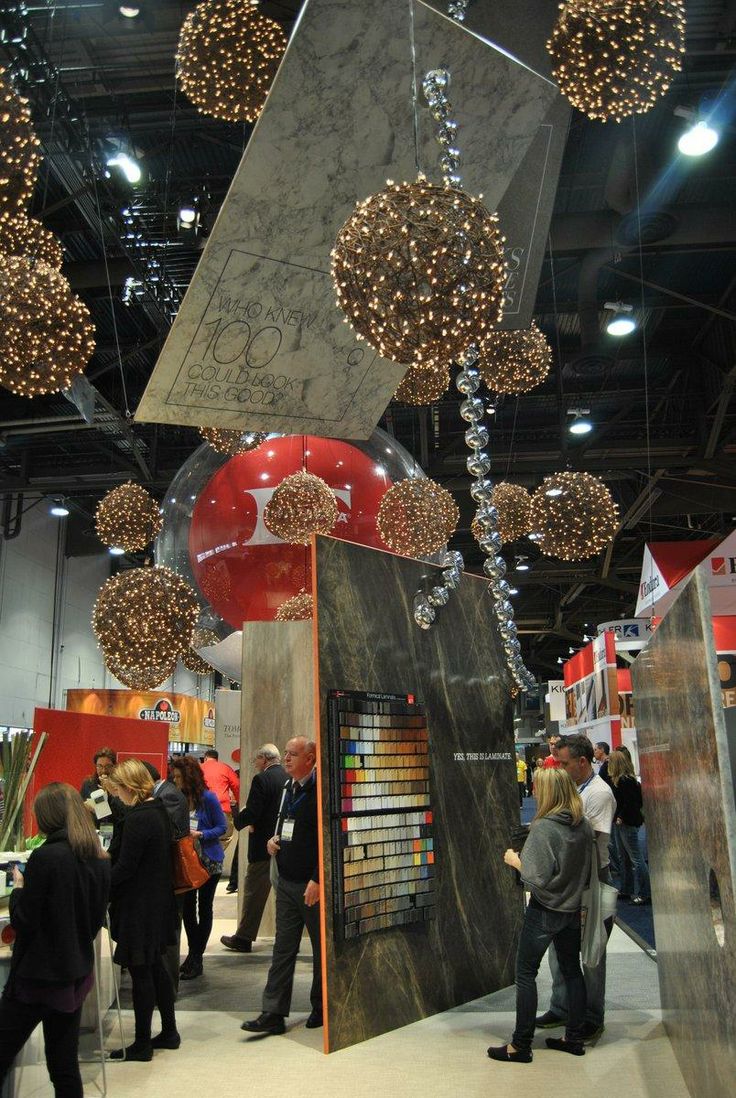
3. Design: Decide if you want a pop-up, table top, or custom booth for the show, and either design it yourself or purchase it in advance. Note that the more unique your trade show exhibit is, the more viewers it will attract, which will bring more business to your company. The booth with a few fliers taped to a white poster board will probably get less traffic than the spectacular, visually appealing booth.
4. Name-drop: Make sure to feature your company's name somewhere prominent in your display. The reason you are attending the trade show is to promote yourself and your company, so don't hide who you are! Also, consider developing a logo if you do not already have one.
5. Print: Acquire the printed marketing materials you will need, such as signage, business cards, brochures, product samples/portfolio, etc.
6. Update: Ensure that your website is up-to-date so attendees can find more information about your company later if they are interested in purchasing a product or service.
7. Contact: Send out email blasts, publish a social media post, and if your budget allows, distribute a postcard mailing, all inviting customers and potential customers to your booth with an incentive.
What to do at the show The way you portray yourself and your company at the trade show is possibly even more important than the planning stage; the most expensive, high-tech display can become worthless if the people at your booth do not interact well with the attendees and other exhibitors at the show. So don't be shy, greet everyone with a smile, and be courteous, helpful, and attentive to visitors at your booth. You should also have a simple way to collect information from those visitors (a fishbowl they can drop their business cards into for a chance to win a prize is a great way to build a database).
A few notes on how to set up your booth:
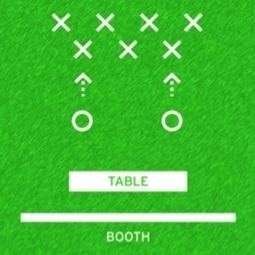
Don't block the entrance with tables or large signs - you don't want to prevent traffic from flowing into your space. Place your printed materials and any give-away items at the back of the booth - people who are interested will have to come inside to access them, allowing you a longer period of time for interaction.
Finally, be sure to follow up with all leads and contacts after the show! Make your investment in attending the trade show worth it by bringing in new business.
|
|
|
Scooped by
Aditya Patkar
September 5, 2015 2:23 AM
|
Headed to a trade show soon? We have all of the tips you need from head to toe to land as many prospects as possible at your next trade show or convention. You…
|
|
Scooped by
Aditya Patkar
September 4, 2015 2:19 AM
|
Myth 1: You’re Not Selling While some exhibitors may not be making any cash-for-goods transactions at a trade show, they are definitely selling a concept. At first it may seem that booths which are not making transactions are wasting time and money, but the correct way of thinking is that a company is selling itself– its brand, its image– to a targeted group of prospects that may one day become major partners or clients. Myth 2: Anyone Can Do It
Thinking of sending your “B” team? It’s important to do more than simply send warm bodies from your office to represent your company. Booth staffing takes a certain kind of person. This is the face of your company. Make sure your staff wants to be there and knows what to say to engage prospects. Myth 3: Party On!
Trade shows are a party? Not so much. While it’s true that most show itineraries are packed with receptions and networking lunches, it’s a lot of handshaking and talking about your business. Very little about traveling for expos is glamorous… unless you have a very generous budget that’s not being spent on show marketing (unlikely)! Myth 4: If You’ve Seen One You’ve Seen ’em All
Another one of the trade show planning myths, which is baffling, is that they are all the same. To say that an international trade show attended by everyone in your industry is the same as a small local trade show in a rural location is absurd. What IS true, however, is that not all expos offer the same return. Some may simply not be worth the time. Myth 5: Virtual Is Just As Good
Some have said that the nature of technology and communication will make “virtual trade shows” the next big thing. While the concept and preliminary attempts are exciting, you just can’t beat face-to-face connections! We are human, and humans like contact with other humans. Think about it: hundreds, even thousands of your ideal prospects under the same roof, just waiting for you to solve their problems. Myth 6: No One Goes Trade shows still attract a lot of attention. Rosters for most expos are booked out well in advance. While show attendance dipped in the 2000s after 9/11, the numbers have bounced back. According to CEIR (Center for Exhibition Industry Research), the trade show industry has been experiencing steady growth for the past 18 quarters (more than four years). Yes, trade shows cost money, but so does getting your product to market through advertising and all other channels. And the opportunity to make connections with suppliers, customers, and prospects in one location at the same time is priceless. For this simple reason, trade shows will continue on for some time to come.
|
|
Scooped by
Aditya Patkar
September 3, 2015 1:16 AM
|
More and more conferences now have an exhibitor trade show. A trade show is a great addition to a conference as it provides an opportunity for your delegates to network and also provides additional sponsorship and revenue opportunities for the conference. However, as an event manager this adds another level of complexity to the conference. You already have venue logistics, menu choices, speakers and registration to deal with, so how do you successfully incorporate a trade show into your planning? Determine the Space and Build the Layout Before you start connecting with potential exhibitors, you need to determine the location of the trade show and build the floor plan. This will tell you how many exhibitors your conference can accommodate. Start by connecting with your venue to determine the space they have available (if not already included in your contract). One thing to keep in mind when choosing a space is that it is important to place your exhibitors in a high traffic area, as this will help to create value. It is also common to have the exhibitor trade show in the same space where you are serving your break or buffet food. Work with your venue coordinator to choose a space that will best suit your needs. Once you have chosen a space, the venue will work with you to build the floorplan. At this stage be sure to take note of the size of the tables and exhibit space as you will require this for the exhibitor registration form. You will also need to inquire about what the venue is willing to provide; tables, chairs, linens, shipping, Wi-Fi, electricity etc. In most cases it is to your advantage to hire a tradeshow display company who can provide the pipe, drape, linens, tables, chairs and act as the receiver of exhibitor materials. Connect with each supplier to request a quote for their services. Your quote should be for the basic booth set up which is typically pipe, drape, a table and two chairs. Some of your exhibitors may require additional display items (outside of what you are providing in your booth price) and assistance setting-up complex booths, so be sure to ask if they are willing to offer these services. The tradeshow company can also act as the receiver of all exhibitor materials, as it can be very costly to ship materials directly to the hotel. Also discuss set-up and take down time as this is something that will need to be communicated to the venue and worked into your timeline for the event. It is also important to inquire about their familiarity with the venue, this can be a big asset especially if you are not familiar with the space yourself. In the end working with a tradeshow display company can help to make your exhibitor trade show a big success as they are the experts in creating a functional space for exhibitors and delegates. Developing the Exhibitor Registration Form Whether you or your client are developing the Exhibitor Registration Form, be sure that it includes the following elements as it will serve as a contract with the exhibitor for the space: Determine a booth price: First, be sure to take into account your costs; room rental, food and beverage costs and booth equipment rentals. Often booth prices are the same for every exhibitor but you could also offer not for profit price discounts or higher fees for more desirable booths. Exhibitor Hours: Determine your exhibitor hours of operation. Exhibitor hours are typically during the busiest hours of your conference, if your conference runs from 8:00 am- 4:00 pm, your exhibitors will be available during those times. Exhibitors appreciate being where the action is, so if possible place them in a room where breaks will be served. It is also helpful to give the exhibitors a preliminary schedule so they know when their peak times will be. Exhibitor hours should include ingress and egress times. Booth Space: Communicate the size of the booth, this is important for their set up and any signage they may bring. A typical booth space is an 8’ x 10’ space, butthis will differ from event to event depending on the size of the room you are using. Also, let them know what is included with their booth; chairs, tables, skirting for tables, electrical, Wi-Fi etc. This information will help them prepare for the conference Booth Placement: Often exhibitors are given a choice of their top three booth preferences, however this is not always appropriate. Think about the type of exhibitors you will have at your conference and if preferred booth placement is important to them. If it is, include a note on the registration form indicating that booth placement is on a first come first serve basis. Payment Information: Be sure to include payment deadlines, method of payment available, an address to send payment to, and contact information for any inquiries Start Booth Placement You have approached potential exhibitors, booth purchases start to roll in and the phone starts ringing, your exhibitor list is filling up quickly. Depending on your event you may have exhibitors who purchase more than one booth, if that is the case it is easier to place those exhibitors first. Also, if sponsors receive an exhibitor booth as part of their sponsor benefits, these booths should be reserved early on as they should be given preferred locations. It is easier to conceptualize something when you have a visual image right in front of you. It is helpful to print a large scale version of the floor plan to put on a bulletin board in your office. This is extremely helpful when selling booths. When you receive calls from potential exhibitors you can immediately see the available booths in front of you. Once a booth is sold you can mark it sold on your map. The visual is a great tool for you, but to ensure that no errors occur, it is also important to keep a spreadsheet of exhibitors and booth numbers. This will ensure that you are communicating the correct booth numbers to exhibitors and will avoid any duplicate booth placements. Communicate With Your Exhibitors The last step to creating a great trade show at your conference is communicating with your exhibitors. The first communication is the confirmation of their booth purchase, in this communication they can also be reminded of what is included in their booth purchase and any outstanding information you require from them. The next communication should be a reminder sent at least 7-10 days in advance of the conference. This is a reminder of the information they already received, but you would also include the final program, a list of registered delegates with contact information (with their permission), and the final exhibitor floor plan. This is most efficiently done through an email, but make sure to include your contact information on site in case any questions arise. Solid Planning Will Help Your Trade Show Sell Itself for Next Year
|
|
Scooped by
Aditya Patkar
September 2, 2015 1:12 AM
|
Exhibiting at a trade show is a very different experience from attending a trade show. You have to be “on” and organized in a completely different way. I run the crowdfunding website, Deposit a Gift, an all-in-one social fundraising platform for donations, sponsorships and ticket sales that allows you to raise money for any organizational or personal need. People use us for everything from charitable and school fundraising, to memorial funds, medical bills, disaster relief, pet rescue or crowdfunding a personal project. We recently exhibited at our first major trade show, and boy did we learn a lot! Rather than the experience just benefiting our company, I wanted to share what we learned and open up a dialogue to make us all better exhibitors. Before the Show…1. Make Cheat Sheets Organization is the name of the game and cheat sheets can help you do that. You want one cheat sheet that is dedicated to setup so that you don’t forget anything and includes technical instructions to avoid malfunctions. Create a second cheat sheet for the day of. Shows typically start early when heads are foggy and you want some quick reminders to get the team focused. Here are some of the things on our list: Always: - Strike up conversation with people, even if you aren’t at your booth. Coffee breaks and mingling can be a great time to meet someone.
- Read their name off their nametag and make sure yours is positioned on your right shoulder to correspond with your handshake.
- Make eye contact with people walking by.
Be sure not to: - Be heads down answering emails or doing other work.
- Eat, drink or chew gum while talking to someone.
- Have your arms crossed.
2. Create a List of Pick-Up Lines We created a list of “pick-up lines” to help us initiate conversations. There is a real skill to connecting with someone in a matter of seconds, especially when the premise is that you want to sell him or her something. Sometimes, even a simple, “Good morning” with eye contact and a smile will reel people in to your booth. Seriously, someone actually told me they stopped at our booth because I was the only one who made eye contact. We created categories of pick-up lines including targeted questions, challenging questions, personal connections, indirect questions and more. Some examples are: - “What is your biggest question or concern about online fundraising?”
- “Do you know what the average amount raised by an individual is through crowdfunding?”
- “Where are you traveling from?”
- “Do you know what crowdfunding is?”
What we learned is that our premium ended up being our best ice-breaker. We had mints with the slogan ‘A Fresh Approach To Fundraising’ on them, and our best pick-up line turned out to be “Would you like some mints” 3. Make a Strategy the Night Before Something we will certainly consider next time is making a game plan the night before. Knowing your ‘prime times’ for traffic flow is key. For us, the day consisted of four main windows during which the attendees had a break between workshops and would walk around to check out the booths. This is important to know because it determines when you need to be forward facing and focused. How could we have prepared better? By doing two things: - Reading the program the night before with a strategic eye to assess these windows
- By arriving even earlier for more time to settle in and assess the landscape
4. Don’t Be a One-Man Band It takes a village to prepare for trade shows. Always be sure to have a team that can help you with all the necessary prep, especially the day before. It is ideal to have more than one person come the night before to set up so that you are prepared the morning of the show. And on the day of the show, if you can have at least two people present, that is best so that during high traffic times you have enough people to interact with prospects. During the Show…5. Don’t Pitch to Competitors Within the first half hour, a man came up to our booth asking about Deposit a Gift. We were so excited that we started singing the praises of our site’s benefits without quickly assessing who we were speaking to. As the conversation progressed, we discovered he was a peripheral competitor. Although it is great to talk to other exhibitors, we recommend not pitching your company to competitors, so be sure to ask whom they are representing before engaging. However, taking the time to walk around and visit other exhibitors is something you definitely want to do during a break. You can pick up important tips for upcoming tradeshows by observing what other booths do well, or not so well. 6. Bring on the Balloons When you are designing your booth, think about what will make yours feel festive and fun. Trade shows are like trick or treating for adults. They come for the candy and stay for the information. Beyond good eats, we brought balloons to attach to our retractable. None of the other booths had balloons, so it made ours stand out visually. 7. Write Notes On Business Cards At a trade show, you talk to hundreds of people in a span of a few hours. It is easy to forget particular conversations you had throughout the day. To avoid this, write down parts of your conversation on the person’s business card. Also, write down ways they could use your services based on their concerns or questions discussed. Referencing key points from your conversation in a follow-up email will make it easier for them to remember you so that you can pick up the conversation where you left off to engage them in a follow-up meeting. 8. Be Prepared For Those Without Business Cards You’d be surprised at the number of people who attend a tradeshow without business cards, so make sure you come prepared with blank paper and some pens. We wrote down people’s names and contact information, and of course, notes about our conversation. This way, we could still reach out to them afterwards. If you forget to ask for their contact information, you can use other resources like LinkedIn and company websites to connect with them. After the Show9. Organize Your New Contacts… Quickly! It is important to go through the business cards while the day is fresh in your mind. Sort the cards and make two piles to help you prioritize. One stack should be for important contacts that you should reach out to immediately, and the other stack is for less urgent contacts. It is still important to get to the second stack, but it is more crucial to reach out to those contacts you had special conversations with that day. 10. Follow Up! Once you have your business cards organized, immediately enter them into a spreadsheet or database to guide your follow-up. Make sure to include notes about your conversation, why they are a good prospect, etc. Now it is time to follow up with them to secure personal meetings.
Read more at http://women2.com/2014/09/19/make-tradeshow-10-tips-first-time-tradeshow-exhibitors/?hvid=2TIby#3xCtd0FavLKumO46.99
|
|
Scooped by
Aditya Patkar
September 1, 2015 4:08 AM
|
When your company spends the money, time, and effort to display a booth at a trade show, it is vital to make the best of it. Careful planning and research can go a long way towards ensuring a successful showing at your next trade show. This article will highlight ways to attract visitors to your booth, detail ways to plan out a successful trade show exhibition, and explore some of the best ideas for trade show giveaways. Attracting Prospects to Your Booth A trade show is a place where buyers and sellers meet. The benefit is that buyers come to a trade show looking to buy and wanting to learn about the latest and greatest that you have to offer. The problem is the amount of competition you have in the direct vicinity. The way to overcome the problem is to take steps to ensure that buyers won’t miss your booth. Here are 10 successful trade show tips to make visitors stop at your booth 1/ Booth Location Of course, the old business adage “location, location, location” stands here just like anywhere else. Most trade shows will offer prime location booths for an extra charge. If you are willing to pay extra, look into this early. Most trade show’s prime locations sell out fast; some prime locations are even grandfathered in, so you may need to think even further in advance, like next year. It also is something to consider when negotiating your contract. If you plan on attending a trade show long term, year after year, prime location is something you can try to leverage at that time. 2/ Get the Look Buyers are attracted to good looking booths. Use bright colors and put effort into the design of your booth. It will make all the difference between visitors stopping or walking by. Make your messaging clear and able to be seen from every direction as well as near and far. Use clear signs and optimum lighting. 3/ Make Your Booth Approachable In addition to having that ‘right look’ and appealing design, your booth should be approachable. Smiling faces of professional booth attendants are important. Have a variety of different display options to appeal to different people. Some people like flyers, pamphlets, and reading materials. Other attendees are visual and would like to see a video demo on an HD screen or tablet. Many will want to engage with the booth staff and ask questions. Make sure that plenty of booth staff is available at all times.
4/ Booth Hosts Consider having a booth host who is trained to answer some simple questions and direct buyers to the appropriate staff member in the booth. You could try using entertainers such as a model, a magician, singer, or other type of entertainer that goes along with your company persona or theme of the booth or trade show. 5/ Offer Show Specials Make sure to highlight your show specials so that buyers know that they need to buy at the show in order to receive the discount or special offer. Make sure your show special is posted and very clear.
6/ Contests and Promotions Everyone likes to win something and contests, special promotions, or prize drawings will attract people to your booth. Be sure that you require something of attendees in order to enter the drawing or qualify to win a prize such as a business card, or filling out a contact form or questionnaire. 7/ Snacks and Drinks Trade show attendees are usually not used to all the walking around. Offering snacks and drinks will be much appreciated. Your drinks or snack offer should be in line with your company culture or theme. Water bottles and any packaging should come with your branding or business card attached to help remind them where they received it from.
8/ Show Your Expertise Offer something of value to trade show attendees. This can be something like a white paper on the state of the industry, top 10 lists of products, newest trends. If most people who attend a particular trade show are from out of the area, you can offer information about the local area, such as top places for dinner. 9/ Reach Out on Social Media You should already have a social media marketing plan in place for your trade show. One way to use social media is to engage with people who have checked in at the venue or mentioned the trade show on social media. Invite them to your booth and offer a special incentive through social channels. 10/ Promotional Products Promotional products and branded gift giveaways are a staple at trade shows. However, choosing the right promotional products to giveaway will ensure that your investment is worthwhile. Make sure that the promotional product giveaway that you choose is something that is relevant to your brand and useful to the consumer. That is the best combination to ensure that they are kept for long periods of time. Some of the most popular promotional products for trade shows include: - Pens: A good old standby. They may be a bit mundane, but everyone still needs a pen to have handy. Pens are kept for a long period of time and even have a transfer value since recipients might give them to others.
- Bags: Everyone always needs something to carry all that stuff they pick up at a trade show. Reusable bags are kept much more often now than in the past for their environmental benefits.
- Electronic Gadgets: USB or thumb drives always rank among the type of promotional item that people would like to receive. Mobile device cases are also always well received.
- Cups & Mugs: Cups and mugs are kept for long periods of time and get a lot of use. For the trade show attending crowd, though travel mugs are probably a better choice for usability.
- Badge Holders: Even though some might only be used during the trade show, handy ones with extra pockets will often be kept and reused at other events.
- Folders, Binders, Notepads: These come in handy both during the trade show and after, they will often make it back to the office for use by the receiver and other staff members.
To Sum Up Carrying off a successful trade show involves a great deal of planning. Since trade shows are often a risk because of the cost involved and the short term, one shot deal nature of them, it is imperative to do enough to ensure their success. Many of the 10 points we illustrated to attract buyers require research and planning ahead of time. If you regularly attend trade shows, you will form a routine; but even if you have a routine, be sure to constantly continue to innovate and improve it.
|
|
Scooped by
Aditya Patkar
August 31, 2015 3:14 AM
|
A company’s initial branding campaign could be the deciding factor in their long-term success. The step made in this initial process will likely determine how target audiences perceive the company and the effectiveness of the brand in the marketplace. Small business owners must, therefore, optimize their trade show displays to highlight the brand’s finest qualities within their introductory campaign. Here, we’ll focus on the three ways to use trade show displays during this brand launch process. Use Statistics within the Display Design Growing companies must be able to prove their expertise to cautious clientele. By effectively using statistics concerning their products or their industry experience, companies can quickly show they have formidable products or services. These tangible statistics quickly engage audience members and at the very least, will likely lead to a discussion with on-site reps. Use Product Giveaways Product giveaways are a critical element of any initial trade show campaign. They allow companies to put a branded product both in the customer’s hand and potentially within their home over the long-term. Used effectively, products such as USB keys and calendars can maximize return on investment for forward-thinking companies. Strong Graphic Design It’s important that new companies fit-in within the trade show landscape but stand out for their branding excellence. Strong graphic design elements can help remove any doubt about the company’s capabilities. Graphics create a visceral appeal that will engage audience members to learn more about the company and its offerings. By following the market’s best practices, growing companies can take-on the industry leaders and succeed in their branding objectives. Success begins by following the proven steps to optimal results.
|
|
Scooped by
Aditya Patkar
August 30, 2015 3:04 AM
|
|
|
Scooped by
Aditya Patkar
August 29, 2015 3:10 AM
|
Trade shows can be tremendous marketing and networking opportunities, but results can be difficult to measure. One thing to remember is that you will by vying for attention among hundreds, if not thousands, of other exhibitors and their trade show booths. It can be a daunting task if you’re not prepared. To stand out, you should have a trade show booth that is inviting, appealing, and engaging. Being unique and memorable doesn’t hurt either. If you’re unsure where to start, think of how much work you put into your apartment the first time you invite a date over. A lot, right? You could do worse than take the same approach when setting up your trade show booth.
No Fluff: What You Need to KnowCreating effective trade show booths doesn’t have to be hard. In fact, even if this is your first rodeo, there are basic principles for designing an engaging trade show booth that can help ensure success. Get your booth right and you’ll find that so much else falls right into place. Follow the steps outlined below, and you’ll be half-way there. But remember, a trade show booth is more than raw materials and graphics – the people matter too. 1. Create an Inviting BoothNo two booths are going to be the same, but successful booths will all share certain things in common. If you want an effective trade show booth, allow your guests’ needs to serve as your inspiration, and you can’t go wrong. Booths that are carpeted and which have seating available help when attendees have been walking around giant swaths of concrete for much of the day. Think of having waters and snacks on hand for this same reason. Phone chargers can draw them in when their batteries get low. All of these things provide your guests motivation, beyond that which your product or service does. Of course, lots of booths will be carpeted. That alone doesn’t guarantee attendance. To get your guests’ attention, and to keep them interested, be sure to have visual displays. Though static displays can work, we recommend that you have multimedia assets and digital graphics on hand. A video that quickly summarizes your product or service can be a great icebreaker. Finally, think to yourself, “Would I stop at this booth?” If the answer is “no,” well, then why would anyone else? To get butts in the seats, as the saying goes, consider this simple checklist: - Show a video
- Host a game, sweepstakes, or giveaway
- Demonstrate a product or service
- Have food and beverages available
- Be engaging, personable, and friendly
Attendees are going to have hundreds of distractions to choose from. How do you get their attention? Design. Comfort. Incentive. 2. Designate a SellerYour booth’s design is important, but it isn’t the only element that’s needed for success. People matter. If you have a personable and highly engaging marketing manager within your ranks who’d do a great job at your booth, use that person. Let that person focus on what she does best; namely, engaging vendors and potential clients. Have someone else manage the miscellaneous tasks that will inevitably arise so that she can be the charming people-person attendees want to talk to. It could mean the difference between flying home empty handed and flying home with five or six meaningful leads in your book. 3. Designate a Strategy ExpertThe other half of your two-person team (you may have more) should work on strategy. Ideally, this person will have a wealth of trade show experience and be well-versed in industry knowledge. He’ll deal with things like negotiating an optimal floor location, creating an agenda, and ingratiating himself with the event management company, so queries for additional electricity, lighting, or WI-FI access are handled quickly. On the day of the event, he’ll work hand-in-hand with your marketing manager to present a full scope of products and services to trade show attendees. Sales and marketing should always work together since sales can talk numbers while marketing can talk process. Attendees at trade shows are going to ask both types of questions. 4. Plan AheadAs a company, schedule your trade show events well in advance, so that you have enough time to plan. Ultimately, you want your team to get the most from the experience. Give your team the opportunity to set up the trade show booth at least two days in advance (if allowed). The day before the doors open should be spent addressing any last-minute issues. Check the lights, do an audio and video test run, and make sure that all of your digital assets work. If you want to build an effective and engaging trade show booth, then you need to build an effective team. Make sure that you give them the time and resources they need to be their best selves. - See more at: http://blog.proofhq.com/engaging-trade-show-booth-007905/#sthash.yibqY9eb.dpuf
|
|
Scooped by
Aditya Patkar
August 28, 2015 3:05 AM
|
So in the past few weeks we’ve talked about a myriad of trade show topics: how to entertain attendees, how to develop an effective trade show marketing strategy, how to train your booth staff, how to reduce costs, and how to be more eco-friendly. Let’s take a few steps back and determine what are a few of the DOs and DON’Ts of pulling together a successful, enticing tradeshow exhibit. Preparing for a trade show, especially for small companies, can be a daunting task. Deciding what to include and how to set up an actual exhibit/display is one of the fundamental decisions you’ll have to make. First step is to contact the show managers and find out the size of the booth you will have, whether there is a wall space for your company sign, if there are electrical outlets available, and any other small items that you might be responsible for supplying.
Here are a few other tips to keep in mind when creating your exhibit: DON'T overstuff it. Product managers might want to display things that represent every brand or product your company offers. Partners might want their logo splashed all over your booth. Keep in mind that sometimes simpler is better. Booths overcrowded with displays, products, stands, etc., turn off prospective attendees and prevent you from quickly communicating why attendees should visit you. DO simplify your message. Many exhibitors make the mistake of bombarding their booth visitors with marketing slogans. Instead choose the one core message you want to impart to potential customers and stick to that in terms of graphic presentations. Displaying fewer, but larger visual elements in your exhibit will reduce clutter and better garner an attendee’s attention and create a lasting impression. DO focus on the cream of the crop. Instead of hauling your entire product line to a tradeshow booth and again cluttering your display, overwhelming visitors, and diluting your marketing message, showcase only your new and top-selling products. DON’T rely on static displays. Any type of motion captures people’s attention as opposed to static displays. You can take advantage of this by playing a looping DVD on a widescreen TV or make use of a rotating display. DO maintain a small, private area. If your booth is big enough, it’s nice to have a quiet, private area with a table and a few chairs to take attendees or promising prospects that might like to sit down and discuss your company and its product and services in more detail. DON’T scrimp on carpet. This might sound silly, but after a long day of walking miles and miles on the unforgiving floors of huge exhibit halls, visitors will appreciate booths that have plush, padded carpet. And, so will your booth workers.
|
|
Scooped by
Aditya Patkar
August 27, 2015 11:59 AM
|
Giving away the right promotional products at a trade show or expo not only helps you attract visitors to your booth, but the giveaways keep making impressions after the trade show ends. Of course, one trade show staple that will never go out of style is the branded pen. You probably have at least one logoed pen with you at this very moment. But with almost every business giving out the same promotional item, pens might not leave the lasting you hope. Here are some of my favorite unique trade show giveaways that will help you think beyond the pen and make a bigger impact on everyone who visits your booth. 1. Smart Wallet for Mobile Devices
I have a Smart Wallet on my iPhone, and whenever I go out people are constantly asking me where I got it. This slim silicone pocket attaches to the outside of any mobile device and is perfect for storing driver’s licenses, credit cards, hotel keycards, business cards, and cash. It even protects card strips from deactivation. I love the Smart Wallet as a trade show giveaway item because it can be useful to attendees right away. Get special pricing on the Smart Wallet for reading this blog! Learn More Here.
2. Microfiber Cloth Microfiber cloths are always valuable. They’re the kind of product that everyone needs to effectively clean mobile devices, laptops, CDs, eyeglasses and LCDs, but most people forget to buy for themselves. These branded microfiber cloths come in a vinyl pouch, so they’re easy for trade show attendees to carry around and store. Learn more here. 3. Phone Stand Branded phone stands with a non-slip pad are another great option for trade show giveaways. People get excited about these phone stands because they’re out of the ordinary, yet they can see the value right away. This particular phone stand folds flat for easy storage, so it makes the perfect trade show swag. This is the type of promotional product that people will keep on their desks and use frequently. Learn more here. 4. Lip Balm
The great thing about branded lip balm is that it’s an inexpensive promotional item that leaves a lasting impression. People normally keep lip balm in their purse or bag, and every time they use it they’ll be reminded of your brand. The promotional lip balm pictured here features a laminated label to protect your company logo and is available in a variety of flavors. Learn more here. 5. Scratch Pad
How many times have you been searching for a scrap piece of paper to quickly jot something down? Scratch pads are another consistently useful promotional item that people will keep by their desks and use frequently. The reach on these extends even further than the original recipient; when they write someone a note, they’ll also be handing them your brand. Learn more here. 6. Stylus Pen
I know, I know—I told you to think beyond the pen. But stylus pens merge the traditional with the modern, giving your brand an even bigger opportunity to get in front of an audience. Whether the person is writing or using their mobile devices, they’ll be reaching for a tool with your logo and brand colors. Learn more here. 7. Color Change Stadium Cup
Branded drinkware is steadily rising in popularity, and it’s going beyond mugs. These sturdy, reusable color change stadium cups are a fun, surprising, and inexpensive item that people will enjoy using. According to the ASI Global Impressions Study, branded drinkware is just as likely to be kept in the office as it is at home. And the best part: you can choose a color that reflects your brand, or mix it up with a rainbow of fun colors. Learn more here. 8. Power Bank
Power banks have recently become one of the most popular promotional items among my clients, and for good reason. Not only are these small, sleek mobile chargers unbelievably convenient and useful, they also look great with a company logo imprinted on them. They’re perfect for trade shows because they charge smart phones and other mobile devices on the go without needing to plug them in. Learn more here. 9. Reusable Tote Bag
The ASI Global Impressions Study reveals that branded tote bags receive the most impressions for promotional products in the United States (Over 5,900!). Reusable tote bagsmake a big impact after the event is over, but they also increase your visibility during the event. When trade show attendees are collecting swag from every booth, they’ll be glad they have a tote bag to carry everything. Then they’re walking around the trade show displaying your brand for everyone to see! Learn more here. The key to the most successful trade show giveaways is finding something that hits the sweet spot between unique, attractive, and useful. These products are just a glimpse into the world of promotional products beyond the pen. For more ideas, explore our promo search website.
|
|
Scooped by
Aditya Patkar
August 26, 2015 9:55 AM
|
Available event center in Anaheim, Orange County with flexible spaces and prices. Best place to host your business meeting, training, expos, conferences, trade shows, wedding, quinceanera, graduation, holiday parties
|
|
Scooped by
Aditya Patkar
August 25, 2015 8:52 AM
|
Earlier the other morning I finished a webinar with my friends Peri McDonald and Becky de Loryn’ from salesforce.com, the cloud computing juggernaut. They asked me to do the webinar with them after they had read another Forbes piece I wrote called “The 12 Commandments of Incredibly Successful Tradeshows,” with the 14 “Tradeshow Sins” in the comments. Our company got attention from setting appointments with 1057 people at the Salesforce.com Dreamforce tradeshow in San Francisco before the tradeshow even began. Salesforce loves to help their partners any way they can and thought these skills would be very valuable. (In this economy we need all the help we can get!) They acted as if nobody has ever done that before. In fact though, most companies don’t even think about setting appointments before an event. We don’t go to an event if we can’t set enough appointments to pay for it in advance. They asked me if I would be willing to put together a summary of the specific skills that we have found to be highly effective and efficient in pulling off events that actually bring results. At tradeshows we used every one of these skills or strategies: Know exactly what you want: Before you begin any campaign ask yourself or your team, “What are we trying to accomplish?” If you are planning a tradeshow; do you want leads, awareness, customer relationships, or market leadership? At a tradeshow get your people (o's) out front to talk to the booth visitors (x's.) Never let them stand behind a table. Stand up and be ready: Many exhibitor staff we watch at a tradeshow sits down behind a table. Don’t do that. Get out front with the people. Push the table back against the booth wall if you have a table and stand up, be ready. Don’t be caught sitting. Your company is paying thousands or tens of thousands for you to be there for very short periods of time. You can rest later. Always use the most assertive media: Nothing is better than face-to-face. A tradeshow is the ultimate opportunity (besides executive seminars) to get lots of prospects and customers in the same room for face-to-face discussions. Right after face-to-face are phone discussions, then high impact mailers, then LinkedIn inMail connections, then LinkedIn messages, then direct social media messages (like Twitter), and finally email. The strategy is to bridge people from passive to assertive media. Tradeshows are ideal if you get as much mileage out of your face-to-face meetings as possible. We have even been able to take people from initial awareness to a closed sale right at our tradeshow events. Stand out: At tradeshows we try to grab a good location. We use unique color schemes. Our data-driven targeting and social media strategy helps us stand out. The biggest key is to give really great presentations! For years we brought all you can eat chocolate, the real good stuff, to get people to hangout in our suite or meeting room.
Give something away that is really cool, but only if people are qualified to buy what you have, and let you spend a few minutes to educate them. Zig when others zag. At last years Dreamforce, we gave away nice sweatshirts. Domo (Josh James) gave away Skull candy headphones… to qualified prospects only of course. We gave away InsideSales.com sweatshirts to everyone at Dreamforce we had set appointments with who were qualified decision makers. We gave away nearly 2000 sweatshirts. Target people specifically: Define who you want to meet by title and function at the tradeshow. For us it is sales directors over inside sales who’s teams uses salesforce.com. Then specifically search for them in your database of past tradeshows, LinkedIn, Twitter, etc. We use predictive analytics to know who to call and when to call in our targeting. Treat appointments like appointments (because they are): Get on the phone 3-6 weeks before the event and invite these people to meet you at the show. Set specific appointments during every spare minute during the exhibit. We like appointments at weird times…. like 10:35 a.m. I learned that at FranklinCovey, the largest time management company in the world. People don’t forget appointments at unique or weird times. Set appointments at meeting rooms and other locations when people can’t get into the exhibit area. Keep an appointment database (we recommend the Salesforce CRM) when everyone is coming to meet you. Follow up immediately at the show if they miss the appointment. Know your key questions: Track all of the questions that you get asked at your booth and summarize the answers to them for everyone who works at the booth or meeting rooms. Learn the business card pocket trick: I keep my own business cards in my right pocket. I hand them to people and ask for their business card. I write notes on their card that qualify them. Then I put them in my left pocket. A little human ingenuity goes a long way. Point out your coolest feature: The old adage is “features tell… benefits sell!” But that is from old school sales trainers, who are right, but it doesn’t work at tradeshows Cool features grab people’s attention. Think of it this way. When you walk through a sales tradeshow with 100 different booths, every one of them promises to help you sell more and save money, don’t they? But what do you go home that night and tell your spouse about? It’s the booth with the coolest features. Cool features grab attention, that’s what you are doing at a tradeshow. The Fonz on Happy Days, made the concept of "Cool" popular even today, you should talk about the coolest thing you offer at a trade show to get attention I wonder if the Fonz, from Happy Days, has any idea what a powerful word he coined when he said, “Cool!”
Remember that clarity trumps persuasion:Besides the cool feature, you need to be to be clear when you tell people exactly what you do. Be simple. Be specific. Only after you are specific should you use metaphors in your language. Use judo, not boxing: This skill is very interesting. Judo uses the momentum and weight of an opponent against them by going their same direction, then shifting them in the direction they want to go. Observe and listen, then take the conversation the way they were taking it. Don’t just jump in and start spewing your canned speech. It’s like going to Nordstrom’s, they don’t run up to you and say, “May I help you?” They watch where you go, and start the conversation based on the context of where you go in the store. Be assertive, not aggressive: Assertive is somebody who is willing to introduce themselves to anybody who walks by, aggressive is somebody who won’t let them leave and won’t let them get a word in edgewise. Be assertive, not aggressive. Introverts struggle with this; extroverts do it naturally. Just remember, it’s your job, and everybody else who is doing it right is being assertive. Be dramatically specific: When you give statistics or case studies, don’t use round numbers. They seem made up. When you tell people about your technology, tell them 58.7% improvement in contact rates by calling with local call ID, NOT you will improve by half. When you set an appointment, say 10:45 on Friday morning at the bottom of the entry stairs… not I’ll meet you in the morning in the entry way. The Nielsen family bought my home a few weeks ago, they wrote me a hand-written letter telling me how they use our home, garden, kitchen, etc. to raise their three young boys. We got 7 offers in 1 day, some for more, but we sold to them. Divert a river, don’t dig a well: Have one of your staff stand out in the traffic flow and move them to the booth (divert traffic). Don’t sit behind the desk and yell out to them (create traffic.) Tell an emotional story that people can relate to: This is so powerful. I just sold my home to a family who told me a true story about how they would use my home to raise their three little boys. It tugged at my heartstrings. I had 7 different offers in two days (the market is really good, theirs wasn’t even the very best. But my wife and I wanted this family.) Follow up immediately with your trade show leads. This graph from our research with Dr. James Oldroyd, shows the effect of following up immediately to web leads, they are similar. Follow up immediately: InsideSales.com learned the power of doing this after our landmark research with Dr. James Oldroyd and Kristina McElheran ofHarvard Business Review. Together we found that you need to respond to leads very quickly. Real time is optimum, 5 minutes is best practice, and 1 hour starts getting too late, a day later is way too late. Do we always pull this off? No. But almost. This same skill of immediate response is profitably applied to immediate follow up. Our reps start keying in business cards right at the show, and finish up that night in the hotel rooms. Ideal is to move people to a meeting room and follow up in real time, next best is to set appointments right at the show for the days following the show, and minimum is to get the business cards into the system and following up that night with an email, LinkedIn connection, and a phone call the next day. ResponseAudits show the average response to a lead takes 39 hours and 22 minutes. Companies leave a huge value on the table by being slow. We at InsideSales.com invented a technology we call ResponseAudit, where we go to a company website, put in a fake lead with a real phone number and email address, and track how fast and how persistent their salespeople are in responding to those leads. We have now done this over 16,000 times.
The average company takes 39 hours and 22 minutes to make their first attempt at calling back a lead. Be pleasantly persistent: The other landmark research that Dr. Oldroyd did with Dave Elkington, our CEO, was to determine that sales people aren’t nearly persistent enough. The average sales person only makes 1.5 phone calls attempts to follow up on a lead that comes from the website. Our research shows the average sales rep should make 6 to 9 attempts. We make 12 to 15. We only leave 3 voicemails and send 3 emails though, or you become a pest. (Full disclosure: we use our own patented technology to accomplish our immediate and persistent follow up.) Here’s the scariest stat of all: Persistency in sales and trade show follow up goes a long way. Sales reps should make 6 to 9 call attempts before giving up. Only 27% of leads ever get contacted! Brief and debrief: I learned a process from the United States military and my background in the Boy Scouts of America. I tell the story in one of my articles called “Great Presentations: Tips from Great Presenters for Scouters” of the book “Flawless Execution” by James D. Murphy, or “Murph.” He teaches that if fighter pilots always brief each other prior to a mission, they then engage in the mission, then they immediately get together afterwards and debrief so they can learn and improve. Their name and rank are on patches on their flight suits have Velcro. When they walk in the debriefing room, they symbolically tear off their names and ranks and leave them on the table at the doorway. Then they can be blunt and honest and forthright, not worrying about repercussions. Take really good notes. In the same article, skip down to #46, and read more about how fighter pilots and Boy Scouts improve after every event, read the oatmeal story. This is one of the most powerful skills you can learn to put on world-class tradeshow events. Plan WAY ahead: FranklinCovey at one time was the largest training company in the world. While there we learned that with 8 weeks of lead time, you can pull off almost any event. Now don’t get me wrong, in a huge venue like the Moscone Center in San Francisco, that salesforce.com uses every year, you need to play a year or more in advance. Rinse and repeat: As you are getting ready to plan a new event, pull out the notes from your debriefs, and make sure you review them in time to plan for the next event. Good luck!
|