Your new post is loading...

|
Scooped by
Aditya Patkar
December 26, 2015 1:44 AM
|
No matter the size of your company, or how long you’ve been in business, trade shows are essential for companies you to grow distribution and also your customer base. Contrary to what lots of entrepreneurs believe, big budgets don’t always equate to big successes at trade shows, so instead of simply opening your checkbook, read these five tips for trade show success: 1. Train your staffAs a business owner, you probably want to be involved with every conversation and interaction that takes place at the trade show; you can’t be everywhere at once. Because of this, it’s important to have a prepared and well-trained staff. Team members that will work the trade show need to walk a fine line between being assertive and friendly. Product or service features should be second nature to them, and they should be able to speak knowledgeably and professionally on these subjects. What are the goals of attending this trade show? How do you want it to impact your business? Decide this prior to attending, and make sure all employees are on the same wavelength. 2. Wow your audiencePotential customers attend trade shows to see the latest and greatest of the industry. Make a splash at your next trade show by showing something new. Not every business will be ready to introduce a new product or service offering at a trade show, but that doesn’t mean you can’t have a wow factor. Choose to focus on something that you haven’t featured yet, so customers that are unfamiliar with your brand may view it as new anyways. Another alternative would be to talk about upcoming products or services, even if you have nothing to show. Mentioning what your company is planning down the road shows you have long-term goals and a direction, a positive for potential customers. 3. Make it worthwhileDraw attention to your trade show space by holding a contest. When people choose to enter your content, have part of the entry process be a contact form so you can collect their information. For more serious customers, hold special deals that only apply for transactions made the day of the event in order to motivate people to make a decision quickly. At popular trade shows, you have to stand out against the spaces around you in order to draw attention. By offering giveaways or special promotions, you’ll have a competitive edge against others around you. 4. Brand your boothTrade show attendees should walk by your space and immediately be able to identify your brand. No matter the size or space you occupy at a trade show, there are a number of opportunities for you to incorporatebranding and make an impact. Make sure there is proper signage so visitors from every direction will be able to clearly see your logo. Create custom giveaway items, letterheads and t-shirts or polos for your team to wear that clearly display your branding. 5. Follow-UpNo matter how well the trade show went or how many people you connected with, you won’t truly have a successful experience unless you remember to follow-up after the day of the trade show. All of your efforts at the trade show should have left you with a number of leads to call upon afterwards. Thank them for spending time in your space at the trade show, and ask them for a follow-up meeting to further discuss opportunities. Don’t wait for the leads to find you again, you have to be the initiator of this second conversation.
|
|
Scooped by
Aditya Patkar
December 25, 2015 1:41 AM
|
Putting that extra bit into care when planning for an upcoming trade show or exhibition can make all the difference. Elevate your brand awareness, attract new leads and generate sales with our tips on having a successful event. Running a stand at a trade show is a great way to get your brand out there and gain those all-important leads, but it often involves a lot of hard work and can be exhausting – long hours at events which you have to stay bright and fresh for can be challenging. That’s why we’ve put together these tips to help make it a more pleasant and successful experience. Follow this checklist to help relieve some of the stresses of planning for an event:
● Who are you going with? First things first, we all know running an exhibition is a full time job. Leaving your stand unattended is not an option, so having just one person running the stand will not work! Toilet and snack breaks are also important. So make sure you have 2-3 people in attendance to ensure your stand is never left unmanned – you could be missing great leads while you pop to the loo otherwise!
● Marketing collateral. Ensure you have enough literature for the event. You don’t want to be running out of product catalogues, flyers or any other kind of collateral mid-event. Check attendance numbers and over compensate. It’s best to have too much literature than not enough.
● Take branded stand items with you. By branded items we mean tablecloths, pull-ups, totems, wrap arounds and any other branded materials you might have to use as furniture in your exhibition space. Depending on the type of space you have booked, you could arrive to a completely empty space. Ensure you have the right amount of marketing peripherals to make your stand look inviting.
● Freebies! Draw potential customers in by offering enticing freebies and giveaways. Stationary is a great giveaway as its practical and can be easily branded. Customised travel card wallets are great for freebies as they get your “brand-to-hand” in a stylish and practical way.
● Business card raffle – a very effective way of obtaining contacts is to do a business card raffle. Get a clear fish bowl and have anyone who comes by the stand drop their business card in for the chance to win a prize – people love prizes, especially when all they have to do is drop in their card, and you’ve got a list of leads to contact after the event!
● Finally, ensure your stand is looking at its best at all times! Keep clutter to a minimum and make sure your stand is neat and tidy. Passers-by will be more attracted to a neat stand than an overly cluttered one – keeping clutter to a minimum will also help to emphasise your brand image.
At Thames Loose Leaf we have a great range of branded items available to our customers to help you really stand out at trade shows. Our customised travel card wallets are very popular as they have so many applications and are very practical. Having your brand logo on something people will use every day is a great way to leave a lasting impression. Our customised travel card wallets are available in a variety of colours, designs, and textured PVC materials. Whatever your design ideas, we can help you make them a reality. Landscape, portrait or extra pockets – there are no rules!
|
|
Scooped by
Aditya Patkar
December 24, 2015 1:39 AM
|
First impressions are everything. Especially at a trade show you want to make the best first impression and a good display can help you. A well-designed trade show booth can catch someone’s attention during that split-second when they decide whether to keep walking or stop to talk to you. Remember, the best exhibit is memorable. We’ve put together some tips to help you succeed when considering your next trade show display and exhibit area: Plan AheadStart thinking about your booth as soon as you register for the show. The truth is, large-scale print jobs (and something as important as this) can take 2-4 weeks to print and deliver. Even working with the design team at Action Signs, you’ll need to allow enough time to finalize the artwork well in advance. Planning ahead will help alleviate that stress of typos or blunders that might be missed when rushed. Keep Important Messaging Large, Concise and HighIt’s almost a no-brainer but important to remember: keeping important information above the waist ensures that it is visible and comfortable to read without having to strain. Make sure to keep your company logo up high so there is absolutely no room for confusion as to whose booth it is. Do not treat your trade show display is an information sheet – no one wants to read more than is necessary. Do your best to keep things short and sweet; condense your message down to a few impactful headlines or bullet points, typically sized so it is legible from a distance. If you have a number of elements to your trade show display, make sure to keep the look and feel consistent across the board. Speaking of branding… Keep It ConsistentStick to your brand standards throughout all of our signage and promotional materials (even swag). This helps to solidify your brand and makes you look more professional. When everything is a different color, it tends to look like a rush job. Some things we consider when designing a trade show display are: - Use of minimal colors with an accent color
- A maximum of 2 different fonts (typically header & paragraph)
- Consistent materials (i.e. wood, metal, glass, etc.)
Consider LogisticsAs any trade show veterans will tell you, it is vital to avoid over-packing your booth with furniture and unnecessary items. In the madness of the show, you’ll want to keep your booth tidy and inviting – leaving just enough room for viewers to interact with you comfortably. Stand Out From The CrowdNothing will catch an attendee’s eye like something that looks great so be sure to set your brand apart from the rest with a clean, professional design. A few things to keep in mind: - Set a budget when looking for a display and include the design fee associated
- Avoid loud graphics and gradients that make your display look busy or gaudy
- Use high resolution images and size the type correctly to avoid any pixilation
- Design visual lines and graphics to lead the eye to the most important message
When your display is strong, it sets the tone for a successful booth exhibit as a whole. The team at Action Signs is here to help you design and execute your next trade show display to set you on the path for success!
|
|
Scooped by
Aditya Patkar
December 23, 2015 1:33 AM
|
|
|
Scooped by
Aditya Patkar
December 22, 2015 1:30 AM
|
Exhibiting in a trade show can be a great way to showcase your products to potential buyers, but knowing which shows to exhibit in and planning your show are essential to a successful trade show marketing strategy. Here’s how to get the best return on investment (ROI) from small shows to large. Set Goals In Advance So why do you want to be in a particular trade show? Trade shows can be an expensive proposition so it is key to know why you want to exhibit. Are you selling your products at the show itself or is it to build your brand image for future sales? Will this show bring out the best target market for you in relation to your product(s)? Will there be many competitors selling the same product as you and if so, what are you going to do to make your booth special? You can have more than one goal in mind, but the point is that you need to be clear about what your participation in a specific trade show is going to achieve. Know Your Trade Show There may be many shows at which you would like to exhibit, but due to budget constraints, you may only be able to afford just one or two in a given year or season. Each show’s promoters should provide a breakdown of prospective attendees, costs, and list of the previous year’s exhibitors. Does the show have a website? Check it out to learn the most about a show before you decide to exhibit your wares. What will be your total out of pocket cost for each show? Remember, it’s not just the exhibiting fee to consider but other issues as well. There are specialty advertising products you may want to give away to attendees, booth staffing requirements, and booth set-up charges (particularly if the show requires union labor). Typically, the smaller shows have lower participation costs as well as set-up charges. Which size show is right for you and what kind of booth is right for you? Again, know your trade show! Plan Your Booth to Fit the Show Maybe you don’t need a mega size booth at a given show. Anticipate the crowd at the show, know where you are in relation to the shows layout, and plan accordingly. Will you be near the front entrance where giving out poly bags is a smart move? Obviously, if your booth is at the back of a show, attendees will likely already have give-away poly bags so consider another give-away. Is the trade show audience primarily made up of information seekers? Then make sure you have plenty of information to give potential buyers after you have made your introduction. And most importantly, don’t forget to get follow up information for each visitor. If you will be selling at the show, make sure to have a credit card machine and bags for purchases if applicable. These are potential buyers so names and phone numbers are key! If you can get their email addresses also, great! Send them a regular edition of your newsletter if you have one or a “thank you” for stopping by the booth. If you are exhibiting at a “mega” show, make sure your booth stands out in size and possesses the latest in technology and graphics. Nothing says “lame” about a company that possesses a booth that is dwarfed by other exhibitors that happened to go all out. Remember, different audiences “shop” trade shows differently, and will likely have different needs. Publicize Your Participation Pre-show publicity is often overlooked by companies when a decision is made to exhibit at a show. Let the world know about the fact that you will be exhibiting at a given show. Effective public relations efforts go a long way in getting the word out that you will be an exhibitor. Always mention the booth number of your exhibit so attendees can find you and don’t forget that your website is a wonderful source to advertise your upcoming attendance. Hire a public relations firm to get the biggest bang out of your trade show buck also for post-show publicity efforts. Maybe you introduced a new product at a show? Let the world know about it! So now your marketing plan has been given a big shot in the arm as it is ready for an upcoming show(s). The next things to consider are booth staffing training, giveaway ordering, and a strategic plan to make the most of your trade show experience. Good luck! - See more at: http://bizlinks.nl/preparing-for-trade-shows-sales-tips-planning-and-prep-for-trade-show-exhibitors/#sthash.dcth6vNI.dpuf
|
|
Scooped by
Aditya Patkar
December 21, 2015 2:26 AM
|
Trade Show Display: 5 Reasons to Rent or Buy 1. ChangeMost companies devote considerable time, energy, and resources to the purchase of a new exhibit. And they should. Trade show marketing can be expensive, and getting it right requires choosing the right display and executing a comprehensive marketing strategy. Exhibitors work hard to get it right… at the first show. Then, many companies go on auto-pilot for several shows, or often for several years. Renting a trade show display, on the other hand, doesn’t change the planning phase. Most companies work just as hard for the first show, but because they know they can change the display (and most often do), they tend to revisit their strategy before every show. As a result, exhibitors who rent are often more engaged in their trade show marketing program. They view the exhibit, the graphics, and their strategy as evolving depending on the show and/or their corporate goals. 2. Design and OwnershipOwning an exhibit has advantages, particularly for exhibitors who have a basic display or a very large customized exhibit. They get exactly what they want in a design or at a specific price point. For a high-end custom exhibit, there are no compromises. It will be built to their exact requirements. No questions. And once built, it’s their property. However, some exhibitors don’t fit that model. They want a trade show experience that showcases their products or services and allows them to be successful on the show floor. The display has to be distinctive, captivating, and practical, but it doesn’t have to be one-of-a-kind. Modern rental exhibits fulfill all those requirements because they can be customized to meet any look or experience. 3. FinancialsPurchasing an exhibit is a considerable capital investment for most companies. They plan for it and put it in their budget. No problem. It’s a one-time expense every year or every couple of years which they depreciate over a fixed schedule. Renting is generally less expensive. Exhibitors rent the structure and purchase the graphics. They have decided that owning the exhibit doesn’t make sense either because their trade show program is always changing or they’d rather budget it in stages. 4. Storage (and Storage Fees)Many exhibitors like having their trade show booth in their building or stored by their exhibit provider. They know what they have and where it is. They don’t mind devoting space to the exhibit in their office or paying monthly storage fees. There’s a certain peace-of-mind to knowing the exhibit is ready to ship at a moment’s notice. Renting is exactly the opposite. The exhibitor doesn’t own it, so there are no storage fees or floor space devoted to cases or crates. If the exhibit is needed, it requires more advanced planning, though this isn’t necessarily a bad thing. 5. CommitmentCommitment and change are two sides of the same coin. If the marketing message has been the same for 20 years and it’s been successful, why change? It would be silly to do anything that alters that formula. That said… it’s possible to be committed to a marketing strategy and still change it depending on the audience, the show, or the season. Renting makes that possible. One show may require a 10 ft. display. The next an island. Sometimes having that flexibility is a good thing. When making the decision to rent or purchase your next trade show exhibit, it’s no longer about making compromises. Exhibitors today can select from a wide range of upscale designs at price points for any budget, and they can decide which approach works best for their business. Are you thinking about a renting or purchasing your next trade show booth? We'd love to hear from you.
|
|
Scooped by
Aditya Patkar
December 20, 2015 1:17 AM
|
Ever since the first photo booth was unveiled at the world's fair in 1889, photo-taking stations have been a fixture at trade shows around the globe. It's easy to see why: They divert the limelight to attendees and give booth staffers a captive audience for a few precious minutes while participants wait in line. Millennials' preoccupation with selfies has only accelerated the trend. So we compiled five examples of in-booth activities that not only put attendees in front of the camera in a creative way, but also generated more buzz than Ellen DeGeneres' infamous Oscar selfie. Here are five exhibitors that incorporated photo-sharing activities to increase traffic and improve brand awareness. By Claire WallingPicturing PassionsA unique photo opportunity that fuses with an exhibit theme is a winning combination. At the Healthcare Convention & Exhibitors Association show in Denver, Czarnowski Display Services Inc. gave attendees an alternate view through its Unlearn & Reframe theme. The campaign challenged attendees to take another look at their exhibit programs. Staffers initiated conversations with attendees by asking them to share their passions outside of work. Next, each participant was invited to peruse a catalog of stock art via a monitor in the exhibit and choose an image that was representative of his or her aforementioned passion. Choices included forest scenes, underwater landscapes, and cityscapes. After an attendee selected an image, the staffer used a camera to take a photo of it displayed on the monitor and then directed the individual to pose in front of a stark-white backdrop. Using a special camera setting, the staffer digitally superimposed the selected background image onto the attendee's silhouette. Next, the staffer printed the images right there in the booth. Czarnowski also emailed the digital file to portrait subjects, and they could subsequently share the image on their personal social-media sites. The staffer used that moment to explain that, much like the Unlearn & Reframe theme implied, Czarnowski hoped to redefine and defy their expectations. Czarnowski Display Services Inc. staffers invited visitors to choose images they identified with, and then used a special camera setting to create superimposed portraits. It's Party TimeWhat better occasion to snap a photo than a birthday party – especially when there are adult beverages involved? So R & A Bailey & Co., the maker of Baileys Irish Cream, festooned its exhibit at the Nightclub & Bar Show with confetti, balloon hats, and an open-air photo booth to get people celebrating the new birthday-cake shot recipe incorporating Baileys Vanilla-Cinnamon liqueur. Attendees could sample the beverage, score a T-shirt that said "Birthday Girl" or "Birthday Boy," and pop in front of the camera to be photographed. Unlike ordinary photo-booth equipment, however, the device snapped four photos in rapid succession while attendees hammed it up. The machine then printed a collage of the four images onto a single sheet that attendees could take with them. Images were also compiled into a GIF (Graphics Interchange Format) that looped like a digital flip book, which attendees could retrieve via an Internet portal. Attendees lined up to join the fun, leaving the company with results worth celebrating. Panoramic PromotionTo show off its new D750 digital camera body and compatible Nikkor lenses at the 2015 International Consumer Electronics Show, Nikon Corp. gave attendees a 360-degree view through its Nikon 360° Project. Booth staffers invited visitors to step inside a circular structure, where they were surrounded by 48 Nikon D750s, each of which was equipped with a 20-millimeter Nikkor lens. Guests were then instructed to leap into the air on cue while the equipment captured the images of them in all their multidimensional glory. After the unusual photo shoot, staffers led participants to a viewing station where they could see a looping 360-degree panoramic video clip that rapidly panned around their bodies, frozen in midair – the result of compiling shots taken simultaneously from every angle. Staffers also invited them to share links to the videos via email or social media. The traffic builder definitely did its job, attracting throngs of attendees who stood in line for upwards of an hour to participate. What's more, waiting attendees chatted with Nikon staffers, soaked up the camera company's key messages, and watched the D750s and Nikkor lenses in action.
To promote its newest camera and lens, Nikon Corp. created an in-booth apparatus ringed with 48 cameras that captured simultaneous photos of participants in motion. Major PropsThe moment when a patient's hearing is restored is a jubilant occasion for audiologists. So GN ReSound Group decided to preserve that feeling on film in its exhibit at AudiologyNow. The hearing-aid manufacturer captured the delight that patients and medical professionals experience with a celebratory in-booth photo activity. Staffers invited attendees to stand in front of a white backdrop and demonstrate the joy they feel when a patient is able to hear again, while a preprogramed camera took 12 rapid-fire shots of them dancing, jumping, and performing other antics. ReSound gave participants two ways to remember their happy moments: 1) Attendees could select four out of the 12 images to be printed on a small badge, which served as their ticket to ReSound's after-hours party, and 2) following the show, they could go online and retrieve an animated GIF of their shenanigans. All in all, 1,500 attendees participated in the experience, more than 700 GIFs were created, and those GIFs were then shared via social media, email, or text nearly 500 times – results that were surely music to ReSound's ears. The images taken in GN ReSound Group's photo booth were turned into animated GIFs for attendees to download and share. Move to the MusicAttendees love an exhibit that's all about them. So at the American Institute of Architects Convention, Austell, GA-based window and door manufacturer YKK AP America Inc. created a whimsical campaign to prove to architects that it understands the unique challenges of the profession. Building off its I am an Architect theme unveiled at the previous year's show, YKK AP brought rap duo Brady/Mosby to its exhibit. The pair performed "Do the Architect," the third installment in the company's series of tongue-in-cheek music videos that call out the profession's peculiarities with a wink and a nod. After the performers – decked out in architect-appropriate garb such as dark-wash jeans, designer loafers, and sharp khaki blazers – demonstrated the moves to YKK AP's de facto theme song, staff invited attendees to give it a try. Individually or in small groups, attendees gathered in front of a wall comprising YKK AP's windows with the I am an Architect campaign logo overhead, and performed the moves with duo Brady/Mosby in front of a slow-motion camera. Immediately after the show, YKK AP compiled the footage into a remake of the original music video, this time putting booth visitors at the center of the action. In all, the manufacturer shot more than 400 video snippets of architects strutting their stuff, and the completed video has been viewed 4,000 times and counting on YouTube. Those are results that would make anyone dance.
|
|
Scooped by
Aditya Patkar
December 19, 2015 12:15 AM
|
When you exhibit at a trade show, you are not only competing with your competitors, you are competing against every single exhibitor. So, how do you stand out? Many companies use the same tactics to attract attention – lead retrieval units, models, interactive activities, etc. But, there are smarter ways to approach trade shows that will make you stand out from everyone else, and leave a lasting impression on the mind of visitors. #1 Ask open ended questions and break the ice. Attendees often walk the trade show floor with wandering eyes and thoughts. Your goal is to engage prospective clients. If attendees are approached aggressively, they tend to be annoyed or feel defensive and leave. If they’re ignored, that is even worse. You never know who is passing you by—that person could be a big decision-maker. To engage prospects, ask a non-threatening question like, “What are you hoping to get out of the show?” #2 Plan ahead. Before attending the show, take an afternoon to go over key strategy and main points with your staff. Be sure they each have a unique 30-second elevator speech prepared that highlights your product or company energetically but non-aggressively. Remember though, don’t give this pitch until you have something that the prospect could actually need. #3 A first impression will be a lasting one. Try and do something different than the average trade show exhibitor. Whether that means constructing unique signage and going beyond industry or branded color schemes, or hosting unique interactive activities or demos in your booth, don’t be afraid to be bold. Give attendees something they won’t be able to resist as they walk by. #4 Intensify your product displays. If you are highlighting a product in your booth, make it noticeable. Use lighting and place it in a location at a different height from your marketing materials. Attendees are at the show to see what you’re offering, so get their attention. If you are featuring a particular product or item, make sure you bring more than one to the show. Anything can happen in transit or even on the show floor. #5 Make an action plan for follow up. Plan your method for following up prior to the show and make it easy for your booth staffers. Digital scanners are often used as well as tracking or customized apps for lead generation. But, if additional details are not captured, that lead will not be qualified. Write any pertinent information and what you promised the client in your lead notes. Things like, “follow up immediately with phone call” or “requested product brochure and wants pricing” so that your sales reps know exactly what the customer was promised. Be sure to record any information that will assist you or your sales team in prompt and detailed follow up after the show. #6 If you’re not using social media, you are missing out. Create a hashtag for your presence and give followers and attendees compelling reasons why they’d want to come visit your booth. Maybe you are offering a special giveaway, a new product announcement, or even the opportunity to be the first to have access to new data. Make your posts personal, and engage with your followers one-on-one. Promo or teaser videos or even pictures of planning and set up are enticing to followers. Be sure to promote your hashtag during the show, or use the event’s hashtag if one is available. A successful trade show is dependent upon proper planning, execution and follow-up. Even more important is the positive attitudes and communication among your booth staff. Give your attendees something to remember, and if they have fun doing it, you are sure to be a success!
|
|
Scooped by
Aditya Patkar
December 18, 2015 2:05 AM
|
How many times have you come across a tradeshow and then had to decide if you and your company should go? Tradeshows will require time and budget for travel that most likely will include hotel stays and airline fees. Not to mention, it always seems like its tradeshow season. There will always be a tradeshow to attend and to consider making the investment and whether that should include a booth space or perhaps being a speaker and speaking on a panel. Any company or company executive needs to have a checklist in place. These tips below will help you determine if attending or exhibiting at an upcoming event is worth the investment. Audience Take a look at who is expected to attend as well as details about last year’s attendance. If the info about last year’s details isn’t on the tradeshow website there is usually a tradeshow contact or coordinator that can provide those details. If international or specific regions are important to you, there should also be a breakdown about international attendance and specific regions. Also, taking a look at the speaking sessions from last year and the upcoming show will provide a good idea of what are the topics important to the audience attending and if these are relevant to you and your business. Recommended for YouWebcast: Sales and Marketing Alignment: 7 Steps to Implement Effective Sales Enablement Exhibitors Similar to finding out about the audience at an upcoming tradeshow, you can also take a look at who usually exhibits. If you are planning to make the investment in booth space, it’s important to know who exhibits and sponsors the event. If all your key competitors exhibit at this event or perhaps potential partners then you want to make the trip and be there as well. Speaking Whether you decide to attend or exhibit, it never hurts to maximize the travel and investment time with a speaking session. However, speaking sessions tend to go quickly and will require submitting a speaking application online. Speaking applications are usually required at least six to twelve months in advance. If you miss the speaking submission window but are exhibiting, it doesn’t hurt to ask the tradeshow coordinator if it’s possible to still participate in a speaking session or panel. Costs If you decide to exhibit at an event, make sure to negotiate to not only get the best possible space but also what additional options might be available for the cost? Such as, and mentioned above, how about a speaking slot or moderating a panel? Ask what promotional materials your company can be included in such as a show press release or maybe the show has a blog on their website that you can submit a guest blog post. Tradeshows are an investment so it’s best to maximize that investment for your company. If you have a PR firm, make sure to tell them in advance you will be present so they can schedule meetings for you with editors and analysts. If you decided to skip the booth this year or perhaps the best booth locations were taken – that is ok. Still take the opportunity to go to the show as an attendee. Get a one-day pass to see if the foot traffic is steady or if a lot of the exhibitors are waiting around –bored. If you’re a business with a lot of partnerships and your partners are attending, it’s a great opportunity to get some face time with them and schedule a meeting after show hours for some quality time, if possible. Even if it doesn’t work out with timing, you made the effort. With 2016 quickly approaching, if you haven’t already scoped out the tradeshow and events circuit for next year then you better get started. Plan to have a short list of must-attend shows and then a backup list of potentials that you might consider attending for the day especially if it is based locally and will not require the extra travel time.
Read more at http://www.business2community.com/marketing/tradeshow-good-fit-01386023#Rs8dAyU43hSRPkkt.99
|
|
Scooped by
Aditya Patkar
December 16, 2015 11:58 PM
|
With the holiday season descending and the fall circuit of conferences and trade shows in high gear, we thought we’d take a look at the trade show booth as a marketing vehicle. Many companies compete for attention on expo floors but most of them are using the same old tired tactics. Here are some smarter ways to grab the attention of conference attendees and net customer leads. Use them well, and people will stop at your competitors’ booths only to ask for directions to yours. Work Facebook and TwitterYou have to go social. A recent survey of event marketers by FreemanXP and the Event Marketing Institute found that half set aside a social media budget for event marketing, and 53 percent intend to increase that spending. Fifty-three percent also measure the viral impact of their events. Letting people know your company will be at the event is the first step to getting prospects to your booth. During the lead-up to the show, incorporate event hashtags in your tweets, and create an event page on Facebook and invite followers of your company page to attend. At the same time, share teaser videos and other event-specific content on your social channels. Keep your profile high during the show by sharing photos and videos of the happenings at your booth and participating in any trending conversations around the event. Give people a compelling reason to visit by promoting contests and giveaways, announcing new products and services, or sharing white papers and other specialized content. After the show, share any wrap-up content your company has produced and any video testimonials you may have gathered during the event. The FreemanXP study found Facebook was most effective for event marketing pre- and post-show, while Twitter was best to use during the event itself. Create a MicrositeDon’t place conference-specific content on your company website. Create a microsite built specifically for potential guests and attendees. What constitutes a good microsite? The Content Marketing Institute defines it as a site concentrating “on a narrow topic or issue, featuring rich content developed by the sponsoring brand itself.” Correctly executed, the microsite creates a gathering place that positions the brand as a contributing member of the community.” Microsites can be produced quickly and inexpensively. They’re also ideal for measuring engagement with attendees: since a microsite has a URL separate from your corporate site, you have tighter control over visitors’ experience, and you can more easily track their responses. And they’re great for lead generation. According to Top Rank Online Marketing, optimized landing pages improved conversion rates by as high as 200 percent. Microsites are ideal for providing a preview of — and generating buzz around — the event, offering an easy way for attendees to sign up for meetings with your executives, or to create a hub of downloadable conference content and host post-event wrap-up videos. Sponsor a SpeakerNothing creates credibility for your brand quite like a charismatic speaker sharing expertise. That can be someone in your organization — or a sponsored keynote speaker. A presenter who draws crowds to the exhibition hall can also drive traffic to your booth by raising your company’s profile at the event, cross-promoting your exhibits, and providing you with more relevant content — their presentation slides, for example — to display at your booth. Even better, sponsor the speaker room. These sponsorships put your brand in front of the most influential show attendees, with your company logo on signage and your marketing messages and product literature around the room and in registration bags. Mobile-ize your boothConference attendees rely on their mobile devices to navigate the events and conduct business. But long days quickly drain smartphone batteries, and problems with conference Wi-Fi access are significant enough to have made headlines. Capitalize on these trade-show scourges and increase foot traffic to your booth by offering a little tech support. Providing branded charging stations is a proven way to get people flocking to your floor space. While visitors hang around waiting for their phones to charge, you can connect with them and share the unique value of your products and services. Or offer free Wi-Fi. Have visitors provide their contact information to access the wireless account and provide them splashy branded sign-in screens and a comfortable place to work. These conveniences will engender more good will than a bag full of branded tchotchkes. It’s time to upgrade to the trade show booth of tomorrow.
|
|
Scooped by
Aditya Patkar
December 16, 2015 1:57 AM
|
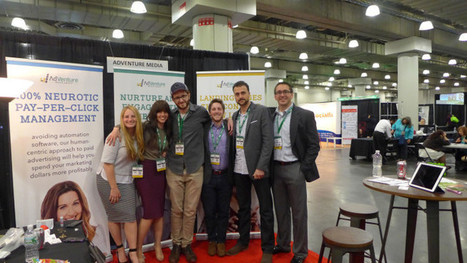
I’ve long heard that trade shows are dead. They’re expensive. They’re awkward. They’re often in places that aren’t easy to get to. So I ask you… does anyone actually come out of these exhausting events in the black? Our company recently exhibited at our very first trade show – a big milestone in our journey as an inbound and pay-per-click marketing agency. Armed with shiny new business cards and beautiful collapsible banners, we ventured from our home base on Long Island to the 2015 Small Business Expo at the Javits Center in Manhattan. I am an inbound marketer. I entered this field because I loved marketing but never wanted to make cold calls. As the Small Business Expo drew near, I had pondered if exhibiting at a trade show could be considered disruptive marketing, and thus goes against the basic principles of inbound. To be honest, this thought made me a little uncomfortable. I imagined the experience to be no different than that of the annoying salesman that approaches people at the Roosevelt Field Mall, clipboard in hand… And I never wanted to be that guy. But I was wrong. Trade Show Marketing is alive and well. As the attendees began to meander through the aisles around 9:30 a.m., I felt a little out of place. However, as I started talking to them I had a realization – Trade Show Marketing creates face-to-face inbound marketing scenarios. Consider this: Have you ever played The Sims? My siblings and I used to fight over the family computer so that we could spend hours playing with our characters in the mansions we constructed (via the rosebudcheat code, of course). The Sims takes real-life and simulates it in an online environment, whereas trade shows take online interactions and simulate them in a real-life, inbound marketing environment. Small business owners had to pay pretty-penny to attend this event, so while they may not have been specifically seeking an inbound marketing agency, they are aggressively seeking ways to improve their business. So instead of asking Google, they decided to walk into the Javits center that Thursday morning. Trade Shows are a weird experience. Companies will do just about anything to get people to stop at their booth. It’s almost pathetic at times. If you can pay Kim Kardashian to sit in a dunk tank at your booth, I’m sure you’ll have a line wrapped around the building. Too many companies make the mistake of attempting to attract visitors with a gimmick. In the same way that I don’t want to trick people into clicking on my ads online, I’d rather not have our sales reps wasting their time engaging with attendees that are only interested in dumping Kim Kardashian into a shark infested dunk tank (Oh yeah.. this theoretical scenario has sharks in the tank. Friendly sharks though, you guys). The companies with the spinning wheels and the dunk tanks are still playing the Cheesy Outbound version of The Sims. We are not. HubSpot has described the inbound process as four stages: Attract, Engage, Convert, and Delight. The Small Business Expo took this method offline and into face-to-face interactions with highly engaged potential leads. It would have been unrealistic for us to try and sign new clients at this event, so the purpose of our day at the trade show was to generate a list of quality leads that could be entered into our sales funnel. And thus, the inbound process began: Inbound Step 1: Attract We didn’t bring a raffle wheel, hire models, or stamp our logo on two thousand hand sanitizer bottles. Instead we brought a simple flier that was only picked up by those interested in our services.
Doesn’t this catch your eye? Most people walking by would at least glance at the funny looking monkey and internally ask, “What are these guys about?” They may have taken another second to examine the copy within the flier, and their eyes may have even glanced over to our display banners. We’ve now attracted them to our booth. This was a real-life example of someone stumbling upon our website or a social media post. At this point, many people would smile and walk away. That’s fine, they weren’t interested in what we do. While any one of us could have awkwardly chased them down and tried to sell PPC advertising to them… it would have been like pulling teeth. Inbound Step 2: Engage Thankfully, many people did stick around. These attendees fell into three categories: Those that are fully aware of pay-per-click marketing and are interested in exploring this service; those that are generally aware of digital marketing and are looking to grow their online business; and those that are a little in the dark about search engine marketing, but their interest has been piqued probably by the monkey or our great looks. All of these are fine. Small business owners have a certain fire to them that is absent from the rest of the corporate world. They are so eager to talk about their passions and ideas, and it’s enjoyable to listen. It didn’t take long to find out which of the above categories they fell into and tailor the conversation accordingly. Inbound Step 3: Convert The Small Business Expo had a mobile app with lead capture technology, and each attendee’s badge was printed with a QR code containing their contact information. After briefly talking to an attendee and mutually agreeing that a second conversation would be worthwhile, we scanned their badges and were able to add any notes. Inbound marketers often use contact forms to collect this type of information, but in our real-world inbound marketing scenario, it was even easier. Further, this step didn’t deter anyone that dreads filling out their contact info. Inbound Step 4: Delight A few days later we segmented our list of leads. The hot leads would be called immediately, while everyone else was entered into a HubSpot workflow. Shortly thereafter, they would receive an email from Isaac reintroducing ourselves and offering a free resource to download. Sound familiar? In the early 2000s when I was playing The Sims on a bulky desktop computer, real-life still took place offline. Today, our lives (or at least most of our livelihoods) exist almost exclusively online. It’s nice to mix things up every once in a while. All in all, AdVenture Media’s first trade show was a huge success.
|
|
Scooped by
Aditya Patkar
December 14, 2015 11:44 PM
|
In the digital age, the idea of heading to a trade show may seem a little old-hat – but there's no doubt about it; they still offer incredible potential. The numbers don't lie. CEIR's recent 'The Changing State of Exhibitions' report revealed trade shows to be almost unanimously beloved by marketers, with 99% stating that they offered 'unique value' that couldn't be unlocked via other marketing mediums. But, with trade shows making up such a large commitment in both time and resource, the challenge is clear: you need to do everything possible to maximize your return. So, in our latest article, we want to talk about how to make the very most of your trade show presence. Follow these steps and you'll get the right types of leads flocking to your booth, unlocking the many advantages of trade show marketing – networking, building new relationships, generating valuable, impartial feedback and, of course, driving more sales!
1. Do the work in advance One of the most common (and avoidable) mistakes you can make is to simply rely on random traffic heading to your booth. Did you know that 7 out of 10 show attendees actually plan their booth visits before the show? They usually know who'll they be visiting, and in what order. 45% of attendees visit only one exhibition per year and – while the good news is that this clearly offers you access to a unique audience – it also means that they'll typically be just as focused as you are towards getting a return from the event. So, in all likelihood, they aren't just going to turn up at the show and head to the booth that looks prettiest! The bottom line is that you're taking a huge chance by simply assuming the right people will find you on their own. That's why it's really important to conduct pre-event outreach. The first step is to get the word out to your existing contacts and prospects. Tell them that you'll be heading to the event and that you'd love to meet up with them if they're in the area or attending themselves. But you also want to liaise with the event organizers to target confirmed show attendees who might not have heard of your brand yet. Often, you'll find that event organizers are happy to help you promote your presence at the show, and – if you're lucky – they may even share the attendee list with you. This allows you to reach out directly via email, phone calls and direct mail. One tactic that often works well is to send out postcards with exclusive offers or discounts – but only if the lead brings the postcard to your stand. This encourages them to hold onto the postcard and to actively seek you out when they arrive. Start the conversation before the event – social media is a great way to do this – and continue throughout the show. Trade shows are a great platform to generate visual content and great photos – share pictures of your stand, your team, and attendees on Facebook and Twitter. By taking this approach and essentially 'making appointments,' you can ensure that – even if you enjoy less foot traffic than you were expecting – the event is far from a bust for you and your business.
2. Location, Location, Location Having said all that, a high volume of quality traffic at your booth clearly has the potential to turn a good event into a great one. And one of the key deciding factors is where your stand is actually positioned. Clearly, the best location will vary by venue, but there are some positions that tend to be highly coveted – particularly main aisles, entrances, ends of rows and corner spaces, which give you access to traffic from intersecting aisles. Interestingly, experts have suggested that, while Europeans tend to first visit booths positioned on the left, Americans go first to those located on the right. It sounds like a mediocre joke, but, remarkably, yes, this is linked to the side of the road we drive on! This is definitely worth considering. Of course, as we'll touch on in more detail shortly, it's not all about driving huge crowds to your stand. You want quality foot traffic and qualified leads, not congestion and chaos. So stay away from exits and entrances, concession stands and restrooms. Instead, you want to be at the heart of passing traffic. A good way to do this is to aim to be positioned along the major route to seminar rooms or exhibitions. 3. Invest in look and feel It's not the single most important factor, but the look and feel of your booth definitely matters. Of course, an awesome stand will help attract passing traffic, but – more fundamentally – that booth is a direct reflection of your brand, and needs to send the right message – welcoming, professional, slick, and on-message! There's plenty of exhibit design inspiration out there to help, and a plethora of stand design companies who can create solutions to fit most budgets. It's interesting to note that modular exhibit systems have become particularly popular in recent times, largely since they weigh 60% less than a traditional custom exhibit, making them much cheaper to transport. The look and feel of your stand extends, of course, to those who work on it. And here, it's all about common sense; stay stood up, ready to greet your prospects. Smile. Make eye contact. These rules should apply across everyone manning your booth.
4. Demonstrate your products Trade shows offer a great opportunity to physically demonstrate products to potential customers. 92% of trade show attendees say that their primary reason for attending is to look for new products – and, in fact, it's been the number one reason for 25 years. As an online merchant, this is clearly a rare and powerful opportunity to show off your products in person. It's particularly powerful if you have a new, exciting product to launch. Many attendees see trade shows as an opportunity to keep on top of what's happening in the industry, and you can create a real buzz by rolling out a new product in front of a potentially huge audience – boosting brand awareness and drumming up orders. 5. Harness the power of technology Technological advancements have changed many areas of business in recent years, and trade show marketing is no exception. The potential for technological additions to your trade show are almost limitless, and can help you deliver an unforgettable experience – from basic stuff like social check-ins and digital signage, through to interactive touch screens and even proximity marketing. A trade show represents a great opportunity to represent a demo of your website or product on a large LED monitor, or even provide a walkthrough demo - always a successful tactic at a trade show. If you carry electronic products, you'll want to have a demo of the actual products on hand. 6. Offer promotional giveaways and perks While you want to avoid cheap gimmicks (see point 7!) promotional items remain a go-to technique for many trade show exhibitors. After all, who doesn't love free gear – pens, t-shirts, bumper stickers et al? Clearly, there's a risk of handing out items to freebie-seekers who have no interest in buying your product – but industry stats suggest these people are generally in a clear minority. Apparently, across the board, as many as 81% of trade show attendees have buying authority and 46% occupy Executive or Upper Management roles. Ultimately, these are generally very inexpensive items. And, because they can give you a valuable head start when it comes to establishing conversations and building relationships, offering them is a no-brainer. They'll usually pay for themselves and that's why they're enduringly popular. There are other creative ways to bring people into your booth. You could consider offering working space and laptop charging points – always in short supply at a trade show – to bring people in. This seems counter-intuitive but will be appreciated by attendees and is an unlikely way to make a positive impression. Related: 11 ideas for cool giveaways 7. Avoid gimmicks Having said all that, you really do need to tread carefully when it comes to established trade show 'gimmicks.' 'Booth babes'...free popcorn stands......ugh. You have to remember that it's not just the size of the crowd, but the number of prospects in it. You may attract a crowd of hundreds wanting to get some free popcorn, but will they remember what you were exhibiting? Do they even care – or do they just want popcorn? Gathering a crowd at a trade show is very similar to running a competition online. You really need to structure and craft it carefully to reach the right type of people. 8. Generate Leads It's a great feeling when the traffic is flowing to your booth. But the next step is every bit as important – you need to get their details and turn them into leads. We could write another article altogether on this topic – but here are a few ideas to get you started. Of course, there are trade show staples like the business card in the bowl. Contests are a great way to entice people to part with their details, and choosing a tailored prize will help ensure you gather the right type of leads. One of the quickest and easiest ways to capture this information is by using badge scanning software. Many exhibitions provide attendees with badges which contain their essential lead information - this can easily captured either by stand-alone badge scanners or using badge scanner mobile apps. Many of the principles of online lead generation can be re-thought slightly to make them potent offline tools too. Most of us would accept that one of the best ways to generate leads online is to trade free knowledge for user details – and there's no reason why this same principle can't work at your trade show. If you're already investing in content creation – ebooks, white papers, guides, etc. - then why not hand them over to leads you generate at the trade show? You can send them the content by email or put it on a USB drive and hand it out physically. Final Thoughts In recent years, we've seen an explosion of new, fashionable ways to market your business. But trade shows – an old favorite – remain as successful as ever. Following the basic rules in this article is going to give you a great head start in driving relevant, targeted foot traffic to your booth. Make sure to spread the word about your presence at the trade show, both before and during the event – 'build it and they will come' is never the best policy! Do some research into the ideal location for your stand, and create a physical presence that is befitting of your brand. Show off your products. Use technology to deliver memorable experiences that really help you stand out. Give out freebies – but be sensible, and remember that, generally, quality comes before quality. Finally, share knowledge at the event.
|
|
Scooped by
Aditya Patkar
December 14, 2015 12:58 AM
|
Hosting an event requires some serious planning. Getting a head start ensures a smoother planning process with fewer hiccups along the way. Your event planning timeline should be broken down into stages. Each stage should fall into a certain timeframe from the start of the planning all the way up to event day.
6 to 4 Months Before the Event Yes, you should be planning at least half a year in advance if not more. This is the initial planning phase that will be the bedrock for the later planning stages. During this stage, you should have the following covered: - A tentative event date – have several dates available since your first preference may not be feasible based on venue availability. You can also use surveys to find out which dates would work best for prospective attendees.
- Two or more venues for consideration – consider factors like maximum occupancy, venue theme, availability of multiple rooms (e.g. kitchen, VIP lounge, briefing room). You can also use a venue finding service like Venueseeker.
- Inquire about the availability of your considered venues
- Acquire cost estimate (e.g. venue rental, catering, speaker fees) and have a budget in place – speak with venue administrators, catering companies, and equipment rental services to inquire about possible discount rates.
- Reach out to any potential partners or sponsors.
- Create your event event registration page early and choose the date you want it to “go live” and accept registrations.
- Depending on the size size of your event and your audience, you may want to send out a save the date to invitees as soon as your data and venue are finalized -- if this is a paid event, consider offering early bird pricing.
2 to 4 Months Before the Event By this time, you should have a venue and date secured. This is where the real planning and outreach begins. Include the following to-dos on your checklist: - Determine the event schedule -- You should have a tentative event schedule which may include things like check-in, speakers, workshops, meals, presentations, networking breaks, and closing.
- Coordinate event schedule and timeline with any partners or sponsors – They should be in the know, and any requests and inputs they provide should be taken into account.
- Determine what the venue provides and does not provide – Will you need to rent additional equipment? If so, determine what you need, where you’re going to rent them, and the estimated cost.
- Finalize any partners or sponsors.
- Determine the goals of your event and discuss with key stakeholders.
This is also the phase where you need to plan your event’s marketing, sales, and PR. You should have a separate checklist devoted entirely to the marketing and campaigning, which should include: - Event announcement via social media.
- Event invitations sent via email with link to registration page.
- Devise a social media campaign – This is where you come up with an event hashtag, send out tweets, email newsletters, and announce VIP/early bird specials.
- Determine the branding of your event with the visuals, messaging, and tone.
- Order any physical marketing materials like banners, collateral, giveaways, etc.
1 to 2 Months Before the Event The event is getting closer now, and most attendees should have already registered. Most of the logistics at this point should also already be complete. At this stage, you should begin the following: - Designate staff roles – Who will be handling check-in? Who will be manning tradeshow booths X and Y?
- Determine which sales reps will be attending the event and get them trained on your event technology.
- Review the budget to make sure overhead cost figures are finalized and submitted to the accounting department.
- Have a plan B for specific scenarios. You should have a backup plan if, for example, the guest speaker cancels last minute, or there are technical issues during a presentation.
- If you have guests traveling from overseas or across state, double check with them to make sure their traveling and lodging are all set.
- Plan equipment setup – Where will the signage displays and other electronic equipment be positioned? Are there power outlets in those areas?
Your event marketing campaign also needs to tighten up at this point. Beyond simple social media posts, you should also: - Continue to emphasize that registration is open but could fill up at any minute.
- Create social media contests with free giveaways. Tickets can be the prize if you still have plenty left.
- Submit press releases with more event info, such as who the guest speakers will be, and the type of workshops that will be available.
1 Week Before to the Day of the Event 95% of the planning should be completed by this point, so consider this stage as more “preparation” than planning. Nevertheless, there is always more to be done all the way to the day of the event. For your final checklist, be sure to address the following: - Double check with guest speakers, catering company, equipment rental service, and venue administrator to make sure everything is in order on their end.
- Send a final reminder to all guests who confirmed their attendance with important logistics information like directions to the venue.
- If there is still space available for more people to register for you event, it doesn’t hurt to send out last minute invitations.
- Remind attendees to download your event app if you are planning on using one.
- Coordinate with the venue to confirm logistics including venue staff who will on onsite.
- Plan post-event follow-up, such as sending a thank you message or a discount to attendees for their participation.
Meticulous Planning Pays Off Event planning is much easier when you have a timeline to follow. This way, nothing that needs to be planned slips through the cracks and ends up having to be completed at the last minute. Sure, it may seem a bit nitpicky, but having every angle covered during the planning avoids problems later down the road. Your event planning timeline may look a little different than this one, but what matters is that you take the time to make a checklist of all that you need to accomplish and attach a timeframe for when tasks should be completed.
|
|
|
Scooped by
Aditya Patkar
December 25, 2015 10:43 AM
|
Planning for an event, conference, or trade show can be a complete nightmare. There are so many moving parts. You’ve finally decided on your marketing plan, trade show giveaways, and your apparel for your upcoming event. Now you just need to make everything happen. This includes choosing, ordering, and managing the process of your trade show giveaways. I've got 3 simple tips to help take some of the pressure off. Looking Good (Make that perfect) Nothing can be more frustrating than the endless chase for print ready files or worrying about the delivery of your order, especially when you’re under the gun to hit your timeline. File FormatWhat kind of file do I need? For most promo products and screen printing on apparel, EPS or AI files typically work great. In some cases a high-res "editable" pdf file will suffice, however EPS or AI files are always preferred. Here's a challenge that we do run into with EPS and AI files, unless you have graphic software like Adobe Illustrator, Photo Shop or Coreldraw. You can’t open and see these files. So in many cases, you are operating in the "dark". Tip #1 If you are working with a graphic designer, always ask for a jpeg or pdf, in addition to the EPS or AI file. There should be no extra charge, but it allows you so to see the art, so you and the printer or promo manufacturer can make sure the files are consistent. It sounds simple, and it is, but it will help expedite things trememdously. Graphic Design Help What if I only have a JPEG and I don’t have access to a graphic designer? In the wonderful world of the internet, there are now many online graphic design service providers, that will do basic graphic design work at incredibly reasonable prices. They usually can turn your request around in fewer than 24 hours. Tip #2 Find an affordable graphic design service to recreate a jpeg file as an EPS or AI file and/or clean up low res art and convert it to high res for printing. Someone can do it locally for you or you can search online for an affordable service. I know that everyone is stretched thin, but having someone who can give you good art will make a world of difference. I've talked to both of these services (never used them) but really like their concepts. If you don't have in house graphic design, both are very affordable. If you need some help on graphic design services, please let me know, I'd be happy to give you some other options. Rely On Your Trusted VendorWhat should you expect from your vendor? It's very simple. The vendor doing the job for you needs to go the "extra mile" to ensure that your project is perfect. Tip #3 Make sure your vendor is a trusted source who will tell you "the good, the bad, and the ugly." In other words, they will go the "extra mile" for you in all aspects of their jobs. Recently we had a large t-shirts from one of our largest clients. The design was going to be a "bear" to work with. We recommended some major changes, but the design had gone through committee after committee for approval. There was no turning back! Our challenge was to take the art and make sure that the chosen design looked spectacular. I NEVER underestimate the importance of the people who work with us. They are just really good at doing what they do! They make my life so much easier. We went to work. - We received the file in an AI format.
- Our graphics team analyzed the art and came back with the following issues:
- Some of the fonts were not outline fonts
- There were a combination of PMS colors and CMYK colors and a whopping 10 different colors
- The background of the art was not useable for printing
We fixed what needed to be fixed and ultimately we made "lemonaid out of lemons." We've been working with this client for years. We know how they operate and we also know that they trust us. So rather than go back to our client, we made the necessary changes to the artwork (without changing the design concept) and showed them a proof. The results: We were able to take it down from 10 colors to 6 PMS colors which saved on screen printing costs for the client. We provided had useable art files that we gave to the client for future reference. We still kept the integrity of the design, so there was no noticeable difference in the t-shirt art vs the original art - The t-shirt came out great and our client was ecstatic.
The "Extra Mile" (but what you should expect from your vendor) - Before we ran the full run of t-shirts we ran 1 sample for our client, just in case.
- We poly bagged each t shirt for easy distribution at our client's trade show booth.
- We labeled every box on the outside with the size and color.
- Delivery at large conferences can be challenging, so we managed the entire process for them, including who signed and when it was delivered.
Preparing for any event has it's share of challenges. I'm sure that there are other ideas that would make your life easier. Hopefully these 3 tips will go a long way in helping.
|
|
Scooped by
Aditya Patkar
December 24, 2015 11:40 AM
|
Trade show season truly is an exciting time of year. Big ticket shows like CES and Mobile World Congress give an early preview of the cutting-edge technologies and cool consumer gadgets that will change the way people live and work in the coming year. But for anyone that has attended a large scale trade show (or two) on behalf of their company or client knows that it’s an equally stressful and hectic time of year. But not to worry! Here are few tips to help set up any team for success (and less stress) during this year’s trade show season: Pre-show: - Create a work back schedule
Things will change and last minute surprises will always happen, but creating a work back plan ahead of each event will help prepare and organize teams and resources. It will give individual team members a clear overview of when ramp up will begin, as well as those weeks when things will get (very, very) busy so they can best prepare. - Start the conversation with journalists early
Scope out their Twitter profile or casually ask them when in conversation to see what shows they are planning to attend this season. - Build the shell
Create templates for press releases, spec sheets, messaging documents and other press and marketing materials so they are ready to go when ramp up begins. It might seem like a small to do, but can be extremely helpful when things really get going. - Get social buy-in early on
Social plays a HUGE part at trade shows and events. It will be important to get key executives and other attendees on board with social early on. For key executives and speakers, create social plans to be approved ahead of time so they can easily tweet onsite – or have their admins tweet for them. Also, for executives and personnel who aren’t as experienced or comfortable with social, create a guide with tips and best practices on how to engage and represent the brand on social media while at events. During: - Designate Team Leads
Activity at trade shows and events can move pretty fast and get hectic, especially on the PR side, so it’s best to have team leads to handle different activities such as routing incoming press inquiries or monitoring social. Designating a lead for each activity will help ensure the flow of information is streamlined and organized and that the team’s time and resources are being used effectively. Post-show: - Assessment
Create a recap document that captures the whole team’s feedback on what worked well and what didn’t in the planning process and what can be improved on for the next event. Be sure to review as a team before starting to plan the next event so everyone is on the same page. - And of course…celebrate!
Get the team together for lunch, drinks or dinner to celebrate everyone’s hard work! Whether you’re a trade show veteran or making your debut at a key industry event, the process can come with some curve balls. However, these tips and tricks can help ease the stress out of the process, and now more than ever is the time to make sure these preliminary steps are taking place. From start to finish, these tips should help set up any brand for success!
|
|
Scooped by
Aditya Patkar
December 23, 2015 9:38 AM
|
Choosing to exhibit at the right events or trade shows is a large contributor to your ROI and success. The right events will have the target market you’re looking for and can also help you see the competition that you face in your industry. Many regions will offer lists of the top trade shows, organized both by location as well as by industry. Don’t rule out exhibiting locally, and don’t rule out travelling as an option either. Keep your options open so that you can find the right show for your objectives and your trade show budget. Consider the following tips when choosing your next exhibiting event: Budget Exhibiting isn’t cheap, so it’s important to understand what you can afford and what you need to be able to afford to make the event worthwhile and meet your goals. Budgeting for a trade show entails multiple facets, so plan ahead and understand what you need for marketing, promotions, staffing, giveaways, event fees, and of course, your exhibit. Know Your Audience Understanding what motivates your consumer demographic plays a major role in all of your marketing initiatives and success. The same holds true for your trade show exhibits. Many companies assume that their targeted audience will only attend functions specific to their industry; however, this is simply not true. Consider various local events; these events can get you in front of the right crowd without all of the competition found at an industry-specific function if you’re looking to start with the intention of more exposure. Walk a Show as an Attendee Perhaps the best way to determine if a function makes sense for your organization is to participate as an attendee. The cost of an entrance ticket to an event is a fraction of the cost associated with becoming an exhibitor. You will have the chance to walk the room and see firsthand every opportunity offered at a specific function to decide with certainty if it’s worthy of your business in future years. These are not all of the factors it takes to know which show is right for your exhibiting efforts, but take these tips as a starting point. Communicate openly with your sales and marketing teams to collaborate on objectives, needs, and other factors that drive your exhibiting endeavors. You’ll find the right shows for you.
|
|
Scooped by
Aditya Patkar
December 22, 2015 8:31 AM
|
The 2016 trade show season is upon us, so if you are planning to attend, sponsor or exhibit at a trade show and haven’t started planning yet, it’s time to start. Trade shows are a big marketing investment and meticulous planning is required in order to make it worth the time and money. A successful trade show plan needs to be started at least six months in advance of the show, and in some cases, depending on the scale of the show or your level of participation like speaking engagements, planning may need to kick-off a year or more in advance. To help you out, we’ve created a Trade Show Booth Planner, which you can use as your overall guide to planning and make sure your marketing team stays on task, on time, and on budget. Start with developing your own spreadsheet, event deadlines always vary and it’s important to keep track of each trade show event individually. For most trade shows, there are a lot of things that need to be ordered in advance like furniture, electrical and internet access, as well as shipping arrivals. You usually get “early bird” discounts if you order before a certain date.Take advantage of planning ahead and you will be able to stretch your trade show marketing budget even further! Here is a guide to start your process: Annual Marketing Planning • Determine marketing objectives for the next calendar year. • Evaluate trade show schedule in light of target markets and product launches. • Research new shows in new markets. • Assess existing exhibit materials for wear and tear on booth components and graphics. • Set annual marketing budget. • Allocate budget dollars for all trade-show related activities and expenses. 10 to 12 Months Before Each Show • Determine the size of your exhibit for each show based on the show’s importance. • Reserve booth space as soon as possible. • Reserve hotel rooms early for popular shows. • Set measurable goals for the show. • Begin planning the theme and determine the booth components needed. 8 to 10 Months Before Each Show • Study the exhibitor manual and its show rules and regulations in their entirety so that you know what can and cannot be done at each show. • Review the show deadlines page and establish a system of reminders so that you do not miss any crucial deadlines and take advantage of any early-bird discounts. • Plan and book hospitality events and extra meeting rooms as needed. 6 to 8 Months Before Each Show • Evaluate current exhibit properties and determine whether replacement components or a new booth design are needed. • Begin working with an exhibit firm on new booth designs and layouts, including new graphics. • Work with your exhibit firm on additional services, such as shipping and installation/dismantle, or contract for those services directly. • Plan and schedule publicity and pre-show promotions, such as mailers and client invitations. • Select and register booth staff and book airline tickets and rental cars/transportation. • Create and order space for show advertising, such as exhibitor guide, trade magazines, and outdoor advertising. 4 to 6 Months Before Each Show • Determine products to be displayed or other booth handouts, such as brochures or promotional items. • Select and order promotional items. • Schedule shipping. • Compile and/or purchase targeted mailing lists. • Design lead cards, pre-show mailers and booth literature to work together to reinforce your brand and your show theme. 2 to 4 Months Before Each Show • Order show services well in advance of the deadline: electrical, carpet and padding, booth cleaning, security, and more. • Order equipment needed such as a/v, computers and furniture. • Set up your exhibit as a trial run in advance of shipping. • Print mailers and handouts. • Write and distribute news releases according to publication deadlines. • Create and print press kits and schedule any press conferences at the show. • Develop lead tracking and follow-up plans. • Train booth personnel and practice presentations. • Schedule booth to ship to advance warehouse. • Create an Emergency Kit But bottom line – start the planning process NOW! As an example – the CES 2016 Exhibitor Manuals are now available online and you can review all your forms and put your plans in place – if you do this now – they are saying that most official CES vendors provide savings of up to 40 percent for orders placed in advance. This will make you twice as productive and provide a wonderful savings to your marketing bottom line. - See more at: http://www.tsnn.com/news-blogs/make-your-trade-show-plan-twice-productive#sthash.g1uOQLw2.dpuf
|
|
Scooped by
Aditya Patkar
December 21, 2015 9:27 AM
|
When we first started this business, a client would contract with us to build a trade show display. They never gave much thought to how the booth design would affect traffic flow, for example. Branding wasn’t so much of a thing back then, either. So every now and then, an executive would say something like, “My wife has a nice blue dress. Let’s make the booth that color.” Modified MOD-1335 iPad Kiosks with Graphics and Locking Clamshell Suffice it to say there wasn’t much trade show technology in the trade show world at that time. And science hadn’t even made a toehold when it came to capturing leads. An exhibitor went to a trade show with a peculiarly blue booth and a stack of lead cards, and pretty much hoped for the best. There were no badge scanners (heck, badges weren’t even computer-printed). Each salesperson would fill out a lead card differently. So some would be complete, while others were sketchy on the amount of information collected. At the conclusion of the show, the sales manager would gather up all the lead cards and stick them in his luggage. Once he got back to the office, he’d distribute the cards to his sales force for the requisite follow up. Of course, back then, technology wasn’t driving the sales process either. So salespeople cherry picked the most promising leads. Or they made sales calls on businesses that were closest to the nicest golf resorts. You get the idea. Then, technology intervened. Today, trade show technology is a necessary and important component of shows and exhibits. We use technology from the beginning of the show registration to lead management after the show. And everywhere in between. Its place in the trade show environment has morphed over time. This is thanks to new developments and the specific needs of exhibitors. Here are just a few examples of how technology has found a place on the trade show floor over time: - 1990: video walls
- 2000: flat screens
- 2005: QR codes and RFID tags
- 2008: virtual reality presentations
- 2010: iPads and other tablets
Add to this list: - badge scanners
- smartphone apps
- cell phone chargers
Charging Stations With Graphics - GPS floor plans
- Touchscreens and other CSI-like advances
There now are any number of ways to incorporate technology into your trade show exhibit. Almost every technological advancement in the trade show field is used to increase attendee engagement. We give attendees more or different things to look at or interact with. And to a point, these trade show technology advances have served those intended goals. Yet, there’s a caveat to any technology. Technology is an adjunct to—not a replacement for—knowledgeable personnel. With the right people in place, technology can help exhibitors reach their audience. And ultimately, to register and track leads and close sales. But technology itself will not make your trade show booth a success. Assuming that it will can cause problems. This assumption may cause exhibitors to skip the real work. Their job is to engage attendees and move them toward the next step in the sales process. You can use a large flat screen monitor with a looping sales presentation to capture the attention of passersby. But almost all sales are a person to person event. If you leave the sales job to your technological tools, you may as well stay home and hope they visit your website! Today, interactive kiosks in your exhibit allow attendees to surf through your catalog. Often they can build their own version of your product in real time using a touch-sensitive screen. Or experiment with your product in real time. The use of tablets has spread like wildfire in the trade show industry. Currently, two thirds of exhibitors are using them. Do you remember when Facebook was something your kids used to share their pictures from the homecoming dance? Today, it’s a business powerhouse. The same is true with YouTube. Youtube was once just a place to watch videos of hapless dads taking a baseball pitch to the groin. Now it’s become a portal for how-to videos that give your customers more ways to use your product. Here’s my thinking on this subject: Use technology to the greatest extent possible. But use it to help your staff. Don’t divorce the technology in your booth from the human element. If there’s a staffer standing next to that kiosk, he or she can ask qualifying questions while the booth visitor tries out a new design. MOD-1430 Charging Station Coffee Table for trade shows You can combine technology and the human element the same way on Facebook, YouTube or other social media platforms. When used effectively, technology should extend the reach of your staff. Use it to enhance your ability to persuade attendees. When you start relying on technology alone to make a trade show successful, you might as well save the cost of the trade show and stay home. Trade shows are unique, specifically because they harness the power of the human element. Trade shows bring together hundreds or thousands of people that are interested in specific types of products or technologies. Most of them are actively looking to solve a problem. All you need to do is figure out their problem, and determine if your product or service will help them. Technology won’t do that for you. You need to reach that critical balancing point between technology and humanity. That will make your trade show exhibit successful. Attract more people using the technological tools. And use that technology to give them more reasons to stay and interact with your staffers. Those staffers will be starting relationships with the attendees. They’ll capture information about each prospect. The info AND the budding relationship will make follow-up after the show faster, easier and more accurate. When I stop and think how much technology has changed this business over the time I’ve been involved in it, I’m amazed. The things we take for granted now would have seemed like science fiction back then. But the robots haven’t taken over yet. So just remember, don’t let trade show technology take over your job yet either. I doubt it will ever replace the importance of people talking to people. Those personal discussions will probably always be the primary factor in succeeding on the show floor.
|
|
Scooped by
Aditya Patkar
December 20, 2015 10:18 AM
|
OK, you just got back from a long week on the road at your favorite trade show. Now what? The number one, patently obvious thing to do is direct sales team follow up with hot leads. In a previous post we cited a study that found that less than 70% of companies have a formalized plan to follow up after a show, less than 50% follow those leads through the buying cycle, and less that 30% track trade show ROI. So we do not take for granted that companies do these basic tasks after a trade show. The key principle when following up a trade show is speed. Do not wait for long to follow up. Be there immediately after the show with the resources and information you promised the lead at the show. Build your credibility with your speed and thoroughness of response. I once led a team launching a major new product in a competitive field. Our key strategy was the speed of lead and sample request response. Our speed and high quality responses were the key competitive advantage used to launch the product, and it worked. Post-show key lead management tasks include: - Follow- Begin by following leads on LinkedIn and social media - use a tool like Sidekick or Rapportive to find them
- Delegate - Assign a specific follow up person to each lead
- Prep your in-house resources - Make sure sales and marketing knows who is doing what - who is calling and who is nurturing
- Score your leads - Create a priority or lead score based on where the lead is in the buying journey
- Segment your leads - Have segments based on urgency of follow up, know the best prospects and treat them accordingly
- Measure the ROI - use automation tools and CRM to the measure ROI of the show
- Identify influencers and connectors - Make sure you list the influencers and connectors you worked with at the show for a full ROI picture
- Build a schedule for contacting leads over time - Set reminders to follow up with these contacts and build value with each contact
- Add leads to your mailing lists - All leads get top level company communications
- Have a series of offers and emails that nurture them along the buying journey - Continue to be helpful and show your commitment to helping them even if they are not ready to buy now
Successful show follow up starts well before the show and is the best way to ensure a strong ROI from your trade show investment. Not sure how to craft your trade show plan, check out this post to see what your pre-show prep should include.
|
|
Scooped by
Aditya Patkar
December 19, 2015 10:17 AM
|
Successful trade show marketing campaigns utilize a wide variety of techniques to capture the attention of event-goers and prospects pre-, during and post-show. Email marketing–like its predecessor direct mail marketing– is fast becoming the preferred cost-effective way of outreach for event marketers. Even with the rise in social media’s influence on the marketing world, email marketing is still king. This post will advise you on some of the best practices when it comes trade show marketing email campaigns and will help you devise the best game plan for your brand.
Your Demographic Target Demographic Before you draft your first email make sure that you are aware of who your target audience is. Is your target demographic likely to be receptive to your message? Will your target demographic be open to email communication? Are the members of your demographic buying influences within their organization? The best way to determine the answers to these question is by forming a buyer persona of your ideal customer. Outline their likes, dislikes and overall temperament. Once your buyer persona is complete, you will be informed of the best subject lines, calls-to-action and promotions to use when sending out emails. Also, by nailing down your demographic you are also maximizing the effectiveness of your event marketing campaign which should in turn lead to a greater ROI for your organization. Send Emails Throughout the Trade Show Marketing Cycle
The trade show marketing cycle goes as follows: Pre-event, in-event and post-event. Each one of these phases is critical to over campaign success. Sending emails strategically during each phases of your trade show marketing campaign will help boost your engagement numbers and overall show ROI. Pre-Event Emails: The pre-event phase of a trade show marketing campaign is often seen as the most important and as such the emails you send during this period will set the pace for the rest of your campaign. When planning pre-event emails ask yourself: What offer, resource or promotion will generate the most pre-event buzz around my brand? In-Event Emails: Emails sent during a trade show need to be drastically different from one sent before it. Your main goal of in-event email is to drive traffic to your trade show booth. That being said, the same principles apply, conceive of an engaging message to share with your recipients, draft a killer subject line and make sure that your email has a call-to-action. Consider offering special giveaways to event-goers who received an email, extend one-on-one consultation invites or offer free limited-time product samples. Post-Event Emails: The emails that you send post-event are important to your overall post-event marketing efforts. Sending personalized emails to prospects your team connected with on the trade show floor is a great way to show them that you valued their time and that you are interested in their needs and concerns. Also, consider sending surveys to prospects that visited with you at your event. You can ask them questions regarding your exhibit, booth staff and where they think you can improve. You can take this data and use it to strengthen your future trade show marketing campaigns. Consistency Successful email marketers understand the importance of testing out different email approaches and the trial and error nature of email marketing. Not every email you send will be a home run. In fact, you may have a few duds before you finally hit your email marketing stride. However, that doesn’t mean you should give up, nor does it mean that what you are doing isn’t worth your time and effort. Testing out a variety of tactics and strategies with your audience is a good exercise in helping you identify which emails they are most receptive to, hone your skills as an email marketer and help you drive consistent conversation and buzz around your trade show marketing campaigns. When used properly, email marketing is one of the most effective tools in an event marketers’ arsenal. As with every facet of event marketing, proper planning is key. So plan, execute and review as often as possible.
|
|
Scooped by
Aditya Patkar
December 18, 2015 12:11 PM
|
Trade shows require such a significant investment, it’s essential to measure not just how much you spend on a tradeshow but also how much you earn as a result of the event. From renting floor space to designing and building your booth, the costs involved in exhibiting at a tradeshow can quickly add up. Even a small trade show can cost your business a huge sum, particularly if it’s located in another city. To effectively accomplish your goals while at the show, you must plan accordingly. Benefits of using a metric to measure Trade Show Several businesses make the mistake of setting vague, incalculable goals before tradeshows. Without a clear and quantifiable goal, it’s impossible to tell whether your tradeshow was a success or a failure. Good goals include lead generation targets like— - Generate 50 new sales leads
- Get 25 business cards from CEOs
In order to have a comprehensive evaluation of the trade show, we feel that you need to measure the following- Segment 1: Trade show Information The first section should have information about the trade show in order to do historical analysis and future planning: - Date
- Location
- Target audience
- Competitors
- Number of exhibitors
Segment 2: Trade Show Costs The second section is a breakdown of trade shows expenses. This help you in evaluating the cost associated with each trade show and help in fixing budgets and finding out variances by city or market. - Exhibit booth
- Travel and expenses
- Sponsorship
- Booth shipping
- Promotional items
- Collateral
Segment 3: ROI Measurement The third section is a breakdown of quantitative data collected during the show that pertains to ROI. This section will help you prove the worth of the show to your company and provide you with strategic information in order for you to make any decisions before, during, and after the show. This data will enable you to determine the success of the trade show and help plan future trade show. - Cost Per Lead (CPL)
- Total number of opportunities created
- Total number of leads created
Segment 4: Grading the trade show The fourth segment is getting feedback from the sales and marketing team based on their experience at the show. After the data has been compiled grade your trade show. This will help in doing your planning. The grading system could be like- - Grade A is equivalent to exhibiting/sponsoring again.
- Grade B is average – the show should be placed in the consideration pile.
- Grade C is below average – this show should not be in the consideration pile.
Pay close attention to your tradeshow metrics and return to them every month to see whether you’ve made progress. The more you measure, the more you’ll understand about the value of each tradeshow you take part in.
|
|
Scooped by
Aditya Patkar
December 17, 2015 9:01 AM
|
When you are on an event, adrenaline and motivation are through the roof. You talk with lots of people, receive valuable feedback and hear promises of future orders. But as the trade show ends and you return to your office, what happens? In average, it takes 7 days for companies to follow up on leads collected on fairs. It means that between the time you meet with a potential customer and the time you send a follow up email, 7 days have passed. In many cases, there is no follow up at all and the business cards end up in a shoebox somewhere. Exhibitions are very costly – in both time and resources. Organizing the event, promoting it, preparing the samples and paying for the booth is a very time & money consuming exercise… and all the efforts are wasted when no business comes out of it! Let’s start with instant follow up Think about it: the person you’ve met on the fair has probably met with a hundred other suppliers such as yourself. Do you think he will remember who you are a week after? Probably not. The best way to handle follow up is to start with an immediate thank you email. Just after your discussion, send a short email with basic background information (your website, catalogue or even pricelist) to your prospect to make sure he will remember who you are. Befaster than your competitors and don’t let promising business fall behind! Continue with thorough follow up The quick introduction email is a great way to make sure your prospect remembers you, but it won’t be enough to convert him. As mentioned, traditional businesses take an average of 7 days to send a follow up email, if any. You should do this right away and take this speed advantage to take market shares from your competitors! If you have recorded your customer information correctly at the expo, you should go back to the office with a complete list of leads. Don’t delay and send a personalized email to each of them as soon as possible and as precisely as possible. Take elements from your notes to remind them of your earlier conversation and provide them with proper answers to their business needs. The right way to record data and send instant emails We all know that time is key on exhibitions. You go from extremely busy times when you must juggle with several visitors to idle times when you have literally nothing to do.You certainlywon’t have time to write detailed emails for each person you meet. Luckily, there are some tools out there that simplify this aspect of trade shows! myfairtool enables you to prepare standard dynamic follow up emails ahead of time and simply send them each time you meet a new user. All you have to do is record digitally, from your laptop, tablet or even smartphone, all your prospect details along with some comments based on your discussion and your follow up email will be sent instantaneously. Once you are back to the office, you will be able to download a list of leads data collectionand manage deeper follow up to convert them into valuable customers.
|
|
Scooped by
Aditya Patkar
December 16, 2015 8:58 AM
|
At the end of your trade show, you’re going to look back and evaluate all of the decisions you made to execute the show. You’re going to look at how much money you spent, did you go over your budget? You’re going to look at any growth your social media channels experienced, how many new likes and followers did you get? You’re going to look at how many leads you captured, how many of those leads are convertible to spending customers? Some of these you have direct control over. Others, like the quantity and quality of leads captured are influenced heavily by the people capturing these leads. Did you staff your booth with real employees, or were they contracted staff? We all know that leads are what makes exhibiting at a trade show worth the money. Here are some great ways for training your staff to qualify leads from a trade show exhibit:
Unless you are exhibiting at the type of trade show geared towards sales (most are not), encouraging your staff to sell to attendees will be futile. Most people who attend a trade show are there to learn about an industry, see competing new products/services, make industry contacts/relationships, listen to a seminar and grab some free fun stuff! Considering the non-purchasing mindset of attendees, attempting to sell to them could hurt your chances of developing that relationship. Instead, encourage your staff to have more casual conversations with guests. Effective sales representatives listen more and talk less. Your staff should focus on the leads situation and desires to identify what they really need. This allows them to discover their underlying problems and relate to the customer. Once this rapport is developed, it’s much easier to convert a lead to a sale. Rather than handing a guest a contact capture form on a clipboard, have your staff fill the forms out for the guest. This casual approach to data gathering makes for a less intrusive experience. Trade shows are notorious for aisle sharks. You know the people, the ones who stand two feet outside their booth into the aisle obnoxiously intimidating people to step into their exhibit and look at their product. Many old fashioned sales managers believe this is the best way to make a sale…”Grab them before anyone else does!” Instead, take a different approach, train your staff to approach people in a non-intrusive manner. People don’t want to be forced into your exhibit, they certainly don’t want to feel pressured to buy. This is a great example of a time to utilize a live promotion at your booth. About the author: William Hall is a seasoned business coach specializing in branding, social media and promotional events. William has spent his career teaching businesses of all sizes how to stand out in the crowd while using marketing dollars most effectively. His clients are continuously thankful for his out-of-the-box ideas that lead to increased revenue, more clicks and a bigger online presence. - See more at: http://www.tradeshowmarketing.com/trade-show-staffing#sthash.Aw36Vsbd.dpuf
|
|
Scooped by
Aditya Patkar
December 15, 2015 9:45 AM
|
I like to think that demand generation can be described like an umbrella—an umbrella of marketing initiatives that get prospects and customers excited about your offerings. Demand generation can help you expand your reach into new accounts and regions, create a buzz, and build greater existing customer relations. Effective demand generation creates touch points throughout your entire sales cycle, decreasing the time it takes for a prospect to become a customer, and building long term buyer-seller relationships. Social media is one of the many facets of demand generation with growing importance. Social media provides a way for you to reach your customers in real-time, listen to their pain points, and get your message across at scale. These stats provided are geared towards helping you organically create demand and influence on social media. Now, the stats you have all been waiting for… - Social media produces almost 200% more marketing leads than trade shows, telemarketing, direct mail, or PPC. (Source: HubSpot)
Keeping this staggering number in mind, here are some important social media quotes that back up this notion. - By spending as little as 6 hours per week, over 66% of marketers see lead generation benefits with social media. (Source: Social Media Examiner)
- Social media lead conversion rates are 13% higher than the average lead conversion rate. (Source: HubSpot)
- 74% of marketers who spend 40+ hours using social media per week earn new business through their efforts. (Source: Social Media Examiner)
Not sold on giving social media your time and budget? Consider this… 5. 58% of marketers indicate that their social media efforts have generated leads. Social media produces almost double the marketing leads of trade shows, telemarketing, direct mail. (Source: Business 2 Community) 6. 67% of Twitter users are more likely to buy from the brands that they follow on Twitter, and 79% of those users will recommend those brands. (Source: Search Engine People) For those who have dedicated program spend, statistics show that a diversification across popular social media really can bring in new business. More tips and tricks Want to get a strong start to your social media strategy? Start blogging. If you are already blogging, keep it up, and consider increasing your cadence. Here are some great stats to inspire your blogging efforts. 7. B2B companies that blog only 1-2X/month generate 70% more leads than those that don’t blog at all. (Source: HubSpot) 8. Companies that increase blogging from 3-5X/month to 6-8X/month almost double their leads. (Source: HubSpot) By taking the right steps to improve your social media presence, you can also save on acquiring new customers. 9. U.S. inbound marketers spending more than $25K per year on social saved $14 dollars for every new customer acquired vs. those relying on outbound strategies. (Source: HubSpot) Hopefully these 9 insightful stats have given you the motivation you need to increase your social presence! - See more at: http://www.everstring.com/blog/9-social-media-stats-that-all-demand-generation-marketers-should-know/#sthash.uWR54DcV.dpuf
|
|
Scooped by
Aditya Patkar
December 14, 2015 10:01 AM
|
Past exhibiting experiences have taught companies lifelong lessons they can impart to others and, most importantly, take to their next tradeshow. One of these key lessons is that it takes much planning with the right partner to implement an effective tradeshow marketing program that keeps attendees engaged. In 2013, SuccessFactors, a provider of cloud-based talent management software, brought out the big guns to generate leads at HR Tech Conference in Las Vegas. The company built excitement at its booth with performances by Cirque du Soleil acrobats, an autograph signing by baseball legend Reggie Jackson and a rock climbing wall. By the end of the show, SuccessFactors had generated 400 leads, but it had strived for more. SuccessFactors exhibit designed by Group Delphi After SuccessFactors partnered with production and exhibit house Group Delphi in 2014 to improve its tradeshow marketing program, the company discovered why it hadn’t generated more leads in 2013. The booth activities were individually presented, rather than connected to the brand and theme of the exhibit. With this lesson learned, SuccessFactors returned to the 2014 HR Tech Conference with a 40’ x 50’ experiential environment produced by Group Delphi. This time around, the company generated 739 leads and attracted 3,500 people. Not only did the 2014 exhibit tell a story, but also the attractions tied into SuccessFactors’ theme “Start anywhere. Go everywhere.” Group Delphi Director of Client Strategy Charlene Soelter knows first-hand how to design experiential environments that engage attendees and build booth traffic. As she did for SuccessFactors, Soelter offers best practices for exhibitors hoping to avoid making costly missteps in their tradeshow marketing campaign. - Choose Creative Partners Early in the Year
As it developed its new campaign for 2014, SuccessFactors sought the expertise of Group Delphi. This action proved beneficial for SuccessFactors, according to Soelter, because it prompted earlier communication and allowed Group Delphi to better understand the client’s needs. “The earlier you bring in a creative team, agency or exhibit house, the better. We looked at how the campaign could be rolled out into a 3D environment. Everything that developed after that was tied into the physical experience,” she stated. “Three dimensional environments have to be approached differently from an ad campaign.” She added that the collaborative process with SuccessFactors started with these encouraging phrases that drove results – “Let’s start early. Let’s define the theme. Let’s come up with a cohesive experience to tie all parts together.” - Use a Consistent Theme Throughout the Show
The theme of the booth should flow throughout the environment during the entire conference, not just one day, according to Soelter. Every 30 minutes, conference attendees witnessed the choreographed movements of Cirque du Soleil acrobats who used the SuccessFactors booth as their stage. The performances were seen live inside the booth and broadcast on a 30’ projection screen. “We started from a performer’s perspective as he is running. There was a backdrop of trees behind him. At one point, he’s outside his home. The backdrop changes — he’s in a big city and then he’s in outer space,” she explained. The changing backdrops reinforced how SuccessFactors’ software suite allows its users to “Start anywhere. Go everywhere.” Acrobats also dressed in costumes that correlated with a location. For example, one performer dressed like an alien, which complemented the space backdrop. - Design for the Customer Experience
The best experiential environments, according to Soelter, place the theme of the booth at the forefront, not how many demonstration stations the booth should have. “You need start with a theme, and the design needs to support the theme. This is relevant with a 10’ x 10’ or larger booth. It shows in the overall success when the design is based on the experience rather than the structure. The difference is also clear when walking into the space,” she explained. Meeting spaces and demonstration stations were designed around the central story at the SuccessFactors exhibit. These areas sparked conversations about the company’s software suite and customers’ success stories. - Avoid Being Too Whimsical
An acrobat dressed like an alien could have come off as too whimsical to attendees at the SuccessFactors booth, but the theme and changing backdrops to reinforce the acrobat’s journey illustrated why this costume was meaningful to the experience. “When people work hard to pull an audience into an experience, they run the danger of being too whimsical. For SuccessFactors, we wanted a meaningful experience,” commented Soelter. - Don’t Deviate from the Brand
Companies should never move away from what makes them who they are when exhibiting at a tradeshow, advised Soelter. “Don’t deviate from the company’s primary marketing message. There is always a primary direction a company is going, and that message should be there to show the company’s stability,” she explained. What companies should do, she added, is re-fresh their booth theme each year. Soelter said, “If you go to a tradeshow each year with the same theme, attendees think you don’t have anything new
|