Your new post is loading...

|
Scooped by
Aditya Patkar
January 30, 2016 9:13 AM
|
Imagine a world where everywhere you turn, another person is interested in what your company does. Aisles filled with prospective clients with money to burn and stars in their eyes. Envision a scenario where every word you say has an impact, directly connecting to your target audience. This is what Trade Shows are all about. The Trade Show News Network reports that a colossal 81% of trade show attendees have buying authority. This means that 4 out of 5 people at your next show are ready to become your customer. With that in mind, let’s start perfecting our Trade Show performance. Never a Second Chance for a First Impression There is nothing more important than a first impression. When introducing yourself to people at a trade show it is especially important to remember names. The primary concern of people is what their peers think of them, and by remembering names we’re instantly building relationships and acknowledging that an impression was made. Sometimes when introducing ourselves we’re so focused on how we come across that we instantly forget the name of the other person as soon as we hear it, especially at a venue with hundreds of people. A good tactic is repetition. Repeating the person's first and last name by introducing them to your colleagues is a good way to solidify the connection. Equally important is finding out what is motivating the customer. You can talk all day about the services you provide but knowing the angle of what would intrigue a person is far more significant in closing deals. After finding out what they need, create a personalized and unique approach to how your product or service solves their problem. The biggest issue at trade shows is when sales reps are repeating generic pitches to every single person that comes by. By not saying anything special or unique to individuals you are wasting precious opportunities to not only build relationships but also a solid opportunity to build brand integrity. Going from booth to booth at a trade show can be daunting—being approached by so many people with the same goal is overwhelming. Taking the time to differentiate between people allows them to feel more important, ultimately leading to a special memory that separates your company from the rest. Technology for Lightening the Load The most important aspect of trade shows is the face to face relationships you are able to develop, but do those relationships always lead to conversions? Imagine being able to solely focus on interacting with the potential customer instead of worrying about manually completing paper orders. Or being able to browse a beautiful e-Catalog, with a simple click to order, instead of cumbersome catalogs that are hard to dig through. The real magic happens when we are able to combine the talent of sales reps with the convenience of technology to improve the trade show sales process both in terms of taking orders and increased customer satisfaction. Combining the impact and intimacy of face to face sales with the support of a good sales rep app provides the best of both worlds. The rep is able to give both personal attention and better product information without the hassle of mounds of paper and bulky catalogs. The end result is the sales rep is more efficient and therefore more successful closing sales. Practice Your Pitch I’m sure you know by now that business deals can happen anywhere. At trade shows, you need to be ready at a moment’s notice for spontaneous opportunities with a buyer, or even the press. The two most important pitches every entrepreneur should have ready to deliver are: 1. Your Brand Pitch: This is commonly referred to as your elevator pitch. Be sure to express your story and origin of purpose. It’s important to articulate how long your business has existed, and perhaps most importantly, what makes your company different from your competition. The aspect of your business that makes you unique might be exactly what someone is looking to buy. You know this information like the back of your hand but practicing it and delivering your core points with confidence and clarity will help to impress anyone coming to your booth. 2. Your Sales Pitch: Knowing your inventory is the key to a successful sales pitch. You need to be able to take your buyer through your collection quickly. By knowing your current offers, features, new items, and price points, you give the buyer confidence that you know every detail about your company. Be sure to emphasize your best selling items and be able to advise availability and delivery times as this is essential information for buyers. Use these tips to rock your next trade show! - See more at: http://www.tsnn.com/news-blogs/how-trade-shows-will-transform-your-business-2016#sthash.W2OfGfcD.dpuf
|
|
Scooped by
Aditya Patkar
January 29, 2016 1:58 AM
|
Five good reasons to exhibit: Regardless of company size, events, exhibitions, shows and trade fairs provide an excellent opportunity to collect qualified leads, make sales, build relationships and much more. Integrated live event marketing can complement other sales and marketing promotion, but unlike most other marketing forms, at an event you get to meet the buyer face to face and isn’t that what you want?
Be it via the rewarding live event marketing options of exhibiting, show sponsorship or partnership packages, events offer brands true ‘permission’ marketing, unlike the ‘interruptive’ alternatives. So here are five great reasons that you can use to persuade your boss to invest in live event marketing. More bang for your buck. Exhibiting at an event is one of the most cost-effective ways for your company to reach qualified audiences. According to a US study by Exhibit Surveys Inc., the average cost per visitor reached at a trade show is £120, while the average cost of a field sales call is £195. You do the maths. Less work, more fulfilling. Sales leads gathered at events require less effort to close. Research by Exhibit Surveys indicates that only 0.8 calls are needed to close a qualified trade show lead, compared to 3.7 calls to close a typical business sale. Also, 54% of all orders placed as a result of a trade show lead require no personal follow-up visit, according to another study by the McGraw-Hill Research Foundation. Fresh faces. The busy people at Exhibit Surveys say that only 12% of the average exhibitor’s stand traffic has been called on by a salesperson from that company in the 12 months prior to the show; 88% therefore are NEW prospects. Furthermore, B2B shows deliver you high-quality visitors. 82% of visitors have buying influence for the exhibiting company’s products or services, and 49% are planning to buy those products or services. Competitive edge. Exhibitions offer your company another opportunity to stand out from the crowd. You can outshine the competition with a well trained stand staff, aggressive pre- and at-show promotion, eye-catching stand design, and conscientious follow-up after the show. Also, event attendees use the opportunity to ‘comparison shop’. So this is your opening to point out where your product is superior – in performance, pricing, service, etc. Face time. You can reach more prospects in a three-day period than your sales force can in three months. Meeting prospects and engaging face to face is also the fastest way to build relationships.
|
|
Scooped by
Aditya Patkar
January 28, 2016 7:25 AM
|
Finding your e-mail box choked with e-blasts from marketers is annoying to say the least. Most people will simply discard emails that look like they originated from an email blast, and even the ones that are opened only rarely prompt the reader to act. People have come to realise the futility of ill-thought out e-mail blasts. It doesn’t really matter if you are sending e-mails to 10,000 people. What needs to be evaluated is how many are actually going through and reading its contents? The key to greater effectiveness therefore is quality over quantity. While most people have an aversion to promotional mails that spam their in-boxes, an interesting study by The Principal Financial Group states that even millennials, who have a reputation for hating e-mail, prefer it for commercial communication. No surprises then that e-mail has consistently been listed as the top marketing communications channel according the E-mail Marketing Industry Census 2015 from eConsultancy & Adestra
Read more here: http://blog.dazzle.today/up-the-effectiveness-of-trade-show-e-mail-messaging/
|
|
Scooped by
Aditya Patkar
January 27, 2016 9:47 AM
|
|
|
Scooped by
Aditya Patkar
January 26, 2016 8:39 AM
|
Being there pays off Establish promising contacts and acquire new orders – use FeuerTRUTZ as a marketing tool. We will bring you closer to your objectives. Enter into conversation FeuerTRUTZ provides the perfect setting for getting to know potential customers, clients and business partners from the area of Fire prevention. Approach your future projects with a good network and achieve more. Be a topic of discussion Leave a good impression: present your company and your products at FeuerTRUTZ. As a first-class industry get-together, FeuerTRUTZ is also extremely well-received by the media. Thus, your innovations will receive the attention that they deserve. Your perfect exhibition appearance How much is your presence at the exhibition worth it? With the Exhibition benefit check, you can calculate and assess the effect of past, as well as planned, exhibition appearances. Try it out now!
|
|
Scooped by
Aditya Patkar
January 25, 2016 1:08 PM
|
A mountain of research already proved that trade shows are an effective way of marketing your B2B products or services. In this presentation, you'll learn why …
|
|
Scooped by
Aditya Patkar
January 24, 2016 1:06 PM
|
- Why do trade shows exist? Because 92% of trade show attendees say they are looking for new products.
- That's why nearly 40% of B2B marketers’ budgets in 2011 were spent on trade shows.
- Why is that? Because B2B marketers say trade shows are among the best channels for generating large numbers of high-quality leads.
- The high quality comes from the fact that 81% of trade show attendees have buying authority.
- All of this is great, but here's the catch: trade shows have the highest cost per lead.
- To get the most out of trade shows, exhibitors say that brand awareness, lead generation, and relationship building are their top 3 goals.
The Trade Show Conundrum Because B2B trade shows come with a high price tag, exhibitors do everything in their power to get as many high-quality leads as possible. Your goals are probably the same. Companies exhibit at trade shows to get high exposure. But it's impossible to talk personally to everyone there who might be interested in your products and services. There will be hundreds, thousands, tens of thousands of people attending the trade show and walking past your booth. The solution is to combine your trade show marketing with additional tools to market and sell to all those people who saw you, but did not talk to you. Another thing is that you will be able to talk to a fraction of those people, but not everyone will be ready to buy now. 92% of people visit trade shows to learn about new products and services for the first time. Many B2B products and services require weeks, months or even years to be sold. The solution is to use additional sales and marketing tools to stay in touch with everyone who might buy in the future. Some of the people you'll talk to at the trade show will be ready to buy soon. But if only B2B sales were as easy as talking to one person! Most B2B sales transactions require approval from several people. This means that the decision maker you spoke to at the trade show cannot make the decision alone. She could be the CEO, but she won't give your product a go unless she gets approval from the head of IT, the VP of marketing, and the head of HR first. The solution is to have answers for all those people ready.
|
|
Scooped by
Aditya Patkar
January 23, 2016 9:05 AM
|
If creating new leads or nurturing existing prospects is your top goal then you’ve probably already established your company and brand in your market. You have some existing leads and prospects you’ve either met with at trade shows before, or whom you expect to see on the show circuit. Even if you’ve never exhibited before, your brand has enough klout within your industry that many show attendees will recognize your name. Setting Your GoalsIn a broad sense, your goal is to meet with existing leads and help move them along the sales cycle, and to create new leads—even if those don’t lead to immediate sales. Your goals might include: - Generate new sales leads
- Build on existing relationships with prospects
- Advance sales cycles with existing leads
- Cross-sell existing customers
- Face-to-face interaction with existing prospects
- Meet with geographically diverse purchasing groups
When developing your overall and individual show strategies, be sure to set more specific goals. How many new leads are you aiming for? How many existing clients are you aiming to meet with? How many sales cycle advances are you trying to achieve. Concrete numbers make it easier to measure success, and help you reflect and improve on future events. Meeting Your GoalsYour focus should be on the visitor’s experience, from start to finish. Consider your target demographic and your product, and think about what you’ll do to: - Let them know you’ll be at the show, such as email or mailed invitations to attend, blogging or social messaging, even phone calls.
- Capture their attention on the show floor, from graphics to demonstrations to celebrity guests.
- Engage prospects and move them forward in the sales cycle, like product demonstrations or on-site estimating or ordering.
- Encourage them to take action during the show (like getting an estimate), and to prepare them for follow-up action after the show is over, when your sales team catches up with leads.
When nurturing leads is your focus your entire exhibit should be geared towards meeting their expectations and providing them with valuable information—and a method for easily capturing and streamlining their information into your own database or CRM. In this case, lead capture software is your best friend. You should be planning how to capture your leads’ information well in advance of your next show. Scanning badges works, but is quickly becoming outdated. Take time to research what methods are available (the technology changes and improves every year) and to find a system that will integrate smoothly with your customer database. In this article from Exhibitor Magazine, eight of the key features of any lead capturing system are explored in detail, which will give you an idea of what to look for when making your own lead capture plan. Measuring SuccessMeasure your success in four stages: First, gather anecdotal information from your sales staff immediately after the show. Debrief them as soon as possible, at a post-show dinner, on the trip home, or the next day at the office. What were their overall impressions of your visitors and leads? Is the overall impression positive, or negative, and why? Did they feel the quality of their leads were affected by the display, message, booth space, neighbours, timing, etc.? Second, review the information from your lead capture system or software. Remember those concrete numbers you generated when setting your goals for the show? Within a few days of the show close, compare your results to your goals and see how you did—taking your staff’s anecdotal information into consideration. Third, ensure all those leads you captured are quickly and thoroughly followed-up with. Staff often find themselves catching up with missed work immediately after a show and can too-easily fall behind on their show lead follow-ups.Leads should be hearing from you within no more than two weeks of the show close date! Fourth, review your sales and leads from the show in another six months. You should have a better idea of how many leads from the show turned into sales, the value of those sales, after six months have passed. When you combine all four of these items you should have a very clear picture of how successful your show was, how to set new goals for the next show, and what changes you may need to make to capture more leads and sales. That’s everything you need to start incorporating a plan to nurture leads and sales into your Trade Show Strategy. In our next Why Exhibit post we’ll cover Generating Sales & Contracts as part of your show strategy.
|
|
Scooped by
Aditya Patkar
January 22, 2016 12:03 PM
|
As 2016 is just around the corner and many clients are organizing their trade show calendar for the year I thought it worthwhile to revisit an email sent fromSteve Blank way back in 2009 which still holds true today. It's a long read but definitely worthwhile and could save you a lot of time and money in the long-run... To: Marketing Department
From: Steve
Subject: Going to Trade Shows Like it Matters Setting Clear Trade Show Objectives
There’s no use going to a show if you don’t know why. Answers like, “because our competitors are there,” or “because it’s on our calendar,” or even “because I think we should,” don’t cut it. (Remember your department has a mission.) There’s a plethora of reasons why a company would want to exhibit at a show:
- write sales orders
- generate leads for future sales
- research the competition
- spot trends
- generate awareness and visibility within the industry
- build our mailing list with quality names
- find better or cheaper suppliers
- build rapport with current customers
- get press
- generate excitement around a new product introduction
- get additional partners
- recruit staff
The problem with this list is that every company can find at least five things they like on it. For a small company this is like throwing your tradeshow money on the floor. A company must pick the one or two top goals or nothing useful will happen. The number one reason a small company is going to a tradeshow is to generate awareness. As the company gets larger and a large professional sales organization kicks in, its second priority is to generate qualified leads. This doesn’t mean that there aren’t tertiary goals, but they are just that – not the top one or two. Before you go to a trade show sales and marketing need to agree to measurable goals. Everything you do before, during, and after the show should be evaluated in terms of whether it contributes toward reaching these goals. While marketing can decide they are going to the show to generate awareness, marketing can’t decide they are going to a show to generate leads – unless the VP of Sales says that they believe those leads will be valuable and sales has a plan to follow up on those leads. If sales doesn’t think the show is worth going to for the leads, and marketing isn’t going to generate awareness, remind me – why are you going to this show? Generating AwarenessOwnership If your company is going to a show to a trade show to generate awareness, then marketing owns the show, and sales is there for support. Do not assign any sales people to the show who feel they “have something better to do,” 1) they might actually do (like closing an order) and, 2) bad sales attitudes are contagious. Budget
A test for whether a show is worth going to generate awareness, is to total up the show budget. Then offer those budget dollars to the VP of Sales. They have a choice; they can tell you not to go to this show and they can use your show budget for anything they want in sales; or they can let you go to the show to use those dollars to create awareness for them. If the VP of Sales doesn’t think that generating end user awareness and ultimately demand for them is worthwhile, then one of you is an idiot. Hope it’s not you. Once you know which show you’re going to and what your goals are, draw up a budget. Without a budget, costs can quickly spiral out of control (last minute impulse purchases to jazz up your booth, for example) and defeat your best laid plans. A rule of thumb is that your space costs represent about a quarter of your total show budget. So when you know what you’ll be paying for space rental, multiply it by four, for a rough idea of your expenses. The Message
Sitting around a conference room table brainstorming messages that might resonate with customers, or worse having a PR agency doing that for you, is a firing offense in a small company. You should be brainstorming messages with current and potential customers. Your messages should have been pre-tested with prospects and existing customers way before you go to a show. Say it Loud Attendees are looking at hundreds of booths each screaming messages at them. Why are your messages going to stand out? Show-goers can’t sort through a pile of inarticulate or barely whispered thoughts. Pick just one or two key ideas that you want to get across at the show and train yourself and your staff to “stay on message”. Then that message needs to be translated into a theme for the booth, the staff and the show. Then shout the messages out (virtually) at the top of your lungs. Visually, demo’s, wild colors, etc. If you think you are going to offend your customers or embarrass your engineering organization, get out of the marketing department. IBM doesn’t have to shout to get noticed, but you do. Design your graphics, pre-show promotion, literature and show directory advertising around your focused message and theme. However, scantly clad women, children and animals (in any combination) are still in bad taste. Promotions attract booth traffic Promotions and give-away’s drive traffic to your booth. Offer a free bestselling book in your industry (can you have the author there to autograph it?); Hold a contest, (If you’re giving away a big prize make sure your most valuable prospect wins.) Have a loud product demo; give away pieces of candy; hire a masseuse and offer free back rubs. While the promotion needs to fit your company’s image and the demeanor of the attendees, I’ll tell you that I’d be giving away dating-service T-shirts at the bereaved widows’ convention. Location, location, location
A small booth is no excuse for being stuck in the corner. Don’t tell me “that’s where they put all the small booths.” I know that, so why do I need you? Get yourself into the booth selection meetings and get to know the manager. Call often and early and try to upgrade your location. Shoot for a high-traffic location. Be sure to look at a floor plan before you choose your site. Foot traffic is heaviest in certain areas of a typical trade show floor. Look for locations near entrances, food concessions, rest rooms, seminar rooms, or close to major exhibitors. Try to avoid dead-end aisles, loading docks, obstructing columns, or other low-traffic regions. Partners Booths
While your booth may be small, some of your potential or existing partners may have much larger ones, in much more visible locations. Figure out how to get your equipment into every other big booth we can. But it has to come with one of your people to talk about the product. If you tell me we can’t find any established exhibitor whose products or services complement ours to let us in, I question why you are going to this show. Trade show Seminars Almost all trade shows have conferences and seminar sessions; is your company keynoting any? Leading or speaking at any? No is the wrong answer. If there aren’t any that match your company, create some. You ought to know who the conference or seminar chairman is a year a head of time, and they certainly ought to know you. I can’t imagine your company going to a trade show to create awareness and not being a speaker. (That means neither can you.) Preshow Publicity
Does your company have any new announcements to make at the show? Are you twittering your appearance at the show? Did you create a Facebook page for the show? Are you buying Google adwords and adsense for the show? Did you issue any press releases targeted at the trade publications and local papers that will be covering the show? Has the company talked to key industry analysts/press pre-show to ask them to stop by? Did the company send out direct mail (email or postcards) to potential or pre-registered attendees reminding them to stop by the booth? Do you have press kits for the show, (electronic and paper) and have you posted them on-line and dropped them by the physical and on-line press room? Key Influencers
Does the company have press/industry analysts scheduled for demos? Does the company have demos or dinners/lunch scheduled for key industry influencers? Is the company hosting/co-sponsoring some event? Why not? Customer Discovery
Sitting inside of your company you’ve made a whole bunch of assumptions about who your customers are and why they will buy. Now there are thousands of real live customers walking around the show floor with facts. You need to get those facts back inside our building. What are all the questions you’ve ever had about customers? What do they read? What other shows do they go to? How would they reach them? Have they ever heard of you? Do they believe your key messages? Do they believe the problem you are solving is important? Who would buy your product? Measurement
How do you measure success at a trade show where the goal was generating awareness? Ask the potential customers who actually came to your booth and call them after the show. Take all the leads you got at the show (yes you are collecting leads even though you’re at the show to generate awareness) and follow up. Ask them what they thought of your company/product before/after the show. What message did they take away? Did this help them to understand your company/product Part 2 of the memo, to be posted tomorrow: using a trade show to generate leads. Plus tips on overall trade show strategy.
|
|
Scooped by
Aditya Patkar
January 21, 2016 9:01 AM
|
ABSTRACT Purpose – Trade shows have played a prominent role in the corporate communication mix for many years. Enterprises use these multifunctional communication platforms to pursue a wide variety of objectives. The purpose of this paper is to, on the one hand, to examine the extent to which trade shows are suitable as an instrument of live communication to meet specific communication objectives during the customer relationship cycle. On the other hand, it examines the way in which these objectives interrelate with each other. Design/methodology/approach – Telephone surveys of around 400 marketing decision-makers have been conducted every year since 2004. For analysing the data, bi-variate longitudinal comparisons with t-tests on significance were used as well as a correlation analysis with Spearman's Rho. Findings – The results indicate that trade shows are suitable primarily as an instrument to nurture confidence in brands and to sustain customer loyalty, but less as an instrument to increase awareness levels. To improve the effectiveness of trade shows, complementary objectives should be targeted simultaneously. Practical implications – The results can help marketing managers and exhibitors to combine all customer channels efficiently and fine-tune the allocation of marketing resources in order to optimise “customer transfer” through every phase in the customer relationship cycle. Originality/value – Though trade shows are widely acknowledged to be a valid multifunctional communication platform to pursue a wide variety of objectives, this paper is the first one to theoretically and practically address and analyse possible relationships which might occur between multiple communication objectives.
Objectives for successfully participating in trade shows. Available from: https://www.researchgate.net/publication/235264973_Objectives_for_successfully_participating_in_trade_shows [accessed Jan 16, 2016].
|
|
Scooped by
Aditya Patkar
January 20, 2016 9:58 AM
|
If you want to communicate at overseas property trade shows and conferences, you can’t afford to overlook social media – but to achieve the best results, you need to produce a plan of action. Nimlok knows all about shows, as it provides custom, custom modular and portable trade show display and exhibit solutions. It says, “In the face-to-face industry social media is becoming one of the most popular ways to engage attendees at trade shows, events and conferences. Done well social media can be very successful, but done wrong it can be a flop.” OPP.Today asked Nimlok Marketing Manager, Amy Benes How important social media is for real estate trade show exhibitors. “Social media is vital to the success of any trade show campaign, real estate exhibitors included. Exhibitors who utilize their social media channels properly expect the following benefits,” she says: - List new properties or properties recently sold
- Make new industry connections via social media
- Elevate brand profile amongst industry leaders
- Keep an eye on competition at trade show
- Increase lead volume.
Nimlok provides portable and modular display solutions, including portable displays, which are ideal for messaging and branding. It also offers a library of trade show marketing guides and resources to help novice or expert real estate exhibitors get a leg up on the trade show floor. The company, which is headquartered in the United States, but is an international brand, shares half a dozen tips on how to make the most of social media. - Develop a detailed strategy
Because social media is so ingrained in our daily lives as a spur of the moment tool, it’s a common mistake to think that you can use it the same way for marketing. The main key to a successful exhibiting social media program is developing a detailed strategy. Approach it just like you would any other marketing plan. Your strategy should include overall goals and a specific plan of action i.e. what platforms you will use, who will post what and when and how social will be incorporated into your existing exhibiting plan. - Designate a social media leader
You don’t want your detailed social media strategy to fall to pieces because no one is in charge, so it is important to have a leader to implement your strategy pre and post-show. This leader will be most valuable on-site. When the show floor opens your booth is going to be hectic, and your sales people will likely be busy with clients. Posting, engaging and monitoring is a full-time job so if you can afford it, bring a team member who is there solely for social media and marketing. - Share something valuable
No matter what show exhibitors are talking about, one thing is for sure, they’re seeking to gain value from following the show hashtag to stand out and build social relationships and be the brand that’s sharing something of value. So here’s how you can do that. Original content
Do you have a corporate blog? Do you publish white papers covering important industry topics? Evaluate the content you already have and look for ways to align with the conversations surrounding the show. This will promote your brand while providing content attendees might actually want to read. Additionally, build new content around what attendees are talking about, or even live-blog during the show. Expert insight
Don’t forget that you’re the expert in the room. On the show floor you will be the one visitors have questions for. Track the hashtag and look for opportunities to chime in with advice and ideas. However, we would advise that you focus on engaging not selling and refrain from talking about your product/brand unless someone asks. Useful information
Whether it’s information about an industry topic or practical show advice, such as alerting attendees to networking opportunities, being useful will make you a trusted resource. Think outside the box to provide information attendees are looking for like show tips for newbies, advice on where to eat in the area or activities for those arriving early or staying later. Industry articles
This will help you build relationships with attendees and publications. Great ideas for articles to share include: pre-show coverage and informative articles covering ‘buzz’ topics. - Connect with your leads on social media
This tip may apply more to the tech-savvy industry shows. If you receive a business card that contains Twitter or Instagram contact details, don’t disregard it. Sometimes a social connection could prove more valuable than just a business phone or email so share valuable content and thank them post-show. - Host/plan a “tweet up” to meet your followers in person
If you have Twitter followers attending a show, a great way to strengthen those connections is by reaching out and planning a ‘tweet up.’ A tweet up is simply a planned, in-person meet-up of a Twitter group. This isn’t a business dinner, just a social ‘get to know you.’ Meeting up one-on-one is intimidating, so try and gather a decent amount of followers and plan to meet in a casual setting or at a show networking event. - Evaluate strengths & weaknesses post-show
Remember the goals you set? After the show completes and the dust has settled, record your results and compare to your goals to determine how successful you were, then create a list of strengths and weaknesses. Look at all the things you did right and all the areas where you need improvement. Discuss the event with your whole team and identify what you can improve for next time.
Read more at http://www.opp.today/social-media-tips-for-effective-trade-show-marketing/#QLvviZCy4Dst6WE5.99
|
|
Scooped by
Aditya Patkar
January 19, 2016 9:56 AM
|
A new year means a new beginning, which also means the opportunity to make your tradeshow marketing better in 2016. There are several things you can do to market better at the tradeshows you plan to attend. Here are seven of the top tips to help you with your tradeshow marketing this year. Reflect on Last Year If you went to tradeshows in 2015, it’s now time to reflect on how they went, what went well, what didn’t go so well, how much you spent and the results. Reflecting on last year gives you the opportunity to improve as you move into 2016. You now have the unique opportunity to look at how you invested your money and make cut backs where necessary, along with investing more into what did work. Take the time to look at last year objectively and you will discover the perfect foundation for your 2016 tradeshow marketing plan. Create Your Priority List for 2016 Trade Shows to Attend You will need a list for this year’s trade shows and each show should be listed in order of priority. Maybe you have a few shows you know you will be attending and others you are unsure of right now. List out the 2016 trade shows with priority given to those you know you will attend. Set Goals for the Year and for Each Show Goals allow for a benchmark of measuring your productivity at each show. You should have a set of goals for the year and for each individual trade show you will attend. Your goals should include things, such as generating new leads, finding new clients, maximizing your media outreach, reaching a new market or even introducing a new product or service. Make sure your goals are well defined, easy to measure and make sense with your overall plan for your business for 2016. Find New Ways to Attract Traffic to your Exhibit One of the biggest mistakes companies make with trade show marketing is sitting on their laurels. You don’t want to just trust that what worked last year will work again this year. It’s important to always test new marketing strategies, even if they are a bit outside-the-box. Make it a goal to test at least one new marketing idea for every show you attend. You might just surprise yourself and find something that really drives traffic to your exhibit. Objectively Assess Your Current Exhibit Maybe your exhibit design will work great again this year, but maybe it needs updated. In order to fully assess your exhibit, you may need to actually set it up and look at what you like and what you don’t like. There may not be any design changes needed, but by assessing the exhibit, you may discover the need for repairs. Check the condition and the design to ensure you are ready for the first show of the year. Book Your Travel in Advance As the popularity of certain trade shows grows, hotels will book up, along with flights. You want to make sure you plan your travel well in advance. Have a Pre-Show Marketing Plan Many businesses don’t do much to market their booth before the show. However, this is one of the best times to reach out to current and potential clients. From email to social media to direct mail, there are several ways to market before any trade show. This year is a clean slate and you have the opportunity to make it the best year ever. Creating a great plan for trade show marketing is one step in the right direction.
|
|
Scooped by
Aditya Patkar
January 18, 2016 11:41 AM
|
Social networking sites provide a unique avenue through which trade show exhibits can be promoted before, during, and after a trade show. Utilizing such methods can help increase traffic to your booth and elevate your lead conversion rate! No matter how hard you try to deny it, social media has invaded Various Causes Of Infertility the marketing world. Communicating with customers through social networking sites, such as Facebook and Twitter, is no longer the exception, it is the standard. Still have no clue what a hashtag is? Not sure exactly what it means to “like” a companyOminous Objects: Trail of Time Collector's Edition or to “retweet” something? If your brow furrows in confusion when colleagues or competitors fire up the Twitter lingo, it’s time to take a course in Social Media 101 – because basically, you can’t afford not to! Utilizing Facebook and Twitter to promote trade show exhibits has become common practice, and has yielded incredible results. Even if you’ve been using these sites for years, there is a constant wave of new technology and trends emerging that are ideal for maximizing theTCS, INFOSYS and WIPRO Careers Bestow Multiple Growth Opportunities in a Challenging Environment impact of your next trade show booth. Best of all, social mediaFinal Cut: Death On The Silver Screen Collector’s Edition provides an avenue through which to promote your company’s display during all phases of the event: before, during and after! Get A Head Start On The Competition There’s no need to wait until the event begins to take advantage of social media. There are a number of ways to reach out to potential attendees and spread the word about your upcoming Final Cut: Fame Fatale trade show booth. One of the most effective ways to get a head start at generating buzz around your booth is to find out which social networking sites the trade show itself will be using – odds are, they will have a presence on one of the major sites! Once you’ve determined this, join the conversation by posting about your upcoming display, including any appealing attractions, giveaways or prizes you’ll be distributing. This is an outstanding way to get people excited about your trade show stand before you even step inside the venue. Just be careful to always post in moderation. If your posts are too frequent and pushy, they will serve the opposite of their intended purpose. And always be sure to keep your company’s values and marketing objectives at the forefront when creating posts. Utilize Social Media To Promote Your Trade Show Final Cut: Homage Collector’s EditionDisplay In Real Time With the growing popularity of smart phones, it’s very likely that a majority of attendees will be frequently checking their Twitter and Facebook accounts during the event. Take advantage of this by tweeting in real time during the show! Post photos of your trade showFinal Cut: Fame Fatale Strategy Guide exhibit, and tweet about games, prizes and giveaways. If your budget allows, consider implementing Quick Response (QR) codes directly into your trade show stand. QR codes are similar to barcodes used by retailers; however, QR codes can hold significantly more information, including URLs and text. Attendees can actually scan these distinctive bar codes with their smart phones, leading them directly to your Twitter or Facebook page – a great way to gain more followers or getFinal Cut: Fame Fatale those coveted “likes.” Watch Your Lead Conversion Rate Skyrocket With Ominous Objects: Trail of Time Collector's Edition Simple Follow-Up Methods Following up with the leads obtained during the event is crucial if you want to convert them into actual Ominous Objects: Trail of Time Collector's Edition sales; and while tradition dictates a snail mail letter or lengthy e-mail, in the current business climate these methods are practically an invitation to be ignored. Using social media outlets to follow up with leads requires fewer resources, in terms of both time and money. It also provides the type of concise, yet personalized communication that customers crave in our fast-paced society. So rather than sending an e-mail that may never get opened or a letter that will be tossed in the trash without a second glance, remind Alliance Leveling Guide – Finding a True Guide to Level Faster in WoW attendees of your fabulous trade show exhibit by posting a quick follow-up message on Facebook and Twitter. You’ll be surprised at how quickly potential customers will respond!
|
|
|
Scooped by
Aditya Patkar
January 30, 2016 3:12 AM
|
Trade shows can be a significant expense for any business. Just ask any integrated marketer. So before you invest heavily in the next big event, consider how to maximize your presence so you get the highest return on the dollar. Choose Your Speaker Your presence at a trade show or industry event shouldn’t simply be about pushing products, it should be designed around attendees and meeting their expectations. Strive to bring something new and buzz-worthy each time out. In addition to just showcasing a new product or line, consider enlisting a featured speaker or star performer to demonstrate it. If possible, get someone who is an expert in your field, who also possesses the ability to articulate your branding and message in a compelling way. It could be a strong presenter from your own organization, or a renowned public figure as your keynote speaker. Plan and Practice The key to success at trade shows is to plan ahead as far out as possible. According to theEvent Planners Association, some keynote speakers will need at least six months of notice in order to book your event. Work closely with your spokesperson or featured speaker to ensure the presentation aligns with your image and message. Once you’ve determined your audience and event, customize your content and focus your approach to reach your target with precision and personality. Each trade show offers the opportunity to refresh and refine your communication. Scheduled Schmoozing Trade show booths should be in good repair and designed to facilitate mingling with new prospects and clients. But your booth is just the beginning of your networking efforts.
You’ll also want to take advantage of the many other avenues your event offers to organize meetings, receptions, or even after-hours get-togethers, where you can not only pitch your product, but concentrate on building relationships with key people in a casual atmosphere. Give Away Goodies Promotional products are perennial trade show favorites. But the way to really make a strong impression is to hand out free samples of your product, or at least quality merchandise that has a practical use (like a customized USB drive) or a cool, innovative feature that ties in to your brand. If you focus your trade show efforts not only on growing sales, but also on understanding customers and building relationships with them, sales growth will follow naturally.
|
|
Scooped by
Aditya Patkar
January 28, 2016 9:51 AM
|
Exhibitions, trade shows and fairs are really time and money consuming. The only way for you to make such events profitable is to collect as many leads as you can andfollow-up these leads until converting them into valuable customers. How to achieve that? The first obstacle lies in recognizing a lead and differentiating it from a simple visitor. Typically, fairs attract all sorts of visitors. You can classify them into 6 categories: hot leads, cold leads, media, potential partners, time wasters and competitors. While you should dedicate an important part of your time to the first 3, you will need tolimit the time spent with the fourth one and get rid of the other two as fast as you can. Hot leads Hot leads are typically visitors that came for a specific purpose and are looking for your product. These people are ready to order and just need to be convinced you are the right person with the right pricing. They are your most important type of visitor: identify them early on, spend time with them and give them the highest priority on follow-ups. Cold leads Cold leads are very similar to hot ones. The major difference is that they are not ready to buy and might need a little more push and follow up to go through. Media Major fairs and exhibitions attract media. They come to see what’s new in a specific industry and will interview large and innovative companies. If you see a reporter walking by your booth, give him your best speech and don’t focus on technical details but get him a “wow” effect with good demonstration. You wouldn’t want to miss an opportunity foryour product to be featured in a magazine! Potential partners Fairs are great to meet new people in your industry. You could find new suppliers or potential marketing partners for cross promotion activities. Remember: while it sounds great, if that is not your main purpose, don’t overspend your time on such encounter! Collect a business card, drop a few notes and keep the long talk for later on. Time wasters These are my favorite. They have absolutely no intention of buying but they’d like to get some free samples or chit-chat a little. They can hold your attention and waste your time easily if you aren’t careful. If after a minute you can’t identify a visitor as a potential buyer, don’t push further and thank him politely for his time before moving on to someone more serious. Competitors Trade shows are perfect for analyzing the competition. Your competitors will certainly come by your booth to find out what you are up to. They won’t claim working for the competition, obviously. Nevertheless, you should be able to quickly identify them based on the very specific type of questions and knowledge they have. Same as time wasters, be polite but firm and expedite them as fast as you can. Taking thorough notes The key to converting leads is to understand them. You have identified your leads, now you must (quickly) follow up with them and push them over the purchase edge. For this you will need as much details as you can about their needs and habits. Takingdetailed notes of each discussion you had on your stall is important. You might believe you have an incredible memory but don’t overestimate your own abilities. Take detailed notes, especially if you expect another person to do the follow up, and force your team to do the same. You will need internet on your stall to collect data efficiently, so don’t forget to plan for it. Your notes must be detailed yet quick and readable. Among the basic information you should always collect you have name, email, company, position, phone number and type of lead (is this a hot lead?). Make use of tick boxes and tags whenever you can to easily and quickly identify your visitors and keep track. Leave a few minor details on your report, things you have discussed with that person that could be used to start a future conversation.
|
|
Scooped by
Aditya Patkar
January 28, 2016 2:50 AM
|
Okay, so you’re booked to exhibit at a trade show and you want it to be successful. Success at exhibitions is all about 1 thing.. Attention. Getting people’s attention and keeping it is THE way to generate the most leads and (possibly) the most sales for your business at an exhibition. The more people’s attention you can get -> the more conversations -> the more leads -> the more clients! So more attention = more clients It’s a simple equation. But, most people’s efforts at an exhibition are boring… Yes, really (yawn) boring.. Games are a fun and different way to generate a lot of interest at an exhibition.
So, how can you generate $10,000 using a Branded Mini-Game? Let’s take an example: Company ABC is exhibiting, let’s assume: - Client Lifetime Value is $2,000
- 5% of leads become customers
Based on the average results from our Branded Mini-Games, if Company ABC could get 300 people to play the game then they could achieve between: $10,000 – $16,000 in revenue. Oh yes. $10,000.They should walk away with over 100 leads, and at least 5 new clients. Bear in mind that these conversion results are based on social and online campaigns – not exhibitions. The reality is that the results should be significantly higher than this. At an exhibition, getting attention and subsequent conversations can generate a lot more results – and conversion rates. So 300 players = 105 leads = 5 clients @ $2,000 = $10,000 All from a game..
At Branded Mini-Games we think games can be a serious business. The value of our games is much greater than just the fun bit that you can see. Be Different The fun part – the game – gets attention and it cuts through all the “noise” and boring stuff that typically happens at a trade show. No more business cards in a bowl. No more leaflets and handouts that nobody reads, or wants.
And as the games can be branded with your logo, products and key messages the games can get attention and put your business firmly in your prospects mind. Being digital the games can be used before, during and after the exhibition too: - Before – promote the game on social media, email it to your prospect and clients, advertise it online, SMS, or on mobile. Tie in attendance to your stand with winning a prize, so you can convert players online with attendance to the show.
- During – use the game on your stand on tablets, laptops or touchscreen devices. Run a competition and the winners will be decided using a leaderboard – the top 5 winners get a prize.
- After – use the game in your promotions, in other shows and maybe use it for other advertising campaigns and events.
Games Get Results As you can see, it’s achievable to generate at least $10,000 from an exhibition using a game, and quite possible to achieve more than that. The results can be increased if – your client lifetime value is higher, your close rate is better or you get the game in front of more people. The game gets attention, generates the conversations and leads – which then becomes your future clients. If you have an exhibition, and are thinking about how to get attention and convert that to leads and sales, then consider Branded Mini-Games.
|
|
Scooped by
Aditya Patkar
January 27, 2016 1:47 AM
|
Why you Need Offline Marketing The options these days are endless in terms of the choices and options for marketing to a potential customer base. Online marketing has made connecting with customers much easier but in another respect, it has made it more complicated. We can for example now use a service such as Google Adwords to directly target specific people in specific geographical regions, down even to a specific street if we choose do so. The other side of this though is that this ability to target customers exists not just for you but also for all of your competitors. So in many respects we have gone full circle in the marketing mix whereby we can break down geographical and socio-cultural boundaries and break through the time-space boundary with instant boundary-less connections. Now that everyone is doing this though, some companies are returning to the historical pre-post-modernist technique of customer service. Marketing both online and offline is seeing a return of sorts to the original methods of face-to-face marketing, with leading companies now using direct contact at trade shows, exhibitions and similar events, as a tool for promoting their online marketing methods. Developing relationships at an intermediate and upper-management level in the last few years is how many medium sized companies have developed the partnership which has enabled them to use what is termed ‘piggy-back marketing’ and to develop high ‘Trust’ connections for their online businesses, along with valuable citations and co-relationships. Whether you are looking to develop your marketing online or offline, the main point to be made here is that developing offline relationships at the management level such as at trade shows can be invaluable for your business. How to Utilise Trade Shows Whether you have a small or large presence at a trade show, having a presence of any kind is certainly much more beneficial than having no presence at all. Budgetary constraints play a significant role in the ability of many of us to allocate funds to exhibiting at a show but if you are unable to exhibit with a large stand, you can often buy very easy to use and easy to set-up banner stands, with a literature stand and other props which you can quite easily develop into an attractive spot. By also standing out and handing out leaflets of any branded literature you can further engage exhibition attendees as they walk past your stand, creating a good opportunity to network effectively using this type of event. If budgets allow, a large exhibition stand and greeting area is certainly worth considering. The design and style of your stand really depends on your requirements and budget, but a good exhibition stands company (we have over 10 years of experience – see our portfolio) will be able to guide you through the various options. Many companies choose to develop their own bespoke solutions with the benefit that the stand and display can be developed to really push the brand in question. The design, shape and style of a stand can be designed specifically around the product or service you are marketing. It is not unheard of for example even to see an exhibition stand in the shape and design of a hot huge hot dog (to promote a food chain) or to see a stand designed to look like the side of a car (to promote a car manufacturer). Many stands are more basic than these two examples but can tend to be quite eye catching and pragmatic. If you have the space, think about including a meeting area with comfortable chairs, table bottled water, coffee facilities etc so that you can talk and engage with potential customers in a relaxed setting. Make sure to also give good attention to the documentation of any leads you generate from this type of event. The main benefit of a trade show tends often to be the follow ups from the leads generated at such an event, rather than agreements necessarily made at the event itself. ‘Reverse marketing’ is another great way to benefit from trade shows. Attending shows run by competitors, sitting in on key note speeches by your competitors and then engaging those who attend to be in the audience, during any coffee breaks and also after the talk. The chances are that a large number of people in the audience are potential customers not only for the guest speaker but also for you. Engaging those attending and for no outlay beyond the cost of your own entrance ticket can be an incredibly cost effective way to network and utilise trade shows. Networking of course is nothing new but specifically targeting very niche presentations, talks and workshops related to your own specific service or item and then working with a very specific agenda to watch and target specific people at these mico-events within the overall trade show, can be very effective. Consider also the seating i.e. those who choose seats closer to the front can often be more interested in the topic than those who turn up late and grab a seat in the back. This is certainly not a scientific and exact science but the point to be made is to pick your targets given that people might drift out of the show at the end relatively quickly. Listen carefully for example to who asks which questions and try and gauge their specific line of interest. If you have a level of expertise certainly though consider trying to get an invite to be one of the guest speakers. To do so you can check the official website of the exhibition or trade show and you will normally find information or contact information to find out about any such opportunities. Trade Show Tips A few quick tips that you might also find interesting for attending trade shows and exhibitions: - Business cards – many executives like to use the back of business cards to make notes, so I suggest to leave the back as plain white. Do try and get the cards embossed as the difference is noticed by higher level managers.
- Performance – Try and treat your attendance at an exhibition as an exhibitor, as a performance. In other words, treat it as a show such as if you were actors in a theatre performance on a stage. Practice what you will say, how you will perform, act, dress and interact. The concept of ‘stage managed performances’ for interactions which take place in spaces such as at an exhibition or trade show, and your interactions with exhibition visitors, is a concept discussed a lot in recent years by the likes of Edensor (2001) and Urry and Larsen (2011). Edensor, Urry and Larsen talk of the multi-sensuous and semiotic nature interactions in these performance areas. Seeing your exhibition area as a performance area is very useful in that it provides us with a greater understanding of the dynamics of exhibition interactions. Try and visualise the performance and setting and plan according. Staff training, dress-code, the way the exhibit area will be used as a semiotic approach.
- Consider using a Leads app to document any contacts you make at the show.
- Make use of your mailing list and let everyone know that you will be at the event so that you can also use your presence at the show to network and meet existing clients also. Use the opportunity to further engage these clients and to develop your working relationship with them.
- Staff – if you are using any staff at the show, it is essential that all staff members are aware of the clear goals that you have for the event, present themselves to the standard you require and have the knowledge about your product or service which can do you justice. Rather than hiring temporary staff for the event for example, it can certainly be worth trying to get department managers or people with the right expertise and understanding of your product or service, to represent your company. Time is a valuable resource to us all but if you are able to include key staff then this could prove to be invaluable for your business.
|
|
Scooped by
Aditya Patkar
January 26, 2016 1:38 AM
|
Exhibitions are undoubtedly one of the best platforms for marketing and promoting products, especially new launches. They tend to be one of the most efficient marketing sources to increase sales, for brand building and new product launches. If you are also planning to participate in any upcoming exhibition, you will need to make sure that you plan it out in such a way that you can successfully grab the attention of exhibition visitors. So let us consider some considerations when planning a stand display. Do I need an Exhibitions Stand? Exhibition stands play an important role when it comes to planning the layout of the exhibition. By using impressive stands for exhibiting your products, you can enhance the overall display of the products and services. A well deisgned and presented stand can create a powerful and strong positive image on your business. In order to get maximum benefit from this form of marketing though, consider hiring professional designers and experts who have the experience and expertise in the respective field. Before we share some tips to plan an exhibition stand, let us first focus on some important consideration that you must keep in mind when hiring on rent or buying exhibition stands. Considerations to Keep In Mind When Selecting Stands for Exhibiting Products Size: Visit any stand manufacturer and you will find a wide range of stands available in the market. These stands come in varied sizes, ranging from shell form to larger than normal stands. However, almost all manufacturers give the option of customisation. You can communicate your requirements as per the space allotted to your company at an exhibition. Make sure that the stand you choose gives you ample of space to conduct meeting and discussion session with your potential clients. Style: Make sure you choose a stand that best reflects the motive and objective of your business. Stands are available in a wide variety of styles such as pop-up stands, banner stands etc. that you can choose from. Take into consideration your requirements when selecting a particular style. Look out for manufacturers providing an option for customized designs, as this will help you give more professional touch to your exhibition. Accessories: Accessories play an important role in enhancing the overall appeal of an exhibition booth. These should not only attract the viewers, but also reflect professional utility of the exhibition. Consider using small LCD’s or monitors on the middle section of the stand displaying the visual advertisements or presentation of your products. This will definitely appeal a large number of people to your booth and thereby help increasing sales. Use Artistic and Graphics: You can make exhibition stands more appealing by using a good designer. Display of graphics representing the images of newly launched products, business logo and other information on new products, can help attract your target audience. The best font styles and use of imagery can is often best planned with the help of an experienced designer, given that their experience from exhibition stand graphics and design can be invaluable and help you to avoid overlooking things which for the non-designer might not be so obvious. Tips To Plan An Exhibition Stand For Marketing Your Business If you are thinking to invest in new stand graphics and equipment, it is important to pre-plan and carefully think long term, in order to maximise the return from this investment. Make sure you follow the golden rule of planning exhibition stands and that is to invest in equipment that is flexible and easily adapt to the changing needs. Here are some tips to make your exhibition stand, stand out and make your business noticeable. - Create a Strong Graphic Message
The rule of thumb is to keep the text as short as possible but to also make it clear. In order to attract your target audience, you must make sure that you know who and what you are and what you want to sell. Keep these factors in mind and ask the designers to design themes that best describe your business. Your message should be clearly communicated though the graphics. - Avoid Barriers
In order attract a maximum number of visitors, make sure you take care of the essentials that do create any barriers or restrict the access. You aim should be to keep your stand as open as possible for anyone to enter and explore your offerings. It is advised to keep the meeting area or discussion counter at the end of the stand for easy flow of visitors. - Differentiate Your Company
An exhibition serves as an opportunity to bring the company’s branding to life and attract new business. All you need is to think about the message you would like to give off to your potential customers. For instance; if you are launching new product or want to increase your company’s sales leads, your stand should clearly reflect this with bright and bold colours. You may even use sound system to attract special attraction. Also, consider adding audio visual equipment and technology to bring interactivity to your stand. - Light Up
The most impressive and attractive exhibition stands are those that use effective lighting system. Without effective lighting, even the most impressive stand of this world can lose its charm and may not reap the desired benefits. Lighting can create an impressive impact and draw people to your stand. Using coloured lighting effects is an excellent way to maximise the presence with minimum investment. Experiment with different direction, color and intensity, as lighting can really make or break your stand! - Use Your Height
Make yourself stand high. Use platform that make you visible to the audience passing by. Some organisers can allow you to build up to 6 metres high platform without charging anything extra. Take advantage of it and let your audience know that you are representing your stand. Research your Niche Given the amount of money and time you will likely be using for marketing at the event in question, part of the exhibition stand planning can be also be considered the time spent ensuring that you are placing the stand at the right show, in front of the right audience, for the right market. Some opportunities might be obvious in that there are very specific and defined shows which are a niche and a must attend event for your specific industry. Other shows though which are small local shows, might not first be obvious to you. You might in fact not even be aware these such shows exist. The easiest way to check shows according to your specific niche is to search the exhibition and events site ‘eventseye.com’ by keyword. If you work in the catering industry then do searches by words such as ‘cuisine’, ‘food’, and ‘catering’ and see which shows come up. You can also search by location and by date. This is an excellent way to better understand the shows in your business sector! Footfall to your Stand Getting footfall to your stand during the exhibition is more than just setting up on the day and having an attractive stand. There are others ways in which you can also plan ahead to increase the number of visitors to your stand. - If you book early for an exhibition spot, try and negotiate for the best possible position for football. Your position in the venue can make a difference. It is not always possible to negotiate in all venues but some of the small venues can be more flexible.
- Use your mailing list and ensure that people who have chosen to sign up to your newsletters are aware and invited to come and meet you at the show.
- Use the build up to the event also to schedule in meetings at the event, for any potential customers and who might be attend to meet you at the event. Plan carefully also for where and how you will meet them. You might, for example, need to include a specific area of your stand build for 1-to-1 meetings and have a table and chairs and coffee machine in that area. In this respect, also consider scheduling. Nothing can be worse than having the chance to talk with two or three key and influence people and having to ask one or two of them to wait. Have a diary and ensure that all staff who are sourcing leads, have access to the diary/schedule.
|
|
Scooped by
Aditya Patkar
January 25, 2016 1:08 AM
|
Exhibiting at a trade show is an crucial part of your overall marketing plan, not just a way to make some quick sales. Your presence will reinforce your company’s brand recognition and define its position in the marketplace. Trade shows offer you the opportunity to garner positive publicity, generate leads, discover new suppliers and find out what your competitors are up to. A trade show filled with your ideal customers is the perfect place to network and learn about the latest developments in your industry. To make your trade show planning a success, take the time to do some advance preparation and follow these 10 Steps. 1. Define your Trade Show GoalsDefining clear objectives can help you determine if the trade show was a success. Identifying your goals will also help you calculate your Return on Investment (ROI) when the show is over. Common trade show goals include showcasing your company’s best differentiator, introducing new product lines, building customer relationships and gaining valuable exposure to new prospects. Setting goals ahead of time will help make every decision you make after this point infinitely easier.
2. Choose the Right Trade ShowContrary to what you may believe, choosing the trade show that will best suit your company is not so easy. There are thousands of shows held annually and you will want to choose one that draws enough vendors and customers for your products and services. Consider the geographic location of the show and the time of year it is scheduled. Find out about companies in your industry that plan to attend, and factor in costs like travel and transporting exhibition materials. After making your decision, sign up early so you can snag a good location for your booth.
3. Set a Realistic Show BudgetTrade shows present a myriad of opportunities for overspending, so it is a good idea to set a budget right up front to avoid the pitfalls. Your exhibit space at the trade show generally represents about a quarter of the total budget, excluding personnel. Be sure to figure in the cost of building and transporting the exhibit, lighting, signage, printed materials and promotional items as well as travel expenses.
4. Create a Trade Show ChecklistSuccessfully participating at a trade show involves a ridiculous amount moving parts, and you need to coordinate them well in advance. Working with a checklist will ensure you stay on track. Train the staff and make travel arrangements several months ahead of time, and touch base with customers, prospects and distributors to inform them of the show dates early on so they can plan accordingly. Order printed materials like posters, logo shopping bags, direct mail postcards and promotional materials beforehand, and assemble information packets in advance. Allow plenty of time to build and transport the exhibit. If remembering the exhaustive list of tasks seems too daunting and you want to save some time, I know where you can buy a sweet Trade Show Checklist that will make you a trade show Rockstar! (Spoiler: It’s mine. I love shameless plugs)
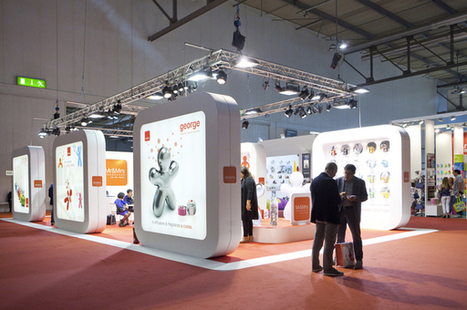
5. Attract Attention at the showYou will want to create an open and inviting exhibit with that “wow factor” that attracts attention and draws people to your booth. Prepare an oversized logo of your company that will be clearly visible from a distance, and use bold colors and curves in the design of the booth. Incorporate a strategically placed lighting truss to add drama and impress customers. If possible, set aside an area where visitors can speak to a company representative comfortably. Building a remarkable exhibit can be expensive, but keep in mind that you can use it again at future trade shows to amortize your initial cost.
6. Train your Booth StaffSales people in your organization may be used to dealing with customers, but others may need practice. Role playing ahead of time is a good way to train your staff so they’ll know how to present the company in the best light, generate leads and close sales. Think about the message you would like to send to the potential customers who stop at your booth. Choose a few key points and stay on message in the brief time your staff will spend with each customer and prospect.
7. Strength in NumbersTrade shows generally run long hours during the day and into the night, which is to your advantage. Make sure you have adequate help at the booth so that you can allow your staff to take much-needed breaks every so often. Booth staff should present themselves as friendly and knowledgeable about your products, even if they are part-timers, friends or relatives filling in for permanent staff.
8. Target your Show MarketingMarketing efforts for a trade show start well before the show date. Make appointments with existing customers and prospects ahead of time, and promote your exhibit booth by direct mail, email, phone calls and reminders in advance of the show. Once your customers step into the trade show, there are many distractions competing for their attention. Sweeten the deal by distributing discount cards or other promotions before the show to increase the likelihood that they will stop by at your booth to see you.
9. Everybody loves Free StuffPromotional concepts for your trade show booth range from simple giveaways like pens printed with your logo, shirts and mugs, to over-the-top attention-getting gimmicks like money blowing machines. Sometimes tried and true ideas are best. If you decide on promotional giveaways, the idea is to pick something useful that has staying power, like a calendar that the customer will use after the show. Or, if your business warrants a more expensive item, try an LED flashlight or a portable phone charger kit.
10. Track your Trade Show LeadsTry preparing a simple lead card with checkoff boxes for the most important qualifying questions and a space for notes to use at the trade show. The information generated will be crucial when following up on leads. Make sure all the lead cards are kept in a safe place so they do not get lost in the excitement of the show. After the trade show, compare your original list of goals you created in Step 1 with your accomplishments and take the time to analyze your ROI so you can plan for the future. You may be surprised at how successful the show was in building customer relationships, generating leads and obtaining exposure for your company and product lines.
|
|
Scooped by
Aditya Patkar
January 24, 2016 1:06 AM
|
radeshows are a great opportunity to promote your company. Yeah, we all knew that already. But are you promoting the company’s brand away from the tradeshow floor? If you have branded shirts, wear them as you travel. Put the shirt on prior to leaving for the airport. There’s a good chance someone will be on the same flight going to the same show. If they’re familiar with your brand, it might prompt them to strike up a conversation with you. If not, maybe they’ll remember the logo when they walk the floor and see your booth.
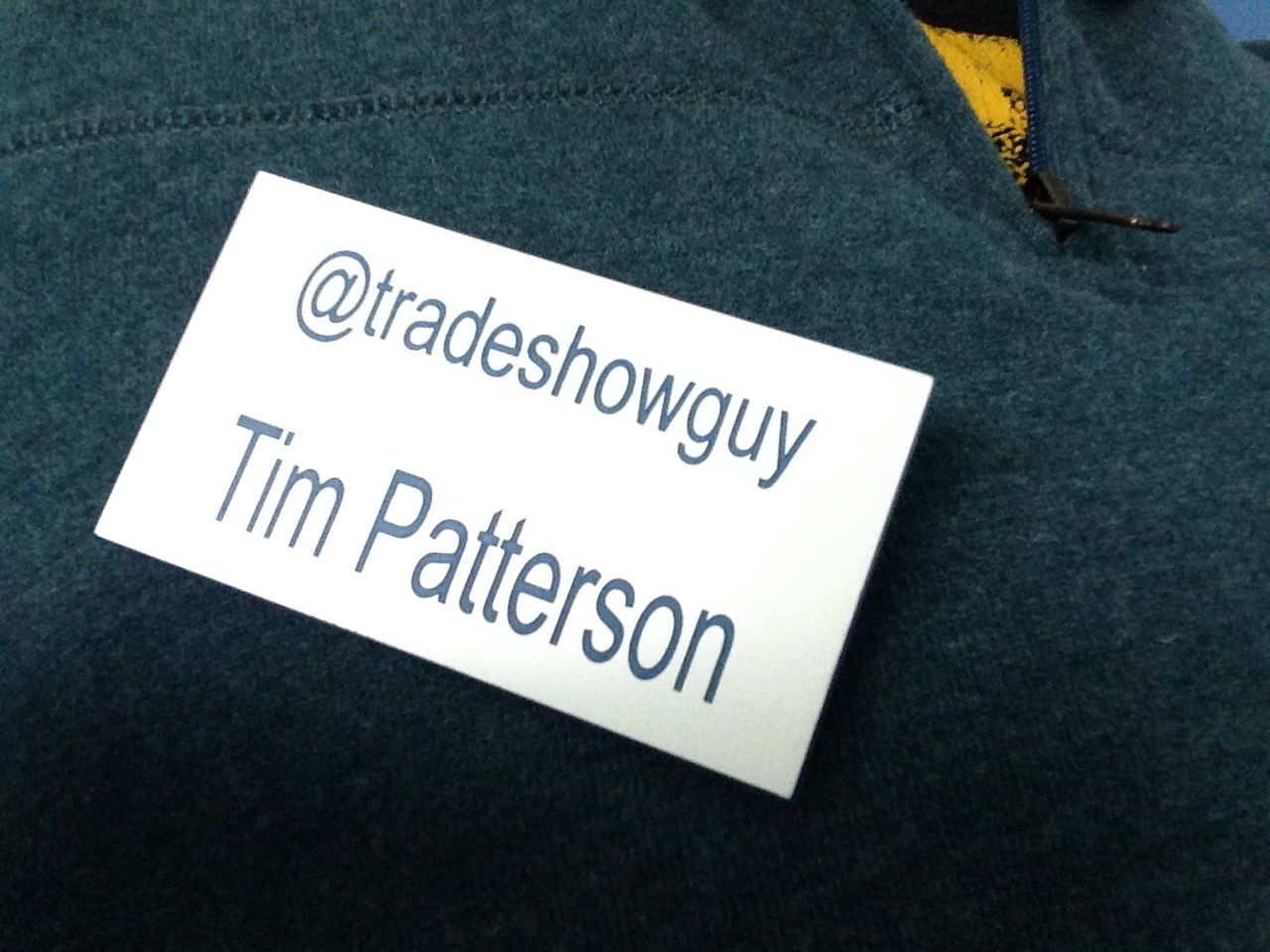
At the show, you’ll have your show badge, but what if you had a personal name tag as well? Something like that would stand out a little, too, giving people another chance to remember your name and company name. Getting a name badge with your company name and your name costs only a few bucks, and you can wear it at all public events. If your company throws parties for clients and prospects at the show, there’s another opportunity to show off the brand with embroidered shirts and name tags, not to mention some other item, such as a kiosk in the corner of the room that allows people to charge cell phones. If you have one of those branded charging stationsfor the booth, there might be other opportunities to use that away from the tradeshow floor. Think where you might find that opportunity. Tradeshows are full of competing companies, all vying to get their name out in front of their competition and in front of your eyeballs. Finding other opportunities to brand your company away from the tradeshow floor might give you that edge you’ve been looking for.
|
|
Scooped by
Aditya Patkar
January 23, 2016 4:04 AM
|
Whatever your brand, business and indeed professional priority, trade shows and exhibitions are all about leads. If you come away from an expo with an extraordinary number of positive leads, it’s considered a success. If by contrast you walk away with very little to go on at all, you quite rightly find yourself asking why you bothered in the first place. It can often seem as though there are some brands and businesses that are naturally predisposed to greater success rates at exhibitions and trade shows than others. In reality however, this simply isn’t the case as while some will undoubtedly stand out for their extraordinarily impressiveexhibition stands and banners, it’s how those in attendance go about generating leads personally that makes all the difference. You’d be surprised how enormous the change can be, simply by modestly modifying the approach of your trade show team before, during and after the event takes place. So from those with a genuine knack for getting it right time after time, here’s a quick rundown of some of the most important rules of all when it comes to maximising and capitalising on trade show leads: 1 – Dead Leads Waste Time First of all, there is no such thing as a pointless prospect – every single person within the event hall is fair game. That being said, the very moment it becomes apparent that any given individual is the very dictionary definition of a dead lead, it’s pointless wasting any more time on them. It’s not always easy to effectively (and sometimes literally) walk away from prospects that are of no real value to you, but doing so is nonetheless of real importance. Your trade show time is precious to say the least, so make sure it is at least for the most part invested in leads that could actually bear fruit. 2 – All Leads Should Be Followed Up When it comes to following leads up after the event, it is of enormous importance to be proactive with every single lead that appeared to be even remotely plausible. There will always be certain leads that take priority over others, but just as long as the lead wasn’t quite literally dead in the water, it is imperative that it be followed up and followed up fully. Dead leads waste time – unlikely leads can sometimes bring home solid gold results. 3 – Leads Should Be Followed Up FAST Still on the subject of leads, the single most important thing to acknowledge when it comes to follow-ups is that speed is of the utmost importance. Why? Well, quite simply because every single one of your leads picked up at the trade show will also be a lead for a whole gaggle of other brands and businesses looking to close the deal just as you are. As such, it can often be a case of those getting there first getting the job done – don’t hang around and let your rivals steal what could be incredibly valuable leads. 4 – You Need a Perfect Pitch Never under any circumstances even think about attending a trade show without first perfecting your pitch. This basically means investing as much time and effort as necessary in the creation of a very short, very concise and very persuasive pitch the likes of which you can deliver with total confidence and flawlessness to every single prospect that walks your way. You simply do not have time to fumble your words or try new tactics on everyone you meet – you need to know what you want to say, how you want to say it and how to pique their interests with only a few seconds available. 5 – You Need to Know Your Competition There’s really only one way of distinguishing yourself from your rivals and showing your prospects that you are indeed the brand to go with – you need to know your competition inside and out. It’s a pretty simple concept to grasp – how can you claim to be better than your rivals if you don’t know exactly what they do and are thus able to pinpoint how it is you can offer and provide something better? If you haven’t done your homework when it comes to your rivals, it’s pretty much game over before things have even begun. 6 – Don’t Wait for Them to Come to You Last but not least, the single biggest mistake anyone can make when standing a trade show or expo is that of sitting around and passively waiting forvaluable leads to wander over. They might, but at the same time it’s exponentially more likely that your proactive rivals will have already essentially sealed the deal ahead of time. For reasons that should be fairly obvious, it makes much greater sense to get up, get active and head out into the crowd to find the kinds of prospects your business fundamentally depends upon.
|
|
Scooped by
Aditya Patkar
January 22, 2016 4:03 AM
|
Planning a Trade Show can be a daunting and challenging experience. While Trade Shows offer a massive range of benefits for organizations, they often demand an equally great amount of focus, work and commitment. Thankfully useful new Trade Show apps like Dazzle Today can take the pain out of planning and help coordinate logistics, capture data and reach out to potential customer. Dazzle Today offers solutions to critical tasks like organization, planning and networking. Check out the Trade Show app http://dazzle.today/ or follow the plan given below to make the process of preparing for a Trade Show more manageable. Start well in advance by identifying the role Trade Shows serve in the overall brand and marketing strategy. With thousands of Trade Shows held annually, picking the one that will provide the greatest benefit on investment of time and money can be difficult. Begin by looking for TradeShows that fit your business. Be tough when evaluating a show’s worthiness and choose one that is most likely to attract customers. Do check on how effective the location and ask organizers for data on past shows, number of attendees and exhibitors. Once the event has been chosen and goals marked up, create a comprehensive checklist. The Dazzle Today app has a handy Task Planning module that makes things simpler. The more comprehensive the checklist, the easier it will be to ensure that the multiple elements that go into putting together a Trade Show are taken care of in a timely manner. Next draw up a budget, without which costs can quickly spiral out of control One rule of thumb is that space costs should represent about a quarter of the total budget. When you calculate space rental, multiply the amount by four for a rough idea of expenses. Then follows the creative part; creating an exciting Trade Show booth starts with engaging graphics and booth design. Chalk out a clear, straightforward message and idea to communicate at least seven to eight months before the show. Design the graphics, literature and marketing around the same. Consider how you can integrate technology into the exhibit to help get more attention, tell a story, and facilitate better conversations between attendees and booth staffers. At this time also identify out-of-the-box high-impact giveaways that will add that extra buzz to the booth. While an eye-catching, high-impact exhibit display can draw visitors to the booth, it will be the staff that actually create meaningful dialog with visitors and identify potential prospects for further follow-up. Research shows that the number one influence on attendee conversion is how they’re treated by booth staff. Begin identifying and training employees who will manage the booth four to five months before the show. Staff needs to know what is expected of them and should be briefed on all programs, initiatives and messaging. Around the 5 month mark on the Trade Show calendar it’s time to start thinking about the marketing campaign surrounding the event. Integrating digital marketing strategies into Trade Show promotions before, during and after each event will help create attention and recall. A combination of website, e-mail, mobile and social media strategies, will help create the buzz required for Trade Show success. In all the activity focused on planning for the more important aspects of the Trade Show, it is imperative not to let attention slip from other equally important things like planning presentations, customer demonstrations and reviewing floor plans, exhibition layout manuals and ensuring that travel and accommodation needs for employees traveling for the Trade Show are taken care of. Also keep track of other logistic requirements like ensuring brochures and catalogues and booth parts are in place and on schedule. The final stretch of the Trade Show timeline should be focused on sending out invitations, finalizing these details, tying up loose ends such as travel and accommodations, briefing booth staff and scheduling meetings with clients and prospects. Review arrangements that have been made and go over the checklist created to ensure that all activity listed has been ticked off and are now in place. Once at the Trade Show keep a record of the prospects, visitors and potential customers. After each show, evaluate what went well and what didn’t. Critique each aspect of the show and ask others for comments. Pay special attention to feedback regarding communication to prospective customers. Use these results to demonstrate the show’s return on investment. Don’t forget to share on Whatsapp! about using Social Media at Trade Shows
|
|
Scooped by
Aditya Patkar
January 21, 2016 4:00 AM
|
The following question is one I hear almost every day from business owners or representatives of companies of all shapes and sizes. Why Hire A Trade Show Model? These business owners or representatives are interested in what value they will receive for the the money they spend, and that is a very good question. Why should potential clients value what we have to say? Well, because Forte Models has been operating since 2000. That’s 15 years of experience providing a service that many might feel is a luxury. We are not still in business over 15 years later by accident. We have developed expertise in this field and want to share it with you. In the next several posts I will share my first hand experience as to what the role of a trade show model is and what you should expect to reap if you contract a Forte Model. We have provided our service to close to 1000 companies since opening our company in 2000. I will share what clients have told us before and after their experience. It is our desire that you will be fully educated about this service so you, our future customer, feels very comfortable moving forward with our elite team. Let us first take into account the fact the most companies have limited budgets toward their trade show presence. So let’s address the initial question with our first answer. Company’s allocate annually a budget for their execution of marketing through trade shows and conventions globally. This can be very costly. You have to pay to enter the show, pay for the booth space your exhibit sits on, the booth itself, admittance costs for your staff, booth decor, floral, a carpet etc for under your feet, etc.. You can be pretty much nickel-ed and dime-ed to death before you even enter the door. So, if you are going to spend $25, 000.00 or even $100.000.00 to create a presence at a show, what do you think is one of the most critical criteria you need to consider first? What is the point of attending a show if you spend all this money and no one drops by your booth? This is where we recognize the first valuable asset in contracting a Forte Model. In our next post we will tell you what we can do for your exhibiting presence. If you are interested in increasing your sales at your next trade show, whether in Orlando Fl, Las Vegas, NV, or any other destination in the United States, contact Forte Model Agency to schedule a booking. One of our professional model consultants is ready to customize your trade show experience with a beautiful model. Be sure to read our testimonials and see how the Forte Model Agency is helping businesses and companies (just like yours) increase trade show traffic, attract quality leads, and enjoy a return on your investment with the presence of beautiful, articulate, lead generating professional National Trade Show And Print Models.
|
|
Scooped by
Aditya Patkar
January 20, 2016 1:57 AM
|
A well-designed trade show booth can bring your business in the limelight at trade shows. Certainly, being the center of attention at trade shows will connect your business with more prospective customers, increasing sales. On top of that, your business relations with existing customers will get a boost. What’s more, a trade show booth can even improve your brand image, adding value to your products and services. However, traditional booth designs and lack of strategic planning are ineffective. As a result, many businesses fail to achieve high return on investments at trade shows. But, with a little more planning and attention, you can easily enhance the effectiveness of your trade show booth. This post gives you vital tips to get moving in the right direction. Stand Out From The Crowd An outstanding trade show booth can help you get ahead of your competitors in terms of footfall and lead generation. Investing in a booth design that instantly grabs attention of prospective customers is a great idea. Even better, you can find a flexible design which can be reused multiple times. Additionally, great design can customize the size of your trade show space without compromising on appearance or functionality. These types of trade show booths can fit into small, medium or big spaces, letting you control the footprint. Surely, a versatile booth design will enable your business to stand out from the crowd. Choose The Right Location
The shape and size of a trade show booth depends on the location at the venue. Depending on where you are set up, trade show organizers usually offer prime spots at a slightly higher charge. However, paying a little extra can considerably improve your chances of getting more customers. When choosing, try to select a trade show booth location that gets high traffic. It is advisable to survey the trade show grounds in advance to select the most convenient location. Generally, the corner spots are known to get more footfall. Of course, you should try to select a corner location as it will give better opportunity of receiving the most exposure. Determine How Much Space Is Needed
It is not always necessary to select a huge trade show booth. The size of your trade show booth should be equivalent to the display space you need. Nevertheless, smart organization can make even a small trade show booth more highly profitable. To prevent wasted space, you can calculate the number of products which will be showcased, determining how much space is really needed. Added to that, you must decide the number of employees who will be present in the booth. The size of your trade show space should be dependent on price, products and people required to make the event a success. Make It Look Good Next, a visually appealing trade show booth can easily attract prospective customers. To make your trade show booth look good, you can use bold colors, classy designs and legible signboards. Furthermore, you can utilize clear images relevant to your business that customers will easily notice. Optimal lighting is another way to make the booth look good. Appropriate lighting can stop prospective customers from overlooking your display. Surely, a good looking trade show booth is bound to drive traffic to your business. Keep Functionality In Mind A trade show booth usually serves multiple marketing functions. The design of your trade show booth should allot specific areas to conduct marketing tasks. For instance, if you plan to give your customers a live demo of a new product, then there should be a demo area available. If you plan on closing sales, you can have a table a chair ready for signing documents. Designating separate spaces to perform different marketing tasks makes a trade show booth functional. Selecting trade show booth design based on functionality helps in increasing your return on investments. A trade show booth can be effectively used in promoting your new products, improving public relations and acquiring new customers. To achieve these results, selecting a flexible and functional trade show booth design is essential. By all means, the right trade show booth will make participating in trade shows more worthwhile.
|
|
Scooped by
Aditya Patkar
January 19, 2016 2:55 AM
|
There’s a misperception in the meetings industry that mobile event apps are just for attendees. When, in fact, event apps help every event stakeholder in a number of different ways… If you’re an exhibitor at an event powered by DoubleDutch, here are 5 tips to help you maximize event ROI. 1. Identify sales targets early. Most planners release their application in advance of the event. Explore the attendee list in the app, find relevant job titles or target accounts, follow, and engage with your best leads to setup a time to meet during the event using 1:1 messaging. You can also identify relevant, sponsored, or competitor-hosted sessions and monitor who’s posting and what they’re saying about the session or competitor. Follow and engage those people in conversations. If they’re talking about your competitors, they just might be interested in your product, too! 2. Drive booth traffic during down times. There are a number of different ways to generate foot traffic to your booth, and the event app is a perfect venue for that. Post status updates in the app to highlight booth giveaways and swag, competitions, and more (just don’t get spammy). You’re already doing this on social media, why not do it in the event app too? 3. Create more visibility for your sales promotions. Did you know your event app has the ability to sort conversations using hashtags? Encourage attendees to create buzz about any booth promotions you might be running and including a hashtag to win more prizes. The more engagement you create around your brand in the event app, means more buzz for your brand at the event. 4. Follow up with leads after you scan a badge. In-app lead retrieval not only streamlines the lead capturing process for exhibitors, it gives you the opportunity to create continuous engagement with those leads in the event app. Follow and interact with these leads through the life of the event to create a more personal, one-to-one relationship. Ask them how the event is going, what sessions they’ve enjoyed, and if they’ll be attending any of the networking events later on. Sharing a beverage after a long day of education is always a great way to continue that relationship! 5. Take advantage of Targeted Offers. Similar to Search Engine Marketing, Targeted Offersgives you the ability to segment attendees within the application and deliver in-app promotions to a curated audience. Use this functionality to target specific accounts, booth visitors, and more! Of course, these are just a few of the ways exhibitors can take advantage of their DoubleDutch event application. If you have a new, exciting idea to enhance exhibitor opportunities within the DoubleDutch platform let us know in the comments below!
|