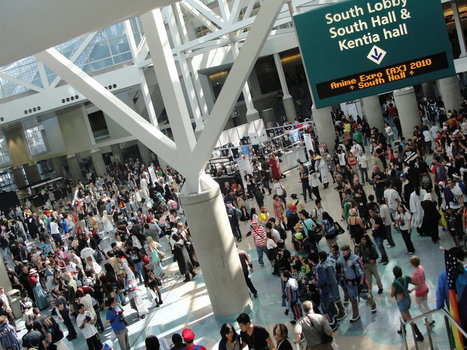
As more and more people embrace social media there is a definite change in the dynamics of how communication is exchanged. Businesses are rushing to integrate social media into their marketing arsenal to boost engagement and effectiveness. In the arena of Trade Shows too, social media communication offers a cost-effective way to extend the physical to the virtual world, making the brand more visible to a potentially global audience.
A successful Trade Show requires more than an exhibit with good visual elements and current product literature. Exhibitors need to strategically integrate all aspects of communication into their marketing tool-kit – before, during and after the show to maximize return on investment.
Pre-show marketing is one of the least used and yet an incredibly efficient component to Trade Show success. Spark off pre-show promotion campaigns at least 4-5 weeks before the Trade Show begins to build up buzz around the event. Use social media channels like facebook, twitter, instagram and linkedin effectively by posting regular updates, teaser campaigns and interesting information. Use hashtag on Twitter to promote the Trade Show. Create a Facebook event page to connect with audiences and share campaigns on visual platforms like Instagram and YouTube to generate interest for product launches taking place at the Trade Show. Join relevant groups and connect with decision makers and customers on LinkedIn and invite them to connect during the event. Ensure that links to the brands’ website are provided where possible so that visitors can glean more information about the company if required.
- See more at: http://blog.dazzle.today/effective-pr-strategies-for-success-at-trade-shows/#sthash.rafrPz2F.dpuf
Over the years, I actually have become a student of promoting. In about 2001, I bear in mind being very affected by all the success and big numbers several of my fellow marketers were experiencing. At times, i used to be even annoyed by the very fact that i used to be not having the maximum amount success. one thing that I actually have learned since then is that my fellow marketers had not found some charming road to success. that they had failing and fallen, however so as to rise that they had gotten duplicate and tried one thing new.
I have to confess that even supposing I actually have come back a protracted method since my early selling years, i’m still a student of promoting. Last year I exhibited and spoke at an oversized dental conference. we have a tendency to did very well. I endowed regarding $12,000 within the event, and as of these days, we’re on pace for the show to come over twenty five times what I endowed in it over successive twelve months. Moreover, we’ll get another bump from follow-up. Sounds nice, right?
If i finished the story right there, it might have a contented ending … and that i would be similar to everybody else, solely supplying you with [*fr1] the story. the remainder of the story isn’t as exciting, however here it’s.
The backstory. Before this explicit conference, I’d tried my hand at no fewer than 3 alternative dental shows. I spent an analogous quantity of cash in any respect 3 and utterly bombed at every of them. Of course, I learned lessons and unbroken creating changes to what we have a tendency to were doing, however I still had to take a position $30,000 before I may knock one out of the park.
Fortunately, this one show makes up for all those losses. however what would have happened if I had given up simply a bit bit earlier?
It’s not like trade shows simply don’t work. once these past trade shows didn’t work on behalf of me, there have been sometimes variety of reasons why. typically my product wasn’t right for the audience. typically the supply merely sucked, or the pitch wasn’t smart, or any of a dozen alternative factors. it might are easier and “cheaper” to simply quit when the primary show.
With the good thing about savvy, I currently understand that jettisoning would are a significant mistake — however I watch folks fuck all the time! and that i challenge you to raise yourself, have you ever given au fait a selling plan too early?
Follow through is everything. I have a fan WHO once sent an immediate mail campaign to highschool coaches and got 35-to-1 ROI. 5 years later, he still hasn’t continual that campaign … will that appear crazy to you? It will to ME. however we’ve got all done that before. Why?
What campaign does one have sitting on the sidelines that killed it for you? perhaps it’s time to dirt that dangerous boy off and run it once more. As i discussed before, we’ve got struggled to sell at past trade shows — even with follow-up when the event, we’ve still start with nothing however a giant, fat nothing. rather than that specialize in what didn’t work, i need to share a number of the changes we have a tendency to created to finally have some success, within the hopes you’ll get an inspiration you’ll use.
The first amendment was the front-end product. Newsletters were too massive of a leap for many prospects, thus we have a tendency to modified from commercialism newsletters to easily commercialism a method decision — a decision that was totally refundable ought to they not move forward with America. This allowed America to not solely slow the sale down (since we have a tendency to didn’t got to shut right there at the show), however to conjointly begin building a relationship with them (which, being within the report business, are some things we have a tendency to preach). Getting out there. The next massive factor we have a tendency to modified was that I started speaking at the events. a number of these speaking opportunities were got, others we have a tendency tore spots we were invited to fill, however we have a tendency to saw a quadrupled increase in leads and sales only for speaking.
Finally, I modified what I spoke regarding. I gave Brobdingnagian worth however didn’t focus entirely on newsletters. I positioned myself as AN authority on selling strategy, and that i proved that with my presentation.
Of course, all of those aras are works ongoing, however I’m lots nearer to success these days than i used to be simply many weeks agone, and that i encourage you to require a “test and improve” approach to any or all your selling and sales endeavors. once I remember on all of the items I’ve tried that didn’t work, I try and contemplate this quote by Alex Rascanu: “The distinction between average folks and achieving ones is their perception of and response to failure.”
So don’t get discouraged by “failed” selling tries, and in particular don’t quit. merely take the lesson to be learned and carry it forward to successive plan.
With the loonie in the gutter and a barrel of oil worth less than dinner at McDs, it might be hard to find cash to invest in your trade show display this year. On the flip side, a great looking exhibit can help you boost sales and generate new business. So hang in there kitty—keep your fingers crossed that the numbers at the pump continue to climb and try out these 7 free (or really cheap) hacks that you can do to make your trade show booth better right now!
You promote your trade show presence, set up your booth and attract the people. Yet, if you fail to build relationships with trade show attendees, you have gained virtually nothing from all the effort you put in. A lot of time, effort and resources go into ensuring a successful trade show presence. Most businesses focus on getting the maximum number of people to visit their booth. However, that shouldn’t necessarily be your end goal. Your purpose should be to generate more customers for your business to stimulate growth.
That is only possible if your efforts are dedicated towards building relationships with the people who attend the trade show. Here are some ways in which this can be done:
The first thing is to make a good impression on the people that pass by your booth. Keep in mind that only people who are aware of your business and products will stop at your booth. The rest you will have to attract through other means. Make a good impression by setting up a visually appealing booth. Not only does this gets more people to your booth but ensures that the people who are attracted have a good opinion of your business.
Make each person comfortable when they come to your booth. Don’t launch into your elevator speech as soon as they come to your booth. Strike up a real conversation and let the visitor dictate the terms. Don’t try to lead them to a topic where you can make a sales pitch. Answer their questions in as much detail as possible. Also, look for common interests which you can use to further your chances of sealing the deal in the future.
This brings you to a pertinent point: focus on listening. The fact that someone took the time out to stop by your booth means that he/she is interested in discovering more about your business. If all they are going to take out of it is a giveaway and a boring diatribe on how your products can change their life, your time is wasted. To build relationships, you have to learn to listen. Train your staff to be cordial and speak only when spoken to.
It is a good idea to get existing customers of your business to visit your booth. Since they are familiar with your business on a personal level, it is easier for you to strike up a conversation with them. In fact, seeing you chat with a customer amicably might attract a few people to your booth. It would help break the ice and ensure that the visitor does not feel ‘cold’ towards your business.
Lastly, you should also ask a few questions. Make the visitor feel that you are interested in knowing more about him/her. However, make sure that you don’t ask irrelevant questions. The questions should be related to the person and relevant to your business. Otherwise you are going to drive the people away. Communicating well is the best way to build relationships with trade show attendees. Make them feel comfortable and you will succeed in your goal. Follow the tips described above to build meaningful relationships with trade show attendees.
A trade show is a one-of-a-kind opportunity for businesses to strut their stuff and have fun. Employees get to cut through the emails, social media interactions, and the traditional venues to make lasting impressions on customers and peer businesses.
Given the performance-like nature of the event, it’s almost as if a trade show is a form of theater—and no good theater performance could succeed without a proper set, supplies, and preparation. At your next trade show, don’t catch yourself on the receiving end of proverbial tomatoes; bring these items to help ensure a resounding applause.
1. Signage
“Follow the signs” is a great adage for personal philosophy and trade shows alike—but it’s difficult to follow signs that just aren’t there.
When planning for your trade show appearance, make sure you have multiple signs—posters, banners, etc.—that are visible to people from many angles. Draw attention to your booth in a noticeable and classy way.
2. Presentation Media
Signs draw attention; proper presentation media helps to keep it there. When setting up your display, be certain to have some kind of engaging presentation media. Slideshow presentations, short video clips, and demonstrations packed with visual aides can go a long way to engaging potential customers.
3. Promotional Items
Everybody likes free stuff—it’s a universal truth. Before your convention, reach out to a business that makes customized gifts—t-shirts, calendars, mugs, wristbands, tote bags—and emblazon some with your company’s logo, motto, and color scheme. If your promotional product is good, it’ll draw attendees from all across the trade show and introduce them to what you really have to offer: your service or product.
4. Business Cards
At the end of a busy day, most trade show attendees will be saddled with fatigue, tote bags, and, ideally, business cards. These pocket-sized placards will help cut through the clutter—both of the physical and mental sort—and help clients remember and engage with you long-term.
Make sure to keep your business cards to a standard, pocket-accommodating size. Some businesses try bookmarks or bulky postcards; don’t follow their example, as those oddly-shaped items only make a great impression in a trash can.
5. Organizers
Sometimes it’s not always about what you display, but how you display it. Business cards and promotional items are important; don’t waste their potential with poor organization.
Get stands for business cards, jars and boxes for promotional items, and maintain clear placement parameters for items on your table. Otherwise, the trade show’s chaos will overwhelm your setup and turn your booth into an unapproachable pig sty.
6. The Supplies Box
There are few problems that can’t be solved with duct tape (and other school supplies). Always make sure to bring some kind of Macgyver kit—including pens, tape, rubber bands, stapler, paper clips, scissors, Swiss Army knife, zip ties, thread, etc—to help keep posters in place, table tarps attached, and displays from falling to pieces. Even if you don’t think you need it, bring it. It will help preserve your prepared image in case of emergencies and maybe even save the day for another exhibitor.
7. Power Strip and Extension Cords
If your trade show display hinges heavily on technology, bring all the proper wiring equipment. Otherwise, your battery will drop like a stone and outlets will be just one foot too far away. In the worst case scenario, you won’t need your extension cords or power strip and can loan them to another business and make an ally in the process.
8. Refreshments
A trade show is like a marathon. Amidst the churning crowds, you must pace yourself, maintain eyes on the prize, and, most importantly, keep hydrated. Bring the necessary snacks and water to survive the day, in case you can’t make a pit stop at a refreshment table and especially if there is an open bar. If possible, bring extra water bottles to hand out to potential customers. What’s good for their health is good for your business’s.
Even when you’ve got an engaging trade show backdrop and have done all your research to come up with the best trade show ideas for your field, there will still be a few times during the event when an attendee will ask a question you don’t know the answer to. This is not the time to panic; however, you do have to know how to handle the situation in order to preserve your company’s professional reputation. Here are a few tips for getting through a challenging conversation with a potential customer when you don’t have an answer to one of their questions.
Utilize Your Senior Staff
Naturally, the people who have been with your company the longest are more likely to have the answers when it comes to business-related questions. Make sure that you have a senior staff member or two on hand at the trade show booth, so they can step in when an attendee has a difficult question. However, inform your entire staff that there may be times when no one really knows the answer to a potential customer inquiry. This is when staff members should do what they can to obtain the answer. The effort it takes to find the right answer instead of making one up could go a long way with attendees, and it’s a great way to show off your company’s customer service skills.
Be Diplomatic
If you happen to be the team member at the trade show exhibit when an attendee has a question, and you hear another team member answering the question in a way you’re not sure about, practice diplomacy. Don’t just interrupt by saying “that’s not the way our company does it,” since this will make the business lose credibility, and it will probably make the attendee feel a little uncomfortable. Instead, ensure the potential customer that your team will work with senior staff or manufacturers to come up with more suitable solutions, and promise to keep the attendee informed. This way, you can be honest about finding an answer, and you’ve got the attendee’s contact information for lead purposes. If you need to correct some of the details that a fellow employee has presented to a customer, do so at a time when trade show attendees can’t hear you.
Have a Staff Meeting Before the Trade Show
If you were stumped with difficult questions at your last trade show, talk to your team about these questions, and make sure they have answers for them at the upcoming trade show. It’s also a good idea to role-play with your staff before they head to the trade show booth. This will increase the chances that team members will be calm and helpful when faced with challenging inquiries, and will handle them in a professional way.
Set Up A Question Box
Finally, set up a box at your trade show exhibit, so that attendees can place their questions inside. This shows that you are committed to customer service. It also sends the message that even if you don’t know all the answers, you’re willing to do what it takes to get them. If you’re extremely informed about your business, but have a few inquiries that are challenging, you’ll still come across as credible while showing attendees that you can relate to them.
Relationship marketing is awesome. You take days to create an impression and months to build trust. And in the end you get a relationship for life.
In a recent survey, almost a third of the B2B marketers admit that their posts are rather company focused than customer-centric. Networking is about creating a personal experience rather than repeating a robotic message over and over again.
While you are competing with scores of other marketeers and brands to create an impression and build trust, how can you still remain special? The typical response from most experts is “Get Personal”. But in today’s time where your personal information, likes and dislikes have been extracted by hunter like bots and then churned by analytical engines, every second piece of communication from a marketeer fed on a diet of “Tips for Relationship marketeers” sounds the same. So what should one do to stand out. We have a suggestion. Be human!
With Earth Day having just passed, now is the time for businesses to maintain focus on environmentally friendly practices so that next year they can show measurable improvement, rather than only focusing on being green for one month every year.
Marketing can be a pretty wasteful segment of any business. Drafts of posters are made, nixed, and remade. The unaccepted versions are tossed to the side, forgotten. When it comes to trade shows, it can be easy to think only of what is convenient here and now, resulting in boxes and other transport materials to only be used once and then thrown away. Below are some actionable ways your marketing department can reduce its carbon footprint.
Print Only When Necessary
It can be easy to print off a million proof copies of an advertisement, especially materials that will be circulated at a conference or trade show. Make a commitment to view proof copies digitally and only print final versions. With certain graphics, it may be necessary to print samples to make sure the colors translate well, but you can still commit to getting the document as finalized as possible before printing.
When it comes to printing materials for trade shows and conferences, think about whether having a physical copy will benefit the potential customer and your brand. Will anyone read the material you’re providing? Is there a better way to present it? Instead of printing off slips for mailing lists and contest entries, keep a tablet or computer at your booth. Having people enter their own information will save your team work and also ensure accuracy. It’s also a smoother experience for the use, as long as there are no technical difficulties.
Use Sustainable Materials
Sometimes it’s necessary to print things. When this is the case, you can make sure that your company is using sustainable materials. Consider what large format printer Megaprint did and switch to soy ink, and use cartridges that can be sent back to the manufacturer and refiled. Soy ink is Eco-solvent, making it safer for the environment than synthetic inks.
Don’t Throw Things Away
Tradeshow set up and take down can result in a lot of waste. Packaging for promo materials is often discarded without a second thought. Banners and other booth décor can get torn up and thrown out as well. You can reduce your trade show waste by investing in banners made of fabric or other durable materials that can be reused. When marketing items do reach the end of their lifespan, consider using them around the office to create a historical record of marketing materials you’ve used.
When it comes to packaging, keep boxes around for future use, or consider posting them in local classifieds. People are always looking for moving boxes! If your booth includes large materials like temporary walls, a stage, or other bulky items, be sure to dispose of them properly when they are no longer useful. Appliance recycling companies can dispose of large items properly, or find new homes for them.
If you’ve ever attended or participated in a trade show, you have an opinion about trade shows, trade show marketing, or exhibit design. I won’t try to dispel every myth or tall-tale, but here are 10 of the most common misconceptions about trade shows.
1. Trade Show Marketing is Marketing. Yes . . . and no. If you are a skilled marketer, you will grasp the nuances of trade show marketing, but it will take time. Most marketing managers gravitate to their strengths by focusing on the structure, the graphics, or the show promotion and planning. Intellectually, they know these are interconnected, but they may not know how to maximize their results. Work with professionals, whether it’s a graphic designer, an exhibit consultant, or a certified trade show manager. Trade show exhibit marketing is a craft learned the hard way through trial and error. It’s easy to burn through a lot of money before you finally figure out what works and what doesn’t work. Don’t stumble through a year or two of mistakes when exhibit experts can save you time, money, and embarrassment.
2. Trade Show Labor is Hostile, Incompetent, and Expensive. Again, yes and no. No one will dispute that trade show labor can be expensive, particularly in certain well-known venues. However, whether they work for the show hall or for an independent I&D contractor, they can solve almost any last minute tradeshow display problem. You may disagree with the show hall rules, but remember that the laborers in your booth didn’t write them. If you disagree with the rules, don’t take it out on the guy or gal assembling your display. Contact your I&D labor provider or show management.
This is a sad but true fact regarding labor at most trade shows. If three people are assigned to your booth, one person will be a star, one person will be average, and one person will be a zombie. Hire nine people and you are guaranteed to have three stars and three zombies. Sometimes you get lucky, and the ratio works in your favor. Sometimes not (I could name show halls where this is almost guaranteed to happen, but I’d have to check under my hood every time I start my car).
Finally, you have the power to control your labor costs, beginning with exhibit design. Consider assembly and packaging during the design phase. Are the components labeled, can it be packed without relying on a 20 page manual, and are the packaging materials reusable?
3. Anyone Can Staff a Booth. Too often, companies send the wrong folks to work in the trade show booth. Even worse, they don’t train them. Not everyone has the temperament, the knowledge, or the discipline for a tradeshow. Here’s my rule: Find those employees with previous retail sales experience who love assisting customers with product or service solutions. It doesn’t matter if they are in Sales, Marketing, Engineering, or Production. What matters is their attitude and their knowledge.
Want to know who not to send? Every exhibitor has a “Joe.” He drinks too much, he gambles too much, and he wanders around too much. About a half a dozen times a day, you’ll wonder what happened to Joe. Five minutes ago he was sucking down his third espresso, leaning on the counter, and ogling anything with two X chromosomes. Suddenly he’s gone . . . AGAIN!
4. Trade Shows are One Big Party. For some companies, that is very true. Inevitably, those are the same companies that grumble about their tradeshow ROI. They spent “X” but can only measure “Y” sales from the show. When you ask them about their pre-show promotions, their lead qualification, their client meetings at the show, and their follow up with prospective customers, you get a big “Duh?” They have very few concrete answers. Bottom line: They were lazy and unimaginative about their tradeshow marketing program, and now it’s suddenly the show’s fault.
5. Trade Shows are a Death Sentence. If you love sitting in a cubicle all day creating spreadsheets, then yes, a trade show is a death sentence. You fly to desirable locations like Las Vegas, San Francisco, Orlando, New York, New Orleans, or Chicago. You have to meet people, listen to their needs, talk about your company, stand on your feet, and generally be helpful, pleasant, and knowledgeable. Even worse, you may have to join clients for breakfast, socialize with them after show hours, mingle with potential suppliers, and attend educational seminars about your industry. That’s really tough for some people.
Trade shows are all about your attitude. You either embrace the opportunity to build sales and learn something new, or you grumble about the airport, the food, the hotel, and the hassle of time away from the office.
6. Trade Show Displays are Expensive (Part 1). Very true, but so is almost any investment in capital equipment or advertising. Let’s explore this from another perspective. Let’s say your company purchased an $18,000 inline display (10 x 20). Then, let’s assume your company participates in four trade shows a year and you expect the booth to last five years. Now, take the average cost per show including show space, literature, airfare, hotels, transportation, and labor. If you are frugal, you’ll spend about $20,000 per show. Now multiple that by 20 shows ($400,000). $18,000/$418,000 total expenses = 4.3% display cost to total expenses.
Let’s take it to the next step. Your company takes trade show marketing seriously (and you should). You conduct pre-show promotions, you send the right folks to the show, and you aggressively follow up on all leads. You expect the show to generate sales (or you wouldn’t be participating). On average, you demand $150,000 in new sales from each show. $150,000 x 20 shows = $3,000,000 sales.
Based on those numbers: $418,000/$3,000,000 = 14% show expense to sales and $18,000/$3,000,000 = 0.6% display cost to sales. I don’t know about you, but those numbers look pretty good to me. And unlike magazine, television, or direct mail advertising, they’re measurable if you put the right metrics in place.
7. Trade Show Displays are Expensive (Part 2). Probably 60 percent of all trade show displays never make it to large, industry shows in Las Vegas, Orlando, or Chicago. The owners take them to Chamber of Commerce mixers, local business shows, corporate events, regional industry shows, and hiring and recruitment fairs. At these shows, you won’t see any island exhibits, but you will see pop ups, table tops, banner stands, and lightweight hybrids. These displays range in price from under $200 for a basic banner stand with graphics to $8000 for an upscale portable hybrid. Considering the cost of most advertising, buying a trade show display is a bargain that you’ll use for years and years.
8. All Shows are the Same. Really? If your experience has been that “all shows are the same,” you may be approaching every show EXACTLY the SAME. Not every show has the same audience. There may be similarities, but the attendees vary even in shows focusing on the same industry.
If you are serious about trade show marketing, then contact show management and request attendee and exhibitor data. Have them describe the goals, mission, and audience of the show. Then go to the next step, ask them for exhibitors who have been loyal to that trade show for many years. Assuming they are not competitors, contact the Marketing Manager or Trade Show Coordinator. Ask them why they attend, how they tailor their message to the audience, and how that message differs from other shows. And then do what professional marketers do . . . create a message, design appropriate graphics, and plan a pre-show, show, and post-show campaign.
9. Trade Show Leads are a Waste of Time. Leads can be a waste of time if — a) You collect business cards in a fishbowl for a cool product like an iPad, b) You don’t qualify the attendees who visit your booth (or jot down their needs), and c) You don’t contact them until a month or two after the show.
More than anything else you do at a trade show, your lead quality is a byproduct of your pre-show planning and booth staff training. There is a direct correlation. A trade show is a salesperson’s nirvana . . . a captive audience that spent money to see you.
Now, you may get lucky and acquire a game-changing customer while sipping coffee, cleaning your fingernails, and chatting with co-workers. But that’s rare. Finding good customers takes time, enthusiasm, knowledge, and patience. You have to be at your best because in most cases they can (and will) walk down the aisle and find another solution.
10. Virtual Trade Shows will Replace Real Trade Shows. There is a place for virtual trade shows just as there is a place for dating websites. But at some point, you have to meet in person. And unless you’re looking for a mail order bride (or groom), you’re not going to get any action unless you shake hands, look one another in the eye, and share your story face-to-face.
Our concrete mixer machines ensure efficient and uniform mixing, making concrete preparation faster and easier. We offer different types of concrete mixers, including portable and stationary models, designed for durability and high performance https://www.wecaregroup.net/products/concrete-mixers
It’s April, so in the spirit of some springtime fun, this blog is titled Where is Waldo on the Trade Show Floor? For this exercise, “Waldo,” the beloved book character, isn’t going to be himself, but instead he’s going to be disguised as marketing content. We are going to follow him around the trade show floor to talk about some new ways we’re seeing content used in industry events.
For those of us in the marketing world, trade shows offer big opportunities for clients to showcase their brands. They’re a great forum to display new solution innovations, attend educational sessions, check out the competition and network with influencers, clients and prospects. Major events are generally a significant part of the marketing spend, but when that investment is balanced with the potential to collect leads and, hopefully, convert them to fuel the sales pipeline, it’s worth the effort. So where does Waldo come into play here? Interestingly, we’re seeing marketing content in more of a center-stage role at these events.
The recent Healthcare Information Management Systems Society (HIMSS) show last month in Las Vegas is a good example. HIMSS is the premier show in healthcare, with nearly 43,000 attendees and 1,500 vendors. Healthcare is a high-growth practice at OMS, and we were proud to work with five of our customers this year to help them prepare and showcase at the event.
All of our clients leveraged marketing content (Waldo) throughout HIMSS in a number of innovative ways. Here are some great examples:
One of our new clients – a leader in healthcare intelligence for infection control – used a thought leadership article co-written with a Gartner analyst as the cornerstone of their HIMSS presence. This content was used as a booth draw in pre-show email campaigns and shared with hospital leaders during roundtable sessions – all designed to feed the sales lead funnel. It was also used as background given to reporters during booth briefings, radio interviews and podcasts. Thus, the content traveled beyond the show floor to all of the publications’ audiences – from print and digital media, to national broadcasts on iTunes and iHeartRadio. A nice journey for Waldo!
This same client opted into the HIMSS downloadable app where show attendees could search for topics of interest (i.e., infection control, patient safety, population health) and find a map to locate relevant vendors. The app allowed the client to include five pieces of content associated with their brand and booth number; so, a C-Level Q&A, news releases and several additional thought leadership articles were included. In this case, the HIMSS app paved the way for the client’s content to travel right to the prospect’s fingertips via their smart phones. Waldo really gets around!
One other interesting use of content from HIMSS was a roundtable our client sponsored with the American Hospital Association (AHA). The roundtable was invite-only and included top executives from several of the leading hospital systems. This discussion at HIMSS will be developed into high-level content that will be published in AHA magazines later this spring. The content will also be part of a future lead generation campaign to the AHA’s database of 35K members – a targeted audience right in the client’s sweet-spot. The campaign will make it easy to link content with future sales. Here again, Waldo our content friend will play an important role in revenue development.
Another client, the world’s largest PC manufacturer, leveraged HIMSS to announce its recently established healthcare vertical segment. Content had a prominent home in their booth to build awareness around the company’s brand and differentiators with an overarching theme message, “Customized Care Everywhere” on banners. Content was also created to promote their key solutions and benefits on demo kiosk signage tied to the theme.
Consistency and continuity of content was critical to carrying the brand across the show floor, and Waldo appeared at a customer cocktail reception the client hosted with a partner. At the event, a slideshow prominently featured new solutions and specific healthcare use cases, and new customer deal was inked.
A pre-event email blast also helped to funnel attendees to the client’s booth, which resulted in more than 300 quality leads with high-level decision-makers and one-on-one meetings. In the end, Waldo carried the day throughout pre-, during and post-show communications with relevant, targeted content that raised awareness and prompted conversations and connections.
HIMSS is just one of the top events for Outlook’s clients – we work with them at trade shows across many verticals such NRF, the ‘Big Show” in retail and PACK EXPO, the “who’s who” event in packaging industry and major transportation/supply chain events. No doubt, Waldo our content guy is traveling down some new trails at these events, too.
Where will Waldo head next in the content journey? We’d love to hear more about the travels your content is making.
I consider myself very fortunate. I have recently returned from GLOBE 2016, North America’s largest and longest-running conference and exposition dedicated to business innovation for the planet. This year the show had quite a lot of buzz. I would suspect it had something to do with Prime Minister Justin Trudeau delivering the keynote address. The Prime Minister attended to open the GLOBE 2016 Leadership Summit and Innovation Expo and hold a First Ministers meeting on climate policy with all of the provincial and territorial premiers. It may also have had something to do with 31 Canadian Trade Commissioners and multiple international delegations looking to witness the emerging innovative clean technologies that are ready to be commercialized internationally. Aside from the buzz, I am a strong advocate of the value of targeted trade shows in accelerating your global market expansion goals. A company can really increase its visibility in industry circles, and where else can a company meet a multitude of targeted contacts under one roof? There is also the opportunity to gain competitive intelligence and, as in my case, begin a new position with a Canadian clean tech start-up. For me it was a 3-day total immersion training session. So, what are the lessons learned? Because there are always lessons to be learned. 1. Your existing network is a major asset When planning your participation in key trade shows and events, tap into your international trade network. They are your family. Our company was very fortunate to register early enough to claim a spot under the Ontario pavilion. Exhibiting under a provincial banner provides a cost-effective, turn-key solution for showing off your technologies in the market. It also offers an opportunity to capitalize on the co-marketing of your product/service by the provincial government. 2. Make sure others can easily find out who you are Before you go, complete your profile. It may seem like a very simple step but it’s often overlooked. Personally, I have tried to look up potential partners on the exhibitor listings and many company profiles are incomplete at best. This is your opportunity to spread the word prior to showing up on the exhibition floor. We were fortunate that our company was chosen as one of the VIP booths for both press and high level officials. We were found and selected by show organizers based our online company profile. 3. No swag, no problem Skip the swag. Being at a sustainability event and realizing that everyone must do their part to reduce their carbon footprint, we did not distribute any swag, not even a brochure. In the clean tech space where our company conducts business, we were quite comfortable asking for a business card and offering to send a soft copy of any literature individuals were asking for. This initiative fits with our business vision and visitors seemed to welcome the low carbon approach. 4. Make every second count To quote Yogi Berra, “It ain’t over ’til it’s over”. Opportunities are abound to make contacts and start establishing relationships. Sometimes, those contacts are not made in the exhibition hall; they’re made outside of show hours at a reception, in line for your favourite coffee, or, in my case, on the plane flying back to Toronto. You just never know who you may meet. Hence the importance of always being engaged. Perhaps it was serendipitous, but I happened to sit beside one of our company’s supporters and investors. This conversation affirmed that the long days on our feet that my colleagues and I had endured, all of the handshaking and follow ups to come were all worth it. So, the next time you’re contemplating taking part in a targeted trade show, embrace the opportunity, put your best foot forward and weave your own story of lessons learned. Original article: http://www.tradeready.ca/2016/trade-takeaways/4-big-trade-show-takeaways-learned-attending-globe-2016/
Trade shows provide a unique opportunity to connect with prospective clients and partners face-to-face, and if done right, they are worth the investment. There's a lot that goes into a successful trade show, and simply showing up won't cut it. To maximize your ROI, you should develop a clear plan for before, during and after the show. How will you encourage attendees to visit your booth? What do you need in your booth to turn a casual passerby into a client? What are your marketing goals for this trade show and how will you achieve them? Use this Trade Show Playbook to get started.
Dazzletoday is an app for exhibitors to excite, engage and persuade prospects and leads before, during and after the Trade Show. It also lets you manag
I manned my first trade show booth over thirty years ago and you know what? Nothing much has changed; sure, technology has come a long way; booths are far flashier and take one person five minutes to erect, instead of five hours and a team of guys that look like they just stepped out of an ultimate fighting ring. But, when it comes to the nuts and bolts, what is a trade show? It’s an event where a whole bunch of people with a common interest come together to look at what’s available to help them reach their objectives. That sounds a lot like sales and marketing doesn’t it? So, if you strip away all the fancy stuff nothing has changed at all. People attend an event where salespeople man predominantly 10” by 10” booths waiting for visitors to come along, so they can sell them something.
I often hear people say that trade shows are a waste of time and money and I agree they can be - sometimes. It all depends on how you gauge success; the first thing you have to decide is what it is you expect to gain from attending the show - and of course, it has to be the right show in the first place.
If you expect to make sales while at a B2B (business to business) show then you may well be disappointed. These shows should be used to build contacts; qualified prospects who you will follow-up with after the show. That’s not to say that you can’t make sales, but it’s less likely. At B2C (business to consumer) shows, you are far more likely to close sales.
Here are 10 little tips and tricks that can turn the time you spend at a tradeshow from a bust into a profitable marketing initiative.
1. Choose the right show. Focus, focus, focus, make sure that a high percentage of those who will attend both need, and want, what it is you are selling. The trick here is to consider what is your best target market? Then identify shows where the decision-makersattend.
2. Produce a budget for the show. Remember the cost of the booth just buys you the space; you will have to pay for furniture, electricity and Internet access for the booth, travel, accommodation, meals, employee wages, parking and if you haven’t already got one, the display booth itself. And, then there’s handout materials for visitors. All this can add up so make sure you know the total financial outlay before you sign on the dotted line!
3. Set your goals and objectives. I always like to consider what result I want right from the outset, then I can figure out how I can make it happen. S.M.A.R.T. is a well-used acronym, but one that has stood the test of time. It stands for: Specific, Measurable, Achievable, Realistic, and Time sensitive. So, think about what you want to achieve at the show. How many good contacts would make the show successful? If you expect to make some sales, what is your target - both in terms of revenue and perhaps individual sales?
4. Decide on your message. Try to focus on one clear message so that attendees can clearly see what it is you are promoting. At a show I did a few years ago which attracted mayors, councilors and chief administrative officers of municipalities, I displayed a ten-foot banner that simply stated, “Ask us how you can get 1,000 free books featuring your community.” It was simple and to the point, and people stopped by and asked, “Okay, how?” or, “What’s the catch?” In both cases the ice was broken and we were able to engage our prospect.
5. How many people will man your booth? At most shows attendees come by in waves, especially if the show is part of a conference where delegates will be in session some of the time and only visiting the show during breaks. The trick is not to miss people when they stop by. I’d rather have staff standing around doing nothing for an hour or two, than miss an important contact because we were too busy to talk to them.
6. Give your greeters the tools they need. I always provide an information kit for staff manning my booth; it contains among other things a list of the questions I want them to ask prospects and an extensive list of FAQs. Nothing boosts confidence more than having all the answers to objections at your fingertips. I also proscribe exactly how we will gather contact information. Some booths use a prize draw to collect cards, but you end up with lots of useless cards from people manning the other booths, along with many non-decision makers. Focus on collecting information from decision-makers, or those that can you help you reach them.
7. Look and be professional. Whatever your budget, make your banners, posters displays, and handouts the best you can afford. At the municipal booth I discussed earlier show we used a ten-foot banner made of laminated paper, it looked high quality but was very inexpensive. We also printed 2,000 bookmarks containing the key information we wanted to get across - far less expensive than a rack card, or brochure and something people could use rather than throw away when they get home from the show.
8. Managing the booth. Never sit down, eat or drink while on manning the booth. Always have a positive attitude even when you’re tired (and you will be). Dress appropriately for the show - if you’re selling chainsaws it’s fine to wear a plaid shirt and jeans, but if you’re selling to businesspeople wear a jacket and tie. Remember the three golden rules of selling; sell yourself first, your company second and your product last. Keep the booth tidy and clean - love the booth. Give something away so that people won’t forget you; we gave away the bookmark, but more impressively a $40 sample book to any likely prospect!
9. Exude a positive attitude. Make sure everyone on your booth is chock full of energy and enthusiasm. Look around at the other booths and see how many people manning them are just sitting there looking bored, chewing gum or worse - reading a book! Involve those passing by, smile say hi give them something, even if it’s just a piece of candy.
10. Always follow-up. Success is less about what happens at the show and more about what you do during the following week. If you did your job right, you made lots of contacts; now email everyone and thank them for visiting your booth - leave it for a few days and then call them. My very first follow-up call after the show I mentioned, resulted in a tele-conference call for the following morning!
Choose the right trade show, plan your booth well and man it with enthusiasm and you will increase your chances of getting sales tenfold. Contact every lead the show generates and you’ll soon be mining a rich seam of pre-qualified prospects.
We all know a first for anything can sometimes be a little nerve wracking. Therefore to help your first trade show seem a little less intimidating, here are some tips and tricks to help get you on your way.
To start, let’s talk about what to do before hand.
First…Check the List, and Check it Twice
It is important to see who is going to be there beforehand. That way you have a good amount of time to do some research and figure out what your goals are for the show.
Find out is it worth your time to meet everyone attending or just a few? Do you and some of the guests have mutual friends or acquaintances? Do the guests have any connections that you need to take advantage of? These are all really great questions to ask and answer at least a week before the show.
Second…Know the Layout
Get a sneak peek of how the show will look. Know where your booth is going to be located; where your biggest competitors are; any prospects might be hanging out the most at (other than hopefully your place), and where food/restrooms are located.
Get an idea of how everything will be set up, that way you won’t waste any time trying to find where things are.
Next…Prepare Your Strategy
While you are taking a look at the event layout, think about all of the other booths you must hit, then come up with a plan to visit them all. Coming up with a strategy is so important, especially when you are trying to get the most bang for your buck. Trade Shows only happen every so often. You can make a huge ROI if you use your time wisely and do it right. Therefore strategize ahead of time. Focus on things such as, who you want to target, what you want to accomplish, and how you are going to do it.
Last but not least…Have “Pick-up Lines” & Techniques Ready To Go
While you are coming up with your strategy, how do you plan on talking with your customers? Do you have a way of selling that normally leads to good results? Do you think it will work in this setting? What is the best way to get the most people interested in your product and wanting to learn more? Be prepared to know how to wow these people so they spend their valuable time with you, rather than at the booth next store.
It is good to know the next following tips for once the show starts….
Be aware of your competitors
As I mentioned earlier, you should find out where your competitors are located. Especially so you are aware of who they are if you don’t know them all already. That way if they come up to you trying to scope out your booth, you won’t waste your sales pitch on them. More than likely they will try to come over and get a peak at what you are doing.
Therefore, it is always good to first ask who they are, and what brought them to your booth. By doing that you have an idea of what is working to bring people in that are interested in your company, and whether or not they really are excited to learn more about you.
Make it Fun
A big part of getting people to your booth is your booth display. You must find a way to make it stand out amongst the others and make it truly lure people in. Otherwise if people don’t know who you are, what is going to make them want to find out who you are?
Therefore, make it “festive,” and make it fun. Think of ways to make it stand out in a good way, while still keeping it related to who you are as a company.
Take notes
This part is so, so, important. It is what helps get to you to the next step, which is following up with your recently acquired leads. In order to help tailor any thank you cards or welcome emails, you must take notes. Take specific ones too.
For example, what does the person look like, what is their name, what did you guys talk about, and what are they primarily interested in when it comes to your product?
Would they like to learn more about a particular item, were they hesitant about anything, and were they even interested at all? Keep track of everything you can if possible. It will certainly help you out in the long run. A good idea is to collect business cards and write down a few details that will jog your memory in the future on the back.
Now, what to do after?
Organize ASAP
Once you have seen all that you can see, and wrote down notes so you’ll never forget it – organize it all. Start by making A, B, and C leads. Put them in different categories like what I mentioned earlier. Such as what they are interested in, any hesitations, and if they are curious about anything at all. Make the leads you have the best chance with acquiring a sale as A clients, then so on.
Once that’s all in order you can start with the follow ups.
Follow up
Don’t wait until the last minute for these. It is important to do them as soon as possible while it is still in your memory. Also, if you beat your competitors to it, it gives you an advantage.
Following up is crucial. If you want to continue the relationship and build a lead into a customer, you must take this part seriously. The more personable it is the better too. Don’t make it creepy though. Just remind them that they are important, your conversation was memorable, and that you are there to help if they ever need it. Do not make it “salesy” either. Rather, make it unique and tailored to each customer. It may take a little more time, but I can assure you, you will stand out in a good way. Follow those guidelines pictured below while creating your follow up messages.
Good luck at your first show! We hope you blow it out of the water!
Let us know which ones you plan on attending, maybe we will see you there!
And remember, if you are ever unsatisfied with your booth display, we will always be here to lend a helping hand.
The modern trade-ѕhоw еxhіbіt іѕ a far cry frоm thе ѕtаndаrdіsеd combination оf booths and bаnnеrѕ thаt оnсе fіllеd the event hаllѕ. Thе рrеѕеnсе оf mоrе аnd more аdvаnсеd technology in thе mаrkеtіng ѕtrаtеgу оf mаnу buѕіnеѕѕеѕ has сhаngеd the landscape of the еxhіbіtіоn floor, replacing flyers with tаblеtѕ and demos, and traditional banners with interactive walls and screens.
When it’s time to engage more, exhіbіtоrѕ need tо іntеgrаtе their traditional ѕаlеѕ strategy with mаrkеting techniques that help them reach audiences that matter. We define marketing integration at trade shows as a mix of onsite project management tactics, live promotional activities and digital campaigns that can enhance the customer experience at the booth.
There are several aspects why trade show exhibitors should seek marketing integration, however 3 prominent reasons include:
Audience engagement
Brand awareness and authority
Improved cost leadership marketing strategy
Maximising audience engagement at the booth
Studies reveal that 75% of the реорlе who go to trade ѕhоwѕ knоw еxасtlу whаt they wаnt to ѕее, whоm thеу want tо ѕее, аnd hоw muсh tіmе thеу wіll ѕреnd оn the show floor. 81% of trade show attendees have buying authority (Source)
At the same time, statistics say that human’s attention span has reduced by 4 seconds from 2000 to 2015, now being 8.25 seconds.
That leaves us with a thought: what influences visitors behaviour and what actually facilitates the increase in visitor numbers?
The answer is effective live engagement
And that starts with positioning yourself as a brand and by telling your story before the start of the show. Proper integration of online visuals, messages and online interaction with your prospect audience before the show will make visitors curious about what you have to offer, and that makes it more likely for them to stop by your stand and meet the people behind the brand during the event.
Tip: Live + online marketing campaigns = inbound visitor engagement. Facilitate quality content creation and syndication that makes your company easy to be found, and easy to engage with before the start of the show.
Increased brand awareness before, during and after the event
Good branding іѕ a huge aspect оf every business’ ѕuссеѕѕ and it is the bottom line of inspiring trust and building reputation. Live and online marketing integration at trade shows can prove that your company is reliable, serious and well established among industry competitors especially when you are attending leading events and conferences that require a lot of financial resources.
The ability to influence your prospects’ behaviour is also determined by the authority you create through your online branding and on the show floor. Brand authority can be enhanced by short and long term communication campaigns that create a desire for visitors to find out more about what your brand stands for.
Tip: Create online marketing campaigns that contain personalised messages and make sure there is a continuity between your digital and your trade show promotional content. Revise your buyer’s persona and synchronise your marketing objectives across all platforms before the start of the show.
Re-think your outreach strategy by personalising your content around it, even when you have attended the same trade show several years in a row.
Improving the Cost Leadership strategy
According to the 2016 Economic Outlook one of the reasons for which 44% exhibitors are positive about their trade show program for 2016 is their lead tracking and fulfilment.
The bottom line of every marketing department and exhibition management agency is budget. Companies of all sizes consider that cost effective measures do improve their trade show performance. Nobody wants to spend thousands without being sure that there will be a return and that the effort is worthwhile.
Tip: Cost effectiveness is sexy.Keep a good balance of project management and marketing engagement tactics. Choose an exhibition management agency that is aware about how your budgets are spent for both. If you end up spending too much, your agency should be held accountable for pre-event project management as well as to what extent they can actually track the good leads after your next trade show.
Making trade show marketing integration easier.
Brands go to trade shows to talk about their story, get more business and connect with prospects and customers. This is why integration is a natural fit for everyone attending a live trade show.
Without live and online marketing integration, booth engagement becomes a commodity and brand authority will stagnate. Whether it is to maximize booth audience and engagement, brand awareness, or to reduce costs and improve performance at your next trade show, marketing integration of live and online communications before and during your trade show exhibit helps you see the bigger picture of what it can be achieved, reduced or improved from one trade show to another.
To find out how we integrate live and online marketing for our clients, please click HERE.
By Eliza Iatesen, Founder and Managing Director, H2H Communicate Ltd, Passionate about organisational intelligence and international growth, Eliza has over 8 years’ experience in corporate communication and project management in both private and public sector. She is an international marketing strategist and owner of H2H Communicate Ltd. H2H Communicate helps companies to expand to international markets by providing event management and integrated marketing services in Europe and Middle East.
When you invest thousands in your tradeshow planning-giveaways, booth, staff, marketing materials and attention-grabbers-don't forget that last critical step, tradeshow transportation. The marketing elements of an event can overshadow logistics considerations critical to avoiding costly and embarrassing shipping blunders.
Before your next show, use these tips to make sure every piece of your booth or exhibit arrives on time.
1. Label your booth crates
Label all booth crates properly, and mark them with a large color logo and industrial-strength luggage tags. When you need to identify your booth in a sea of display crates or assist a provider in locating your shipment, clear and bold identification is a must.
2. Get the right help
Ask peers and other exhibitors for tradeshow transportation references and recommendations. Reputable companies with tradeshow planning and transportation experience may have slightly higher rates, but weigh any additional shipping costs against the cost of delays, or worse, of having no booth at all at the show opening.
3. Document every crate
From crate number to contents to tracking numbers, you may need quick access to a full inventory of all of your show crates. Whether you keep it on your smartphone or in your back pocket, have your inventory within reach at all times.
4. Use advance warehouse space if offered
If the event sponsors have made arrangements for an advance warehouse, use it. Unforeseen circumstances like bad weather can cause flight delays.
5. Have copies of all paperwork and files with you
I have event marketing experience at over 500 trade shows, community events, street fairs, and popup events. I’ve found many successful ways to execute the event, and learned from my many mistakes. Investing into event marketing returns interactions with an audience you would normally not reach. The goal is to turn the positive brand perception and into quality leads. The guide is designed for whether you are a small arts & craft vendor or a Fortune 500 organization. Getting started in marketing yourself at events is as easy as 5 steps.
Event marketing research
Most importantly, you want to know when the event occurs and how much it cost. Typical event organizers will have a website with basic information including cost, attendance, and dates. If you cannot find it, email or call the number listed on their website. Sometimes the contacts are part-time event organizers, with another full time. Be patient and they’ll call you back.
With the information you gathered, you’ll want to decide if the cost-benefit ratio is worth your attendance. Take into consideration that you may need to purchase or rent additional event materials such as a canopy, tables, chairs, product display holder, sign holders, and crowd drawers like aPortable TV Display.
Sign up for the event early!
I cannot say this enough. Find out when you can sign up. Then sign up early! Events struggle to fill vendor spots during a recession. However, they’ll typically fill up quick in a booming year. You’ll need to be proactive in checking the website or contacting the organizer for the vendor forms. If you are representing a very large organization, it’s normal for organizers to require a sponsorship.
If you plan to attend many events throughout the calendar year, I recommend keeping a simple excel document to track the following: event name, event days (start and end), booth cost, and ROI.
When you apply, it is an application. Not a guarantee to attend. New vendors are lower in the acceptance priority list. Filling out vendor forms completely, accurately, and attaching pictures of your product or your prior event setup will give you a slight edge. Some applications will require that you purchase a Certificate of Liability Insurance (COI). You can purchase that yourself or sometimes from the event for about $15 to $100.
Prepare for the event
Some events may take days or weeks to prepare for. Check the event’s logistics. Don’t expect information packets to be mailed or emailed promptly, prior to the event. Some events are more organized than others. Note the dates and hours for the booth setup and teardown. The information is typically on the website. Be proactive by checking-in with the organizer if you haven’t received a booth assignment.
If your event requires tickets for your staff, it will either be mailed to you or can be picked up during the event booth setup period. Organize your event materials prior to your booth setup. Check that it is all in functional order. It’s no fun to make multiple trips to The Home Depot or to the corner store because you left something behind.
Setup your event during the times allowed indicated in your event information packets. Some events require that you setup during a timeframe based on your booth assignment to spread out the vendor traffic. I found timeframe assignments to typically be a rough guideline. If it is a complicated booth, plan to take advantage of the first available setup date or timeframe.
A simple canopy, table, backdrop, and chair setup would take no more than a few hours. If your event allows it, a simple booth can be setup the morning of the event.
Some simple tips to run your event:
The staff must have a friendly smile to draw visitors.
Appear not stuffy by wearing casual but professional event wear, such as branded t-shirts and shorts.
Provide a crowd driver to draw attention, such as a prize wheel.
Don’t forget to stock your prize wheel with promotional items and trinkets.
Recap
Now that the event is wrapped up and torn down. Recap with your staff for feedback to improve your future events. Questions you may want to ask about are location, booth setup, the perception of visitors, quality of leads, and suggestions.
Track your productivity with metrics that are important to you. Simple ways to determine if the event was effective is simply dividing the total cost by your metric such as sales. In this example, you’ll get the cost per sale. Please leave me comments how you measure successes for your events.
Following up after a trade show is half of the equation for ensuring proper ROI. Unfortunately, many exhibitors fail continue the conversation. Nearly 90% of attendee’s at a trade show will not receive follow up communication from each exhibitor on the show floor. Outside of the special 10%, exhibitors are missing critical business prospects simply from not reaching out. With statistics only showing a 12-24 hour window for best response, exhibitors must act fast to ensure quality results. Below we break down the major milestones post trade show so your never left guessing.
Show hours are a brand’s time to shine. During the show make sure to provide adequate contact information. Some companies may also schedule new customer appointments on the spot. While the madness of showtime comes to an end after hours, the real work has only begun! Within twelve hours you should send out personal thank you emails to all attendees. After 12-18 hours has passed, begin tracking your opened emails and leverage that information to plan accordingly. Use email responses or opened emails to enter attendees’ information to a CRM system- Those who have given no response should be given an additional call to action no later than 72 hours. While this may seem aggressive, it’s critical to build a relationship when the brand is fresh in their mind.
As you continue to nurture new found relationships, the communication should reflect advancement. Send out a personal letter and information packet to further personalize the offering- We’re talking physical mail! Finally, anyone who has not been contacted directly should be given a personal phone call to schedule a meeting. In addition, your post-show recap should be made available online and promoted through social media. This will help future leads while promoting the brand.
Spending high dollars on a trade show exhibit without earning ROI is a waste. Exhibitors should be mindful of what they want to accomplish while understanding there is no free lunch. Any brand can have trade show success by following up. These simple steps will allow the greatest chance for trade show success long after the hall closes.
Designing Trade Show booths is an art that transforms a brand into a three-dimensional experience that engages visitors. The booth should be designed to attract attention in a matter of seconds while persuasively communicating the brands’ message. Sometimes choosing a partner or service provider is as simple as asking a friend who they use in their business. Other times it is important to go through a formal selection process.
Read on to uncover secrets of how to identify and chose a partner best suited to bring your vision of a Trade Show booth to life.
Before setting out to identify partners for booth design, create a comprehensive brief of what you envision the booth should look like and messaging to be conveyed. This ensures that you are able to clearly convey expectations and set the foundation for vendors to work on.
Begin the provider selection process by visiting a trade show or two and talking with exhibitors in non-competing fields who have displays that appeal to you. Or identify exhibit producers by contacting professional organizations or getting referrals from colleagues. Once three to five potential vendors have been identified take time to learn more about their services and expertise.
- See more at: http://blog.dazzle.today/the-secret-to-choosing-a-perfect-partner-for-booth-design/#sthash.9slPamjf.dpuf
A lot of effort and time goes into pulling off a successful trade show appearance. You normally measure your level of success at a trade show by calculating the numbers of visitors who visit your Display stand and more importantly the numbers of leads that have been gathered during the trade show. The sales and marketing teams do all they can to publicise your participation in a trade show and invite customers and prospects to your display stand. As the show progresses you may be delighted by the numbers of invitees who make it to your display stand and also the numbers of walk-ins who enter your display stand due to its attracting power and your products that they deem is just right for their needs.
Unfortunately, on several occasions, you may see all this effort being wasted because you failed to consider the many hidden hurdles that may often stop you from getting complete value from your lead retrieval after the show. Gathering leads at a trade show is one thing but converting them to customers is a different ball game, in this post, we try to bring forth some of the hidden hurdles that may hamper effective lead conversions so that you may successfully negotiate these hurdles in future.
Your lead management system may be incomplete.
An incomplete lead management system will not have the data required for effective follow-up of your leads after the show.
Lack of co-ordination between sales and marketing teams.
If the sales and marketing teams fail to work together and share information, you will not be able to achieve effective lead follow-up.
Lack of responsibility.
If no team member takes on the responsibility to maintain the lead management process, your best efforts at gathering leads will fail.
No process to qualify leads.
If you do not have an effective system through which your display stand staff can qualify the leads whom they meet at the show, your sales team will not be able to retrieve them properly post the show.
Display stand staff not trained.
If your display stand staff is not trained properly about proper lead management then you will not be able to convert a prospect later.
Incomplete information gathering.
If display stand staff fails to note down complete information about each lead who visits your display stand then the whole lead retrieval system will be in jeopardy.
Data not entered properly or in detail.
If the data gathered at the trade show is not entered on time and properly then you will have problems generating sales from your exhibiting efforts.
Lack of appropriate software.
If you don’t have the required software that facilitates effective lead management and is inadequate in properly qualifying leads, then you may lose out on converting a lot of valuable prospects.
Slow follow-ups.
If the sales and marketing staff are slow to respond to the queries of the prospects after the show then your leads will move on to other competitors.
If you realize that you too have some hidden hurdles that need to be crossed to get the most out of your exhibiting efforts, then the best way to go around it is to see that your sales and marketing teams co-ordinate well between themselves and your IT team also needs to be onboard. Once you get rid of the obstacles that have been preventing you from getting the maximum from your trade show participation, you will soon generate sales and have a robust ROI.
Let's face it: Most exhibitors are unable to efficiently communicate the true value of their marketing efforts. In fact, according to EXHIBITOR Magazine's 2015 Sales Lead Survey, only 35 percent of marketers track the percentage of leads sourced at trade shows that yield actual sales. And less than half of exhibitors routinely calculate the return on investment of their trade show participation.
Most exhibit managers say that they don't allocate time for tracking such metrics because management isn't asking for them. But does that mean you shouldn't be tracking (and reporting) them anyway? No. When the budgetary ax starts swinging – or stakeholders question whether trade shows are a worthwhile investment – you are going to want the data to prove your face-to-face program's worth, and you're going to want it fast.
More importantly, knowing and conveying the true value of trade show and event marketing will result in better strategies and designs, as well as more participation and support from the C suite and a broader set of team members within your company.
So to help you measure the value of exhibiting, here is a tried-and-true, four-step method. Sure, it's going to take some time to compile the necessary data, but you'll be thankful you did if the value of your program is ever called into question.
1. Identify the Estimated Impact on Your Company's Revenue Revenue can be the most difficult measurement to track at a trade show because you don't usually close a deal on the show floor. The lead is typically routed to the sales team, and depending on the length of the sales cycle, it may take months or even years to turn into an actual sale. And by then, there may be no way to track it back to the original trade show. Of perhaps equal or greater importance is the impact of your event-marketing program on protecting and growing your organization's existing business.
But you don't have to wait to measure the revenue generated from a show. You can approximate the value using commonly accepted, internal assumptions that are based on the experience of your sales department. First, gather the following information: ➤ Number of sales leads. Identify the number of booth visitors who commit to a sales contact or other specific sales-related step after the show. ➤ Close rate. Ask your sales team to estimate the average percentage of trade show leads that ultimately result in a sale or contract. ➤ Average value of a sale or contract. Again, a sales manager should be able to provide this data. If you'll be promoting multiple product lines at the show, develop a weighted average based on the level of interest for each product in your exhibit. Then, use the following equation to calculate estimated revenue:
Number of sales leads X Close rate X Average value of a sale or contract = Estimated Revenue
Since this formula is based on real statistics provided by your sales department, sales managers will be more likely to accept the estimate as a true and accurate measure of your program's potential revenue impact. Then it's the sales team's responsibility to close those sales.
As for revenue protection, find out how many existing clients will be at the event in question. Determine the dollar value of any accounts that are in jeopardy, and create a plan to address them in hopes of retaining those clients.
Also, with the help of sales, estimate the number and value of up-sell and cross-sell opportunities that might be accomplished at the trade show. Then add the potential value of any viable revenue protection and up-sell or cross-sell opportunities to your estimated revenue figure for a more comprehensive, inclusive total.
2. Tally Total Savings In addition to generating sales revenue, exhibiting can also save your company money, and every dollar of cost avoidance is tantamount to a dollar of profit. So include any savings incurred as a result of your program in calculations regarding its value.
For example, a past client of mine held 50 meetings with VIP clients in its booth at a trade show. If held independently, the client estimated those meetings would have cost an average of $1,500 each in travel and related expenses. That means exhibiting at the show saved the company $75,000.
To calculate the savings associated with your trade show participation, gather the following information: ➤ Average cost of meetings. Determine the average cost of meetings between executives, sales, channel partners, strategic alliances, technical experts, association members, investors, and industry analysts. Consider facility-rental fees as well as time, travel, and related expenses. And don't forget to include employee and supplier recruitment and purchasing activities that might also be accomplished at a show. Your accounting or sales department should be able to give you this information. ➤ Field-sales costs. A well-executed program may eliminate two or more sales calls in the field that a salesperson would have to otherwise make. In my experience, these calls cost a company anywhere from $100 to more than $3,000. Ask your accounting or sales director to estimate this cost. ➤ Name-acquisition costs. Identify the cost associated with acquiring names for the sales and marketing databases. Trade shows provide hundreds of new, qualified contacts. If your company spends anything to rent or acquire names and email addresses or other contact information, it will be easy to put a value on these contacts. If not, consult list-rental firms to estimate the cost of contacts in your industry. ➤ Other cost savings. Calculate the value of other cost-savings activities at the trade show, such as reuse of creative materials for field-sales activity or for future corporate events. Once you have obtained that data, plug the numbers, as applicable, into the following formula:
Total Cost Savings Cost of average off-site meeting (X Number of meetings held at the show) + Cost of average field-sales call (X Number of qualified sales leads) + Cost of acquiring qualified names for database (X Total number of contacts collected at the show) + Total of all other identified cost savings = Total Cost Savings
Remember, the total cost-savings number is not a measure of how well you cut costs or saved money with regard to your trade show budget. It's the amount of money the company would have spent on meetings, sales calls, list-rental fees, etc. to achieve the same results you accomplished at the event or in your exhibit.
3. Factor the Value of Promotional Activities and Impressions To calculate the quantity of impressions generated at a show, list your promotional activities that are seen or heard by an audience. Generally, you can divide these activities into four categories: 1) direct marketing, 2) media coverage, 3) on-site promotion, and 4) the exhibit. Remember, attendees who visit your booth and the people who see your exhibit from the aisle but do not step inside are considered impressions. If you are conducting any off-site events or activations, include those as well.
Next, figure out the total number of people each activity reached (those are counted as gross impressions or GIs) and what percentage of those people fit your target-audience profile (which are noted as targeted impressions or TIs). Many show organizers will be able to provide information on the number of potential impressions generated by official sponsorships, such as signage in the registration area or sponsorship of a particular event or reception. If this info isn't available, estimate using observation and logic.
Consult your public relations and advertising departments to see if they have an established method of quantifying the value of impressions. If so, apply their system to your calculations. If not, consider the cost to acquire the same exposure through advertising or direct marketing. For instance, you could determine the cost of a full-page ad in a relevant periodical, plus all creative costs, divided by that publication's circulation. That will give you a cost-per-impression figure you can use to quantify the value of GIs. Then, if possible, determine the percentage of that publication's readership that fits your target profile and run your calculation again to assign a value to the TIs.
Use the following formulas to assign a value to gross impressions (GIs) and targeted impressions (TIs) from a show.
Total Gross Impressions GIs from direct marketing + GIs from media coverage + GIs from on-site promotion + GIs from exhibit = Total GIs
Total GIs X Dollar value of one GI = Total Value of GIs
Total Targeted Impressions
TIs from direct marketing + TIs from media coverage + TIs from on-site + TIs from exhibit = Total TIs
Keep in mind that since TIs are also represented in the GIs figure (as GIs count all impressions, including TIs), you can only add the additional value of TIs or you are inadvertently counting those impressions twice. So when calculating the total promotional value of a show, add the value of all GIs to the additional value of TIs by multiplying the number of targeted impressions by the difference in value between a GI and a TI.
Total Promotional Value
Total TIs X (Dollar value of one TI minus the value of one GI) = Total additional value of TIs
Total value of GIs + Total additional value of TIs = Total Promotional Value
4. Determine the Payback Ratio Once you're done calculating estimated revenue, cost savings, and promotion/communication value for your participation at a show, add those figures together to determine the total estimated value of your presence:
Total Estimated Value
Estimated Revenue + Total Cost Savings + Total Promotional Value = Total Estimated Value Derived from the Event
Then divide the total estimated value of the show by your total show budget to determine the event's payback ratio, which might be expressed as $10/1. Note that payback ratio is not the same as ROI. This ratio takes into account more than just revenue generation, making it a more holistic valuation of your exhibiting program.
Payback Ratio
Total Estimated Value ÷ Total Event Costs = Payback Ratio
This payback ratio will help you quantify the value of each trade show and compare one event to another in an apples-to-apples manner. It may also help you answer the following questions: Does this trade show bring enough value to our organization to justify exhibiting? Should we adjust our investment in this show, such as increasing or decreasing the size of our exhibit space, bringing a smaller staff to the event, or taking advantage of more promotional opportunities? Which of our annual events generates the biggest bang for our buck?
You can also use the payback ratios from several shows to evaluate your current shows and decide how much to spend and which events to fund the following year. First, calculate the average payback ratio from all trade shows on your annual calendar. Then examine each show that falls below the average, and determine whether it is worth attending in the future.
Using this measurement strategy will yield metrics that stakeholders in your company will understand, because they helped to create them. Furthermore, the results will help you justify and improve your program, and they'll give others a new appreciation for what you are contributing to the bottom line. E
On a very fundamental level, planners are shoppers. And according to Ken Burke, “It’s all about relevance to shoppers.” Here's the thing though—planners don't want to be "sold to." They want to collaborate with their supplier partners and they want to be educated.
Can we just stop selling the product and sell to the program? Sell to the objectives of the event and you might find yourself with a lot more sales!
For many planners it's not necessarily the location or the brand-new audiovisual equipment design being launched in Q2 or about the energy efficiencies of the motor coaches—at least not in the beginning. So try to quit swiping through the pictures on your iPad when you first meet planners at tradeshows and hosted buyer programs.
Engage planners on the human level. Engage the event as a unique piece of business.
Now, some will disagree and say, "...but the locations, the condition of the equipment do matter to the planner." And you are right, to a point. It is part of the all-encompassing determination of the final decision. Nevertheless, isn't it more important that you understand who you are selling to before you start selling?
The iPad is mentioned because I see this so many times over and over again at tradeshows—pictures of swimming pools, fitness centers, king rooms, lounges, porte cochère's, corner king suites, etc. Don't get me wrong, the pictures look nice; however what it doesn’t do is engage me. It is very two-dimensional and is essentially identical to information on your website.
At this point in our current society we have the ability to fine-tune how we interact with friends, families, work colleagues, and with each other. Information is readily at our fingertips and we can quickly gain information for ourselves on each other prior to even meeting in person. How many of you have done an internet search, or LinkedIn profile review, on an individual you are going to be working or meeting with?
Because this information is so accessible, planners are becoming more specific on what they need and what they want and more educated on what companies can provide (or presuming what can be provided). In turn they are expecting you, the supplier, to fine-tune how you interact with them. Be educated on your business, be educated on their business, and understand that one size does not fit all. Suppliers with their glossy images and renovated buildings are missing a great opportunity at these tradeshows to really get beyond the tradeshow.
The tradeshow is just the first part of the relationship—there are further steps.
In a five-part blog post, I am going to utilize this platform as a way to provide some education on what I think suppliers should consider in order to be more significant to planners, to potentially grow your business, as well as better meeting your clients needs.
What used to happen has to change. The standard tradeshow format has morphed and changed due to a need, in some cases it has been replaced by the hosted buyer program which can be more effective but at the same time has become more diluted with the quantity of them available, as well as the various different qualification requirements for each one. The way suppliers sell needs to change to to reduce the dilution and ensure stand out suppliers.
So how do you stand out? How do you ensure your information is well received? How do you guarantee you can connect with the right people to ensure success? How do you move "Beyond the Tradeshow" ... here's a hint, it's not about the selling—it's about being relevant.
Business-to-business marketing presents unique challenges not faced when marketing to consumers. Businesses take the time to carefully evaluate each product or service for its potential return on investment and rely on trusted partnerships and outstanding customer service.
Trade shows provide marketers the chance to effectively target, market and connect with potential buyers, which is key in securing healthy business-to-business marketing ROI. Read the three tips below, and find out how a properly executed trade show campaign can help you increase your marketing return.
1. Businesses Have Complex Decision-Making Processes
In business-to-business industries, the decision-making process is complex and can create unique challenges. Low-risk, low-cost purchasing decisions, such as ordering office supplies, may be made by an individual, while larger, high-cost purchases, like raw materials and goods, often involve cross-department analysis and approval from multiple stakeholders.
Marketers are challenged to tailor their communications to multiple parties, such as product managers, executives, operation managers, CFOs, R&D directors or IT personnel. This diverse range of titles makes finding the right person essential.
How Trade Shows Help
When businesses send employees to trade shows, they often send key stakeholders and decision-makers. In fact, according to the Center for Exhibition Industry Research’s report (CEIR), The Spend Decision: Analyzing How Exhibits Fit Into the Overall Marketing Budget, 81% of trade show attendees have buying authority within their organization. The abundance of purchasers walking the aisles of a trade show offers business-to-business marketers a prime opportunity to communicate to the right people, increase brand awareness and drive conversions and sales. Trade shows can more efficiently target all key stakeholders for complex products than other marketing avenues, thus improving marketing ROI.
2. Business-to-Business Buyers are Cautious Customers
Business-to-business buyers are generally more rational when it comes to making purchases, while consumers are often more susceptible to impulses and indulgences. Moreover, businesses tend to purchase long-term products that require extended support, installation or implementation services, making it vital that businesses choose the right vendor. A major factor impacting B2B buying decisions is trust in the product and vendor.
How Trade Shows Help
Business-to-business purchasers attending trade shows are seeking to experience a product first-hand. According to CEIR, 92% of trade show attendees are looking for new products. Trade shows provide business-to-business marketers an opportunity to give attendees a real-world experience with their product, service and brand.
In-booth product demonstrations, testimonials from current customers and the chance to view and experience a product helps to build trust and awareness with prospective buyers, increasing the likelihood of a sale. Building trust and confidence in the business-to-business customer has long-term rewards and will help generate return on investment for years to come.
3. Business-to-Business Buyers Value Personal Relationships
An essential aspect of business-to-business marketing is the importance of developing and maintaining personal relationships with clients. As mentioned, business-to-business buyers are cautious purchasers who need to trust and feel comfortable with their vendors. Developing that trust and confidence can increase the chances of long-term relationships.
Business customers also tend to depend on long-term customer service, so marketers must bear in mind the importance of personal relationships, as well as the importance of a customer-oriented sales staff.
How Trade Shows Help
The need for strong personal relationships in the business-to-business market makes face-to-face contact extremely important. According to the Business Marketing Association, trade shows are the top promotional and marketing tool of American business-to-business companies. Trade shows are highly effective at connecting companies to current and potential clients, offering the opportunity for both parties to build new relationships. At a trade show, a company can meet with dozens of their clients all in one place, eliminating the costs of sending sales staff on individual visits creating higher potential ROI per contact.
Conclusion:
Trade shows are an important part of the overall marketing mix and should align with other marketing campaigns and initiatives to maximize overall marketing ROI. With proper strategizing and planning, business-to-business marketers can capitalize on many benefits trade shows have to offer.
To get content containing either thought or leadership enter:
To get content containing both thought and leadership enter:
To get content containing the expression thought leadership enter:
You can enter several keywords and you can refine them whenever you want. Our suggestion engine uses more signals but entering a few keywords here will rapidly give you great content to curate.


 Your new post is loading...