Your new post is loading...

|
Scooped by
Beeyond
May 5, 2022 2:29 PM
|
AS SOON AS the covid-19 pandemic began, several research institutes around the world set up studies asking people to share data from their wearable fitness trackers. On most devices, signing up involved just a few clicks, and people did so enthusiastically. The biggest study, the Corona Data Donation project set up by the Robert Koch Institute in Germany, enrolled more than 500,000 people. Over 30,000 signed up for DETECT, a study by the Scripps Research Institute in California.
|
|
Scooped by
Beeyond
April 22, 2022 9:04 AM
|
The National health policy 2017 envisions a Digital Health Technology Ecosystem. Recognising the integral role of technology (eHealth, mHealth, Cloud, Internet of things, wearables, etc.) in the healthcare delivery, a National Digital Health Authority (NDHA) has to be set up to regulate, develop and deploy digital health across the continuum of care. The policy advocates the extensive deployment of digital tools for improving the efficiency and outcome of the healthcare system. The policy aims at an integrated health information system that serves the needs of all stakeholders and enhances efficiency, transparency, and citizen experience. The goal is to deliver better health outcomes regarding access, quality, affordability, lowering of disease burden, and efficient monitoring of health entitlements to citizens.
|
|
Scooped by
Beeyond
April 6, 2022 10:45 AM
|
GV (formerly Google Ventures) backed the most digital health companies at 22, making it the most active investor in the space four years in a row. But GV was in good company, as many invested in the space. For example, Maverick Ventures supported 20. And Salesforce’s and Sony’s venture arms funded over 5 digital health companies each in 2021. Further, the venture arms of several healthcare companies also invested. For example, Kaiser Permanente, Johnson & Johnson, and Optum participated in 2021, with 10 deals, 9 deals, and 11 deals respectively, according to the report. New investors joined the ranks, too. Specifically, CVS Health started its CVS Health Ventures in 2021 with a fund of $100 million.
|
|
Scooped by
Beeyond
April 3, 2022 4:47 AM
|
The rise of value-based care, the shift from acute to chronic diseases, increased life expectancy, and the transition of treatments from hospital to home are long-term drivers of more agile and personalized healthcare; as a result, a digitized, connected, and consumer-like model is emerging.
|
|
Scooped by
Beeyond
March 29, 2022 3:09 AM
|
The two companies say they plan to launch a series of Software as a Medical Device (SaMD) companion apps for various diseases, including asthma, chronic obstructive pulmonary disease (COPD) and heart failure, as well as technology for running decentralised clinical trials. The move marks an uptick in investment in digital health for AZ, which has been less visible than some of its peers in the big pharma sector in embracing the category. It effectively makes Huma AZ’s “extended digital health arm”, the startup’s chef executive Dan Vahdat told CNBC.
|
|
Scooped by
Beeyond
March 23, 2022 7:03 AM
|
The company’s vision is straightforward: “As care settings extend beyond the hospital, with increasing ambulatory and home care, the health IT landscape is growing accordingly. Health systems are seeking ways to improve patient and provider experiences and better deliver care throughout the continuum by connecting data from various points-of-care and disparate systems. Cloud-based, integrated platforms are increasingly recognized for their ability to liberate data from siloes and derive meaningful insights that support workflows enabling precise, proactive and integrated care delivery.”
|
|
Scooped by
Beeyond
March 20, 2022 12:07 PM
|
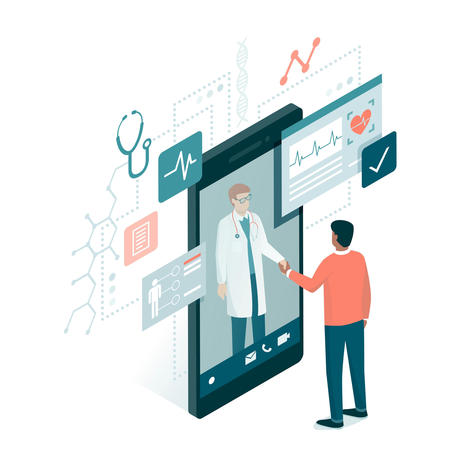
Healthcare providers are embracing digital health services and technologies to extend care to their patients. What is digital health? Digital health is when practitioners use technology to help improve their patients’ health and treatment process. Digital health includes the use of Artificial Intelligence (AI), wearable gadgets, Telemedicine EMR Software, mobile apps for doctors and patients, and electronic medical records software. These digital healthcare trends have transformed the way the healthcare system operates by improving care quality and extending remote care options which were especially seen as life-saving during the pandemic.
|
|
Scooped by
Beeyond
March 20, 2022 12:05 PM
|
The idea of a “digital front door” to create a streamlined consumer experience in healthcare has touched every corner of this year’s HIMSS conference in Orlando, Florida. When Valdes asked how many attendees had heard the phrase during the conference, laughter rippled through the crowd, and every person in the audience threw up their hand.
|
|
Scooped by
Beeyond
March 20, 2022 12:02 PM
|
The benefits of digital health technologies are enormous! Providers and other stakeholders use them to reduce inefficiencies, improve access, reduce costs, increase quality, and make more personalized medicine for patients. Patients and consumers can also use them to better manage and track their health and wellness-related activities. It is not only a new way to communicate but also an innovative way to monitor health and well-being.
|
|
Scooped by
Beeyond
March 20, 2022 11:59 AM
|
Technology companies and device manufacturers should coordinate with public health officials to introduce a new era of precision public health.
|
|
Scooped by
Beeyond
March 18, 2022 7:25 PM
|
Basic public health initiatives—such as hiring contact tracers, providing facilities and financial compensation for quarantining, knocking on doors to decrease vaccine hesitancy, and providing free masks, tests, and vaccines—have proven to be the best ways to save lives during the pandemic. Unfortunately, many governments have chosen instead to partner with Big Tech to implement needlessly complex initiatives that do little more than boost large companies’ profits and increase surveillance.
|
|
Scooped by
Beeyond
March 8, 2022 3:16 AM
|
A 2016 study reported that 259,000 digital health apps were available for consumers. Global consumers will spend $49 billion by 2020 on digital health solutions. A record number (296) of private digital health companies received venture funding in 2016, funding that totaled more than $4.2 billion that year and approached $6 billion the following year.
The excitement about these technologies partially stems from their potential to address health care system challenges that have slightly improved with traditional health care processes, payment models, regulations, guidelines, and innovations such as drugs and devices. Still, there is objective real-world evidence that these technologies work.
|
|
Scooped by
Beeyond
March 2, 2022 10:16 AM
|
Sanofi and digital therapeutics company DarioHealth will work together to promote the tech firm’s offerings for the management of chronic diseases. Under the $30 million, multi-year agreement, the partners will also develop new technology tools.
|
|
|
Scooped by
Beeyond
April 22, 2022 9:05 AM
|
Digital health in the mental health care industry is proving to be particularly influential. At a consumer level, the rise of mental health apps and the introduction of telehealth services has made it easier to access crucial care and resources. At a provider level, digital health is helping to ensure a more open line of communication between doctors and other professionals within the healthcare industry.
|
|
Scooped by
Beeyond
April 20, 2022 2:14 AM
|
The study examines the amplifying role of users in the e-healthcare sector and holistically show its current state and potential. The paper aims at contributing to the scientific literature with a comprehensive review of the current state of the art on the application of user innovation (UI) in the e-healthcare sector, as a solid step for discussing the potential, trends, managerial gaps and future research avenues in this field.
|
|
Scooped by
Beeyond
April 3, 2022 4:56 AM
|
In the race to roll out telehealth offerings and digital patient engagement tools during the height of the pandemic, many providers and health plans inadvertently created a rag-tag assortment of patient portals, health apps and clunky websites that can be impossible to navigate and even more difficult to integrate with existing tech infrastructure. To overcome these obstacles, providers and payers need to take a holistic approach to digital patient engagement, one that makes it seamless for patients to coordinate care with multiple providers across digital, telehealth and face-to-face interactions.
|
|
Scooped by
Beeyond
March 30, 2022 4:08 AM
|
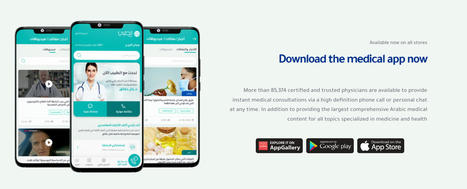
Founded in 2011, Altibbi is the largest AI-based digital health provider in the Arab world with unrivaled scale and innovation. The Company hosts over two million pages of content and has published six peer-reviewed scientific papers in the last year alone. It has conducted 4.5 million telehealth consultations to date, has 20 million unique visitors a month to its platform, and offers its 24/7 telehealth services across seven regional countries – with over 1,500 active certified doctors on the platform. Altibbi’s AI engine, created by their leading team of data scientists, engineers and clinicians, also provides a unique capability for a comprehensive patient solution.
|
|
Scooped by
Beeyond
March 28, 2022 9:23 AM
|
Doctors have always had to grapple with how to transfer, incorporate, and standardize new knowledge. But this task has gotten exponentially harder. First anatomy, then germ theory, the discovery of disease pathways, the creation of screening and diagnostic tests, procedures, and treatments, followed by the increasing medical complexity of chronic conditions and longevity and the rise of genetics and epigenetics. Alongside these advances are new guidelines, standards of care, quality metrics, and thousands of new peer-reviewed articles each month. Synthesizing all this would require hundreds of hours a month — time and energy clinicians just don’t have.
|
|
Scooped by
Beeyond
March 21, 2022 5:40 AM
|
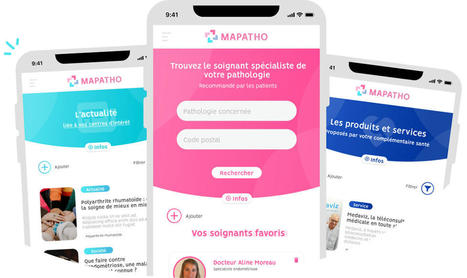
Trouve facilement et rapidement le soignant expert de ta pathologie. Découvre la boite à outils digital qui facilite ton quotidien.
|
|
Scooped by
Beeyond
March 20, 2022 12:06 PM
|
For years, when patients needed a new prescription or a refill on existing medication, they were required to make an appointment to see their doctor in person. However, when COVID-19 hit in 2020, lockdowns and closures forced a rapid shift to digital healthcare, with many in-person doctor appointments replaced by telemedicine or virtual visits — yet through it all, the need for prescription medications did not disappear.
With the shift to digital health here to stay — a recent report found that almost half of Canadians have now accessed a physician using virtual care, and 91 percent are satisfied with the service they received — the healthcare industry faces some important questions.
|
|
Scooped by
Beeyond
March 20, 2022 12:04 PM
|
Increasingly, digital health technologies (DHT) are becoming part of the conduct of clinical trials for pharmaceuticals and medical devices. They cover an extremely broad range of applications, including ingestible and implantable sensors, wearable devices carried by patients to measure certain health related parameters, digital/remote monitoring of drug intake, electronic signatures on consent forms, health data analytics through processing data that support bioinformatics modelling, and electronic patient diaries. The options are increasing daily.
|
|
Scooped by
Beeyond
March 20, 2022 12:01 PM
|
Pioneering technologies can detect the risk of disease, predict how a disease may progress and enable the right treatment decision at the outset. Software solutions that support these tests and devices are becoming an integral part of decision making along the entire continuum of a patient’s health or disease, enabling physicians to make full use ofin vitro diagnostics (IVDs) along the healthcare value chain. Digital health software empowers patients to gain control over chronic conditions by enabling both physicians and patients to monitor treatment progress. And, through its ability to rapidly connect dots between patients, healthcare professionals, evidence-based research and even between biomarkers and disease indicators, digital health provides data-driven results to support life-changing decisions.
|
|
Scooped by
Beeyond
March 20, 2022 11:56 AM
|
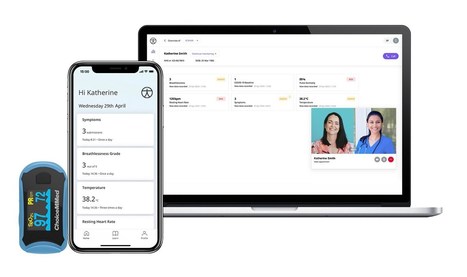
The coronavirus pandemic expedited the digital transformation underway in healthcare, and patients and providers alike saw benefits to the new tech and virtual solutions. Telehealth appointments, remote patient monitoring services, and amended insurance offerings were able to extend quality care to consumers at a quicker and less-expensive rate.
But incumbent healthcare institutions should keep an eye out for big tech companies encroaching on their space, as companies including Alphabet, Amazon, Apple, and Microsoft try to sway consumers from traditional healthcare players through consumer-first, tech-focused approaches.
|
|
Scooped by
Beeyond
March 16, 2022 6:05 AM
|
A federal law requires that health information be easy to exchange by the end of this year. The development of standardized application programming interfaces, or APIs, will go a long way toward making that possible. Care providers, health plans, and software vendors should take several steps to capitalize on the opportunities that they will generate.
|
|
Scooped by
Beeyond
March 8, 2022 3:13 AM
|
MDisrupt addresses the lack of widespread adoption of digital health products via its data-driven platform, which allows digital health companies to generate datasets through clinical crowdsourcing, giving a way to evaluate the system in place. The idea is that the healthcare company can show payers why they should cover their technology, health systems why they should implement the technology, thereby prompting providers to adopt the system, Gadelrab said.
|