From ICEERS: We seek to look deeply at the process of mourning due to the loss of a loved one and the influence that the intake of ayahuasca may have had throughout this process.
Given that up to now no studies of this kind have been carried out, and no data exist about the possible therapeutic potential of ayahuasca in processes related to the loss of our loved ones, we would like to contact a sufficient number of people who could explain in detail their personal experience, with the goal of expanding the knowledge about these processes and the ingestion of ayahuasca.
We, at ICEERS, would be sincerely grateful if you know someone who has gone through this situation and could let them know about our initiative, so that in the future, the largest number of people would be benefited by the knowledge shared by these volunteers.
Defense lawyer Toy Haber discusses the evolution of the Santo Daime Church in Brazil which utilizes Ayahuasca. We will trace the importation of the tea and establishment of Churches in the United States and the failed efforts to obtain agreement with the United States to permit the tea. We will discuss the legal and factual issues that arose in the federal court case highlighting the government’s intellectually bankrupt reasons for banning the tea, the importance of experts in such cases, and of understanding the the legal issues regarding “reliable science.”
Roy S. Haber, LLB is a Eugene, Oregon-based attorney for the Santo Daime Church of Brazil. He is a practicing civil rights and environmental lawyer formerly with the Lawyer’s Committee for Civil Rights Under Law in Jackson, Mississippi, the Native American Rights Fund and Deputy Chief in the Civil Rights Division of the Department of Justice under President Carter.
Roy Haber will be joining our panel discussion on Oct 19th. Get your tickets now! www.neuronstonirvana.com
BREAKING NEWS! We are very happy to announce that Roy Haber will be joining our panel discussion on Oct 19th. Get your tickets now! www.neuronstonirvana.com
Roy S. Haber, LLB is a Eugene, Oregon-based attorney for the Santo Daime Church of Brazil. He is a practicing civil rights and environmental lawyer formerly with the Lawyer’s Committee for Civil Rights Under Law in Jackson, Mississippi, the Native American Rights Fund and Deputy Chief in the Civil Rights Division of the Department of Justice under President Carter.
Deep in a remote Cambodian rainforest, criminals are setting up illegal factories to produce safrole oil, the raw ingredient for ecstasy. Adam Yamaguchi join...
La fantasia ,la falta de rigurosidad y el desequilibrio mental alimentan búsquedas amazónicas de sabiduría ancestral, puestas de moda por antropólogos californianos que encontraron en los indígenas un paradigma de conocimiento no contaminado por la biblia ni el positivismo- Importantes populizadores de esta moda han sido Carlos Castaneda y Michael Harner, Alrededor de sus míticos escritos se formó un movimiento de turistas neochamanicos que invadió las selvas contaminando de otra forma no química pero igual de peligrosa a las poblaciones indígenas. Tras unos años de aventuras selváticas, viajes organizados para intoxicarse de alucinógenos in situ.Este movimiento ha llegado a las ciudades formando otro fenómeno pseudomistico y pseudochamánico, con importantes repercusiones en la salud mental de algunos incautos, en el que el chaman viaja de la selva con sus espíritus y sus drogas a occidente a iniciar a ciudadanos urbanos con tomas multitudinarias de sustanci as tóxicas, con una alta facturación ,formalizando un negocio con tintes ilegales repartido entre indígenas contaminados por el capitalismo y socios locales sin escrupulos que lamentablemente afecta a personas que con buenas intenciones de desarrollo personal y aspiraciones místicas que acaba iniciando un viaje al desequilibrio mental, la dependencia de drogas y sus consecuencias que nada tienen que ver con la intención inicial de adquirir sabiduría ancestral.En este estudio se realiza un análisis de este fenómeno que tiene lugar en ciudades principales de Europa, ante el que los profesionales de la salud mental tenemos que estar atentos.
It is a rare occurrence to encounter an anthropological work that is intellectually rigorous and deeply spiritual, one which both illuminates the mind and touches the deep concerns of the heart.
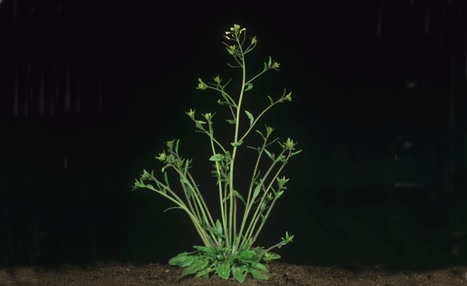
This is an interesting science piece. You can research how this happens and whether research is going into learning how to replicate this in other objets.
We received a secretly-recorded audio clip from a closed-door session of a recent Global Industry Summit. The subject was speaking about recent advances in neuro-marketing…
They target our minds in order to steal our happiness,which is the cornerstone of our true power as awakened activists. Yet a true heart, grounded in love, is immune and impenetrable to tactics of scarcity, fear, and deceit.
Complex unconscious psychological stresses underlie and contribute to all chronic medical conditions, from cancer and addiction to depression and multiple sclerosis. Therapy that is assisted by psychedelics, in the right context and with the right support, can bring these dynamics to the surface and thus help a person liberate themselves from their influence. Special focus will be given to the speaker's experience in treating addictions and other stress-related conditions, both with aboriginal people and in non-indigenous contemporary healing circles. This work has been done under the guidance of indigenous Peruvian shamans and their Western apprentices.
Every $ counts. Help fund the 1st, largest, multi-sited, multidisciplinary research project on Ayahuasca-assisted Treatment for Mental Health and Addiction.
Groundbreaking study reveals why some doctors stop caring about their patients.
Youngson said research shows doctors who are empathetic and who listen get better results in patients.
A recent study of 20,000 diabetes patients in Italy found those who rated their doctors as empathetic had 40 per cent fewer hospital admissions. He said the medical benefit of compassion had been shown to be more powerful than that of many medicines.
a psychologist named Daniel Goleman reported that, “A growing body of recent research shows that people with the most social power pay scant attention to those with little such power.”
He went on to suggest, “This has profound implications for societal behavior and government policy. Tuning in to the needs and feelings of another person is a prerequisite to empathy, which in turn can lead to understanding, concern and, if the circumstances are right, compassionate action.
This essay, which is the third in the series “Recollections, Reflections, and Revelations: Ethnobiologists and their First Time in the Field”, is a personal reflection by the researcher on his experience and involvement in kinship and friendship networks while conducting agrobiodiversity research in southern Appalachia, USA. Vignettes are given from moving moments spent with Native spiritual leaders, backcountry mountain people, and local co-collaborators in the research process. The author demonstrates how lasting field friendships have helped lead to groundbreaking ethnoecological research.
Curling up in a hammock, I struggle to suppress my gag reflex. I’ve just forced down a glass of muddy liquid with the consistency of blended socks – all in the name of spiritual awakening.
Uyghur Traditional Medicine Doctors Tested in Chinese Radio Free Asia A licensing exam requiring doctors of traditional Uyghur medicine to answer questions in Chinese is threatening the future of the indigenous medical practice, according to ethnic...
Featureteaser: Throughout the past decade of working with ayahuasca, I've often thought of South American shamanism and the Santo Daime variety of shamanism as the yin and yang of the medicine world.
Nuevo Estudio de la Fundación ICEERS en collaboración con el IMIM para ganar nuevos conocimientos sobre los efectos del cannabis en personas con enfermedades...
Scientists have long known how drugs act on the brain’s reward center, but a researcher shows that societal factors play a large role in addiction, too.
"“Eighty to 90 percent of people who use crack and methamphetamine don’t get addicted,” said Dr. Hart, an associate professor of psychology. “And the small number who do become addicted are nothing like the popular caricatures.”"
To get content containing either thought or leadership enter:
To get content containing both thought and leadership enter:
To get content containing the expression thought leadership enter:
You can enter several keywords and you can refine them whenever you want. Our suggestion engine uses more signals but entering a few keywords here will rapidly give you great content to curate.


 Your new post is loading...












New study from ICEERS, please take the questionare if you have experienced ayahuasca has been helpful to you in the loss of a loved one.