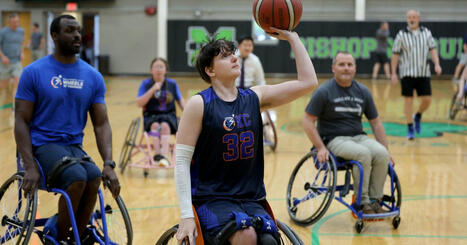
Americans who have disabilities are twice as likely to have diabetes, stroke and depression. That's partly because they get less exercise than they need. They face many obstacles. Most gym exercise machines are not accessible, and asking for help to use them may make some feel uncomfortable.
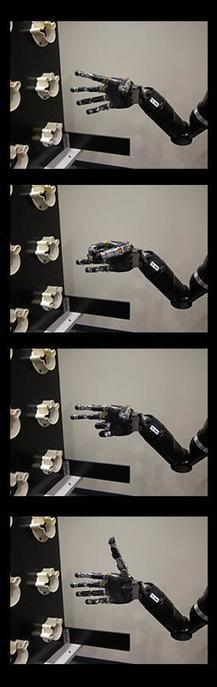
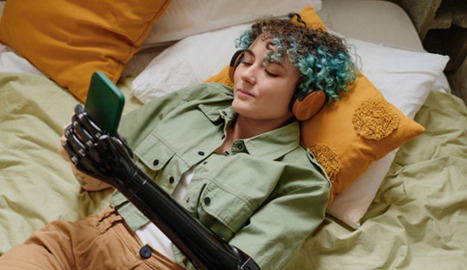
Brain-computer interface technology has the potential to improve the function and quality of life of those unable to use their own arms, a woman with quadriplegia shaped the almost human hand of a robot arm with just her thoughts to pick up big and small boxes, a ball, an oddly shaped rock, and fat and skinny tubes.
Inclusive design is innovative design is beautiful design. Welcome to Microsoft's Inclusive Tech Lab, a state-of-the-art facility dedicated to advancing inclusive design.
Located on Microsoft's Redmond Campus, the Inclusive Tech Lab is a space dedicated to inclusive modern life and education, accessible productivity, and gaming for people with disabilities. The facility is crafted so people with disabilities can explore assistive and adaptive technologies, inclusively designed products, and sensory experiences - it's a space for people with disabilities, not about people with disabilities.
The Lab works with Microsoft software, hardware and product design teams to ensure traditionally marginalized perspectives are integrated into every stage of the design process, making technology that is accessible and empowering for everyone.
Dyslexia is a specific learning disability that affects reading and language processing. It's a neurological condition that primarily manifests as difficulty with accurate and fluent word recognition, as well as poor spelling and decoding abilities.
Here are some key points about dyslexia:
Characteristics: People with dyslexia often struggle with reading fluency, reading comprehension, spelling, and sometimes writing. This difficulty is not related to intelligence but rather how the brain processes written and spoken language.
Causes: Dyslexia has a genetic basis and tends to run in families. It results from differences in how the brain processes language, particularly in areas involved in phonological processing—the ability to recognize and manipulate sounds in words.
Diagnosis: Dyslexia is typically diagnosed through educational and psychological assessments that evaluate reading skills, cognitive abilities, and language processing. Early diagnosis and intervention are crucial for effective support.
Impact: Dyslexia can affect various aspects of life, including academic achievement, self-esteem, and social interactions. However, with appropriate interventions and accommodations, individuals with dyslexia can succeed academically and professionally.
Interventions: Effective interventions for dyslexia include specialized reading programs that emphasize phonological awareness, multisensory learning approaches, and assistive technologies such as text-to-speech software and audiobooks.
Legal Protections: In the United States, dyslexia is considered a disability under the Individuals with Disabilities Education Act (IDEA) and Section 504 of the Rehabilitation Act. This entitles individuals with dyslexia to receive accommodations and support services in educational settings.
Awareness and Support: Increased awareness of dyslexia has led to better understanding and support in schools and workplaces. Educators and employers are encouraged to provide accommodations and create environments that support the strengths and challenges of individuals with dyslexia.
Overall, dyslexia is a common learning difference that affects millions of people worldwide. With early identification, appropriate interventions, and support, individuals with dyslexia can overcome challenges and thrive in various aspects of life.
COMMENTARY | The new category in artificial intelligence, conversational AI, has governments captivated. Here are some of the ways they are thinking of ...
REHACARE 2024 – Self-determined living Düsseldorf from 25 - 28 September 2024: REHACARE International is the leading trade fair for rehabilitation, prevention, integration and care. Every year, experts, specialists and visitors from Europe and overseas meet in Düsseldorf to present and experience the latest developments and trends in the fields of mobility, barrier-free living and work design, as well as aids and technologies for people with disabilities.
Discover the TiPY Keyboard - the innovative one handed keyboard designed for efficient use and individuals with disabilities. This keyboard allows complete control of your computer using either the left or right hand. With its ergonomic design and accessible features, the TiPY Keyboard is specifically helpful for individuals with physical limitations. It provides an efficient and productive solution for one-handed typing and improved accessibility. The TiPY Keyboard is a revolutionary assistive technology empowering individuals with arm and hand disabilities to fully utilize their computers. Experience the future of one-handed keyboards and unlock the versatility and efficiency of the TiPY Keyboard for an inclusive computer experience.
That was filmed at Integra 2024. A big thank you to the organizers and the wonderful collaboration with Platus and their great team. And of course, many thanks to all the visitors and interested parties!
There’s a joke in one of my favorite movies, “Real Genius,” which feels directly applicable to a lot of AI discussions we’re having today. (It’s an ’80s movie, s…
Disabled people are experts in using – and designing – assistive technologies. They have lessons to offer everyone about keeping control when help is offered.
Your weekly dose of information that keeps you up to date on the latest developments in the field of technology designed to assist people with disabilities and special needs. Special Guests: Dr.Al…...
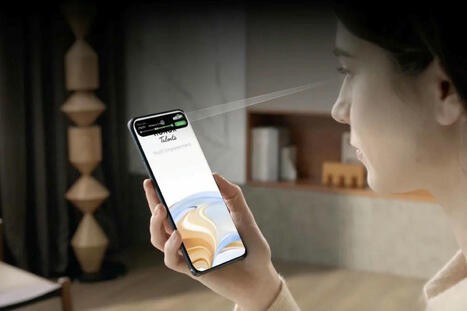
Adhering to HONOR’s commitment to human-centric innovation, the company stands as the first smartphone brand to introduce intent-based eye-tracking technology through its MagicOS 8.0 operating system.
Japanese eSports gamer Mashiro is blind and often relies on a companion to get around Tokyo -- but he hopes that artificial intelligence, hailed as a promising tool for people with disabilities, can help him travel alone.
Hosted by the SID-US Education for Development Workgroup
This event explored the impact of Artificial Intelligence (AI) in advancing inclusive education and ways AI tools can be utilized in alignment with USAID's Universal Design for Learning (UDL) guidance. This event brought together leaders from the Ed-tech industry and technology experts to explore how AI tools and platforms can personalize learning experiences, accommodating diverse learning styles and abilities. Participants of this session gained insights into real-world examples of AI-driven assistive technologies that enable students with disabilities to access educational content and actively participate in the classroom.
The remote work trend of the Covid-19 era shaped how remote work continues to support disability inclusion. One out of five workers still do some telecommuting.
My name is Aaron Page. I am Allyant’s Director of Accessibility, and I am blind. I was born with congenital glaucoma and lost my remaining functional vision 15 - 16 years ago. I want to start by stating that my experiences are my own, and they are affected by my disability, my past experiences, and
To get content containing either thought or leadership enter:
To get content containing both thought and leadership enter:
To get content containing the expression thought leadership enter:
You can enter several keywords and you can refine them whenever you want. Our suggestion engine uses more signals but entering a few keywords here will rapidly give you great content to curate.


 Your new post is loading...