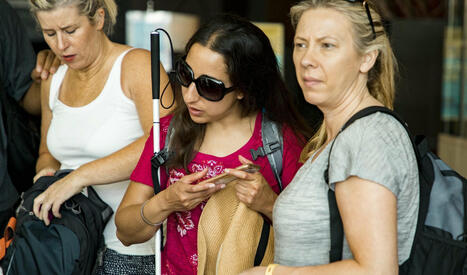
Visual impairment affects the ability of people to live a life like normal people. Such people face challenges in performing activities of daily living, such as reading, writing, traveling and participating in social gatherings. Many traditional approaches are available to help visually impaired people; however, these are limited in obtaining contextually rich environmental information necessary for independent living. In order to overcome this limitation, this paper introduces a novel wearable vision assistance system that has a hat-mounted camera connected to a Raspberry Pi 4 Model B (8GB RAM) with artificial intelligence (AI) technology to deliver real-time feedback to a user through a sound beep mechanism. The key features of this system include a user-friendly procedure for the recognition of new people or objects through a one-click process that allows users to add data on new individuals and objects for later detection, enhancing the accuracy of the recognition over time. The system provides detailed descriptions of objects in the user's environment using a large vision language model (LVLM). In addition, it incorporates a distance sensor that activates a beeping sound using a buzzer as soon as the user is about to collide with an object, helping to ensure safety while navigating their environment. A comprehensive evaluation is carried out to evaluate the proposed AI-based solution against traditional support techniques. Comparative analysis shows that the proposed solution with its innovative combination of hardware and AI (including LVLMs with IoT), is a significant advancement in assistive technology that aims to solve the major issues faced by the community of visually impaired people
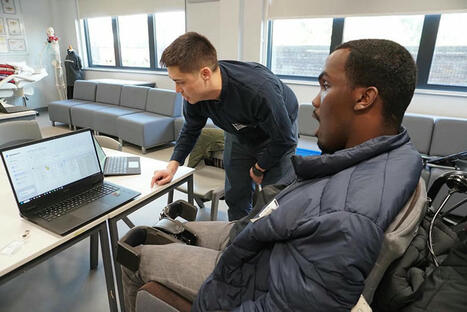
At Sensory Guru, innovation means creating powerful, accessible technology for people with complex disabilities.
In this short video, we share the story behind Sensory Eye FX — how it began with a deep understanding of attention as a form of interaction, and evolved into a system that empowers users of all abilities.
From our early development of eye tracking software in 2010 to the launch of Sensory Eye FX, our focus has always been clear: ✅ Make interaction possible for everyone ✅ Deliver meaningful cause-and-effect experiences ✅ Improve engagement and quality of life
We believe that students once considered the most profoundly challenged can thrive with the right tools — and we’re proud to be part of that journey.
This article will explore the most impactful technologies helping seniors today, the innovations making aging at home more manageable, the challenges of adoption, and what the future may hold for all of us.
Why is braille still undervalued in 2025? In this powerful conversation, Steven Scott welcomes accessibility leader Dave Williams to discuss his journey from RNIB to DOT, a company creating a new type of braille tech, and the cultural barriers still holding blind people back. From leadership gaps to breakthrough devices like the Dot Pad X, this episode offers deep insights into blind empowerment, inclusive design, and the state of accessible technology today. Double Tap is a treasure trove of information for anyone who's blind or partially sighted and has a passion for tech. Steven and Shaun not only demystify tech, but they also regularly feature interviews and welcome guests from the community, fostering an interactive and engaging environment. Tune in every day of the week, and you'll discover how technology can seamlessly integrate into your life, enhancing daily tasks and experiences, even if your sight is limited.
Explore Windows 11 accessibility with voice navigation and typing. Use advanced voice recognition to transcribe your spoken words into text on your PC.
Despite delays and limited outreach, Bulgaria’s EU-funded assistive technology programme offers life-changing support to people with disabilities. NGOs are calling for broader access and long-term sustainability.
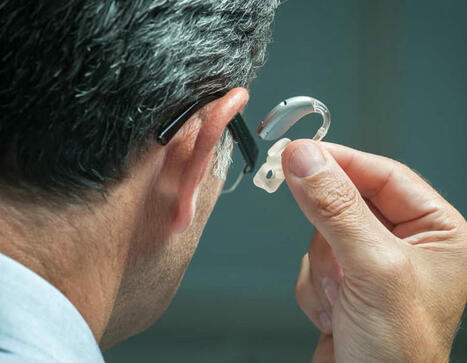
To mark World Day for Assistive Technology, WHO/Europe’s new guide offers a practical framework to help countries and stakeholders improve access to assistive technology (AT), through better understanding of AT markets and targeted interventions to address market shortcomings. AT includes a wide range of devices, such as wheelchairs, hearing aids, prosthetics and communication devices, which enable people with disabilities, older people and those with particular health conditions to live independently and participate fully in society. Yet, globally, only 1 in 10 people who need these products have access to them.
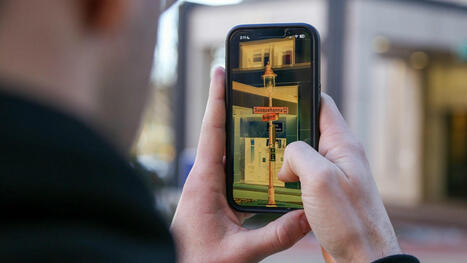
In this video, I take you on a deep dive into Observo, the powerful object recognition app now available on the BlindShell Classic 3 — the innovative phone built specifically for the blind and visually impaired. Observo uses AI to identify objects in your environment, helping you navigate your world with greater independence and confidence.
Whether you're trying to identify household items, sort groceries, or explore unfamiliar surroundings, Observo turns your BlindShell Classic 3 into a smart visual assistant. Simply open the app, point the camera, and let Observo describe what's in front of you — all with accessible audio feedback and easy-to-use controls.
Observo is one of the many exciting upgrades on the new BlindShell Classic 3, further proving that accessibility and innovation can go hand in hand.
Does your child or teen have ADHD? Whether they struggle with time management or need to work on their reading skills, these savvy tools include everything from free downloads to digital to-do lists. Give them a boost in the classroom and beyond with expert-approved apps and gadgets.
The Disability Technology report explores the potential for data-driven digital technologies to reduce barriers that disabled people encounter in their everyday lives.
By Jim ShimabukuroEditor Introduction: This article is a collaboration with ChatGPT. With the gigantic Air Jordan leaps we're taking toward AI, we can't help but wonder: Are people with special needs being neglected?
Can Affordable Equipment Train BCI Users Effectively? In this informative video, we will explore the world of brain-computer interfaces (BCIs) and the role of affordable equipment in training users. We will discuss how budget-friendly technology can be just as effective as high-end systems, allowing more individuals to engage with this cutting-edge field. You'll learn about the performance of lower-cost devices compared to traditional systems and how they can simplify user experience while still delivering results.
WHO/Europe has introduced a new data dashboard, providing streamlined access to information and evidence related to assistive technology policies and services.
To get content containing either thought or leadership enter:
To get content containing both thought and leadership enter:
To get content containing the expression thought leadership enter:
You can enter several keywords and you can refine them whenever you want. Our suggestion engine uses more signals but entering a few keywords here will rapidly give you great content to curate.




 Your new post is loading...