Analytics and data - trying to understand the conversation
1.5K views | +2 today
Analytics and data  - trying to understand the conversation
Bits and pieces to  research this growing area in training and education . Your students and your staff .
Curated by Jess Chalmers
Your new post is loading...
Scooped by Jess Chalmers
March 16, 2013 6:51 PM
Scoop.it!

SXSW 2013: Measurement and Making Sense of Your Data

SXSW 2013:  Measurement and Making Sense of Your Data | Analytics and data  - trying to understand the conversation | Scoop.it
This is the last post in a series of post about my experience at SXSW.
No comment yet.
Scooped by Jess Chalmers
March 15, 2013 1:18 AM
Scoop.it!

Learning Analytics: How Data Provides Direction | PropertyCasualty360

Learning Analytics: How Data Provides Direction | PropertyCasualty360 | Analytics and data  - trying to understand the conversation | Scoop.it
Analytics provide perspective about employee development and corporate performance, along with how your organization’s learning programs stack up in the industry.
No comment yet.
Scooped by Jess Chalmers
March 15, 2013 12:48 AM
Scoop.it!

Turning Learning into Numbers - A Learning Analytics Framework

Invited talk at SURF seminar on Learning Analytics http://www.surf-academy.nl/programma/event/?id=395
No comment yet.
Scooped by Jess Chalmers
March 14, 2013 9:41 PM
Scoop.it!

12 Education Tech Trends to Watch in 2012 | MindShift

12 Education Tech Trends to Watch in 2012 | MindShift | Analytics and data  - trying to understand the conversation | Scoop.it
Getty Looking ahead at some of the education technology trends we'll likely see in 2012, many are already underway. But here are 12 areas where we bel
No comment yet.
Scooped by Jess Chalmers
March 14, 2013 5:54 AM
Scoop.it!

Learning Analytics: Leveraging Education Data [Infographic]

Learning Analytics: Leveraging Education Data [Infographic] | Analytics and data  - trying to understand the conversation | Scoop.it
RT @edc_blog: Learning Analytics: Leveraging Education Data [Infographic] http://t.co/I9Uq2dsDDh #edtech #edchat #highered
No comment yet.
Rescooped by Jess Chalmers from Learning Analytics, Educational Data Mining, Adaptive Learning
March 14, 2013 5:51 AM
Scoop.it!

"No More Excuses": Michael M. Crow on Analytics (EDUCAUSE Review) | EDUCAUSE.edu

"No More Excuses": Michael M. Crow on Analytics (EDUCAUSE Review) | EDUCAUSE.edu | Analytics and data  - trying to understand the conversation | Scoop.it

If you are instead trying to educate a broader spectrum of the population, including elite students, and you aren't using analytics, you won't know what's going on.


Via Kim Flintoff
No comment yet.
Rescooped by Jess Chalmers from Learning Analytics, Educational Data Mining, Adaptive Learning
March 14, 2013 5:50 AM
Scoop.it!

Why Big Data (Mostly) Can't Help Improve Teaching -

Why Big Data (Mostly) Can't Help Improve Teaching - | Analytics and data  - trying to understand the conversation | Scoop.it

Right now, what we’re trying to do is a little like trying to conduct physics research before somebody has invented calculus. You can do some things around the edges, but you can’t describe the really important hypotheses about causes and effects in learning situations with any precision. And if you can’t describe them with precision, then you can’t test them, and you certainly can’t get a machine to understand them.


Via Kim Flintoff
No comment yet.
Rescooped by Jess Chalmers from Learning Analytics, Educational Data Mining, Adaptive Learning
March 14, 2013 5:47 AM
Scoop.it!

Daphne Koller: What we're learning from online education | Video on TED.com

TED Talks Daphne Koller is enticing top universities to put their most intriguing courses online for free -- not just as a service, but as a way to research how people learn.


Each keystroke, comprehension quiz, peer-to-peer forum discussion and self-graded assignment builds an unprecedented pool of data on how knowledge is processed and, most importantly, absorbed.


Via Kim Flintoff
No comment yet.
Rescooped by Jess Chalmers from Learning Analytics, Educational Data Mining, Adaptive Learning
March 14, 2013 5:46 AM
Scoop.it!

Learning Analytics: The Future is Now

Learning Analytics: The Future is Now | Analytics and data  - trying to understand the conversation | Scoop.it
GUEST COLUMN | By Deb Everhart Everyone is talking about analytics applied to education and how “big data” can (will?) transform many aspects of our educational institutions. And for those of u...

Via Kim Flintoff
No comment yet.
Rescooped by Jess Chalmers from Learning Analytics, Educational Data Mining, Adaptive Learning
March 14, 2013 5:44 AM
Scoop.it!

Course Signals - Stoplights for Student Success

Course Signals - Stoplights for Student Success | Analytics and data  - trying to understand the conversation | Scoop.it

Purdue University's Course Signals application detects early warning signs and provides intervention to students who may not be performing to the best of their abilities before they reach a critical point.


Via Learning Futures
No comment yet.
Rescooped by Jess Chalmers from Learning Analytics
March 14, 2013 5:40 AM
Scoop.it!

Grades 2.0: How Learning Analytics Are Changing The Teacher’s Role | Edudemic

Grades 2.0: How Learning Analytics Are Changing The Teacher’s Role | Edudemic | Analytics and data  - trying to understand the conversation | Scoop.it

Via R Kay Richardson
No comment yet.
Rescooped by Jess Chalmers from Learning Analytics
March 14, 2013 5:37 AM
Scoop.it!

Concept Mapping as a Tool for Group Problem Solving

An animated presentation about concept mapping. Focuses on how groups can employ the technique as a tool for collaborative planning and problem solving. he presentation was first given at Swarthmore College's Staff Development Week on January 11, 2011.


Via Gust MEES, Jenny Pesina, R Kay Richardson
Becky Schivley Mather's comment February 26, 2013 5:25 PM
PBL is a tremendously powerful strategy- but it is misunderstood and misused way too often! These articles should help clarify the concepts!
Scooped by Jess Chalmers
March 14, 2013 5:36 AM
Scoop.it!

Learning Analytics [Infographic] ~ Educational Technology and Mobile Learning

Learning Analytics [Infographic] ~ Educational Technology and Mobile Learning | Analytics and data  - trying to understand the conversation | Scoop.it
No comment yet.
Scooped by Jess Chalmers
March 16, 2013 8:27 AM
Scoop.it!

Data Can Open College Doors for Disadvantaged Kids

Data Can Open College Doors for Disadvantaged Kids | Analytics and data  - trying to understand the conversation | Scoop.it
And social technology can help them once they're enrolled.
No comment yet.
Scooped by Jess Chalmers
March 15, 2013 1:00 AM
Scoop.it!

Learning Analytics - L&D Community of Practice 2012

Learning analytics to inform learning design.
No comment yet.
Scooped by Jess Chalmers
March 15, 2013 12:20 AM
Scoop.it!

NMC Horizon Report > 2013 Higher Education Edition | The New Media Consortium

NMC Horizon Report > 2013 Higher Education Edition | The New Media Consortium | Analytics and data  - trying to understand the conversation | Scoop.it
No comment yet.
Rescooped by Jess Chalmers from E-Learning-Inclusivo (Mashup)
March 14, 2013 5:17 PM
Scoop.it!

Visual Analytics to Support E-learning | InTechOpen

Visual Analytics to Support E-learning | InTechOpen | Analytics and data  - trying to understand the conversation | Scoop.it
Visual Analytics to Support E-learning | InTechOpen, Published on: 2010-01-01. Authors: Diego Alonso Gomez Aguilar, Cristobal Suarez Guerrero, Roberto Theron Sanchez, et

Via juandoming
No comment yet.
Scooped by Jess Chalmers
March 14, 2013 5:53 AM
Scoop.it!

Where do you see online education in 20 years?

Where do you see online education in 20 years? | Analytics and data  - trying to understand the conversation | Scoop.it
Oh on-line learning, where will you lead us? Where do you see online education in 20 years? http://t.co/XSmqWh28UN via @socializeWP
No comment yet.
Rescooped by Jess Chalmers from Learning Analytics, Educational Data Mining, Adaptive Learning
March 14, 2013 5:50 AM
Scoop.it!

Pushing the MOOC envelope with Learning Analytics

How can Learning Analytics be used to bring about the true revolution traditionally assumed for MOOCs? With audiences in the thousands of users, the key is mass

Via Peter Mellow
No comment yet.
Rescooped by Jess Chalmers from Learning Analytics, Educational Data Mining, Adaptive Learning
March 14, 2013 5:49 AM
Scoop.it!

How Learning Analytics Are Being Used In HIGHER ED - Edudemic

How Learning Analytics Are Being Used In HIGHER ED - Edudemic | Analytics and data  - trying to understand the conversation | Scoop.it
The Horizon Report showcases a number of different examples of institutions that are using learning analytics in different ways.

Via LGA, Peter Mellow
No comment yet.
Rescooped by Jess Chalmers from Learning Analytics, Educational Data Mining, Adaptive Learning
March 14, 2013 5:46 AM
Scoop.it!

Research and Data Services for Higher Education Information Technology: Past, Present, and Future (EDUCAUSE Review) | EDUCAUSE

Research and Data Services for Higher Education Information Technology: Past, Present, and Future (EDUCAUSE Review) | EDUCAUSE | Analytics and data  - trying to understand the conversation | Scoop.it

Higher education IT data needs to go beyond descriptive analysis to new ways of using data and research to align IT strategy with institutional strategy, plan new services and initiatives, manage existing services, and operate the IT organization on a daily basis.


Via Peter Mellow
No comment yet.
Rescooped by Jess Chalmers from Learning Analytics, Educational Data Mining, Adaptive Learning
March 14, 2013 5:45 AM
Scoop.it!

Personalization And Analytics: The Future Of Education?

Personalization And Analytics: The Future Of Education? | Analytics and data  - trying to understand the conversation | Scoop.it
n/a (RT @mattrea: More on the Pearson / Knewton adaptive learning deal: http://t.co/vudTrqKd #edtech...)...
Via Grant Montgomery, Learning Futures
No comment yet.
Rescooped by Jess Chalmers from Learner Analytics and Accessibility for Disabled Students
March 14, 2013 5:42 AM
Scoop.it!

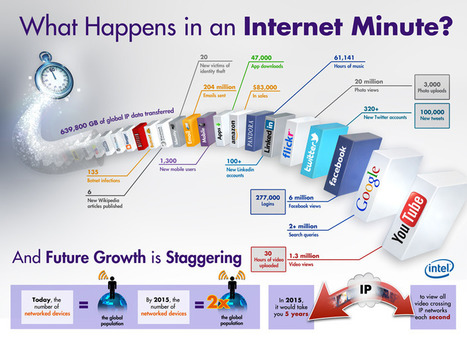
What Happens in an Internet Minute?

What Happens in an Internet Minute? | Analytics and data  - trying to understand the conversation | Scoop.it
Do you know what happens in one minute on the Internet? In just one minute, more than 204 million emails are sent. Amazon rings...

Via Martyn Cooper
No comment yet.
Rescooped by Jess Chalmers from Learning Analytics
March 14, 2013 5:38 AM
Scoop.it!

"Big Data" & Its Myths

"Big Data" & Its Myths | Analytics and data  - trying to understand the conversation | Scoop.it

To say that “Big Data” is a hot topic is an understatement.  

A simple Google search reveals the term gathers more interest than “Cloud Data”, supposedly one of the hottest topics of our era.

Yet, many are still asking: “What is Big Data?” or “is Big Data another marketing buzzword?”  We’ve known for years that Data is the ‘oil of the tech economy’ (see here my interview of Tim O’Reilly).

What’s different now?  And, how do you cut through vendors’ overzealous marketing or the panic created by the press?

The mythical “Data Scientist”
For years, the data business has relied on “data specialists”.  These experts understand data, and business leaders have to know who they are if they are to find answers to their questions.  

1) The industry doesn’t have a clear definition for what a “Data Scientist” is.  (Best resources include EMC’s whitepaper here and InformationWeek’s Doug Henschen’s report here).
2) Most agree that there will never have enough of these experts.  According to McKinsey, the US will need close to 200,000 analytical experts & 1.5 million more data-literate managers by 2015 to take advantage of “Big Data”.

Short of going around the company & re-titling your “Database Administrators” & “Business Analysts” to “Data Scientists”, what should you do with this information?

Here are two suggested steps:

Big Data isn’t just about the Data Scientist
First, realize that the majority of the problem isn’t about the Data Scientist.  The bigger issue is the “data-literate manager”.

With “Big Data”, we now have the opportunity to approach this field in a new way.  We should think about “Big Data” as the chance to make better decision making available and affordable to all.  

 Big Data isn’t about large companies
Second, “Big Data” isn’t only for large enterprises with large amounts of data.  It isn’t even about solving the most complicated analytical issues only large corporations have.  

 The majority of organizations are unable to produce a basic, real-time picture of their business in a format that’s usable by most employees.  Focus on the most necessary and broad base needs before you orchestrate for the most complex and specialized scenarios.

Still confused?
The above consists of general guidance


By Bruno Aziza - http://bit.ly/MCaZoK

Source: http://onforb.es/LF5832


Via maxOz, R Kay Richardson
No comment yet.
Rescooped by Jess Chalmers from Learning Analytics
March 14, 2013 5:37 AM
Scoop.it!

Who's Reading Your Research? Academia.edu Offers an Analytics Dashboard For Scholars

Who's Reading Your Research? Academia.edu Offers an Analytics Dashboard For Scholars | Analytics and data  - trying to understand the conversation | Scoop.it

by AUDREY WATTERS on 15 AUG, 2012


Cross-posted on Inside Higher Ed


"Academia.edu, a social network for scholars, is unveiling a new feature today that its founder Richard Price hopes will help address part of the “credit gap” for research. Academia.edu allows users to upload and share their research papers, and the site is launching its Analytics Dashboard for Scientists today that Price says will let scholars see the “real-time impact” of their work.


Academic publishing has long been a black-box in terms of both who’s reading and who’s citing. Publishing in journals may be expected (required, even), but the delays in the publishing process can make it challenging to ascertain how much influence work has. “It typically takes about 3 to 5 years for citations to actually appear back in the process,” argues Price, pointing to the lengthy time between researching, writing, peer-reviewing, and publishing.


That’s part of the problem with services like Google Scholar that do offer citation counts, Price contends. And certainly the new feature available on Academia.edu today is more akin to Google Analytics than Google Scholar. You can see the pageviews on your papers; you can see the keywords that led people to them; you can see where those viewers come from.


The latter only gives details about the country of origin – enough for scholars to be able to tout the global reach of their work. It would be interesting to see more granular information – which city, which university even – but Price says there are certain privacy concerns before offering those sorts of details..."


Via Jenny Pesina, R Kay Richardson
No comment yet.