Devops for Growth
117.2K views | +0 today
Devops for Growth
For Product Owners/Product Managers and Scrum Teams: Growth Hacking, Devops, Agile, Lean for IT, Lean Startup, customer centric, software quality...
Curated by Mickael Ruau
Your new post is loading...

Popular Tags

Current selected tag: 'Conduite du changement'. Clear
Scooped by Mickael Ruau
January 30, 2024 6:10 AM
Scoop.it!

Essayer plutôt que travailler du cerveau ! –

Essayer plutôt que travailler du cerveau ! – | Devops for Growth | Scoop.it
Dans l’entreprise A, des cadres expérimentés se réunissent plusieurs fois et dessinent un plan très précis de leur projet. Ils en parlent ensuite aux personnes de l’atelier dans des réunions d’une vingtaine de personne. Le Directeur de Production montre le nouveau plan aux employés et leur demandent ce qu’ils en pensent. Il y a peu de réponses, les gens disent que ça a l’air bien. L’implantation est réalisée pendant la fermeture de l’usine.

Dans l’entreprise B, des cadres dessinent la trame de ce qu’ils imaginent. Ils décident de réaliser des simulation à échelle 1 sur leur très grand parking. Munis de rouleaux de scotch pour représenter les espaces et les matériels, ils représentent leur trame au sol. Ils demandent ensuite aux employés concernés de venir essayer la nouvelle configuration et de donner leur avis. Les employés soulèvent de nombreux problèmes et, tous ensemble, ils essaient des configurations différentes jusqu’à ce que les solutions les meilleures soient trouvées. La nouvelle implantation est réalisée par les employés eux-mêmes.

A votre avis, quelle est la nouvelle implantation qui a généré le moins de problèmes de démarrage ? quelle est celle dans laquelle les employés ont eu très envie de laisser leurs responsables se débrouiller avec toutes les difficultés rencontrées ?

La morale de cet exemple est triple :

Le management participatif ne consiste pas seulement à demander leur avis à des subordonnés. Il faut au préalable mettre les gens en conditions de comprendre la situation et critiquer, compléter sans risques.
On est plus motivé si on participe à la conception du changement. On y adhère et on cherche des solutions à tous les problèmes qui n’ont pas été anticipés.
Mieux vaut « trystormer » que « brainstormer » !

Des Frawley, Athletics Carnival, BrisbaneEt cerise sur le gâteau, c’est très amusant de travailler en équipe pour apprendre comment les flux de nouveaux processus peuvent fonctionner, de travailler avec des maquettes qu’on peut déplacer et modifier à volonté, de redécouvrir chaque individu du groupe !

Le seul inconvénient d’essayer est qu’on prend le risque de l’échec. C’est souvent la peur de l’échec qui prolonge la phase de préparation et retarde la mise en œuvre.

On comprend bien que l’échec est cependant beaucoup plus grave si on passe sans transition de l’idée à la mise en œuvre effective sans essais et ajustements préalables. Il nous faut donc passer sans attendre aux essais et simulations.
No comment yet.
Scooped by Mickael Ruau
January 18, 2024 5:54 AM
Scoop.it!

Plus de contraintes, moins de stress, plus de productivité ?

Plus de contraintes, moins de stress, plus de productivité ? | Devops for Growth | Scoop.it


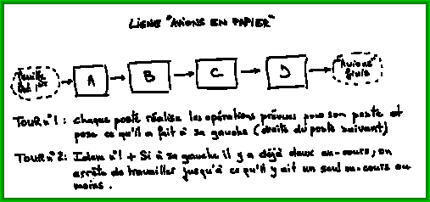
Notre objectif dans l’article d’aujourd’hui, c’est de montrer qu’il FAUT étudier le passage entre deux postes successifs et que c’est là que se joue la rentabilité du processus ET son impact sur le stress au travail. Voyons donc ce que vont faire nos deux équipes concurrentes.

Nous avons annoncé que l’équipe gagnante sera celle qui aura réalisé le plus d’avions conformes et finis à la fin de deux tours de jeu. Ça c’est pour stimuler l’envie d’aller vite et de faire bien ! En réalité, notre objectif est de faire réfléchir le groupe aux meilleures pratiques d’organisation d’une ligne de production.
No comment yet.
Scooped by Mickael Ruau
December 29, 2023 10:06 AM
Scoop.it!

Design organisationnel : la boîte à outils

Design organisationnel : la boîte à outils | Devops for Growth | Scoop.it
Une démarche de transformation des organisations comporte deux dimensions : le design organisationnel d’une part, la conduite du changement d’autre part. Pour synthétiser et en schématisant, on peut dire que le design organisationnel se préoccupe du « hard » et du contenu de la transformation alors
No comment yet.
Scooped by Mickael Ruau
November 4, 2023 6:17 AM
Scoop.it!

7 grands modèles de gestion du changement | Blog Lucidchart

7 grands modèles de gestion du changement | Blog Lucidchart | Devops for Growth | Scoop.it
La gestion du changement désigne généralement la manière dont les équipes et les entreprises mettent en œuvre le changement organisationnel. Découvrez 7 modèles de gestion du changement qui ont fait leurs preuves et que les organisations utilisent encore et toujours.
No comment yet.
Scooped by Mickael Ruau
November 4, 2023 6:14 AM
Scoop.it!

7 exercices pour diminuer l'opposition au changement

7 exercices pour diminuer l'opposition au changement | Devops for Growth | Scoop.it
Cliquez ici pour découvrir des techniques qui permettent de lutter contre l'opposition au changement et de s'assurer du soutien de ses employés.
Mickael Ruau's insight:

La méthode POPE

Sur une grande feuille de papier ou un tableau, tracez quatre colonnes en leur donnant les titres suivants : Projet, Objectif, Personnes et Environnement.

Demandez à vos collaborateurs d’écrire dans chaque colonne quelles seront, selon eux, les répercussions du changement sur ces quatre catégories. En demandant aux employés d’exprimer leurs inquiétudes sur les conséquences du changement dans certains domaines spécifiques, les managers en conduite du changement pourront plus efficacement répondre à ces appréhensions. Le fait de parler de ces inquiétudes aidera vos collaborateurs à mieux comprendre les effets réels du changement et ainsi atténuer la résistance.

No comment yet.
Scooped by Mickael Ruau
October 16, 2023 5:42 AM
Scoop.it!

Management de changement : les 3 étapes incontournables selon Kurt Lewin

Management de changement : les 3 étapes incontournables selon Kurt Lewin | Devops for Growth | Scoop.it
Face à un monde en perpétuelle évolution, porté par la puissance du web et des nouvelles technologies, les entreprises doivent parfois faire preuve d'une adaptabilité importante. Les périodes de transition deviennent de réels défis pour les sociétés. Repenser leur activité, leur organisation interne
Mickael Ruau's insight:

Kurt Lewin définit le processus de changement en trois étapes incontournables. Pour cela, il est utile de faire marcher votre imagination. Pensez à un bloc de glace de forme carrée. Comment faire pour en changer la forme ? Kurt Lewin a la solution :

  • Unfreeze (ou faire fondre en français) le bloc de glace ;
  • Change (ou changer, remodeler en français) pour lui donner la forme voulue ;
  • Refreeze (ou recongeler, solidifier en français) pour figer cette nouvelle forme obtenue.

Pour Kurt Lewin, les entreprises ont tout intérêt à suivre ce même processus pour faire face au changement.

No comment yet.
Scooped by Mickael Ruau
January 10, 2022 2:10 AM
Scoop.it!

Talk First, Code Later

Talk First, Code Later | Devops for Growth | Scoop.it
When making changes to a system you are not familiar with, follow these steps to reduce churn:

Summarize the problem you're trying to solve. Talk with people owning the system, sharing your problem.
Share and validate the fix you're thinking of. Reach out to engineers on the owning team: in-person, over chat/email or a call, and talk
Describe your code changes clearly, following pull request best practices. Especially when working across timezones, you might not be able to verify your fix: a clear description will help in this case.
Do the above, especially when working with remote teams or across timezones. It's tempting to think, "oh, the owning team is another timezone, I'll just write the code while they sleep." Still, it's far more efficient to shoot an email summarizing the problem and your approach first. If you're in a hurry, you can also write the code and submit a pull request at the same time: you already are offering a lot more context this way. However, in the majority of cases, getting that initial validation can save many revisions of back-and-forth.

It's interesting how problems like this are mostly nonexistent when the whole team is colocated. However, when working across locations, the "talk first, code later" approach is an un-intuitive tool that speeds development up and leads to better communication between engineers and teams. This is despite how it feels like it will slow things down by delaying writing code.
No comment yet.
Scooped by Mickael Ruau
December 9, 2021 4:02 AM
Scoop.it!

Accompagnement au changement organisationnel : 3 stratégies

Accompagnement au changement organisationnel : 3 stratégies | Devops for Growth | Scoop.it
Les changements peuvent être périlleux en entreprise. Découvrez comment maîtriser l'accompagnement au changement organisationnel avec votre équipe.
No comment yet.
Rescooped by Mickael Ruau from LEAP EntrepreneurshiԀPassion - lasting enterprise action practices
November 30, 2021 12:05 AM
Scoop.it!

TBTB

TBTB | Devops for Growth | Scoop.it
TOOLBOXTOOLBOX

A curated list of the best business, design, and organisational change toolboxes built by some of the most influential companies, institutions and thinkers.

SUBMIT A TOOLBOX TEAM

Via Oliver Durrer swissleap.com
No comment yet.
Scooped by Mickael Ruau
September 27, 2021 6:10 AM
Scoop.it!

Organizations and Change | Organizations and Change | InformIT

Organizations and Change | Organizations and Change | InformIT | Devops for Growth | Scoop.it
Change can be intimidating, particularly when it comes to your organization. This chapter will help ease you through those changes with finesse. Who knows? Maybe you'll even find yourself looking forward to change.
Mickael Ruau's insight:


This research has identified several factors that speed up or slow down the innovation-decision process and, as a result, the time it will take the change to become part of the environment. We consider three factors: the change agent, the culture, and the people. To begin a successful change effort, you will need to understand all three and how they work together.

No comment yet.
Scooped by Mickael Ruau
September 27, 2021 6:08 AM
Scoop.it!

Linda Rising on "Fearless Change" Patterns

Linda Rising on "Fearless Change" Patterns | Devops for Growth | Scoop.it
In this interview made by Floyd Marinescu, co-founder of InfoQ, Linda Rising talks about the book "Fearless Change: Patterns for Introducing New Ideas" and offers examples of how the patterns presented in the book can ease the stress of Agile adoption.
Mickael Ruau's insight:


6. Continuing with the scenario, how do you convince them to take an idea?

You bring in the cookies and some people will be convinced just because they are innovators and they like new ideas and some people will be convinced by the fact that the innovators are excited and you brought in the right kind of chocolate chip cookies, so you are slowly making headway. Other people on the technical environment are often convinced because they are early adopters and they need evidence.

So you might have a book, that you bought at QCon, about DSL or whatever the practice is that you want to introduce, and you say "Look, I have got this book, written by Martin Fowler who is a really famous guy and everybody has heard of him", and for some people that is convincing, the fact that there are experts who have written books or you might have some articles that you picked up in your presentation or tutorial that you attended and so that is sort of external validation -that is the name of the pattern-. People are convinced by a publication, a sort of a certification, a stamp of approval.

If Addison-Wesley or InfoQ published this, it must be OK, so it is convincing to them. Some people look to that kind of influence. So you have got the innovators, who like new things, you have got the people who sit down and eat chocolate chip cookies, you have got the people that like external validation, you are building steam, you are gaining ground. So, what convinces other people, in your experience? What convinces you? A good technical argument.

And some people want to see a good technical reason. There are certainly technical people who may believe that this is what they want to see, but you can forget about that. So one of the things that you can do in your brown bag, while you are serving the cookies, is actually go through some of the technical arguments for the good ideas. And some people will be convinced by that. Other people, who like technical arguments, are still not going to be won over unless they know that there is a local guru, someone they all respect - every organization has someone like that - and if they know that that particular guru says "You know, this stuff sounds pretty good. I think it looks like we might try it at least."


7. Is one of your patterns "Convince the guru"?

Yes. It is called "guru on your side". So, if you have the brown bag, the first person you might invite would be the local guru and give it a little head start because gurus do not get to go to conferences. They are too valuable. They are always working on 6 or 7 projects and they are loaded with deadlines, so they never let them out. They want to hear about this stuff, so you can overwhelm them, you can make them feel bad that they didn't get to go to the conference, but you give them a little preview, so when they come to the brown bag they already know enough, so they can nod at the right time and validate what you are saying and everybody in the room will be looking to the guru and say "Wow, he likes it, and we are having cookies and the innovators are excited" so they get caught up in that.


8. What comes next? Once you have had your meeting and you have raised the buzz, then what?

Nothing convinces people more than experience. And of course, you have just been at QCon and you have never done Agile development or whatever the new thing is, so you get maybe some available innovator, or maybe now somebody who is a little more open and say "You know, maybe we could try, just an experiment, pair programming. I am working on this particular part of the project. Would you like to try that with me? And then we could see how it works for us, so a little trial run, just a little experiment". And then, if it works, if it really does work, you have an ally because the two of you have tried it.

The friends of the ally who can hear "Yes, we tried pair programming, and here is what happened, and we really did discover something new that none of us would have thought of on our own. There really is benefit. Maybe we should try this on a larger scale". So a little experiment and then tell everybody about it, maybe have another brown bag to say "Hey, Floyd and I have been trying this pair programming and here are some of the benefits that we have seen. Maybe the rest of you would like to do, just try it. It is just an experiment" - so trial run. People are afraid of change, they don't want you to come in and say "We are going to do something totally different. Throw out everything you are doing now and we are going to do Agile stuff". Most people like to try something in the way of an experiment, and once they have tried it, not only is the experience convincing but - again this is a brain thing - why do they, when you go in to buy a new car, let you drive around the block? Because somehow that is your car, just for a little bit. And once you have tried it, you are more likely to buy it.

When you go buy a suit, or a jacket you are going to try it on. If they don't let you try it on, you are not likely to buy it. If they let you have the time and the space to try it on, see how you like it, you are much more likely to buy it. No pressure: if you don't like it, you don't have to buy the jacket. But if you try it on, they know you are very likely to take it home. So you get the innovators, the guru, all the people who follow the guru, people like chocolate chip cookies, people are convinced by reports of success, and then, of course, you need to try it full blown, pilot, have somebody try it on a real project.

Help them out and you learn yourself how it works out, and stay in touch with everybody, tell them you are doing this. Don't make it a special thing, you know, like pilots backfire most of the time is that they hand pick people and when it works no one is surprised and say "You put Floyd on that project, no wonder that worked. But that wouldn't work for my project". So it is just got to be a sort of an experiment for that project with just ordinary developers on it, ordinary scenario, nothing critical risk. They will try it for an increment or two, then let them tell us how it works.

No comment yet.
Scooped by Mickael Ruau
September 27, 2021 6:03 AM
Scoop.it!

Fearless Change

Even though change is difficult, leaders can't avoid it. So wouldn't it be wonderful if people who have successfully introduced a new idea into an organization could share their stories with you? Our book, Fearless Change: Patterns for Introducing New Ideas is the next best thing.

We have gathered proven strategies for leading a change initiative. To do this, we heard numerous experiences from people leading change in a variety of sizes and types of organizations throughout the world. While doing this, we documented our observations, read publications on the topics of change and influence, studied how change agents throughout history have tackled the problems they faced, and exposed our work for comment and feedback.

Change is hard. Leaders will struggle and so will the people they are trying to convince. But the stories of success we have heard show that there is hope. You need three things to introduce your idea: your belief in it, the determination to act on your belief, and some information on how to bring the idea into your organization. You supply the first two; the patterns in Fearless Change provide the third.


The book includes a complete version of the patterns, a framework for using them, and experience reports that describe how the patterns can help you introduce new ideas into your organization!


Mickael Ruau's insight:

Pattern Summaries

Book Appendix

These files are formatted for easy printing on index cards:


No comment yet.
Scooped by Mickael Ruau
June 10, 2021 8:08 AM
Scoop.it!

Dealing with Psychopaths and Narcissists during Agile Change

Dealing with Psychopaths and Narcissists during Agile Change | Devops for Growth | Scoop.it
Psychopathic or narcissistic toxic employees can slow down the adoption of change in a company. Many of the techniques or practices you use with healthy people do not work well with psychopaths or narcissists. This article explores four key areas that can help a change consultant succeed when dealing with toxic people.
No comment yet.
Scooped by Mickael Ruau
January 24, 2024 6:07 AM
Scoop.it!

Visite d’usine lean : leçon de transparence et de temporisation !

Visite d’usine lean : leçon de transparence et de temporisation ! | Devops for Growth | Scoop.it
Il faut du temps, beaucoup de temps

Durant la visite, le responsable du lean management a également attiré notre attention sur le fait « qu’il faut 5 à 10 ans pour que les gens changent vraiment » et donc avant que les pratiques et comportements deviennent vraiment durables.

C’est aussi ce qu’affirment d’autres personnes, telles Karen Martin (voir les documents de son excellente téléconférence du 3 mai 2012, en anglais, dans les sources citées en dessous de cet article). Partant du principe que « nous devons améliorer notre manière d’améliorer », Karen martin explique que la maîtrise totale requière beaucoup de pratique. Tous les grands sportifs et les grands artistes s’entrainent énormément. A la question combien d’heures d’entrainement, elle répond : 10 000 h, soit environ 10 ans de travail intensif !

Elle poursuit en expliquant qu’il faut beaucoup de discipline pour pratiquer autant. Il s’agit de travailler dur, non pas pour corriger des faiblesses mais dans le but de devenir meilleur.

En attendant de voir le résultat de notre travail acharné pour s’améliorer individuellement et collectivement, il faut donc être vigilant et entretenir, cultiver les bonnes pratiques et les bons comportements qui ne sont pas totalement ancrés dans chacun des équipiers.
Mickael Ruau's insight:

Quelques sources d’inspiration et liens utiles

une excellente présentation, en anglais malheureusement, de Karen Martin (dont le beau slogan est « profit through simplicity ™» « des profits par la simplicité ») : « the outstanding organization : the power of discipline » (l’organisation exceptionnelle : le pouvoir de la discipline) – Le diaporama ou la vidéo 

No comment yet.
Scooped by Mickael Ruau
December 29, 2023 10:09 AM
Scoop.it!

Design organisationnel, Expérience collaborateur et Symétrie des attentions

Design organisationnel, Expérience collaborateur et Symétrie des attentions | Devops for Growth | Scoop.it
Carte mentale interactive avec liens web intégrés : Expérience Collaborateur Design du parcours employé
Carte mentale PDF téléchargeable : Expérience Collaborateur Design du parcours employé

Staffing, compétences, postures, processus…permettent-ils au collaborateur de donner le meilleur de lui-même et de s’épanouir ? In fine cela nous permet-il d’innover et de mieux servir nos clients ou publics ?
No comment yet.
Scooped by Mickael Ruau
December 29, 2023 9:58 AM
Scoop.it!

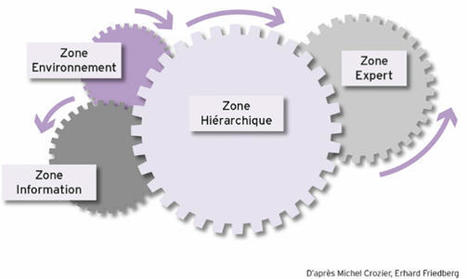
Les zones de pouvoir (Crozier)

Les zones de pouvoir (Crozier) | Devops for Growth | Scoop.it
Avantages

L'utilisation de cette grille de lecture sur les quatre zones de pouvoir vous permet de " peser " sur la négociation en faisant varier le " diamètre " de vos zones.

Précautions à prendre

Ne pas se tromper dans l'évaluation réelle de vos quatre zones de pouvoir.
Ne pas surestimer ou sous-estimer vos forces et faiblesses.

Comment être plus efficace ?

Le négociateur doit comprendre qu'aucune de ces quatre zones de pouvoir n'est définitivement fixée.
No comment yet.
Scooped by Mickael Ruau
November 4, 2023 6:16 AM
Scoop.it!

https://www.kaizen-coach.com/fr/kaizen/methodes-kaizen-les-7-concepts

https://www.kaizen-coach.com/fr/kaizen/methodes-kaizen-les-7-concepts | Devops for Growth | Scoop.it
Après avoir vu les 3 principes fondamentaux, analysons les 7 concepts qui réfèrent aux 7 méthodes Kaizen qui transforment la philosophie Kaizen en une méth
No comment yet.
Scooped by Mickael Ruau
October 16, 2023 6:19 AM
Scoop.it!

Méthodologie conduite du changement : les 7 grands modèles

Méthodologie conduite du changement : les 7 grands modèles | Devops for Growth | Scoop.it
Découvrez les sept plus grandes méthodes de gestion du changement utilisées dans les entreprises en France.
Mickael Ruau's insight:
Méthodologie conduite du changement : les 7 grands modèles
  1. Modèle de Lewin. ...
  2. Modèle ADKAR. ...
  3. Modèle 7s de McKinsey. ...
  4. Modèle de changement en 8 étapes de Kotter. ...
  5. Modèle transitionnel de Bridges. ...
  6. Courbe du changement de Kübler-Ross. ...
  7. La Roue de Deming. ...
 
No comment yet.
Scooped by Mickael Ruau
March 2, 2022 1:33 AM
Scoop.it!

Agilité et-le-mal-agile tourbdx-27-10-2016

Presentation donnée à l'Agile Tour Bordeaux le 27/102016
No comment yet.
Scooped by Mickael Ruau
January 9, 2022 10:23 AM
Scoop.it!

How London’s Silicon Roundabout dream turned into a nightmare

How London’s Silicon Roundabout dream turned into a nightmare | Devops for Growth | Scoop.it

Silva travelled to Silicon Valley – with then digital secretary Jeremy Hunt in tow – for a meeting with then Google CEO Eric Schmidt. Silva did not even have a name for the cluster yet, but somehow hoped that Schmidt would be won over by the vision, and throw Google’s weight and money behind it. “I said we were going to do something really big to get behind this digital cluster emerging in East London. ‘It's gonna be great, we would love for you to be involved’,” Silva recalls. Schmidt was curt: he had heard similar spiels before; he was not going to send Google folks to a business park in the middle of nowhere. Silva then rattled off the bountiful attractions of Shoreditch – its independent art galleries, its cafes, its clubs. “That cultural life of East London was what persuaded him,” Silva says. Schmidt initially proposed to buy the whole Olympic Park, but Silva convinced him to do something slightly less dramatic – open a Google-run space near the roundabout. The result was the Google Campus: a seven-storey coworking space – including free coworking in the building’s basement cafe – and event venue that opened on Bonhill Street in 2012.

The jigsaw was complete. Before, aspiring startuppers getting off at Old Street station would bemusedly peer around for a portal to the famed Silicon Roundabout; now they would head to the Campus cafe, grab a peanut butter brownie, and type on their laptops for hours, surrounded by tens of other people doing exactly the same. The government had pointed at the roundabout, and Google had made it a cluster.

Over the next few years, the neighbourhood would be set alight with ferment and the sacred fire of innovation.

No comment yet.
Scooped by Mickael Ruau
November 1, 2021 2:09 AM
Scoop.it!

Comment Faciliter L'Apprentissage En Equipe Et Améliorer Les Performances

Comment Faciliter L'Apprentissage En Equipe Et Améliorer Les Performances | Devops for Growth | Scoop.it
La performance de l'équipe dépend de la sécurité, du travail d'équipe et de l'apprentissage en continu. La clarté des rôles, la sécurité psychologique, la rupture des mauvaises habitudes et l'apprentissage régulier sont essentiels pour obtenir des performances élevées.
Mickael Ruau's insight:


Notre cerveau est un énorme agrégat dans lequel un grand nombre de processus différents se déroulent en parallèle. Le cerveau doit résoudre de nombreux problèmes simultanément - en commençant par le fait qu'il est nécessaire de "dessiner" tout ce que nous entendons, voyons, en terminant par ce que nous pensons, ressentons, percevons. Et cela ne tient pas compte de la régulation du tonus musculaire, du travail des organes internes dont sont responsables d'anciennes parties évolutives du cerveau.

Avec autant de processus différents qui se produisent simultanément, nous devons agir de concert. Nous ne pouvons pas faire plusieurs choses à la fois, bien que nous ayons beaucoup de désir et d'influences externes. Notre cerveau doit tenir compte d'un grand nombre de facteurs et créer une sorte de vecteur de résultats en fonction de ceux-ci. Le cerveau hiérarchise donc les tâches. 

Revenons à notre exemple de résolution du Nouvel An. Imaginez que vous essayez de changer un comportement que vous avez depuis des années, depuis l'enfance. Par ailleurs, vous avez décidé qu'à partir de cette année, vous ne mangerez plus de bonbons, vous avez décidé de réduire la consommation de sucre. Mais que se passe-t-il lorsque vous voyez un beau morceau de gâteau ? Vous le mangez. Et votre cerveau vous explique immédiatement : une fois ne fera pas de mal. C'est le principe de la dominance. Un centre nerveux prend le dessus dans la lutte contre les autres réseaux neuronaux et reçoit leur tension. Vous avez donc formé le réseau neuronal pendant des années, et vous vous attendez à ce qu'une seule belle pensée le change. Ça ne fonctionne pas comme ça.

Pourtant, il est inutile de lutter contre les « mauvaises habitudes » sur le front.

Cela aiderait si vous aviez quelque chose de plus, quelque chose de systémique. Pour se débarrasser d'une « mauvaise habitude », il faut apprendre à devenir dominant envers soi ou envers son équipe.

Par exemple, commencez par étudier comment tant de sucre nuit à l'organisme. Ou bien la prochaine fois que vous voulez manger du gâteau, mangez plutôt des fruits. Ainsi, étape par étape, vous formez une nouvelle dominante dans votre cerveau. En connaissant ces ingrédients, nous pouvons neutraliser les éléments qui développent nos habitudes. Et dès que nous les neutralisons, nous privons un réseau de neurones de puissance ; nous allons changer ce pouvoir pour créer un autre dominant. Nous recevrons de l'énergie pour former un nouveau réseau neuronal qui deviendra notre nouveau stéréotype dynamique.

La même mécanique fonctionne avec l'équipe. En tant que leader, nous devons comprendre que la formation d'un nouveau comportement dans un groupe prendra plusieurs cycles. Nous pouvons réussir si nous créons des conditions spéciales au sein de l'équipe pour éviter de répéter les anciens comportements. Si vous avez postulé au moins une fois à un changement d'équipe, vous avez dû remarquer à quel point les gens deviennent défensifs.

Une façon de créer un environnement sûr pour accepter l'échec et l'apprentissage est de mener des expériences de petite envergure, limitées dans le temps, avec des résultats attendus et des indicateurs de réussite précis. Communiquez les avec l'équipe, mettez-vous d'accord sur la nouvelle façon de faire les choses et commencez votre expérience. Assurez-vous que pendant l'enquête, tous les membres de l'équipe suivent le chemin que vous avez vu ensemble. Une fois le temps écoulé, collectez les métriques nécessaires et parlez-en avec l'équipe. Si l'équipe constate une amélioration des résultats, elle continuera à appliquer la nouvelle approche sans même discuter. Mais si les changements décidés ne fonctionnent pas, alors pourquoi continuer à les suivre ? Jetez-les et recommencez :) 

En résumé 

  • La performance est un comportement.
  • Aménagez les habitudes de l'équipe si vous voulez changer les performances de l'équipe.
  • Chaque équipe doit bien comprendre son rôle, les règles du jeu, les objectifs et la stratégie et apprendre de ses échecs pour permettre une meilleure prise de décision à tout moment.
  • Soyez patient, ne vous attendez pas à des changements rapides dans votre équipe.
  • Réalisez des expériences de petite envergure et limitées dans le temps avec des indicateurs de réussite et des résultats définis précis. Cela aidera votre équipe à évaluer et à s'améliorer plus rapidement.

Lectures complémentaires, références 

No comment yet.
Scooped by Mickael Ruau
September 28, 2021 1:16 AM
Scoop.it!

What Is The EFQM model? The EFQM Model In A Nutshell

What Is The EFQM model? The EFQM Model In A Nutshell | Devops for Growth | Scoop.it

The EFQM model is a management framework helping organizations manage change and improve performance. The EFQM model was launched by the European Foundation for Quality Management in 1992 to increase the competitiveness of European companies.

No comment yet.
Scooped by Mickael Ruau
September 27, 2021 6:09 AM
Scoop.it!

» Studying patterns for Fearless Change

» Studying patterns for Fearless Change | Devops for Growth | Scoop.it
Don Gray got me started, with his posting of 3x5 notecards for studying the patterns in the book, Fearless Change: Patterns for Introducing New Ideas, by Mary Lynn Manns and Linda Rising. I agree with him that it's a wonderfully helpful book, and I thought the idea of creating cards to carry and stud
Mickael Ruau's insight:

So, at Don’s suggestion, I re-formatted his format and created both OpenOffice and PDF versions of the cards. I hope you find them useful, but be sure to read the book! Not only is that fair to the authors, but the cards will make a lot more sense to you.

No comment yet.
Scooped by Mickael Ruau
September 27, 2021 6:06 AM
Scoop.it!

30 Days to Success – Steve Pavlina

 A powerful personal growth tool is the 30-day trial. This is a concept I borrowed from the shareware industry, where you can download a trial version of a piece of software and try it out risk-free for 30 days before you’re required to buy the full version. It’s also a great way to develop new habits, and best of all, it’s brain-dead simple.

Let’s say you want to start a new habit like an exercise program or quit a bad habit like sucking on cancer sticks. We all know that getting started and sticking with the new habit for a few weeks is the hard part. Once you’ve overcome inertia, it’s much easier to keep going.

No comment yet.
Scooped by Mickael Ruau
July 12, 2021 4:28 AM
Scoop.it!

Pilotage du changement/Les techniques et les principes d’ITIL — Wikiversité

Pilotage du changement/Les techniques et les principes d’ITIL — Wikiversité | Devops for Growth | Scoop.it

Sommaire

No comment yet.