


Présentation : « Ultra HD : l’état de l’art »
Présentation : « Hulu en chemin vers DASH »
Panel : « Architectures vidéo dans le cloud : à quand le basculement total ? »
Slides et détails ici : http://ovfsquad.fr/conferensquad-4/

 Your new post is loading...
 Your new post is loading...
Your new post is loading...
 Scoop.it!
Présentation : « Ultra HD : l’état de l’art » Présentation : « Hulu en chemin vers DASH » Panel : « Architectures vidéo dans le cloud : à quand le basculement total ? » Slides et détails ici : http://ovfsquad.fr/conferensquad-4/ 

Taskiy's comment,
February 23, 2019 2:00 AM
http://sco.lt/5lWzx2

Noyakuza's curator insight,
January 8, 2021 5:14 PM
It!
Sign up to comment
Scoop.it!
There are a lot of product verticals within the streaming media industry, and one of the lesser known ones includes a small handful of vendors that are typically referred to as offering stream optimization technology. While many of them have very different solutions, the goal of all of them is the same. To reduce the size of video bitrates, without reducing quality. Vendors in the market include A2Z Logix, Beamr, Cinova,EuclidIQ, eyeIO, Faroudja Enterprises, InterDigital, Sigala and QuickFire Networks (just acquired by Facebook). Some of these vendors would take issue with me listing them next to others they feel don’t compete with them, but amongst content owners, they are all thought of as offering ways to optimize video, even if many of them do it very differently. I don’t put them all in the same bucket, but many content owners do.
Scoop.it!
Scoop.it!
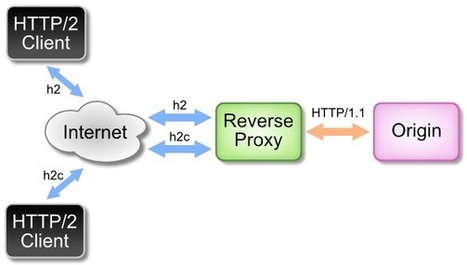
We are pleased to announce the launch of our Adaptive Media Streaming over HTTP/2 trial. We are inviting you to participate in order to help us gather important data. The experimental HTTP version 2 protocol promises to improve the web browsing experience but what does it mean for HTTP-based media streaming technologies such as MPEG-DASH?
Scoop.it!
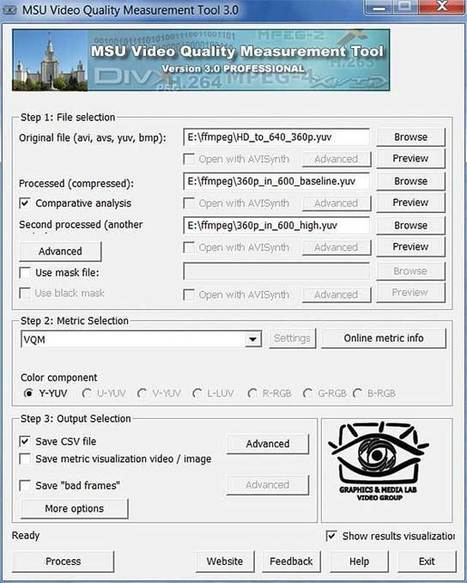
Never heard of it? Learn why we call this video encoding analysis tool invaluable, and a must-have for anyone serious about encoding or compression. Via Philippe Rambourg
Scoop.it!
Ittiam Systems is pleased to announce its bringing the power and scale benefits of the advanced High Efficiency Video Coding (HEVC / H.265) technology to the mass market. Ittiam worked over the last several months to bring native HEVC Decode to Android, by way of the standard’s inclusion in the Android Media Framework, within Android 5.0, Lollipop.
Scoop.it!
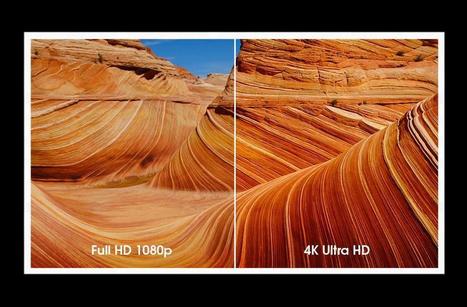
La 4 K (ou Ultra H-D), aujourd'hui, en résumé :
Sony a profité de l'édition 2014 du MIPCom cette semaine à Cannes pour faire le point, lors d'un cycle de conférences et de projections, d'une année riche en productions Ultra HD expérimentales sur tous les continents.
Scoop.it!
This is the presentation delivered at Akamai EDGE conference in Oct 2014 by Will Law and Nicolas Weil
The presentation gives an overview of the genesis of the standard, differentiates it from legacy formats, examines its benefits in the OTT, broadcast and wireless industries and then demonstrates how simple it is to get DASH playback across devices . It highlights current deployments, reviews the status of the industry and gives an outlook for the next three years.
Scoop.it!
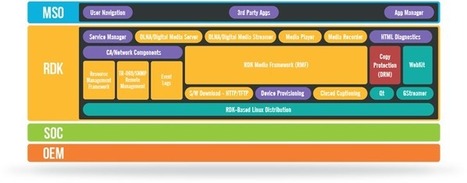
An intriguing set of new capabilities for bringing IP content to set-top boxes is coming into focus as a result of the inclusion of the GStreamer multimedia framework in the protocol stack endorsed by developers of the Reference Design Kit platform for next-gen devices. Fluendo’s GStreamer-based Oneplay platform opens the door to building rich applications on a framework that supports playback in Linux, Windows, MAC OS X, Android and iOS environments from video streamed over any of three leading adaptive bitrate (ABR) formats, including HLS (HTTP Live Streaming), Microsoft Smooth and MPEG DASH adaptive bitrate formats.
Scoop.it!

Probably the hottest thing the W3C is working on right now is their Encrypted Media Extension Working Draft. The EME draft is widely talked about as "the DRM standard for HTML5", but this is not truly what it's content covers. I'll look at what it is, why it's not a great idea, and some implications of its approval, were it to be approved. It's possible to tell what's actually covered by the W3C's draft by carefully examining its title; the second word - "media" - is the key. Your average layman might assume that this refers to media in the general sense (and its oh-so-natural wont for encryption); whereas in fact, it refers very specifically to HTML5's media elements. You might know them as <audio> and <video>. The standard specifies some funky extensions to their DOM/Javascript API, based around cryptographic key management. There is almost nothing here about interesting DRM technology, but there are some warnings that it will introduce yet another way for advertisers to track you. Huzzah.
Scoop.it!
Called ‘Ripcode Transcoder’, after the company Ripcode, which was acquired by RGB Networks in 2010 and which originally developed TransAct, the new, cloud-enabled software transcoder will provide RGB Networks’ customers with greater control, integration and flexibility in their video delivery workflows. In a pioneering move, and harnessing the industry momentum toward developing cloud-based solutions, RGB Networks is actively welcoming operators and vendors to be part of a community of contributors to the open source project. The intended feature set of the open source Ripcode Transcoder will include:
Unlike other open source projects, an open source transcoder is more difficult to release due to built-in professional codec licensing. RGB Networks will release Ripcode Transcoder with only the codecs that can be legally used with open source software. Additionally, in order to facilitate use of the transcoder in professional environments that require licensed, third party codecs and pre/post processing filters, the Ripcode transcoder will include a plug-in framework, that will allow use of best-of-breed codecs and filters.
Scoop.it!

Brightcove now supports transcoding video into the MPEG-DASH format. Support is also available for MPEG-DASH encrypted with Common Encryption, allowing multiple DRM systems to playback a single source asset. This topic provides an overview of the steps required to publish and play DASH content through Video Cloud. Dynamic Adaptive Streaming over HTTP (DASH), also known as MPEG-DASH, is an adaptive bitrate streaming technique that enables high quality streaming of media content over the Internet delivered from conventional HTTP web servers. Similar to Apple's HTTP Live Streaming (HLS) solution, MPEG-DASH works by breaking the content into a sequence of small HTTP-based file segments, each segment containing a short interval of playback time of a content that is potentially many hours in duration, such as a movie or the live broadcast of a sports event. The content is made available at a variety of different bit rates and as the content is played back by an MPEG-DASH client, the client automatically selects from the alternatives the next segment to download and play back based on current network conditions.
Scoop.it!

This article focuses on the live streaming DASH features enabled by Azure Media Service, and how they can be used to deliver live and video on demand adaptive streaming to Web browsers and new devices of all types, which are adding support for the DASH standard. DASH live streaming is now available for public preview, and will graduate to “general availability” with normal service level agreements after the preview period. DASH output is a runtime option for all live and VOD streaming from Azure Media Services. A player can request a DASH Media Presentation Description manifest and compatible ISO Base Media File Format “Media Segments” just by including a DASH format tag in each URL request. The same files or live stream can be delivered in Microsoft Smooth Streaming, Apple HLS, or Adobe HDS by indicating any of those formats in the URL format tag. This enables the introduction of DASH to new browsers and devices while maintaining compatibility with legacy players and formats. The ability to dynamically package media segments in realtime is essential for low latency live streaming, as well as efficient multiplatform support.
|
Scoop.it!
Internet Explorer 11 in Windows 8.1 introduced support for Professional Quality Video using Media Source Extensions (MSE) and Encrypted Media Extensions (EME). With Windows 10, Microsoft is announcing browser support for HTTP Live Streaming (HLS) and enhanced support for MPEG DASH in the new EdgeHTML rendering engine. These new features automate adaptive streaming, and make it very simple for Web sites to take advantage of professional quality video.

Philippe J DEWOST's curator insight,
February 5, 2015 9:52 AM
Microsoft is coming (back) after having lost the WMV battle and embraced open standards. Curisou to see whether they'll achieve in media what they did on XML opening (their) document formats. 
Viblast's curator insight,
June 9, 2015 5:44 AM
Major step for Microsoft and an appreciated boost for DASH
Scoop.it!

Four years ago, we wrote about YouTube’s early support for the HTML5 <video> tag and how it performed compared to Flash. At the time, there were limitations that held it back from becoming our preferred platform for video delivery. Most critically, HTML5 lacked support for Adaptive Bitrate (ABR) that lets us show you more videos with less buffering.
Scoop.it!
The Broadband Forum, the leading global association of broadband service providers and technology vendors announced support for the new ITU-T ultra broadband access standard, G.fast, as a new way to deliver bandwidth intensive consumer applications such as 4K Ultra High-Definition TV (4K UHD) and cloud-based consumer applications. “Consumers should have confidence that the leading broadband service providers globally are working hard to deliver 1Gbps, ultra broadband access,” said Robin Mersh, CEO of Broadband Forum. “The new G.fast standard makes it possible for telcos to deploy 4K UHD services faster and more affordably than they could with Fiber to the Home (FTTH).” G.fast uses a novel mix of technology and architecture, which dramatically increases the performance of digital transmission over telephone wires. The new ITU-T standard (G.9701), approved last week, enables up to 1Gbps by using next-generation, high bandwidth communications technologies and by placing them closer to the home into the distribution point (where phone lines get bundled near the residence) – often within 300 meters from the customer premises.
Scoop.it!

HEVC might be getting all the attention, but Google's VP9 appears to match H.265 in quality and might play a bigger role in the transition from Flash to HTML5
Scoop.it!

Convert all your video to the latest and next generation video codec. The H.265 standard, able to produce same quality while reduce bandwidth up to 50%, which mean capable shrink half of original file size!
Scoop.it!

Google is phasing out support for the Netscape Plugin API in the coming months, so Smooth Streaming providers need to come up with a strategy soon.
Scoop.it!
The first commercial deployments of version 2.0 of the hybrid broadcast/broadband standard HbbTV are now likely to surface in the second half of 2015, with mainstream adoption taking place the year after, according to the HbbTV Association – currently holding its annual Symposium in Paris. Proposed features for HbbTV 2.0 include improved support for HTML-5, push-VOD, ad insertion, HEVC video and MPEG-Dash – plus the introduction of companion screen app-launching and synchronisation. It had been hoped the specification would be nailed down around half-way through 2014, but Kirk Edwardson, co-chair of the HbbTV Marketing Group, said that 2.0 was still moving through ratification and final approval. “Late this year/Q1 next year, we should be into final ratification, and starting then to turn that over to commercial suppliers […] to start to implement,” he said. “So I think we should start seeing our first 2.0 services and devices in the second half of 2015. 2016 is probably where you’ll see it really blossom.”
Scoop.it!
This session will cover the approaches for a cloud-based workflow: media ingest, storage, processing and delivery scenarios on the AWS cloud. We will cover solutions for high speed file transfer, cloud-based transcoding, tiered storage, content processing, application deployment and global low-latency delivery, as well as the orchestration and management of the entire media workflow.
Scoop.it!
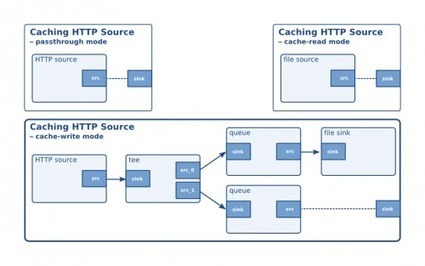
Let’s talk a bit about HTTP Adaptive streaming and GStreamer, what it is and how it works. Especially the implementation in GStreamer is not exactly trivial and can be a bit confusing at first sight. If you’re just interested in knowing if GStreamer supports any HTTP adaptive streaming protocols and which you can stop after this paragraph: yes, and there are currently elements for handling HLS, MPEG DASH and Microsoft SmoothStreaming.
Scoop.it!
DASH’s Time Has Come By now, you’ve probably read enough to understand what DASH is and why it’s important. But let’s boil it down to the most important points: DASH is an adaptive bitrate streaming technology for delivering multimedia—i.e., video. It’s a codec- agnostic technology designed to partition and deliver congruent piecesofamultimediafiletoaclient,usingHTTP. Alongwith network conditions and other variables, the receiving device (such as a smartphone, tablet, set-top box, smart TV, or computer) dictates which “chunks”—each of which contains a different resolution and bitrate—to deliver to ensure uninterrupted play of the file as a whole. Of course, adaptive bitrate (ABR) streaming has been around for a while. If you ever watched a cat playing a piano and it got fuzzy for a few seconds, you experienced a version of ABR. But was it DASH doing the heavy lifting? Almost certainly not. That’s changing... Via DASH Industry Forum
Scoop.it!
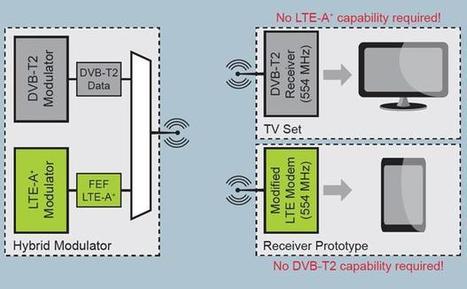
A new hybrid mobile broadcast technology platform could provide a solution to the current standoff between the mobile and TV sectors over a common approach to mobile broadcast standards. The system, which embeds an LTE-A+ video steam within a standard DVB-T2 broadcast signal, is about to be field-trialled.
Scoop.it!
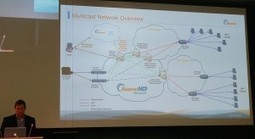
This year the EBU BroadThinking Conference was sounding like a holistic swirl, a milestone in the trend of technology to define sets that are greater than the sum of their parts, through creative evolution. « Where Broadcast Meets BroadBand », you get some interesting fusion effect occurring and diluting the traditional boundaries of the screens, with the handheld devices being part of the big screen experience or extending it rather than trying to scalp it, in an environment where all the devices converge towards a restricted set of standards rather than tracing their own line. While we by default think that standardization kills creativity, events like BroadThinking show that it’s the opposite: if we gather energies to solve common problems together, we can both come up with a more evolved solution and concentrate on what’s important past the pixel grid: the user experience, so consistent across screens that you forget there’s more than one screen involved.
|





