Your new post is loading...

|
Scooped by
Jim Lerman
|
For the purposes of this site, the history of human interaction with information may be divided into 4 eras. The first (spoken) era ended with the invention of writing around 3000-4000 BC. The second era ended with the invention of the printing press in 1440. The third era ended, and the fourth began, with the invention of the Internet (depending how one defines its operational beginning) somewhere between 1969 and 1982. We now exist early, but decidedly, in the fourth era. All readers may not agree with this interpretation of the history of information, especially with the division and numbering of the eras. That is not the main point. Rather, it is that humankind presently exists in an era distinctly different from the one that preceded it -- that in fact, this new era is accompanied with, and characterized by, a new - and quite different - information landscape. This new Internet information landscape will challenge, disrupt, and overpower the print-oriented one that came before it. It will not completely obliterate that which preceded it, but it will render it to a subsidiary, rather than primary, level of influence. Just as the printing press altered humanity's relationship with information, thereby resulting in massive restructuring of political, religious, economic, social, educational, cultural, scientific, and other realms of life; so too will the advance of digital technology occasion analogous transformations in the corresponding universe of present and future human activity. This site will concern itself primarily with how K-20 education in the US, and the people who comprise its constituencies, may be affected by this transformative movement from one era to the next. All ideas considered here appear, to me at least, to impact the learning enterprise in some way. Accordingly, this work looks at the present and the future through a lens that is predominantly, but far from entirely, a digital one. -JL
|
|
Scooped by
Jim Lerman
|
Meta CEO Mark Zuckerberg has personally and repeatedly thwarted initiatives meant to improve the well-being of teens on Facebook and Instagram, at times directly overruling some of his most senior lieutenants, according to internal communications made public as part of an ongoing lawsuit against the company.
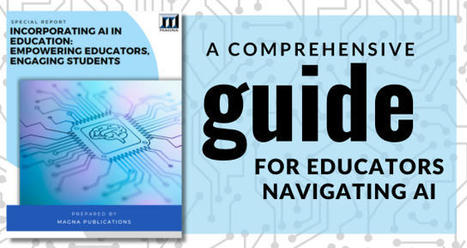
This special report delves into the convergence of education and artificial intelligence, offering a comprehensive guide for educators navigating this transformative landscape.
Via EDTECH@UTRGV
" We built a little demo of an LLM that tells you a choose-your-own-adventure story, alongside DALL-E generative art. The demo is really, really fun. Feel free to go play with it now and talk with the LLM to generate a story!
Whether or not we’ve wrapped our minds around AI, or determined how it will affect the work we ask students to shoulder, at the very least, we need to have a conversation.
Via EDTECH@UTRGV, Jim Lerman
Discover the power of AI in education! Explore practical examples and AI tools to design equitable, student-centered learning experiences.
Via Yashy Tohsaku, Jim Lerman
"We’re sharing a few stories of how educators are using ChatGPT to accelerate student learning and some prompts to help educators get started with the tool. In addition to the examples below, our new FAQ contains additional resources from leading education organizations on how to teach with and about AI, examples of new AI-powered education tools, and answers to frequently asked questions from educators about things like how ChatGPT works, its limitations, the efficacy of AI detectors, and bias.
"How teachers are using ChatGPT
"Role playing challenging conversations
Dr. Helen Crompton, Professor of Instructional Technology at Old Dominion University, encourages her education graduate students to use ChatGPT as a stand-in for a particular persona—like a debate partner who will point out weaknesses in their arguments, a recruiter who’s interviewing them for a job, or a new boss who might deliver feedback in a specific way. She says exploring information in a conversational setting helps students understand their material with added nuance and new perspective.
"Building quizzes, tests, and lesson plans from curriculum materials
Fran Bellas, a professor at Universidade da Coruña in Spain, recommends teachers use ChatGPT as an assistant in crafting quizzes, exams and lesson plans for classes. He says to first share the curriculum to ChatGPT and then ask for things like fresh quiz and lesson plan ideas that use modern or culturally relevant examples. Bellas also turns to ChatGPT to help teachers make sure questions they write themselves are inclusive and accessible for the students’ learning level. “If you go to ChatGPT and ask it to create 5 question exams about electric circuits, the results are very fresh. You can take these ideas and make them your own.”
"Reducing friction for non-English speakers
Dr. Anthony Kaziboni, the Head of Research at the University of Johannesburg, teaches students who mostly don’t speak English outside of the classroom. Kaziboni believes that command of English is a tremendous advantage in the academic world, and that misunderstandings of even small details of English grammar can hold back students from recognition and opportunity. He encourages his students to use ChatGPT for translation assistance, to improve their English writing, and to practice conversation.
"Teaching students about critical thinking
Geetha Venugopal, a high school computer science teacher at the American International School in Chennai, India, likens teaching students about AI tools to teaching students how to use the internet responsibly. In her classroom, she advises students to remember that the answers that ChatGPT gives may not be credible and accurate all the time, and to think critically about whether they should trust the answer, and then confirm the information through other primary resources. The goal is to help them “understand the importance of constantly working on their original critical thinking, problem solving and creativity skills.”
Via Jim Lerman
How can we ensure learning experiences remain engaging, personalized, and effective? The answer lies in Artificial Intelligence (AI).
Via EDTECH@UTRGV
|
|
Scooped by
Jim Lerman
|
"Most people use the incognito browsing mode when they want to keep their browsing history private. But did you know that incognito mode isn't actually private?
"When using incognito mode in your web browser, you may think that your activities are completely anonymous and untraceable. Unfortunately, this is not always the case. Your Internet Service Provider (ISP) and other third-party entities may still be able to track your online activity, even during private browsing. Not only that but if you share your device with others, even they can find out what you visited in incognito mode."
"When time is limited, equipping yourself with the right tools will enable you to accomplish more. Although your Mac already has several built-in features and apps to help you be more productive, you may still need something extra to complete the job.
"Fortunately, several macOS apps have integrated artificial intelligence (AI) to streamline your workflow and automate mundane tasks, allowing you to focus on the important stuff. Below, we'll cover the best AI-powered Mac apps to boost your productivity."
|
|
Scooped by
Jim Lerman
|
/PRNewswire/ -- Global study platform Quizlet today launched its first-ever State of AI in Education Report, polling students and teachers in the US o
"ChatGPT is a powerful AI chatbot that is quick to impress, yet plenty of people have pointed out that it has some serious pitfalls.
"From security breaches to incorrect answers to the undisclosed data it was trained on, there are plenty of concerns about the AI-powered chatbot. Yet, the technology is already being incorporated into apps and used by millions, from students to company employees. "With no sign of AI development slowing down, the problems with ChatGPT are even more important to understand. With ChatGPT set to change our future, here are some of the biggest issues."
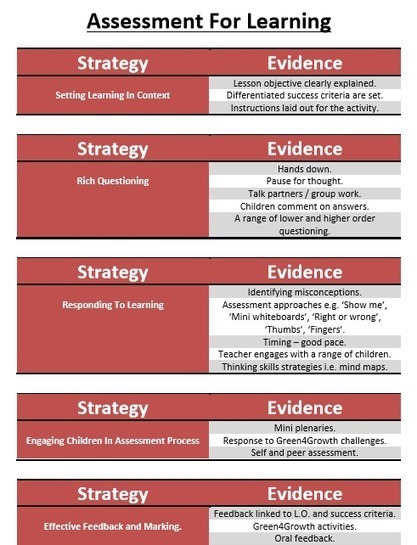
Assessment for Learning (AfL) is the process of finding out how much progress students have made in their learning and then planning next steps for them. What does successful AfL look like? Strategies to 'see' the progress of learners are vital in lessons - constant checking of who is excelling and who is struggling. Once…
Via Yashy Tohsaku, Jim Lerman
|
In the rapidly evolving landscape of education, the pivotal axis around which transformation revolves is human-AI interaction. In this sense, this paper adopts a data mining and analytic approach to understand what the related literature tells us
Via Vladimir Kukharenko, Jim Lerman
Today, President Biden is issuing a landmark Executive Order to ensure that America leads the way in seizing the promise and managing the risks of artificial intelligence (AI). The Executive Order establishes new standards for AI safety and security, protects Americans’ privacy, advances equity and civil rights, stands up for consumers and workers, promotes innovation and competition, advances American leadership around the world, and more.
As part of the Biden-Harris Administration’s comprehensive strategy for responsible innovation, the Executive Order builds on previous actions the President has taken, including work that led to voluntary commitments from 15 leading companies to drive safe, secure, and trustworthy development of AI.
There's an art to writing effective chatbot prompts to get the results you want from your friendly neighborhood AI. Here's how to up your prompt-writing game.
Via Vladimir Kukharenko, יפה בן-דרור
|
|
Scooped by
Jim Lerman
|
"What if you could generate AI images directly in Google Search? That's exactly what Google is experimenting with withing its AI-powered Search Generative Experience (SGE) feature.
Making Images Come to Life in Google Search
"Google launched its SGE feature in August 2023, providing users with answers to their queries right on the search page. Google has now expanded its SGE abilities to include AI image generation.
"The update allows users to create images with generative AI by typing a text description in Google Search. You describe your idea, and SGE will provide up to four generated images in the search results. You can then tap on any of those images and edit the description further to add more details and refine your vision."
"The chatbot was the ideal test taker—it exhibited no trace of test anxiety, poor concentration or lack of effort. And what about that IQ score?"
Via EDTECH@UTRGV
|
|
Scooped by
Jim Lerman
|
"Many people use ChatGPT for various legitimate uses, including answering questions, generating content, explaining complex concepts, and writing code. However, the limitations of the free version of the chatbot, like delayed responses, can be frustrating.
"Malicious actors often exploit these limitations by encouraging users to download a supposedly premium version of ChatGPT for free. The fake chatbot may contain malware that can be used for cyberattacks, like data theft.
"Here’s a list of malicious ChatGPT-themed domains and apps that you need to be aware of."
|
|
Scooped by
Jim Lerman
|
"We are beginning to roll out new voice and image capabilities in ChatGPT. They offer a new, more intuitive type of interface by allowing you to have a voice conversation or show ChatGPT what you’re talking about.
"Voice and image give you more ways to use ChatGPT in your life. Snap a picture of a landmark while traveling and have a live conversation about what’s interesting about it. When you’re home, snap pictures of your fridge and pantry to figure out what’s for dinner (and ask follow up questions for a step by step recipe). After dinner, help your child with a math problem by taking a photo, circling the problem set, and having it share hints with both of you.
"We’re rolling out voice and images in ChatGPT to Plus and Enterprise users over the next two weeks. Voice is coming on iOS and Android (opt-in in your settings) and images will be available on all platforms."
Let’s take a look at what the research says about the use of virtual manipulatives in mathematics learning:
Need to foster abstract reasoning? Manipulatives allow students to move from concrete experiences to abstract reasoning. (Heddens, 1986; Reisman, 1982; Ross and Kurtz, 1993 as cited here)
Want to help students think and reason in more meaningful ways? Provide them with manipulatives. You can develop students’ well-grounded interconnected understandings of mathematical ideas. Do this when you give students concrete ways to compare and operate on quantities. Manipulatives such as pattern blocks, tiles, and cubes can assist in accomplishing this.
Long-term use of manipulatives in the classroom has yielded some additional benefits such as:
Verbalizing mathematical thinking
Discussing mathematical ideas and concepts
Relating real-world situations to mathematical symbolism
Working in collaborative ways
Thinking in a divergent manner to find a variety of ways to solve problems
|
|
Scooped by
Jim Lerman
|
"Most people use the incognito browsing mode when they want to keep their browsing history private. But did you know that incognito mode isn't actually private?
"When using incognito mode in your web browser, you may think that your activities are completely anonymous and untraceable. Unfortunately, this is not always the case. Your Internet Service Provider (ISP) and other third-party entities may still be able to track your online activity, even during private browsing. Not only that but if you share your device with others, even they can find out what you visited in incognito mode."
"Google's Arts & Culture app is a miniature mobile masterpiece, which anyone with even a passing interest in art will enjoy exploring. Launched in 2016, it was originally designed to complement the Google Arts & Culture website, which lets you virtually visit thousands of galleries and museums around the world.
"But the app, which you can download for free for Android and iOS,, now goes far beyond that. It uses the latest technology to deliver an immersive, educational, and entertaining art experience. Let's take a look at the best things you can do in Google Arts & Culture."
|
|
Scooped by
Jim Lerman
|
July 24, 2023 /PRNewswire/ --" Global study platform Quizlet today launched its first-ever State of AI in Education Report, polling students and teachers in the US on how they are using AI and how these technologies are shaping the future of education.
"Key findings include:
62% of all respondents have used AI technologies
Students agree that AI technologies help them better understand material (73%) and study faster or more efficiently (67%)
Students who study three hours or more per night are more likely to say they have used AI technologies
"A similar percentage of students (47%) and teachers (48%) say AI technologies have had a positive impact on the student learning experience
"42% of all respondents report that AI creates a more equitable system"
"Available through Apple Podcasts, Spotify, and other platforms, the free audiobooks use neural text-to-speech technology to read to you in a human-sounding voice ..."
Via Leona Ungerer
PresentationGPT is a highly advanced AI Powered Presentation Generator that can create stunning PowerPoint presentations in seconds.
Via Nik Peachey
|