

Artificial intelligence is everywhere. But before scientists trust it, they first need to understand how machines learn.


|
Scooped by
Complexity Digest
onto Papers October 7, 2016 2:40 PM
|
 Scoop.it!
Artificial intelligence is everywhere. But before scientists trust it, they first need to understand how machines learn.

 Your new post is loading...
 Your new post is loading...
Your new post is loading...
Scoop.it!
From
www

Entropy 2026, 28(5), 523 Collective systems often exhibit emergent behaviors that cannot be reduced to the properties of individual components. A central question is whether individuality itself is a precondition for collective organization, or whether it arises from it. Here we develop and empirically test Community First Theory, which proposes that collective organization is the generative substrate from which individual dynamical identity emerges. To operationalize this claim, we introduce non-trivial information closure (NTIC), which quantifies whether an individual’s temporal predictability is self-determined or distributed across collective relations. Using high-resolution tracking of complete Tetrahymena populations across four generations, we show that information closure emerges transiently in the middle phase of the cell cycle, flanked by strong collective coupling. Cells in the information-closed regime show significantly greater divergence from parental phenotypes, demonstrating that community organization actively generates behavioral diversity. These results provide initial empirical support for Community First Theory in a single-model system and suggest that NTIC offers a substrate-independent tool for locating agency transitions in collective systems. Read the full article at: www.mdpi.com
Scoop.it!

From
www
Rebecca Carstens, Raj Deshpande, Pau Esteve, Nicoló Fidelibus, Sara Linde Neven, Ramona Ottow, Lokamruth K.R., Paula Rodríguez-Sánchez, Luca Santagata, Javier M. Buldú, Brennan Klein & Maddalena Torricelli Elite football is believed to have evolved in recent years, yet systematic evidence for the pace and form of that change remains sparse. Drawing on event-level records for 13,018 matches across ten top-tier men’s and women’s leagues in England, Spain, Germany, Italy, and the United States (2020–2025), we quantify match dynamics through two complementary lenses: conventional performance statistics and pitch-passing networks that track ball movement across spatial regions of the field. Between 2020 and 2025, average passing volume, pass accuracy, and the proportion of passes made under pressure all increased, with the largest year-on-year changes occurring in women’s competitions. Network measures reveal that normalized outreach decreased, indicating teams increasingly concentrate ball circulation into shorter-range passing connections rather than wide spatial distribution. These trends are consistent across countries and tiers, yet persistent national differences indicate that stylistic diversity remains. Notably, women’s competitions exhibit stronger rates of change across most metrics, consistent with an accelerating professionalization, while the systematic decline in network outreach across all competitions is consistent with a sport-wide shift toward shorter, more concentrated passing structures. Read the full article at: www.nature.com
Scoop.it!
From
arxiv
Qianyang Chen, Mikhail Prokopenko Active matter generates order or patterns through nonequilibrium dynamics. An open research challenge is to determine how efficiently a nonequilibrium self-organising system can convert consumed energy into macroscopic order. We study an information-theoretic quantity that directly addresses this challenge by estimating the entropy reduction induced by a small control-parameter perturbation, relative to the generalised work required for the perturbation. This quantity has previously been considered mainly in an equilibrium or near-equilibrium context, and here we extend this framework and apply it to two nonequilibrium self-organising systems: persistent and active Ising models. We observe that the thermodynamic efficiency of nonequilibrium systems maximises at phase transitions, as in equilibrium systems. Furthermore, we compare thermodynamic efficiency and inferential efficiency across control parameters. While these two quantities are equal in equilibrium as a consequence of the fluctuation-dissipation theorem, we report that they diverge out of equilibrium, and the gap reflects how far the system is from equilibrium. Read the full article at: arxiv.org
Scoop.it!

Mario Franco & Carlos Gershenson Nowadays, neural networks act as a synonym for artificial intelligence. Present neural network models, although remarkably powerful, are inefficient both in terms of data and energy. Several alternative forms of neural networks have been proposed to address some of these problems. Specifically, spiking neural networks are suitable for efficient hardware implementations. However, effective learning algorithms for spiking networks remain elusive, although it is suspected that effective plasticity mechanisms could alleviate the problem of data efficiency. Here, we present a new framework for spiking neural networks—Spark (https://github.com/Nogarx/Spark)—built upon the idea of modular design, from simple components to entire models. The aim of this framework is to provide an efficient and streamlined pipeline for spiking neural networks. We showcase this framework by solving the sparse-reward cartpole problem with simple plasticity mechanisms. We hope that a framework compatible with traditional ML pipelines may accelerate research in the area, specifically for continuous and unbatched learning, akin to the one animals exhibit Read the full article at: www.frontiersin.org
Scoop.it!
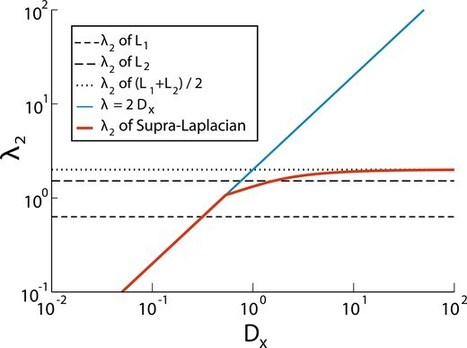
Alberto Aleta, Andreia Sofia Teixeira, Guilherme Ferraz de Arruda, Andrea Baronchelli, Alain Barrat, János Kertész, Albert Díaz-Guilera, Oriol Artime, Michele Starnini, Giovanni Petri, Márton Karsai, Siddharth Patwardhan, Kathryn Coronges, Ann McCranie, Alessandro Vespignani, Yamir Moreno, Santo Fortunato Journal of Complex Networks, Volume 14, Issue 2, April 2026, cnag007, Multilayer network science has emerged as a central framework for analysing interconnected and interdependent complex systems. Its relevance has grown substantially with the increasing availability of rich, heterogeneous data, which makes it possible to uncover and exploit the inherently multilayered organisation of many real-world networks. In this review, we summarise recent developments in the field. On the theoretical and methodological front, we outline core concepts and survey advances in community detection, dynamical processes, temporal networks, higher-order interactions, and machine-learning-based approaches. On the application side, we discuss progress across diverse domains, including interdependent infrastructures, spreading dynamics, computational social science, economic and financial systems, ecological and climate networks, science-of-science studies, network medicine, and network neuroscience. We conclude with a forward-looking perspective, emphasizing the need for standardised datasets and software, deeper integration of temporal and higher-order structures, and a transition toward genuinely predictive models of complex systems. Read the full article at: academic.oup.com
Scoop.it!

From
arxiv
Adam B. Barrett, Borjan Milinkovic, Pedro A. M. Mediano, Fernando E. Rosas, Daniel Bor, Lionel Barnett, Anil K. Seth The integrated information theory of consciousness (IIT) is uniquely ambitious in proposing a mathematical formula, derived from apparently fundamental properties of conscious experience, to describe the quantity and quality of consciousness for any physical system that possesses it. IIT has generated considerable debate, which has engendered some misunderstandings and misrepresentations. Here we address and hope to remedy this. We begin by concisely summarising the essentials of IIT. Given IIT is supposed to apply universally, we do this with reference to an arbitrary patch of matter, as opposed to the usual system of discrete computational units. Then, after briefly summarising IIT's theoretical and empirical achievements, we focus on five points which we consider especially important for driving forward new theory and increasing understanding. First, a high value of the measure Φ is not synonymous with `more consciousness'. We describe how Φ might be replaced with a suite of quantities to obtain a multi-dimensional characterisation of states of consciousness. Second, we describe with nuance the distinct flavour of panpsychism implied by IIT -- whereby space (and time) are tiled with substrates of (proto-) consciousness -- and find this is not problematic for the theory. Third, Φ is not well-defined for real physical systems, and has not been computed on any real physical system. Fourth, so far only proxies for IIT measures have been computed, and not approximations. Fifth, for IIT to fit with current successful theories in fundamental physics, a reformulation in terms of continuous fields would be needed. Read the full article at: arxiv.org
Scoop.it!
From
www
Yasuhiro Hashimoto, Hiroki Sato, and Takashi Ikegami Entropy 2026, 28(4), 398
Read the full article at: www.mdpi.com
Scoop.it!
Tetsushi Ohdaira Chaos, Solitons & Fractals This study modifies the model in the previous studies and considers three types of inter-individual relationships: regular, random, and scale-free ring lattices. Furthermore, we introduce defectors, who do not contribute to the public goods; cooperators, who contribute to the public goods; and loners, who do not participate in the public goods framework. We assume that each of these three types of individuals punishes other individuals with a probability proportional to the difference between their own payoff and their opponent's average payoff including them. Using this modified pool punishment model, this study shows the following. Firstly, the damage to the average payoff due to excessive punishment is kept significantly low. Secondly, antisocial punishment is not evolutionarily advantageous, and cooperators always become advantageous. Finally, the final average payoff is always higher than that of pool punishment in existing studies and roughly comparable to that of peer punishment in existing studies. The results of this study provide new insights that the claim of the existing study is not always correct; that is, even if antisocial punishment is possible, it does not have an evolutionary advantage, and cooperators always become advantageous, which in turn solves the problem of antisocial punishment. This study is being conducted as part of efforts to improve specialized education at Kanagawa Institute of Technology. Read the full article at: www.sciencedirect.com
Scoop.it!
From
www
Tim Pollmann and Jochen Staudacher Complexities 2026, 2(1), 7 Shapley values are the most widely used point-valued solution concept for cooperative games and have recently garnered attention for their applicability in explainable machine learning. Due to the complexity of Shapley value computation, users mostly resort to Monte Carlo approximations for large problems. We take a detailed look at an approximation method grounded in multilinear extensions proposed in 2021 under the name “Owen sampling”. We point out why Owen sampling is biased and propose unbiased alternatives based on combining multilinear extensions with stratified sampling and importance sampling. Finally, we discuss empirical results of the presented algorithms for various cooperative games, including real-world explainability scenarios. Read the full article at: www.mdpi.com
Scoop.it!
Adams, Fred C. Read the full article at: ui.adsabs.harvard.edu
Scoop.it!
From
papers
Steven D Shaw, Gideon Nave People increasingly consult generative artificial intelligence (AI) while reasoning. As AI becomes embedded in daily thought, what becomes of human judgment? We introduce Tri-System Theory, extending dual-process accounts of reasoning by positing System 3: artificial cognition that operates outside the brain. System 3 can supplement or supplant internal processes, introducing novel cognitive pathways. A key prediction of the theory is "cognitive surrender"-adopting AI outputs with minimal scrutiny, overriding intuition (System 1) and deliberation (System 2). Across three preregistered experiments using an adapted Cognitive Reflection Test (N = 1,372; 9,593 trials), we randomized AI accuracy via hidden seed prompts. Participants chose to consult an AI assistant on a majority of trials (>50%). Relative to baseline (no System 3 access), accuracy significantly rose when AI was accurate and fell when it erred (+25/-15 percentage points; Study 1), the behavioral signature of cognitive surrender (AI-Accurate vs. AI-Faulty contrast; Cohen's h = 0.81). Engaging System 3 also increased confidence, even following errors. Time pressure (Study 2) and per-item incentives and feedback (Study 3) shifted baseline performance but did not eliminate this pattern: when accurate, AI buffered time-pressure costs and amplified incentive gains; when faulty, it consistently reduced accuracy regardless of situational moderators. Across studies, participants with higher trust in AI and lower need for cognition and fluid intelligence showed greater surrender to System 3. Tri-System Theory thus characterizes a triadic cognitive ecology, revealing how System 3 reframes human reasoning and may reshape autonomy and accountability in the age of AI. Read the full article at: papers.ssrn.com
Scoop.it!
From
arxiv
Thomas F. Varley, Josh Bongard Read the full article at: arxiv.org
Scoop.it!
From
www
Vicky Chuqiao Yang, James Holehouse, Hyejin Youn, José Ignacio Arroyo, Sidney Redner, Geoffrey B. West, and Christopher P. Kempes PNAS 123 (7) e2509729123 Diversification and specialization are central to complex adaptive systems, yet overarching principles across domains remain elusive. We introduce a general theory that unifies diversity and specialization across disparate systems, including microbes, federal agencies, companies, universities, and cities, characterized by two key parameters. We show from extensive data that function diversity scales with system size as a sublinear power law-resembling Heaps’ law-in all but cities, where it is logarithmic. Our theory explains both behaviors and suggests that function creation depends on system goals and structure: federal agencies tend to ensure functional coverage; cities slow new function growth as old ones expand, and cells occupy an intermediate position. Once functions are introduced, their growth follows a remarkably universal pattern across all systems. Read the full article at: www.pnas.org
|
Scoop.it!
From
journals
Mateo Bouchet, Alejandro Tejedor, Xiangrong Wang, and Yamir Moreno Phys. Rev. Lett. 136, 207401 We study diffusion on multiplex networks with directed interlayer couplings. We demonstrate both numerically and analytically that even with undirected layers, interlayer directionality alone reproduces superdiffusion and the prime regime. We further reveal a new phenomenon, the directionality-induced jamming, whereby directed interlayer links hinder diffusion, fragmenting the system into dynamically disconnected components and preventing convergence to the steady state of the diffusion process. Via an optimization process, we show that this new regime is attainable in both toy models and real-world topologies. These findings underscore the crucial role of interlayer link directionality in shaping the emergent behavior of multiplex systems, with potential implications for the design and control of such systems. Read the full article at: journals.aps.org
Scoop.it!
From
papers
Klaus Jaffe Money serves several roles: a medium of exchange to buy and sell without bartering; a unit of account to price goods consistently; a store of value to save purchasing power over time; a means to defer payment of future obligations like credit or loans. An agent based computer simulation program determine quantitatively the relative importance of these services. The main results showed that money for credit was by far the feature that achieved the largest overall production of wealth in the simulated societies. A conclusion from this study suggests that fomenting the use of internationally tradable currencies such as Bitcoin seems to be most promising pathway for international economic growth in the near future. Read the full article at: papers.ssrn.com
Scoop.it!
C. Marchuk, L. Ríos, A. González, S. González, G. Pereira and C. von Lücken, "A Computational Economic Complexity Model for Regional Economic Integration: Analysis of the EU, MERCOSUR, URUPABOL, and the AndeanCommunity," 2025 IEEE CHILEAN Conference on Electrical, Electronics Engineering, Information and Communication Technologies (CHILECON), Valparaíso, Chile, 2025, pp. 1-8, doi: 10.1109/CHILECON66915.2025.11476476. Regional Economic Integration is a process by which countries seek mutual benefits through the reduction of trade, social, and political barriers. This paper introduces a computational mathematical model grounded in Economic Complexity Theory to analyze economic blocs as unified entities. Four case studies are examined: the European Union, MERCOSUR, URUPABOL, and the Andean Community. Using real export data and complexity metrics, we identify the combined productive capacities of member countries. Results reveal that integration enhances product diversity and increases the ubiquity of exports within the bloc. The study demonstrates that regional integration boosts development and strengthens competitiveness in the global economy. The proposed methodological approach provides a novel tool for regional analysis and serves as a foundation for future strategies in economic cooperation and productive planning. This research contributes to understanding how collective capabilities can generate synergies that exceed individual national potentials, particularly in the context of Latin American regional development. Read the full article at: ieeexplore.ieee.org
Scoop.it!

The universe creatively sets the rules for its own becoming. Stuart Kauffman is a theoretical biologist and leading complexity scientist who has argued that the self-organization of organisms is as influential in evolution as natural selection. His seminal book on the subject is “The Origins of Order: Self-Organization and Natural Selection in Evolution” (1993). He spoke recently with Noema Editor-in-Chief Nathan Gardels. Read the full article at: www.noemamag.com
Scoop.it!
Reda Benkirane Complex Systems, 34(4), 2026 pp. 387–400. Complexity, a term that is both ambiguous and multifaceted, is used widely today. Various legitimate definitions can be proposed for it, as is the case with “ample” notions such as intelligence, consciousness or culture. The recurrent mention of this term can be attributed to the transformation of our societies and their artifacts, as well as the acceleration of time brought by the digital revolution—a technological upheaval comparable to the invention of writing and the printing press. Read the full article at: www.complex-systems.com
Scoop.it!
From
www
Lluís Danús, William Dinneen, Carolina Torreblanca, Guy Grossman, and Sandra González-Bailón PNAS 123 (18) e2511050123 The term “invisible college” refers to communication networks that help scientists exchange information and advance knowledge. These networks create social capital, granting access to resources like new ideas and support. Measuring those intangible exchanges is an empirical challenge. Here we approximate these ties through the analysis of the “thank you” notes appended to journal articles. Our findings show that scholars disconnected from this layer of academic social capital have lower publication impact. We also show that informal ties provide support not captured by coauthorship ties, which reflect a more rigid form of collaboration. Documenting how informal structures of support operate can help leverage collective resources in the pursuit of shared intellectual goals. Read the full article at: www.pnas.org
Scoop.it!
Luis A. Nunes Amaral; Arthur Capozzi; Dirk Helbing Organizations learn from market, political and societal responses to their actions. While in some cases both the actions and responses take place in an open manner, in many others, some aspects may be hidden from external observers. The Eurovision Song Contest offers a mostly open-data case in which to study organizational level learning at the levels of organizers and participants. We present here evidence for changes in the rules of the Contest in response to undesired outcomes such as runaway winners. We also find strong evidence of participant learning in the characteristics of competing songs over the 70 years of the Contest. English has been adopted as the lingua franca of the competing songs and pop has become the standard genre. The number of words of lyrics has also grown in response to this collective learning. Remarkably, we find evidence that France, Italy, Portugal and Spain have chosen to ignore the ‘lesson’ that English lyrics increase winning probability, consistent with utility functions that award greater value to featuring national culture than to winning the Contest. These countries—but not Germany—appear to be less susceptible to Anglo-Saxon cultural influence than their peers, a resistance that may extend beyond cultural matters. Read the full article at: royalsocietypublishing.org
Scoop.it!
From
www
JÉRÔME M. W. GIPPET, COLIN J. CARLSON, TRISTAN KLAFTENBERGER, MATTÉO SCHWEIZER, EVAN A. ESKEW, MEREDITH L. GORE, AND CLEO BERTELSMEIER SCIENCE 9 Apr 2026 Vol 392, Issue 6794 pp. 178-182 The wildlife trade affects a quarter of terrestrial vertebrates and creates opportunities for cross-species pathogen transmission, but its precise role in shaping animal-human pathogen exchange remains unclear. In our analysis of 40 years of global wildlife trade data, we show that traded mammals are 1.5-fold as likely to share pathogens with humans as nontraded mammals, and that illegal and live-animal trade further exacerbate pathogen sharing. Time spent in trade predicts the number of zoonotic pathogens that a wildlife species hosts. On average, a species shares an additional pathogen with humans for every 10 years it is traded. Read the full article at: www.science.org
Scoop.it!
From
www
Kishore Vasan, Márton Karsai & Albert-László Barabási The metaverse is a virtual space enabling interactions beyond geographical boundaries, promising to transform how people engage with each other both in the digital and the physical worlds. The lack of geographical boundaries and travel costs in the metaverse prompts us to ask if the fundamental laws that govern human mobility in the physical world apply. We collected data on avatar movements from Decentraland, along with their network mobility extracted from NFT purchases on Ethereum and Polygon. We find that despite the absence of mobility costs, an individual’s inclination to visit new locations diminishes over time, limiting movement to a small fraction of the metaverse. We also find a lack of correlation between land prices and visitation, a deviation from the patterns characterizing the physical world. Finally, we identify the scaling laws that characterize meta mobility and show that we need to add preferential selection to the existing models to explain quantitative patterns of metaverse mobility. Our ability to predict the characteristics of the emerging meta mobility network implies that the laws governing human mobility are rooted in fundamental patterns of human dynamics, rather than the nature of space and cost of movement. Read the full article at: www.nature.com
Scoop.it!
From
www
Danielle L. Chase, Daniel Zhu, Mahi Kathait, Henry Robertson, Jash Shah, Sully Harrer, Gary Nave, Nolan R. Bonnie, Orit Peleg When honeybee colonies reproduce by fission, several thousand bees and their queen depart the parental nest and temporarily form a dense cluster on a tree branch or other surface while searching for a new nest site. Once the new nest site is selected, the swarm disassembles and flies toward it. How honeybees transition rapidly between dispersed flight and an aggregated cluster remains an open question. Here, we develop an experimental system and three-dimensional imaging pipeline to track individual flying bees together with the evolving morphology of the swarm during formation and dissolution. We report results from a representative swarming event. During assembly, swarms rapidly form low-density clusters before undergoing a slower contraction to a more dense steady state configuration. In contrast, disassembly occurs significantly faster than assembly and is characterized by strongly divergent flight, with bees departing the swarm in all directions. Overall, this method is able to demonstrate the coupled flight and morphological dynamics that underlie honeybee swarm assembly. Because the system is relatively low-cost and low-power, it is readily adaptable for three-dimensional imaging of other biological collectives in naturalistic environments. Read the full article at: www.biorxiv.org
Scoop.it!
From
arxiv
Tenta Tani Read the full article at: arxiv.org
Scoop.it!
Jonas Wickman, Christopher A. Klausmeier, and Elena Litchman The American Naturalist Environmental variability, in the form of either temporal fluctuations or intermittent perturbations, affects virtually all ecological systems. However, while temporal variability is widely recognized to play an important role across many ecological and evolutionary subdisciplines, there is no high-level cross-cutting concept that describes how species, communities, and ecosystems respond to variability. In this article we propose that “antifragility” could serve well as such a concept. Initially used in economics, antifragility denotes that a property or metric of performance increases with variability. To showcase the breadth of applicability and utility of the concept, we examine two mathematical models for antifragility in ecosystem services and competition. We also demonstrate some of the nuances and possible misapplications of the concept. Under global change, the variability of environmental conditions is expected to change. We believe that antifragility could serve as a useful concept in coordinating research efforts toward understanding the effects of these changes. Read the full article at: www.journals.uchicago.edu
|





