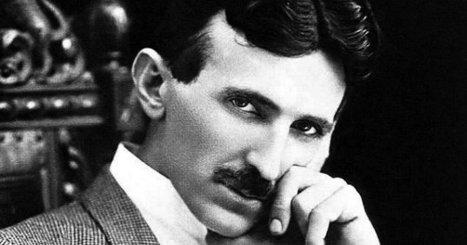
Nikola Tesla has become something of an Internet hero. According to legend, he was a mad genius who almost never got the credit he deserved in the money-hu
Get Started for FREE
Sign up with Facebook Sign up with X
I don't have a Facebook or a X account


|
Scooped by
LIGHTING
onto Lighting in history September 23, 2016 12:49 PM
|
 Scoop.it!


 Your new post is loading...
 Your new post is loading...
Your new post is loading...
Scoop.it!
|
|
|
Scooped by
LIGHTING
March 1, 1:03 PM
|
Scoop.it!
Imagine a city in the 1700s after sunset, when darkness fully took over and street lights did not yet exist. What you’re seeing is not a definitive reconstruction, but a plausible one based on urban regulations, travelers’ accounts, court records, and everyday life before public lighting.
As night falls, the city shifts rhythm. Streets empty, doors close, and life retreats indoors. Light comes from candles, lanterns, and isolated fires; sounds carry farther, and movement relies on memory and habit. Night is not neutral—it brings risk, social control, and silence.
This video explores what it felt like to live in a city during the 18th century after sunset, when darkness shaped behavior, movement, and safety. It’s not a romanticized past, but a contextual look at an urban experience that vanished with the arrival of street lighting.
What you’re watching is an attempt to understand how urban life worked when the night belonged to the shadows.

|
Suggested by
Gilbert C FAURE
December 24, 2025 9:58 AM
|
Scoop.it!

Aux origines de la photométrie avec Lionel Simonot. Essai d'optique : https://lnkd.in/eBUC6mfY
|
|
Suggested by
Gilbert C FAURE
September 16, 2025 11:13 AM
|
Scoop.it!

The Bureau of Street Lighting (BSL) celebrates the 100th anniversary of its establishment and outstanding services to the residents of the City of Los Angeles. BSL's mission is to light the way for Los Angeles through its vision to build, operate, and maintain world-class systems that deliver limitless benefits to our neighborhoods. Congratulations to the BSL employees who have made immense contributions to leading the nation in innovation, technology, and efficiency.
|
|
Scooped by
LIGHTING
August 7, 2025 4:17 AM
|
Scoop.it!

Light Was Once a Luxury. Now It’s a Problem.
Before electricity, light was expensive—firewood, oil, candles. People used it sparingly.
Today, we flip a switch and flood the night with brightness.
Dr. Gonlin reminds us: “Lighting is cheap today… we’re disconnected from it.”
Let’s reconnect with the value of darkness.
Find the episode here: https://lnkd.in/gcBqH6WD
Nancy Gonlin, Mark Baker, Michael Colligan, NAILD
https://lnkd.in/gDuUS6yk
#EnergyAwareness #LightPollution #HistoryOfLight #NancyGonlin #RestoringDarkness
|
|
Scooped by
LIGHTING
June 14, 2025 10:30 AM
|
Scoop.it!
One of the first electric streetlights installed in downtown Hemlock, MI.
Hemlock Area Historical Society:
https://www.facebook.com/HemlockAreaHistoricalSociety
Support this channel:
https://www.deltabroadcasting.org/donate/
|
|
Scooped by
LIGHTING
June 14, 2025 10:28 AM
|
Scoop.it!
Is KING Louis XIV The REAL Reason Paris Has Amazing STREET Lighting?
In 1667, under the rule of King Louis XIV, Paris became the first city to implement organized public street lighting. The goal was to improve safety and reduce crime in the city’s dark streets. Initially, thousands of oil lamps were placed along main thoroughfares and bridges. These lamps were manually lit each evening by dedicated lamp lighters.
This innovation earned Paris the nickname "The City of Light" (La Ville Lumière), not only because of its street lamps but also as a center of enlightenment and intellectual thought during that period.
Later advancements included gas street lighting, first introduced in London in 1807, and eventually electric street lighting, which began in Cleveland, Ohio, in 1879, and then spread worldwide.
Note- My videos do not violate any spam, fraud or scam policies. The videos are made for your entertainment. Please like, comment & subscribe.
Copyright Disclaimer: My videos are for entertainment purposes only. Any type of video does not violate any YouTube Community Guidelines. Under section 107 of the copyright Act 1976, allowance is mad for FAIR USE for purpose such a as criticism, comment, news reporting, teaching, scholarship and research. Fair use is a use permitted by copyright statues that might otherwise be infringing. Non- Profit, educational or personal use tips the balance in favor of FAIR USE.
TAG...
#ancienthistory
#History
#Ancient
#africanhistorycalvideo
#ancientmysteries
#ancienthistory
#ancientcivilizations
#AncientHistoryExplorers
@AncientHistoryExplorers
#foryou
#ancienthistory
#HistoryVideo
#AncientVideo
#AncientHistoryVideo
#AncientHistory
#AfricanVideo
#africanhistorycalvideo
#historycalvideo
#UnknownFacts
#viralshorts
#shortvideo
#unknowfactsshort
#UnexplainedFacts
#DidYouKnow
#UntoldStories
#MysteryChannel
#SurprisingFacts
#FactExploration
#TruthRevealed
|
|
Scooped by
LIGHTING
June 14, 2025 10:28 AM
|
Scoop.it!
In 1822, Paris experienced a curious incident when streetlights went out due to miscommunication over oil.
#Paris #History #UrbanLighting #CandleFair #1822 #Streetlights #CityLife #EnchantedStreets #RomanticParis #UnexpectedEvents #Shorts
|
|
Scooped by
LIGHTING
June 14, 2025 10:27 AM
|
Scoop.it!
Hammerfest later became the first town in Norway to get electric streetlights—in 1891—continuing its legacy as a pioneer in lighting up the dark.
#summary #history #amazingfacts
|
|
Scooped by
LIGHTING
June 14, 2025 10:27 AM
|
Scoop.it!
Early Street Lights Were the First CCTV 📷 Cameras | Shocking History! #shorts #cctv #addyandsush
#CCTVHistory
#SurveillanceTech
#StreetLightEvolution
#BigBrotherTech
#TechHistory
#HiddenHistory
#DarkTech
#SecurityCameras
#PrivacyDebate
#MindBlown
#DidYouKnow
#TechSecrets
#HistoryExposed
|
|
Scooped by
LIGHTING
June 14, 2025 10:26 AM
|
Scoop.it!
Imagine a world where darkness reigns—until one brilliant mind flips the switch! 💡 In this captivating YouTube Short, we dive into the groundbreaking invention of the arc lamp by Humphry Davy in 1802, the first electric light that forever changed our nights! Witness the stunning visuals of glowing arc lamps and the buzzing atmosphere of a 1800s lab as electric sparks dance in the air. Join us on this electrifying journey through history! If you’re inspired by innovation, like and share this video!
#TrueLinner #ArcLamp #ElectricLight #Innovation #History #HumphryDavy #Science #TechRevolution
|
|
Scooped by
LIGHTING
June 14, 2025 10:26 AM
|
Scoop.it!
Hey everyone! I wanted to let you know that this video is a shorter, edited version of a lecture originally presented by Dr. Roy Casagandra.{channel's link http://www.youtube.com/@DrRoyCasagranda } clming any ownership over the original content—it still belongs entirely to Dr.Royagandra and his team. I’ve simply tried to share the key insights in a more digestible format, and I believe this use falls under fair use for commentary and educational purposes. If you’re the copyright owner or have any concerns about this use, please feel free to reach out directly so we can work it out together. Thanks for watching and for your understanding!
Did you know that Arabs were using oil to light their streets as early as the 8th century? 🔥 Long before the modern oil boom, ancient Islamic cities like Baghdad and Damascus were illuminated at night—powered by natural oil extracted from the earth.
This hidden piece of Arab history became a crucial clue for the British Empire in the 20th century, revealing that vast oil reserves still existed in the Middle East. 🌍💡
In this video, we uncover:
✅ How early Islamic civilization used petroleum and oil lamps
✅ The role of Arab innovation in urban street lighting
✅ How this ancient clue helped the British discover oil in the Middle East
✅ The untold story of oil before the Industrial Revolution
📚 History lovers, oil industry researchers, and anyone curious about the real origins of the oil age—this video is for you!
🔍 Trending Keywords:
#ArabHistory #MiddleEastOil #AncientInnovation #OilDiscovery #8thCentury #IslamicGoldenAge #BritishEmpire #OilInvention #PetroleumHistory #BaghdadHistory #OilLamp #EarlyTechnology #HiddenHistory #ArabInnovation #StreetLightingHistory
|
|
Scooped by
LIGHTING
March 1, 1:03 PM
|
Scoop.it!
Safety regulations? Never heard of them! 🚫👷♂️ This is how street lights were maintained back in the early 1900s. A worker balances on a towering ladder mounted on a vintage truck (likely a Ford Model T) to change a bulb. One slip and it's over!
👇 Would you be brave enough to climb this? Let us know in the comments!
#VintageTech #DangerousJobs #History #1920s #FordModelT #VintagePhotos #OldSchoolCool #Electrician #WorkSafety #DailyLife #Shorts #Facts
|
|
Scooped by
LIGHTING
March 1, 12:52 PM
|
Scoop.it!

whatsapp8615815758133
hello@lederillumination.com
www.lederillumination.com
Serious outdoor maker, playful budget saver—custom pillar-top lanterns shining. Procurement kings, DM me before your tender cries.
We build outdoor lights, not drama. If your site needs signature pillar-top lanterns that look boutique and behave like tanks, you just found your factory friend. We carve, mill, and powder-coat in-house, then stress-test until the finish laughs at sun, dust, salt, and sudden rain. Factory-direct means you talk to engineers who turn napkin sketches into production drawings fast—zero telephone game, zero mystery mark-ups.
Specs your submittals will actually use: IP65–IP66 weather protection, IK08 impact resistance, UV-stable diffusers, anti-corrosion coatings for coastal air, and 4/6/10kV surge options for moody grids. Inputs from 110–277V AC or 12/24V DC. Choose 2700–6500K, CRI 80/90, static or tunable white, or go RGB/RGBW when the plaza wants to celebrate. Controls? 0–10V, DALI, Zigbee/BLE; timers, photocells, and motion profiles to dim after midnight and save energy without spooking security.
Design freedom is the point. We’ll laser-etch city crests, hotel monograms, or botanical patterns into the crown so the brand glows softly, not loudly. Go classic louvered, sleek modern cut-outs, or statement filigree. Pick opal, prismatic, or clear glass; add anti-glare optics so pathways feel calm and cameras don’t blow out highlights. Sizes scale from villa pillars to boulevard caps; lumen packages tune for courtyards, resorts, malls, campuses, and gated communities. Uniform light, no harsh hotspots—your landscape looks curated, not “bolted on.”
Finish matters. Standard matte black, sand bronze, champagne gold—and any RAL your architect dreams up. Hardware is stainless; gaskets are silicone; lenses are tempered glass or UV-stable PC. Thermal paths keep LEDs happy in summer heat. Every unit gets burn-in tested. Documentation lands with the shipment: IES/LDT photometrics, DIALux/Relux files, wiring diagrams, exploded views, Revit families, labels, and bilingual packing lists. Need a fast concept board for an owner review? Send the mood; we’ll send clean renders and a realistic BOM.
Procurement stays painless: friendly MOQs for pilots, smooth ramps for rollouts, honest lead times, and packaging built for forklifts and rainy docks. Samples in days, not months—so you can test, present, and lock specs before the calendar turns unfriendly. Five-year warranty available on request, plus spare-parts kits for multi-site peace of mind.
Why “playful budget saver”? Because we optimize materials, drivers, optics, and tooling so you hit the look, the lux, and the line item. We tune lux levels, not just luck. Less rework, fewer RFIs, happier inspectors. Your Gantt chart gets a little less suspense and a lot more green bars.
If your tender whispers “distinctive pillar-top luminaire,” we’re ready. Tell us pillar size, target wattage and lumen range, finish, control method, and deadline. We’ll quote fast, sample faster, and ship on time—so walkthrough photos sparkle and sign-off feels boring (the good kind).
Project engineers and buyers—message now before timelines go dark. Let’s carve light, not excuses.
#+OutdoorLighting #+PillarTopLight #+LEDLantern #+LandscapeLighting #+GardenLighting
#+ArchitecturalLighting #+FactoryDirect #+OEMODM #+SmartLighting #+ProjectProcurement
|
|
Suggested by
Gilbert C FAURE
December 24, 2025 10:01 AM
|
Scoop.it!
|
|
Scooped by
LIGHTING
August 7, 2025 8:44 AM
|
Scoop.it!
Step inside 140 years of industrial innovation, personal resilience, and community transformation in this original PBS Fort Wayne documentary.
From the rise of a local electric company in the 1880s to the global powerhouse of General Electric, this film traces the story of how GE shaped Fort Wayne—and how Fort Wayne shaped GE.
Experience the WWII production boom, hear stories from the workers who powered a city, witness the heartbreak of the 1980s economic collapse, and see how new life is emerging through the Electric Works redevelopment.
📍 Filmed in Fort Wayne, Indiana
📺 A PBS Fort Wayne Original Production
📌 Subscribe for more local stories and documentaries:
👉 https://www.youtube.com/@pbsfortwayne
This program is made possible by viewers like you. Please support your local PBS stations: https://www.pbsfortwayne.org/support/
Enjoy full episodes of your favorite PBS shows anytime, anywhere with the free PBS app: https://to.pbs.org/2QbtzhR
Stay current with the latest previews, videos, and more from PBS FORT WAYNE each week by signing up for the myPBSfw Member Account: https://www.pbsfortwayne.org/support/mypbsfw/
FOLLOW PBS FORT WAYNE:
Facebook:
https://www.facebook.com/PBSFortWayne/
Instagram:
https://www.instagram.com/pbsfortwayne/
TikTok:
https://www.tiktok.com/@pbsfortwayne
Original Air Date: 03/05/2020
#ElectricLegacy #GEFortWayne #documentary #generalelectric #fortwaynehistory #indianahistory #rustbelt #industrialamerica #factorytown #wwii #urbanrevitalization #americanindustry #midwest #documentaryfilm #pbsdocumentary #oralhistory #fulldocumentary
|
|
Scooped by
LIGHTING
June 14, 2025 10:30 AM
|
Scoop.it!
In 1797, Londoners were captivated by a peculiar phenomenon. The city's street lamps, newly fitted with reflectors, seemed to hold mysterious eyes. Rumors spread that these eyes belonged to a secret society, watching over the city. But was it true? The reflectors, designed by William Murdoch, merely enhanced the light, yet the illusion persisted. People swore they saw blinking eyes in the glow. This sparked a fascination with optics and light, leading to innovations in lighting. Today, we wonder: how much of what we see is real? Hit the like button, subscribe, and leave a comment to support us.
#history #mystery #london #shorts #youtubeshorts #growyourchannel #viralcontent

Conspiracy theories and technology has been walking hand in hand for a long time. The story onf the "London's eyes" is a pretty good example of such a coupling.
|
|
Scooped by
LIGHTING
June 14, 2025 10:30 AM
|
Scoop.it!
How did we survive without Electricity, History Of Oil Lamp, Uniq History
#Historyofsimplethings#evolution
#historicalfacts #timetraveler
Oil lamps have been lighting the way for thousands of years, from prehistoric caves to ancient cities. Early humans used simple stone bowls filled with animal fat, while civilizations like Mesopotamia, Egypt, Greece, and Rome refined their designs with clay, bronze, and olive oil. Over time, innovations in lamp-making spread across the Byzantine, Islamic, and Renaissance eras, leading to brighter and more efficient lighting. Though electricity has taken over, oil lamps remain a symbol of history, culture, and human ingenuity.
|
|
Scooped by
LIGHTING
June 14, 2025 10:28 AM
|
Scoop.it!
Explore the historical impact of gas lighting, transforming urban life and night activities.
#History #GasLighting #UrbanDevelopment #19thCentury #WilliamMurdoch #CulturalShift #London #PublicSafety #Nightlife #ModernLiving #Shorts
|
|
Scooped by
LIGHTING
June 14, 2025 10:27 AM
|
Scoop.it!
@TheCuriosityCorner11
Discover the dazzling history of electric light in Paris! 🌟 In 1829, the French capital became the first city to illuminate its streets with electric lighting, using innovative battery-powered carbon lamps. This groundbreaking step revolutionized urban life, enhancing safety and transforming the economy. Imagine Paris, the "City of Lights," without its iconic glow—it's hard to fathom! Join us as we explore this remarkable leap in technology that paved the way for modern public lighting. Don’t forget to like and share this video if you enjoyed this fascinating glimpse into history!
#ElectricLight #ParisHistory #CityOfLights #Innovation #TechRevolution
|
|
Scooped by
LIGHTING
June 14, 2025 10:27 AM
|
Scoop.it!
in 1800s england, street lamps were so important that turning one off could lead to execution.
it was basically the harry potter version of killing a city’s light charm.
follow for more bizarre historical laws and facts!
#weirdlaws #harrypotterreference #gaslamp #historyfacts #strangelaws #crazyhistory #fyp #shorts #didyouknow #funfacts #youtubeshorts
|
|
Scooped by
LIGHTING
June 14, 2025 10:27 AM
|
Scoop.it!
Did You Know Jellyfish DNA Could Light Up the Streets of the Future?" #shorts #shortsfeed #facts
📍Keyword at the Beginning
Did You Know Jellyfish DNA Might Power Glow-in-the-Dark Forests?
Did You Know Scientists Are Using Jellyfish DNA to Make Glowing Trees?
Did You Know Jellyfish DNA Could Light Up the Streets of the Future?
Did You Know Glowing Trees Could Replace Streetlights Thanks to Jellyfish DNA?
Did You Know This Sea Creature Could Revolutionize Urban Lighting?
📍Keyword in the Middle
Scientists Reveal: Did You Know Jellyfish DNA Could Make Trees Glow?
You Won’t Believe It — Did You Know Jellyfish DNA Is Going Into Plants?
Future Lighting Revolution: Did You Know Jellyfish DNA Is Key?
Glowing Trees Are Real — Did You Know It’s All Thanks to Jellyfish DNA?
What If Trees Lit Up at Night? Did You Know Jellyfish DNA Makes It Possible?
📍Keyword at the End
Trees That Glow at Night? Powered by Jellyfish DNA — Did You Know?
A Biotech Breakthrough That Could Light Cities — Did You Know?
Scientists Are Engineering Glowing Trees Right Now — Did You Know?
This Ocean Discovery Could Change Our Cities — Did You Know?
The Future of Streetlights Could Be Trees — Did You Know?
YOUTUBE DESCRIPTION |#@mrfactnova
Did you know jellyfish DNA could light up the streets of the future? This groundbreaking idea isn't science fiction — it's real science in motion. Researchers around the world are studying the glowing proteins in jellyfish to genetically engineer trees that naturally emit light. Imagine a world where city streets are illuminated by bioluminescent trees instead of electricity-hungry streetlights! In this eye-opening video, we explore how this innovation could revolutionize urban planning, save energy, and bring nature and technology together in ways we've never seen before. Get ready to discover how jellyfish could help build greener, glowing cities — and why this might be the future of sustainable lighting.
#DidYouKnow
#GlowingTrees
#JellyfishDNA
#BiotechInnovation
#GreenTechnology
#Bioluminescence
#FutureCities
#GlowInTheDark
#ScienceBreakthrough
#sustainablefuture
#trendingshorts
#viralshorts
#intrestingshorts
#funshorts
did you know, jellyfish dna glowing trees, jellyfish dna science, glowing tree technology, glowing plants biotech, glow in the dark trees, future of lighting, jellyfish dna in plants, glowing trees streetlights, bioluminescent trees, urban lighting innovation, sustainable city lighting, green lighting solutions, jellyfish inspired technology, nature powered lights, biotechnology 2025, light producing plants, science behind glowing plants, trees replacing streetlights, glowing trees explained, biotech trees, jellyfish dna future use, glowing forest future, glowing tree experiments, science facts jellyfish, jellyfish bioluminescence, glow in the dark dna, jellyfish protein application, glow gene jellyfish, sustainable biotech, jellyfish dna glow experiment, smart city lighting, natural lighting future, jellyfish facts, innovative lighting, futuristic landscaping
glowing plants are illuminating the streets,plants are illuminating the streets,the future is here,editorial analysis of the hindu,the hindu analysis,streets of our cities,the hindu analysis by prashant sir,jellyfish,the hindu analysis today,the hindu analysis for upsc,the hindu analysis in hindi,glow in the dark,massachusetts institute of technology,illuminating streets,streets,lights,little known black history facts,the hindu editorial today
|
|
Scooped by
LIGHTING
June 14, 2025 10:26 AM
|
Scoop.it!
Before London had lights… Benin City was glowing.
In the 1400s, the Kingdom of Benin (in present-day Nigeria) had wide streets, underground drainage, and night lighting from palm oil lamps.
The Portuguese were shocked. But centuries later, the British burned the city in 1897, stole the Benin Bronzes, and buried its story.
Why? Because it proved that Black Africa built advanced civilizations long before colonizers came.
This is the story of Benin City — the capital of brilliance they tried to erase.
🔥 “They burned the city. But not the truth.”
🔔 If you love discovering Africa's rich heritage, hit subscribe! Stay tuned for soulful rhythms, inspiring talents, mesmerizing dances, & stories that celebrate the richness of African culture: https://www.youtube.com/@Cenn_Entertainment/?sub_confirmation=1
🔗 Stay Connected With Us.
👉 Facebook: https://web.facebook.com/people/CENN-DANCE/100091648415681/
👉 Instagram: http://instagram.com/cennentertainment?igsh=djd2M3I2a3dkMHdx
👉 Tiktok: http://tiktok.com/@cennentertainment?_t=8pJtXbp3Oh3&_r=1
=============================
🎬 Recommended Playlists
👉 MUSIC AFRICAN CALM VIBES
https://www.youtube.com/playlist?list=PL9ONJF-iI2geupCGLx2YZbjaOrQWPDPPi
👉 AKIN: AN AFRICAN DYNASTY
https://www.youtube.com/playlist?list=PL9ONJF-iI2gcjf0E1cCYXYP9Z4gSXVZm3
🎬 WATCH OUR OTHER VIDEOS:
👉 Trailblazing Women In History Who Changed America
https://www.youtube.com/watch?v=ShLOuDfBNKI&t=626s
👉Amina’s Dark Path To Win Akin Back (Part 2): African Folktale Of Love, Betrayal & Magic
https://www.youtube.com/watch?v=Hki4RTu4xzg
👉Fannie Lou Hamer’s Courage: The Fight For Voting Rights | #shorts
https://www.youtube.com/shorts/8glyVlgcoWU
=============================
✅ About Cenn Entertainment.
Welcome to Cenn Entertainment – your gateway to the heart and soul of African culture!
Based in UK, but from Africa we bring you an immersive experience into Africa's rich and vibrant heritage, including the best of African traditions, music, dance, and stories that inspire and engage.
Our channel also seeks to discover lesser-known and more rural talents and bring them to light while enjoying the richness of African cultural dance, mesmerizing folktales, soul-stirring music, and engaging discussions on topics that resonate with today's viewers.
🔔 Experience the beauty of African traditions! Subscribe for hidden talents, soulful music, mesmerizing African dance, inspiring folktales, & the diversity of African culture.
https://www.youtube.com/@Cenn_Entertainment/?sub_confirmation=1
=================================
Benin City history, Benin Empire, ancient African cities, African architecture, pre-colonial Nigeria, stolen African artifacts, Benin Bronzes, British invasion 1897, African engineering, black history facts, African power before colonization
@Cenn_Entertainment
|
|
Scooped by
LIGHTING
June 14, 2025 10:26 AM
|
Scoop.it!
The image shows the first electric street light in Asia, lit in Bangalore (now Bengaluru) on August 5, 1905. Key details include:
Location: Installed in the area of Chandni Chowk, Shivaji Nagar, and Russell Market.
Significance: Bengaluru became the first city in Asia with electric street lighting.
Source of Power: The electricity was
supplied by the Shivanasamudra hydroelectric power station.
Pre-electricity Era: Before 1905, the city's streets were lit by kerosene lamps.
Historical Context: The installation reflects Bengaluru's early adoption of modern technology.
Current Status: The original lamp posts were removed during construction in the 1980s.
#banglore #rcb #indianhistory #incredibleindia #theworldhistory #motivation #educationalvideo #trendingshort