|
cmc2012: Site open for Paper Submissions / Sitio abierto para Envío de Trabajos ===== Español al final ==== Hi, The paper submissions site for cmc2012 is open at: Papers can be submitted in English or Spanish, and the conference will count with simultaneous translation English <-> Spanish of Oral Presentations Submissions can be Papers with Oral Presentation, Posters with Paper, and Posters without a Paper. Instructions for preparing submissions can be found at: http://cmc.ihmc.us/cmc2012/cmc2012PaperInstructions.html The deadline for submissions is April 27, 2012! See you in Malta! ==== en Español ===== Hola, Ya está abierto el sitio para envío de trabajos para cmc2012 en: http://cmcsubmission.ihmc.us/index?zmax_display_lang=es Los trabajos pueden ser en Español o Inglés, y en el congreso habrá traducción simultánea Inglés <-> EspaNNol. Los trabajos pueden ser Artículos con Presentación Oral, Pósters con Artículo y Pósters sin Artículo. Las instrucciones para preparación de ponencias se encuentran en: http://cmc.ihmc.us/cmc2012/cmc2012InstruccionesPonencia.html La fecha límite para el envío de trabajos es el 27 de abril! Nos vemos en Malta!
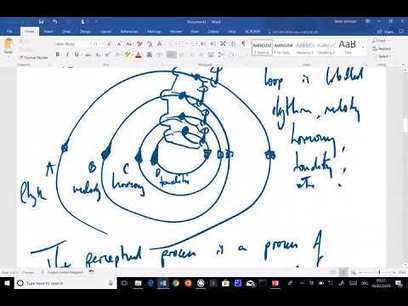
In this talk I discuss what will be coming 'After Moodle' by means of a discussion of open learning, connectivism, and personal learning environments, including... Via Susan Bainbridge, enrique rubio royo
Survey shows people take training as infrequently as they go to a conference; but they learn continuously in other ways 40 EmailShare Although there have been well over 100 responses to the survey, once again, as with my previous survey a pattern to the responses appeared quite early on. So to make it easier to read the data, I took a snapshot of the results once 100 responses had been received. Although there are probably few surprises in the responses to the four main questions themselves, it is when you view the amalgamated results that you can see the bigger picture. But, here first, are the responses to the four main questions. Click on the images for the full-size versions.
This post is co-written with Pat Thomson, who is simultaneously publishing on her blog 'Patter'. If you haven't already, head on over there and check it out!
Jane Hart asked readers “how regularly are you “learning” in the workplace?” Here are the top five ways that people learn, with my comments below on how this can be facilitated in the organization, either by management or the learning support group. Notice that these are all informal. The more formal methods, like courses, ranked much lower on the survey results.
I shared this beautiful video with a team of teachers before a planning session this morning. Via Ana Cristina Pratas
"Provoke discussion. Engage viewers. Discuss impact & challenges of technology in teaching and learning today."
@flairandsquare has posed some really GREAT QUESTIONS in this presentation. Who are Gen Y? What tools do they use? How do they learn? How to teach them? What tools to use to engage them?
Via Anne Whaits
Covers a variety of Web 2.0 and other Multimedia Tools educators can use to engage, excite, and educate students. Via Baiba Svenca, Ana Rodera
This week I presented our netnographic research on community lifecycle at a MeMo project meeting at the Federal Minsitry of Economics and Technology (BMWi).
Future U is a multipart series on the university of the 21st century.
"In the weeks and months to follow we will be covering the future of the textbook, the technological development of libraries, how tech will change the role of the professor, and the future role of technology in museums, research parks and university-allied institutions of all kinds." Curt Hopkins Via k3hamilton, Louise Robinson-Lay
Reflexiones sobre la Pantalla Digital Interactiva (PDI) en el boletín núm. 14 del CITA. Vía @jordi_a (Twitter).
|
Slidedeck for a presentation on personal learning networks (PLNs) used in my social media class...
Comment: nice collection of slides, even if there is too much emphasis on a PLN as an information filtering device and too little on the in my view mandatory bidirectionality of communication in a network. (pbsloep) Via Peter B. Sloep
The computer – or, most specifically, the global Internet connected to it – is ultimately disruptive, not just to the classroom learning experience, but to the entire rationale of the classroom, the school, the institution of learning, says Mark Pesce Via OLnet Team, Score Project
I feel a certain lassitude towards aspects of work at the moment. I have phases like this. Ironically, they're often times when I get important things done. But it's a struggle.
By Dayna Catropa, Inside Higher Ed Educational publishing has gotten a lot of attention in the recent past, from controversy over rising prices to digital advances. Another trend is the proliferation of tools for educators to create and publish their own content. TED brings us one such tool, launched at the end of April: TED-Ed, “lessons worth sharing.”
Brad Honeycutt, a fellow Spartan (he graduated 1996 a couple of years before I started here at Michigan State) is fascinated by optical illusions.
POGIL uses guided inquiry – a learning cycle of exploration, concept invention and application – as the basis for many of the carefully designed materials that students use to guide them to construct new knowledge. POGIL is a student-centered strategy; students work in small groups with individual roles to ensure that all students are fully engaged in the learning process. POGIL activities focus on core concepts and encourage a deep understanding of the course material while developing higher-order thinking skills. POGIL develops process skills such as critical thinking, problem solving, and communication through cooperation and reflection, helping students become lifelong learners and preparing them to be more competitive in a global market.
Check out the Resources tab for curriculum materials, implementation materials, facilitators toolbox and more.
Suitable for both high school and college students. Read more here: http://www.facultyfocus.com/articles/effective-teaching-strategies/an-interesting-group-work-model/
Via Anne Whaits
Entire Book 1. Introduction
Learnadoodledastic: Making a case for creating Open Educational Resources for use in Higher Education | @scoopit http://t.co/VDJerRh2... Via Terese Bird
|
| 1 | 2 | 3 | 4 | ![]() |
54 |
|
Next |