Connectivism
69
Are You Connected? Do You Know What It Means?
Follow
Your new post is loading...
Scooped by Susan Bainbridge
Scoop.it!

Get Regular Update on Connectivism

Get Regular Update on Connectivism | Connectivism | Scoop.it

Click the 'follow' button on the top, right.


Trying to find posts on a particular aspect of Connectivism?

Click 'filter' tab above and choose an area of interest.


Thank you to everyone for the suggestions and 'thank you's'. I appreciate your support!

Tòfol Tobal's comment, April 1, 12:39 PM
Teaching aplications, new didactics projects
Scooped by Susan Bainbridge
Scoop.it!

Why the Past Cannot Predict the Future of MOOCs and Online Learning [#Infographic]

Why the Past Cannot Predict the Future of MOOCs and Online Learning [#Infographic] | Connectivism | Scoop.it
Higher education has withstood centuries of progress without changing. That’s about to change.
No comment yet.
Scooped by Susan Bainbridge
Scoop.it!

Loveless MOOCs

Loveless MOOCs | Connectivism | Scoop.it

Teaching & Learning Is there a paradigm shift to learning in higher education or are universities going to continue focusing on content delivery. Have we lost the human touch? Are we using technology or is technology using us? Have we lost the human touch in education?

No comment yet.
Scooped by Susan Bainbridge
Scoop.it!

MOOCs and Beyond

MOOCs and Beyond | Connectivism | Scoop.it
"In August, 2012, four months after opening, Coursera—one of several Massive Open Online Course (MOOC) providers quickly gaining traction on the Internet—registered one million students, from nearly 200 countries. This is only one of the many staggering statistics that could be shared about the sudden popularity of MOOCs, the total of which speak to the worldwide interest in accessing university courses online."
No comment yet.
Scooped by Susan Bainbridge
Scoop.it!

George Siemens on Connectivism

I'm addicted to TED talks and wanted to share this one with the class.
No comment yet.
Scooped by Susan Bainbridge
Scoop.it!

Introduction to Views of Connectivism Theory of Learning | Journal Register

Introduction to Views of Connectivism Theory of Learning | Journal Register | Connectivism | Scoop.it
No comment yet.
Scooped by Susan Bainbridge
Scoop.it!

Connectivism in the context of acquisition of basic digital skills

Carlos Lizarraga Celaya's curator insight, May 10, 12:49 PM

Learning basic digital skills through use of a network is somewhat of a contradiction.  Hence, I have commented on Siemens’s key principles in the context of this most fundamental learning in a networked world.  In the developing world, the most basic of digital skills (keyboard, mouse, logging on etc.) have to be learned before more valuable skills (searching, publishing) can be developed.

 
Scooped by Susan Bainbridge
Scoop.it!

Half an Hour: Assessment in MOOCs

No comment yet.
Suggested by MOOC News & Reviews
Scoop.it!

News Roundup -- Continuing Ed MOOCs for Teachers, XPU College Readiness MOOC - moocnewsandreviews.com

News Roundup -- Continuing Ed MOOCs for Teachers, XPU College Readiness MOOC - moocnewsandreviews.com | Connectivism | Scoop.it
The biggest development this week is the announcement of new classes on Coursera that particularly focus on continuing ed MOOCs for teachers.
No comment yet.
Scooped by Susan Bainbridge
Scoop.it!

Posts About MOOCs ~ Stephen's Web

Posts About MOOCs ~ Stephen's Web | Connectivism | Scoop.it
Stephen's Web, the home page of Stephen Downes, with news and information on e-learning, new media, instructional technology, educational design, and related subjects
No comment yet.
Scooped by Susan Bainbridge
Scoop.it!

Connectivism: Theory or Phenomenon?

Connectivism: Theory or Phenomenon? | Connectivism | Scoop.it
Preface Back in March 2013, I signed up to do the "Open Education" MOOC from The Open University on the OpenLearn platform. Also in March, I started my Doctorate in Education (EdD) at Canterbury Ch...
No comment yet.
Scooped by Susan Bainbridge
Scoop.it!

Connectivism in the context of acquisition of basic digital skills | Guy Cowley's Blog

Learning basic digital skills through use of a network is somewhat of a contradiction.  Hence, I have commented on Siemens’s key principles in the context of this most fundamental learning in a networked world.  In the developing world, the most basic of digital skills (keyboard, mouse, logging on etc.) have to be learned before more valuable skills (searching, publishing) can be developed.

Joyce Valenza's curator insight, April 28, 9:41 PM

add your insight...


Scooped by Susan Bainbridge
Scoop.it!

MOOC Mania: Debunking the hype around massive open online courses - The Digital Shift

MOOC Mania: Debunking the hype around massive open online courses - The Digital Shift | Connectivism | Scoop.it
Kamakshi Rajagopal's comment, April 23, 5:14 PM
Hi Minter Dial! We are conducting a survey on education-related topics on Scoop.IT at the Open Universiteit in the Netherlands and could really use your help. Would you like to join our experiment? You can sign up here: http://bit.ly/14QR9oa Thanks for your participation!!!
Scooped by Susan Bainbridge
Scoop.it!

Connectivism ???

Connectivism ??? | Connectivism | Scoop.it
Connectivism - George Siemens In the world of Higher Education and among well-motivated and intelligent students there is probably a case for seeing Connectivism as one theory of learning but not t...
Susan Bainbridge's insight:

Thoughts on it as an actual theory is questione.

No comment yet.
Scooped by Susan Bainbridge
Scoop.it!

How to explain the current xMOOCs in terms of education model and pedagogy?

How to explain the current xMOOCs in terms of education model and pedagogy? | Connectivism | Scoop.it
Daniel in his post of  a criticism of computer science models or modeles says: The problem is made worse by the fact that researchers working on modèles more easily get the upper hand. They are nev...
No comment yet.
Scooped by Susan Bainbridge
Scoop.it!

Connected Learning: A Learning Approach Designed for Our Times

Connected Learning: A Learning Approach Designed for Our Times | Connectivism | Scoop.it
What does connected learning look like in action? It looks like Charles Raben, a 14-year-old aspiring photographer from a public school in New York City.
No comment yet.
Scooped by Susan Bainbridge
Scoop.it!

The Pedagogy of MOOCs

The Pedagogy of MOOCs | Connectivism | Scoop.it
There is a great deal of energy, enthusiasm, and change happening in today's education sector. Existing and new education providers are leveraging the Internet, ICT infrastructure, digital content,...
No comment yet.
Scooped by Susan Bainbridge
Scoop.it!

Connectivism in the context of acquisition of basic digital skills | Guy Cowley's Blog

No comment yet.
Scooped by Susan Bainbridge
Scoop.it!

A Reminder to Give Credit to the Creators of MOOCs.

A Reminder to Give Credit to the Creators of MOOCs. | Connectivism | Scoop.it

"We’re witnessing a concerted retelling of the history of MOOCs. It’s one that erases almost all contributions made by Canadians. Stephen Downes. George Siemens. Dave Cormier. Alec Couros."

No comment yet.
Scooped by Susan Bainbridge
Scoop.it!

The pedagogical foundations of massive open online courses

The pedagogical foundations of massive open online courses | Connectivism | Scoop.it
The pedagogical foundations of massive open online courses
Carlos Lizarraga Celaya's curator insight, May 8, 11:39 AM

In 2011, the respective roles of higher education institutions and students worldwide were brought into question by the rise of the massive open online course (MOOC). MOOCs are defined by signature characteristics that include: lectures formatted as short videos combined with formative quizzes; automated assessment and/or peer and self–assessment and an online forum for peer support and discussion. Although not specifically designed to optimise learning, claims have been made that MOOCs are based on sound pedagogical foundations that are at the very least comparable with courses offered by universities in face–to–face mode. To validate this, we examined the literature for empirical evidence substantiating such claims. Although empirical evidence directly related to MOOCs was difficult to find, the evidence suggests that there is no reason to believe that MOOCs are any less effective a learning experience than their face–to–face counterparts. Indeed, in some aspects, they may actually improve learning outcomes.

 
Scooped by Susan Bainbridge
Scoop.it!

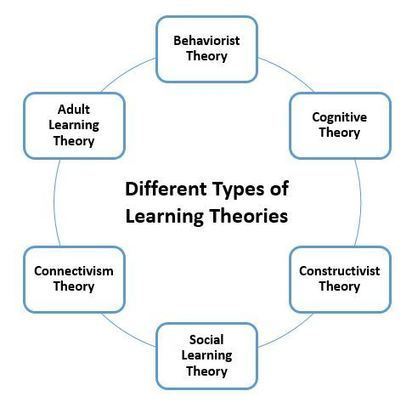
The Difference Between Instructivism, Constructivism, And Connectivism - TeachThought

The Difference Between Instructivism, Constructivism, And Connectivism - TeachThought | Connectivism | Scoop.it
We spend so much time in education trying to make things better. Better policies. Better technology. Better standards. Better curriculum. Better instruction. Better assessment.
Nimah Nirvanova's curator insight, May 7, 9:24 AM

as we evolve...

Carlos Lizarraga Celaya's curator insight, May 10, 12:48 PM


Instructivism is definitely more teacher and institutionally centered, where policy-makers and “power-holders” create processes, resource-pools, and conditions for success.

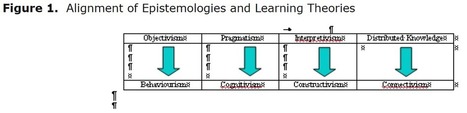
Constructivism sees the teacher step aside to a new role as facilitator, pairing students with peers, learning processes, and another another at key moments based on data and observation while the students create their own knowledge and even early learning pathways.

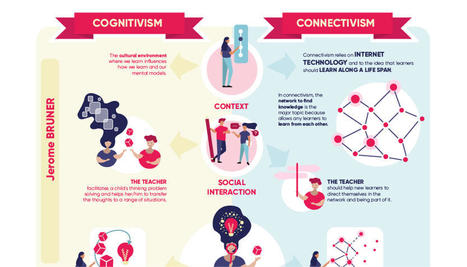
Connectivism is similar to constructivism–in fact, a learner participating in connectivism would likely do so at times with an constructivist approach. The difference here lies in the central role of relationships and networks in connectivism. Rather than supplemental, they are primary sources.

 
Suggested by MOOC News & Reviews
Scoop.it!

The Ultimate Student Guide to xMOOCs and cMOOCs - moocnewsandreviews.com

The Ultimate Student Guide to xMOOCs and cMOOCs - moocnewsandreviews.com | Connectivism | Scoop.it
A history of xMOOCs and cMOOCs (or collectivist MOOCs) with a review of two of the xMOOC providers and advice on how to choose between them.
Ken Ronkowitz's curator insight, May 4, 2:40 PM

perhaps not the "ultimate" but a good short introduction

Marci Segal, MS's curator insight, May 5, 8:26 AM

A good intro to MOOC's.  Next best thing in education?

Marci Segal, MS's comment, May 5, 8:29 AM
Agree - a good introduction
Scooped by Susan Bainbridge
Scoop.it!

Connectivism: Learning Theory for the Future?

Connectivism: Learning Theory for the Future? | Connectivism | Scoop.it
Connectivism: The pipe is more important than the content within the pipe. Our ability to learn what we need for tomorrow is more important than what we know today.
Anne Whaits's curator insight, May 1, 10:44 PM

It is my view that one of the most significant statements made by George Siemens is this one: "As knowledge continues to grow and evolve, access to what is needed is more important than what the learner currently possesses." 


The role of teaching (and learning) then needs to shift in several ways to support this. How do we support students in selecting, discerning, organising this information and critically reflecting on it? How do we support students in creating new ways of evidencing their learning? How do we encourage students to create content themselves that adds to this growing and evolving abundance of information and knowledge generation?


"The Network is the Learning"....another of George Siemens' statements that resonates so well with me.

Carlos Castaño's comment, May 10, 10:08 AM
Quizá no sea aún una teoría del aprendizaje en sentido estricto del término, pero su influencia es innegable. Es, sin duda, un intento de articular una teoría del aprendizaje que entiende la Red. Y ese es el mejor comienzo
Carlos Lizarraga Celaya's curator insight, May 10, 12:46 PM

Connectivism is the integration of principles explored by chaos, network, and complexity and self-organization theories.

In a knowledge economy, the flow of information is the equivalent of the oil pipe in an industrial economy…

The pipe is more important than the content within the pipe. Our ability to learn what we need for tomorrow is more important than what we know today. A real challenge for any learning theory is to actuate known knowledge at the point of application. When knowledge, however, is needed, but not known, the ability to plug into sources to meet the requirements becomes a vital skill. As knowledge continues to grow and evolve, access to what is needed is more important than what the learner currently possesses.

Scooped by Susan Bainbridge
Scoop.it!

Massive Open Online Courses threaten to aggravate the problems they were designed to solve.

Massive Open Online Courses threaten to aggravate the problems they were designed to solve. | Connectivism | Scoop.it
The Voice of the Rest
No comment yet.
Scooped by Susan Bainbridge
Scoop.it!

Theory-informed TEL and Connectivism

Theory-informed TEL and Connectivism | Connectivism | Scoop.it
This week I met Seb Schmoller  who recommended that I have a look at the ocTEL MOOC , a 10 week open course in technology enhanced learning which is being run by ALT (Association for Learning Techn...
systerwoody's curator insight, April 23, 10:42 AM

Interestingly, ALT is out of U.K. http://www.alt.ac.uk/about-alt & they also offer CMALT, certified membership 'alt' scheme for learning technologists.

Scooped by Susan Bainbridge
Scoop.it!

Grading the MOOC University

Grading the MOOC University | Connectivism | Scoop.it
Take away the dorm rooms, the classroom banter, the brown-nosing, the keg parties and the tuition, and is it still college? (Two Cheers for Web U!: Take away the dorm rooms, the classroom banter, the brown-nosing, the keg parties and t...
No comment yet.