 Your new post is loading...
Security researchers have released a report examining a social engineering operation designed to trick admins into installing backdoor malware called CrytoPHP by way of of tainted CMS plugins and themes for WordPress, Joomla and Drupal.
The attackers lure targets into publishing the pirated themes and plugins by providing them for free, offerings that usually incur a fee for use.
“After being installed on a webserver the backdoor has several options of being controlled which include command and control server communication, mail communication as well as manual control,” the researchers revealed.
Via Gust MEES
The benefits that the Internet of Things can bring are numerous, but so are the concerns that it can facilitate cyber attacks. As we are entering the era of the Internet of Things (IoT), our homes are becoming increasingly populated by devices that are connected to the Internet in order to share information with each other and the external world more easily.
Ranging from smart phones and smart TVs to motor-cars with 4G and Wi-Fi, from automated household appliances to sophisticated business tools, this web – connected smart devices are collectively known as the Internet of Things.
According to a Ciscoreport, it’s predicted that 50 billion objects worldwide will be connected to the internet by 2020.
Via Gust MEES
Security researchers at Proofpoint have uncovered the very first wide-scale hack attack that involved television sets and at least one refrigerator.
Via Gust MEES
12 December 2013 Word that mobile malware is rather pervasive has been making the rounds for months, but a new report has found that a shocking 100% of the Top 100 paid Android apps and 56% of the Top 100 paid Apple iOS apps have been hacked. Averaged together, users have a 78% chance of running into an app that has been compromised at some point.
Via Gust MEES
When you hear the phrase 'cyber security', what springs to mind? Human error In cyber security we often say 'there is no such thing as a malicious machine'. Trace a cyber attack or information breach back to its source and you won't find code, you'll find a person. In fact, most information breaches are the result of human error and a lack of awareness, and the 'human problem' appears to be increasing.
Via Gust MEES
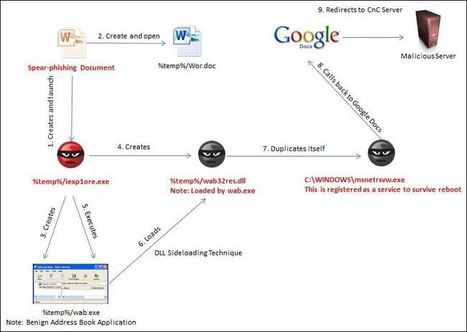
1. Executive Summary The FireEye research team has recently identified a number of spear phishing activities targeting Asia and ASEAN. This malware was found to have used a number of advance techniques which makes it interesting: The malware leverages Google Docs to perform redirection to evade callback detection. This technique was also found in the malware dubbed “Backdoor.Makadocs” reported by Takashi Katsuki (Katsuki, 2012).It is heavily equipped with a variety of cryptographic functions to perform some of its functions securely.The malicious DLL is manually loaded into memory which hides from DLL listing.
Via Gust MEES
. . Introduction In previous articles WE discussed already about the responsibility that everyone is responsible for a safer and more secure Internet, that the weakest link in the security chain is...
Via Gust MEES
|

|
Rescooped by
michel verstrepen
from Robótica Educativa!
February 7, 2015 7:05 AM
|
OPSWAT’s latest market share report ranks Avast as the top vendor and finds that 90% of devices haven’t updated their antivirus definitions in the last seven days.
Via Gust MEES
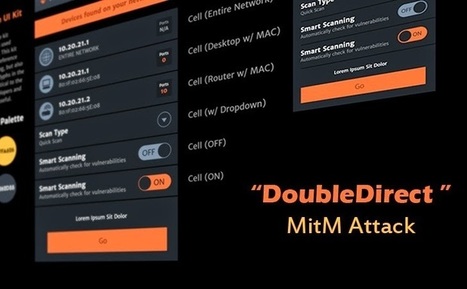
Security researchers have discovered a new type of "Man-in-the-Middle" (MitM) attack in the wild targeting smartphone and tablets users on devices running either iOS or Android around the world.
The MitM attack, dubbed DoubleDirect, enables an attacker to redirect a victim’s traffic of major websites such as Google, Facebook and Twitter to a device controlled by the attacker. Once done, cyber crooks can steal victims’ valuable personal data, such as email IDs, login credentials and banking information as well as can deliver malware to the targeted mobile device.
San Francisco-based mobile security firm Zimperium detailed the threat in a Thursday blog post, revealing that the DoubleDirect technique is being used by attackers in the wild in attacks against the users of web giants including Google, Facebook, Hotmail, Live.com and Twitter, across 31 countries, including the U.S., the U.K. and Canada.
Via Gust MEES
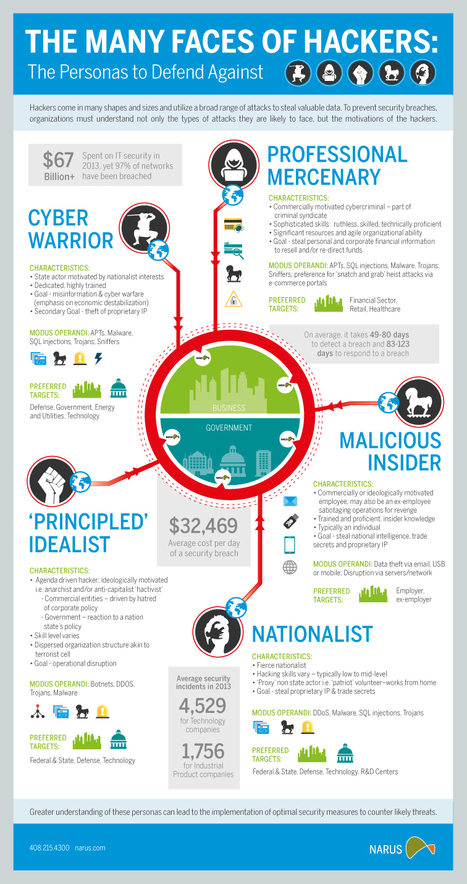
How many of these hacker personas are you dueling with in your organization?
Via Gust MEES
Recently, a report has emerged on the fact that certain applications available on Android are vulnerable to the Heartbleed Bug, and it seems that more... Moreover, the team claims that the issue is present even on handsets and tablets that do not run under the affected platform iteration itself.
They note that 273 applications in Google Play were found to be bundled with the standalone affected OpenSSL library, thus being vulnerable on any device on which they are installed.
“In this list, we see last year’s most popular games, some VPN clients, a security app, a popular video player, an instant message app, a VOIP phone app and many others,” the TrendLabs notes in the aforementioned blog post.
Learn more:
Via Gust MEES
Das Security-Blog Sucuri warnt vor einem neuen Trojaner, der sich komprimiert in PNG-Bilddateien versteckt. Anti-Viren-Software erkennt den Schädling nicht.
Via Gust MEES
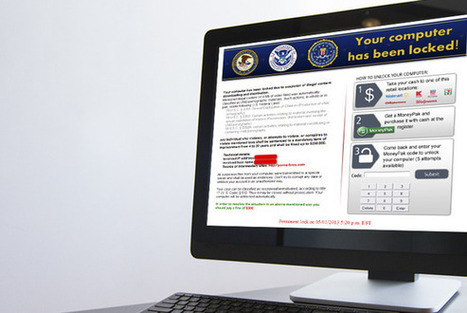
Don't negotiate with e-terrorists. Be a hero and rescue your hostage PC.
Via Gust MEES
1.5 million people fall victim to cybercrime everyday. Learn 5 key ways to stay safe online.
Via Gust MEES
Research by IT Governance suggests over half of IT execs believe human error by staff is the biggest cause of data breaches
Via Gust MEES
Once installed, the “remote administration tool” (RAT) software allows hackers to take control of the machine at any time – similar to how IT workers fix office computers remotely. Hackers can then use a victim’s home computers as if sitting at it – doing everything from switching on the webcam to looking through personal files on the hard drive. Mr Neate said: “The most at-risk computers are those running older software, and those without up-to-date anti-virus software installed.”
Via Gust MEES
|

























![Stay Safe From Cyber Attacks This Holiday Season [Infographic] | business analyst | Scoop.it](https://img.scoop.it/jXsu6BPYAHxt_BJehhkYTjl72eJkfbmt4t8yenImKBVvK0kTmF0xjctABnaLJIm9)






Learn more:
- https://gustmees.wordpress.com/2012/10/11/learning-basics-of-cyber-security-by-easy-to-follow-steps/
- https://gustmees.wordpress.com/2012/11/29/cyber-hygiene-ict-hygiene-for-population-education-and-business/
- https://gustmees.wordpress.com/2015/01/28/practice-learning-to-learn-example-2/