
Twitter can be a busy place with lots of tweets–and thus lots of “noise.”
A #hashtag is a way to aggregate tweets that are appended with a hashtag. Picture it like a magnet that attracts all messages categorized by that topical word or phrase
Get Started for FREE
Sign up with Facebook Sign up with X
I don't have a Facebook or a X account


 Your new post is loading...
 Your new post is loading...
Your new post is loading...
 Scoop.it!
Twitter can be a busy place with lots of tweets–and thus lots of “noise.” A #hashtag is a way to aggregate tweets that are appended with a hashtag. Picture it like a magnet that attracts all messages categorized by that topical word or phrase 
No comment yet.
Sign up to comment
Scoop.it!

They may not be doing algebra, but pre-K kids can master scientific concepts that will make a big difference later on.
Scoop.it!

LEGO® Education LearnToLearn is a hands-on educational tool that helps elementary school students experience the possibilities of what can be learned using LEGO Education solutions within Design and Engineering, Language Arts, Mathematics, Science, and Social Studies while also building and reinforcing the most fundamental learning skills of the 21st century: Collaboration, Communication, Creativity, Critical Thinking, and Problem Solving.
Scoop.it!

New research suggests that curiosity triggers chemical changes in the brain that help students better understand and retain information.
Scoop.it!
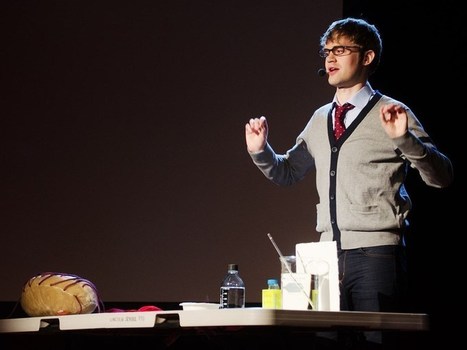
High school science teacher Tyler DeWitt was ecstatic about a lesson plan on bacteria (how cool!) -- and devastated when his students hated it. The problem was the textbook: it was impossible to understand. He delivers a rousing call for science teachers to ditch the jargon and extreme precision, and instead make science sing through stories and demonstrations.
Scoop.it!

Play is a powerful strategy for putting into action many of the ideas suggested by research and social science.
Scoop.it!

What does a padlock, toothbrush, permanent marker and toothpaste have to do with digital citizenship!? Great visuals to get the point across!
Scoop.it!
Andrea Zeitz's insight:
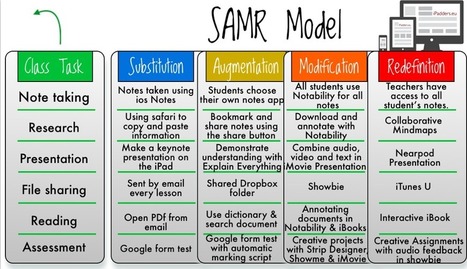
Beautiful interactive image on the SAMR model. iPadders have provided examples of how to use each classroom task according to the different SAMR categories. And in each category, a set of apps and tools are provided to help you carry out the task under study. Nicely integrated!
Scoop.it!

Brainwriting is an easy alternative to face-to-face brainstorming, which often yields more ideas in less time than traditional group brainstorming.

Carlos M. Raposo's curator insight,
September 13, 2014 9:55 PM
Método para criar ideias em grupo mistura o brainstorming com técnicas de colagem ao estilo de cadavre exquis
Scoop.it!
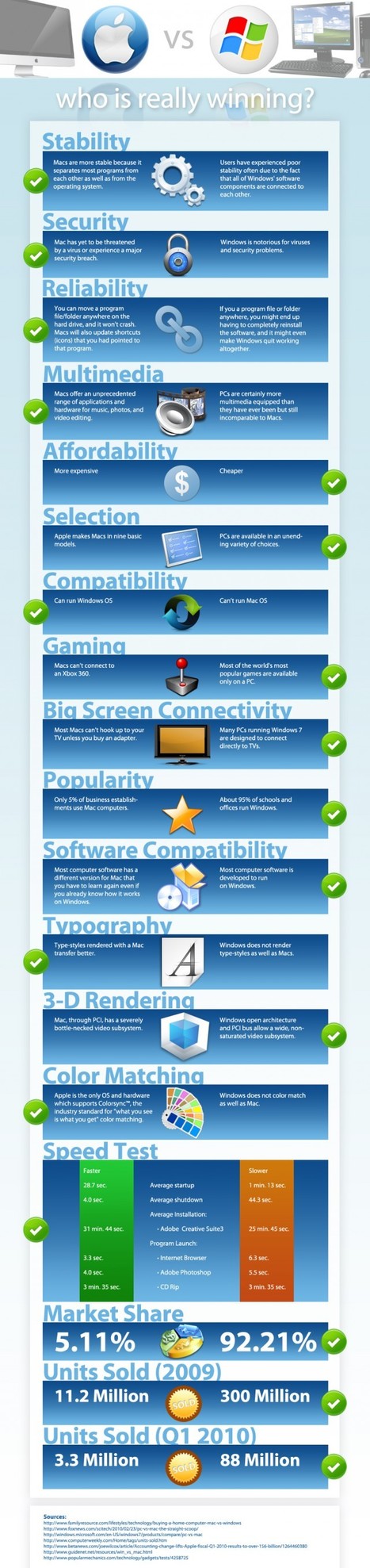
Here is an infographic to try and organize the pros and cons between a Macbook and PC.Decided for yourself what features are important!
Scoop.it!
![How Google Works [infographic] | Visual*~*Revolution | Scoop.it](https://img.scoop.it/sx8W6IQU85XJAp48q39pajl72eJkfbmt4t8yenImKBVvK0kTmF0xjctABnaLJIm9)
Google is something that we often take for granted, but something we disregard even more is the amount of work that it takes to catalogue and index such an inconceivable amount of information.
|
Scoop.it!

We all do it, and some see it as a badge of honour, but if we think multitasking makes us more productive then we need to think again.
Scoop.it!

The visually stunning field of tilt-shift photography became a fairly big thing in the Web a couple of years ago. It uses a special lens that gives a real-world scene the illusion of being a miniature model.
Scoop.it!

The conceptual age is upon us. How does your classroom need to change? This infographic presents the basics of new blended learning models that will enable you to rethink school and prepare students for the world they’re about to enter.
Scoop.it!

Terry Heick uses these sorts of stems to create “learning blends” for students–either with them, or for them. He couples these prompts with other components–technology like apps or social media channels, texts from literary classics to postmodern non-fiction, creativity, or even local matters of citizenship.
Scoop.it!

Physicist Werner Heisenberg said, “When I meet God, I am going to ask him two questions: why relativity? And why turbulence? I really believe he will have an answer for the first.” As difficult as turbulence is to understand mathematically, we can use art to depict the way it looks. Natalya St. Clair illustrates how Van Gogh captured this deep mystery of movement, fluid and light in his work.
Scoop.it!
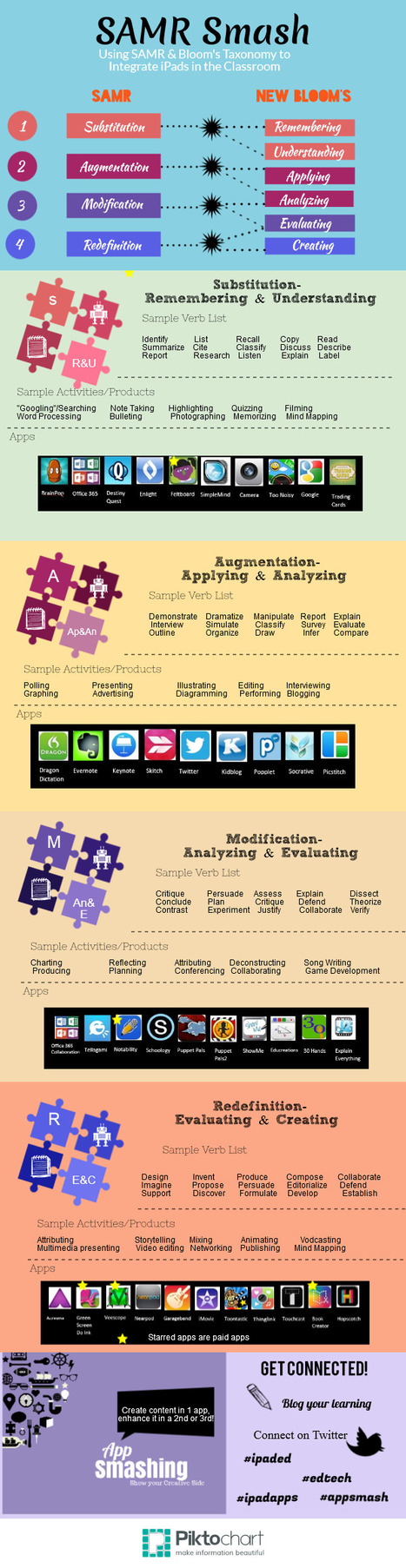
SAMR model is a framework through which you can assess and evaluate the technology you use in your classroom.
Scoop.it!
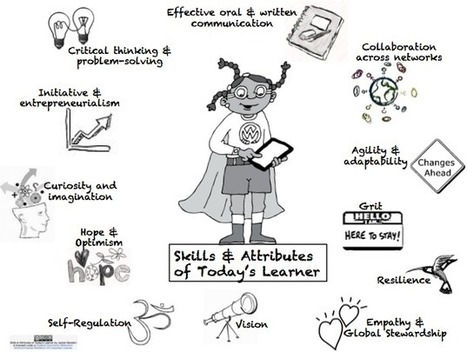
From Jackie Gerstein's resource-rich site comes this sweet infographic depicting the skills we'd like to instill in our students. The post also includes a long, helpful list of resources for everything from how to help students develop hope, to encouraging empathy and social and emotional skills, to how to foster grit, tenacity and perseverance: an educator's guide.
Scoop.it!

A new music video by Brunettes Shoot Blondes for their song ‘Knock Knock’ uses 14 different Apple devices to tell a charming, animated love story. With synchronized iPhones, iPads, iPods and Macbooks, it’s surprising that this isn’t an Apple ad.
Scoop.it!

As with most nutrients, it’s better if you get them directly from the foods you eat. But now how am I supposed to know which foods have which vitamins? Thankfully, the Internet answered. This handy dandy infographic shows what these vitamins do, which foods they are in, and even shows you what food group they belong to.
Scoop.it!

What is Educational Technology? An Inquiry into the Meaning, Use, and Reciprocity of Technology / Qu’est-ce que la technologie pédagogique ? Un examen de la signification, de l’utilisation et de la réciprocité de la technologie Via Ana Cristina Pratas
Scoop.it!

Carmelo Blandino was born to Sicilian parents in Tübingen, Germany, and grew up in the culturally charged city of Montreal, Quebec. He studied art and design at the local colleges and began a successful career as a freelance illustrator, working with architects, designers, and advertising agencies. In 2002 Blandino shifted his focus and indulged in the world of fine art. Today, his paintings are widely known for their immediacy and lascivious expressions of colour, movement and shape.
Scoop.it!
This is a quick introduction to the SAMR Model, developed by Dr. Ruben Puentedura. It is not meant to be an in-depth view of the model. For more information, visit http://hippasus.com/.
|